
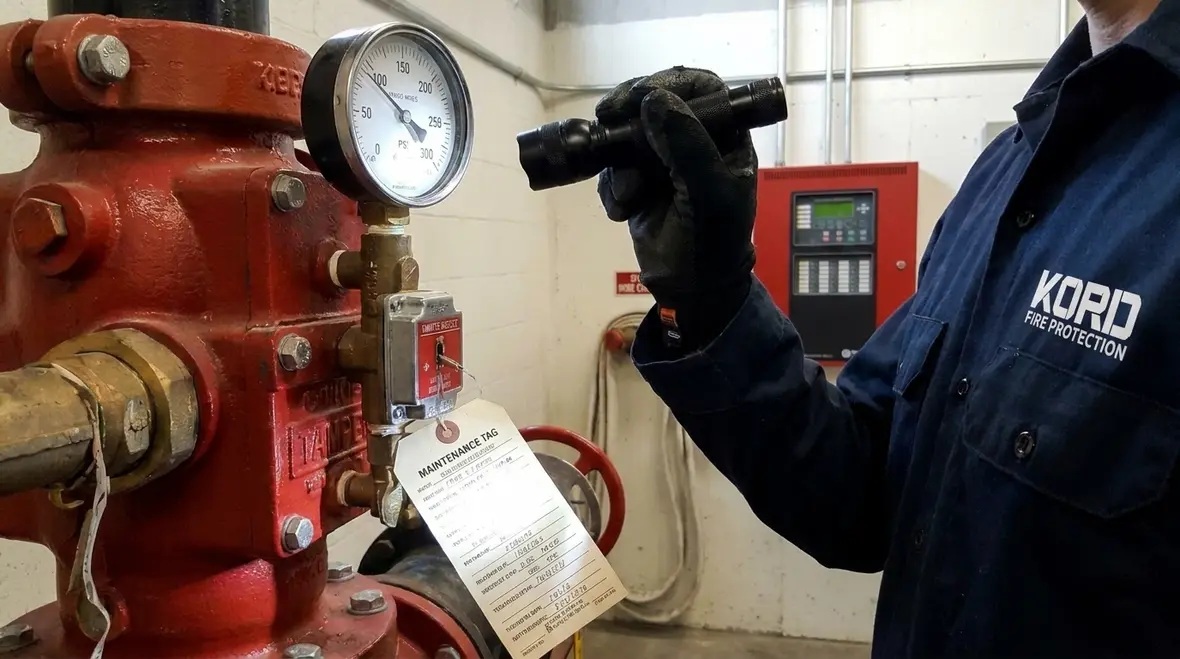
NFPA 13E Section 8.1: System Status and Reliability of Sprinkler and Standpipe Systems
Quick Answer: NFPA 13E Section 8.1 requires owners and service teams to verify sprinkler and standpipe system status and reliability as part of fire department operations support. It focuses on maintenance, inspection, impairment management, and evidence that systems will perform as designed when needed.
The sprinkler standpipe system status reliability fire department topic matters because incident outcomes depend on whether water supplies, valves, and control features function as intended during real-world conditions. For commercial facilities, compliance is not just a document exercise. It is a repeatable operational process supported by documented tests, impairment controls, and clear communication during emergencies and inspections.
If your team is tightening system readiness in the field, a practical next step is reviewing sprinkler system inspection and maintenance requirements so reliability checks and restoration steps do not drift apart.
Why Section 8.1 focuses on reliability, not paperwork
NFPA 13E Section 8.1 addresses how sprinkler and standpipe systems are managed so they remain reliable and ready for fire department use. In practical terms, the standard drives facilities to demonstrate that the installed systems, including water supply characteristics, are in a known condition. It also expects a disciplined approach to system impairment and restoration so that reliability does not degrade quietly over time.
For commercial, industrial, and retail properties, the operational risk often comes from “partial readiness.” Examples include valves inadvertently left in non normal positions, control panel issues that affect notifications, water supply changes caused by construction, or recurring trouble signals that are treated as nuisance events. Section 8.1 aims to prevent that drift by requiring status and reliability verification tied to system performance.
What NFPA 13E Section 8.1 covers for sprinkler and standpipe systems
Section 8.1 centers on confirming system status and reliability for sprinkler and standpipe systems so fire department response can proceed with confidence. In field terms, this means the facility must be able to answer core questions quickly and accurately:
- Are the sprinkler system and standpipe system components capable of providing water when called upon?
- Do valves, controllers, and indicators reflect the as designed operating state?
- Are there any current impairments, and are they documented and managed?
- Has maintenance been performed to preserve performance, including restoration after inspections or repairs?
These requirements apply across the life cycle of a system. A system that is “licensed” at installation is not the same as a system that is “reliable” during ongoing occupancy. Section 8.1 pushes the facility to treat reliability as a managed condition, verified through inspection, testing, and maintenance practices.
How facilities verify system status in real operations
In a commercial environment, status verification must be fast, repeatable, and evidence based. The goal is to avoid a situation where the fire department must infer readiness from incomplete information.
1) Confirm valve positions and control states
Many reliability failures begin with waterway isolation features that are not restored correctly. Facilities should ensure:
- Control valves and auxiliary shutoffs reflect the required normal positions.
- Tamper switches and supervision devices are functioning and reporting correctly.
- Any recent maintenance actions are reconciled, with devices returned to service and indicators verified.
Common failure points include work order handoff gaps, post construction changes that affect access, and supervisory systems that generate troubles that never get cleared to normal.
2) Validate water supply readiness for standpipe operations
Standpipe system reliability depends on available pressure and flow under expected operating conditions. Facilities should maintain confidence in:
- Primary water supply condition and performance (including seasonal variability and demand changes).
- Municipal connection reliability, where applicable.
- Fire pump operational readiness when pumps serve the standpipe system.
- Operational controls that coordinate pump start, pressure regulation, and alarm signaling.
3) Manage system impairments as a controlled workflow
Impairment management typically represents the biggest compliance gap. Even if the physical system is capable, reliability drops when equipment is out of service without active control. A strong workflow includes:
- Immediate documentation of impairments with scope and location.
- Fire department notification process aligned with local procedures.
- Equivalent fire protection measures where required by the scenario.
- Timed restoration and post restoration verification so the system returns to known reliability.
Facilities that treat impairment logs as static records often fail during audits because they cannot show restoration evidence or demonstrate that the system was returned to normal before occupancy risk resumed.
What makes sprinkler standpipe system reliability fail under pressure
Reliability is mechanical, hydraulic, and administrative. The failure modes that matter most during incidents often come from a mix of overlooked components and recurring “minor” defects.
Sprinkler system reliability risks
- Obstructed or damaged sprinkler environment: storage racks, renovations, and ceiling changes can introduce obstructions or alter coverage.
- Supervisory signal issues: trouble conditions that do not get corrected reduce decision quality during emergencies.
- Valve supervision problems: supervisory devices can fail silently, leaving crews without reliable indication of valve position.
- Water supply changes: new tenant demands, line replacements, or closed or modified connections can change availability.
Standpipe reliability risks
- Unverified pump readiness: pump controllers, power supplies, and pressure regulation require maintenance continuity.
- Friction loss and configuration changes: added lengths, capped sections, and altered routing can affect flow performance.
- Drain and auxiliary controls: improper drain valve handling or incomplete restoration after maintenance affects operational readiness.
- Hose valve and connection integrity: physical damage, missing hardware, or non standardized accessories can delay deployment.
These risks align directly with sprinkler standpipe system status reliability fire department expectations. A fire department needs predictable information and predictable performance, not assumptions.
Maintenance and testing practices that support ongoing compliance
NFPA 13E reliability expectations work best when the facility runs maintenance and testing as an integrated program, not isolated tasks. To support status reliability, teams should connect inspection results, test data, and impairment history into a single operational narrative.
Linkage to installation and system context
Reliability depends on correct design and correct installation details. For background on how automatic sprinkler systems are installed and maintained in commercial settings, facilities can reference:
This context helps teams understand how component choices and installation practices influence later reliability verification, including valve arrangements and system control strategies.
Australian service execution and operational readiness
Facilities operating in Australia can align service planning with local execution practices through:
Using consistent service partners supports the evidence trail required for confidence in system status, restoration after repairs, and readiness for fire department operations.
Evidence that convinces during inspections
To strengthen compliance outcomes, maintain clear documentation that links:
- Inspection and test schedules to actual dates completed.
- Measured results where applicable, including pump performance and control verification.
- Impairment actions, equivalent protection measures, and restoration verification.
- Valve position checks tied to supervisory status outcomes.
This is where Kord Fire Protection adds value. Ongoing maintenance and compliance support should produce reliable, traceable records and reduce the gap between what the system can do and what the facility can prove.
Supporting the fire department: communication, access, and readiness
Section 8.1 reliability expectations directly impact how quickly and confidently responding crews can operate sprinkler and standpipe systems. Commercial facilities can support fire department needs by focusing on three operational categories.
1) Clear system knowledge at the site level
Facilities should ensure site teams and fire response procedures reflect system layout and control locations. This includes understanding which valves control sprinkler sections and standpipe zones, and how alarms and indicators operate.
2) Unobstructed access to critical equipment
Reliability fails when equipment is difficult to reach during incident conditions. This includes keeping control rooms and valve access corridors free of stored materials and ensuring signage and labels remain readable and accurate after renovations.
3) Known impairment status communicated promptly
When impairments occur, status reliability depends on how quickly the facility recognizes, communicates, and mitigates the condition. A mature program includes standard decision criteria and a restoration verification step before normal operation resumes.
When these practices align with sprinkler standpipe system status reliability fire department expectations, the facility improves both operational performance and audit readiness.
Frequently Asked Questions
Get reliability aligned with real operations
Sprinkler and standpipe reliability depends on disciplined status verification, impairment control, and documented restoration. Kord Fire Protection supports commercial facilities with ongoing inspection, testing, and maintenance practices designed to strengthen sprinkler standpipe system status reliability fire department readiness. Contact Kord Fire Protection to review your current program, identify common reliability gaps, and build a compliant workflow that stands up during audits and incident response.

Join Our Newsletter!
Get the latest fire safety tips delivered straight to your inbox From our Newsletter.



