
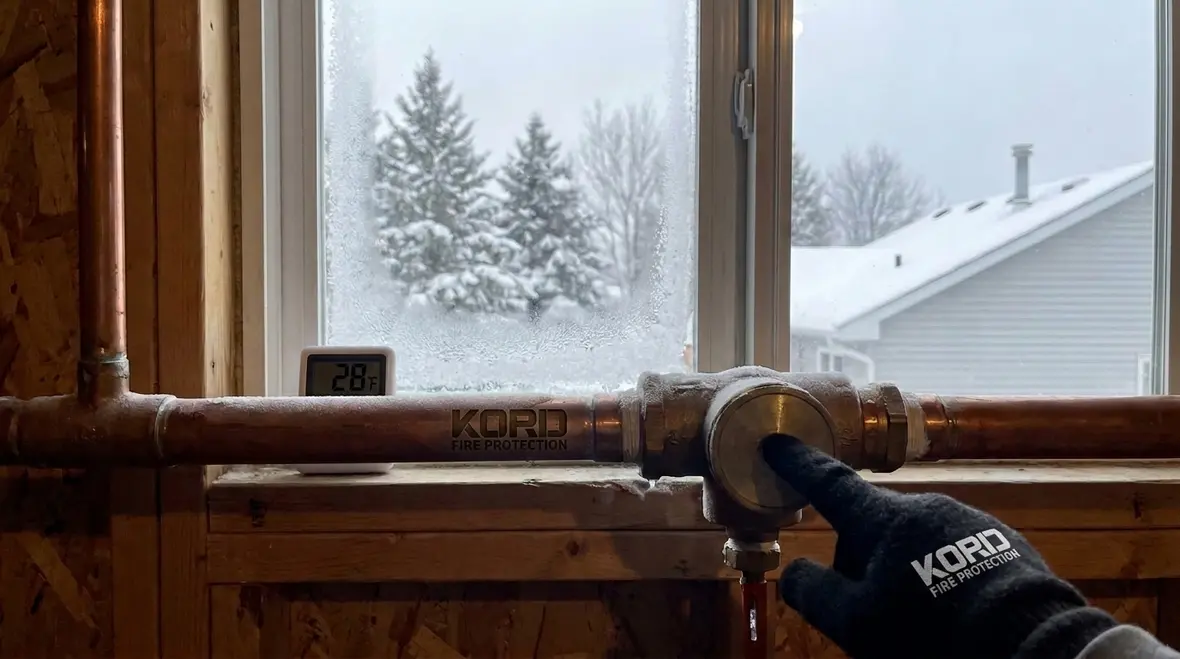
NFPA 13D Section 7.8: Passive Purge Systems for Residential Sprinkler Piping in Cold Climates
Quick Answer
NFPA 13D Section 7.8 addresses how to limit freezing and unintended impairment in residential sprinkler piping installed in cold climates. Passive purge systems use controlled air and pressure management to keep water out of vulnerable piping while maintaining required sprinkler performance and compliance.
What NFPA 13D Section 7.8 requires in cold climate installations
NFPA 13D Section 7.8 focuses on protecting residential sprinkler piping from freezing when conditions would threaten system operation or create a severe risk of water damage. In cold climates, installers must manage how water is isolated from pipework that can be exposed to low temperatures. The technical goal remains the same: maintain the sprinkler system’s ability to deliver water promptly during a fire event while preventing freezing in the interim.
Within the scope of NFPA 13D Section 7.8 passive purge systems residential sprinkler piping cold climates, the core compliance challenge is balancing two competing needs. The system must resist freezing in normal conditions, yet it must not introduce delays, obstructions, or unsafe failure modes when a sprinkler operates. Many field issues occur when passive purge components are installed without strict attention to air management, pressure boundaries, and drain behavior.
For facilities reviewing broader service and maintenance needs, Kord Fire Protection’s fire sprinkler system service page is a useful place to see how inspection, repair, and ongoing support fit into real-world code compliance. For a broader view of how installation details support reliability, see Kord Fire Protection’s overview here: NFPA 13 overview and automatic fire sprinkler system installation. While the link covers NFPA 13 concepts, the installation discipline applies across residential and light hazard sprinkler system work.
How passive purge systems actually work
Passive purge systems rely on air and pressure relationships rather than active controls to keep piping safe from freezing. The configuration typically separates the water supply from portions of the piping that are susceptible to freezing and introduces a purge medium so that water is not present where freezing would occur.
Common operational mechanisms include:
- Controlled purge air in the sprinkler piping zone intended to remain dry during normal conditions.
- Pressure boundary management so the purge air remains in the correct area, not siphoning into supply lines or escaping through unintended leakage paths.
- Drain and isolation behavior that ensures the system transitions to fire mode quickly and predictably when a sprinkler activates.
- Retention of sprinkler readiness by preventing conditions that would trap air in locations that interfere with sprinkler water delivery.
In practice, the system depends on correct component selection, proper piping slope, correct sealing, and disciplined installation to avoid air migration where it should not occur. A purge system that seems to work during acceptance testing can still fail in real use if it is later altered by maintenance repairs, attic or concealed space modifications, or valve replacements that do not match original design intent.
Key compliance and installation details that drive success
Compliance difficulties often show up during plan review, field inspection, and later operational verification. NFPA 13D Section 7.8 passive purge systems residential sprinkler piping cold climates should be installed with attention to the specific failure points below.
1) Freezing protection depends on correct zoning and exposure control
Passive purge designs fail when the “cold zone” is underestimated. Roof overhangs, exterior walls, uninsulated soffits, garage penetrations, and mechanical chases often create localized freezing pockets. Installers must ensure the purge strategy matches the actual thermal conditions, not only the design narrative.
2) Piping and component integrity matter more than drawings
Even minor leakage at fittings, test connections, or improper thread seal usage can shift the pressure balance the purge depends on. When purge air migrates, the system may not maintain a dry condition in the targeted lines. Conversely, trapped air can interfere with rapid discharge during operation.
3) Transition to fire mode must remain predictable
The system must ensure that once a sprinkler operates, water can reach the discharge point without undue delay. If purge configuration or isolation components are misapplied, the fire mode transition can slow, producing partial discharge or abnormal flow patterns that create unacceptable performance risk.
4) Maintenance access and testability reduce long term risk
Passive purge systems require maintenance procedures that confirm the purge environment is stable over time. Without proper access to key components, technicians end up unable to verify correct operation or to detect progressive leakage.
Commercial, industrial, and retail facilities often extend residential sprinkler concepts into buildings that still require rigorous maintenance discipline. For those organizations, the practical expectation should be a formal maintenance program, documented inspections, and trained technicians who understand how passive purge systems behave. Kord Fire Protection supports facilities with ongoing compliance, testing, and maintenance to keep cold climate sprinkler systems reliable through seasonal extremes.
Inspection, testing, and common failure points in passive purge systems
Field performance depends on ongoing verification. The most serious issues typically fall into three categories: purge stability failures, transition failures, and component drift over time.
Typical failure points
- Purge air loss from leakage at fittings, caps, or improperly sealed connections.
- Incorrect valve orientation or replacement that changes the intended pressure boundary.
- Blocked or misrouted drains that alter how the system empties or transitions.
- Unapproved component substitutions during repairs that do not match the original flow, leakage, or sealing characteristics.
- Thermal changes such as added insulation, remodels, or ventilation alterations that change pipe temperature profiles.
What inspections should focus on
A practical inspection program should verify that the system configuration matches the approved design and that the purge environment remains stable. Technicians should confirm:
- Accessible purge components remain sealed, unobstructed, and properly configured.
- There are no visible signs of leakage, moisture accumulation, or corrosion in cold exposed spaces.
- System changes introduced during tenant improvements or maintenance do not compromise the purge boundary.
- Any required acceptance and ongoing test procedures are performed and documented.
For additional industry context around sprinkler water supply and system components, FirePumps provides helpful resources for understanding fire system considerations: firepumps.org. Facility teams often use these references when aligning pump performance, water supply reliability, and sprinkler system expectations with local requirements.
Design and maintenance integration for facilities in cold regions
Even when the building type is residential, the compliance mindset in cold climates should be operationally similar to commercial system management. Facilities and property managers should treat passive purge systems as mission critical components that require seasonal verification and controlled maintenance practices.
Commercial and industrial owners should also anticipate that building operations staff may perform work in attics, mechanical rooms, and exterior penetrations. A robust compliance program includes:
- Change control for any work that touches concealed piping, valves, or purge components.
- Seasonal checks before peak winter exposure and after major building envelope work.
- Maintenance documentation so technicians and auditors can trace what was verified, when, and by whom.
- Training for maintenance contractors who might otherwise treat purge components as “set and forget” equipment.
Kord Fire Protection positions itself as a vital commercial service partner for ongoing compliance, testing, and maintenance. This approach helps property owners reduce the most common real world risk: systems that pass initial commissioning but degrade due to small, undocumented changes during ongoing operations.
Frequently Asked Questions
Conclusion and call to action
NFPA 13D Section 7.8 passive purge systems residential sprinkler piping cold climates require disciplined installation, stable purge integrity, and repeatable verification over time. Facility teams should not rely on “pass once” acceptance results. Kord Fire Protection can help with compliance planning, inspections, and maintenance documentation so winter exposure does not turn a design intent into an operational risk. Schedule a review and confirm your passive purge configuration remains fit for purpose before the cold season peaks.

Join Our Newsletter!
Get the latest fire safety tips delivered straight to your inbox From our Newsletter.



