
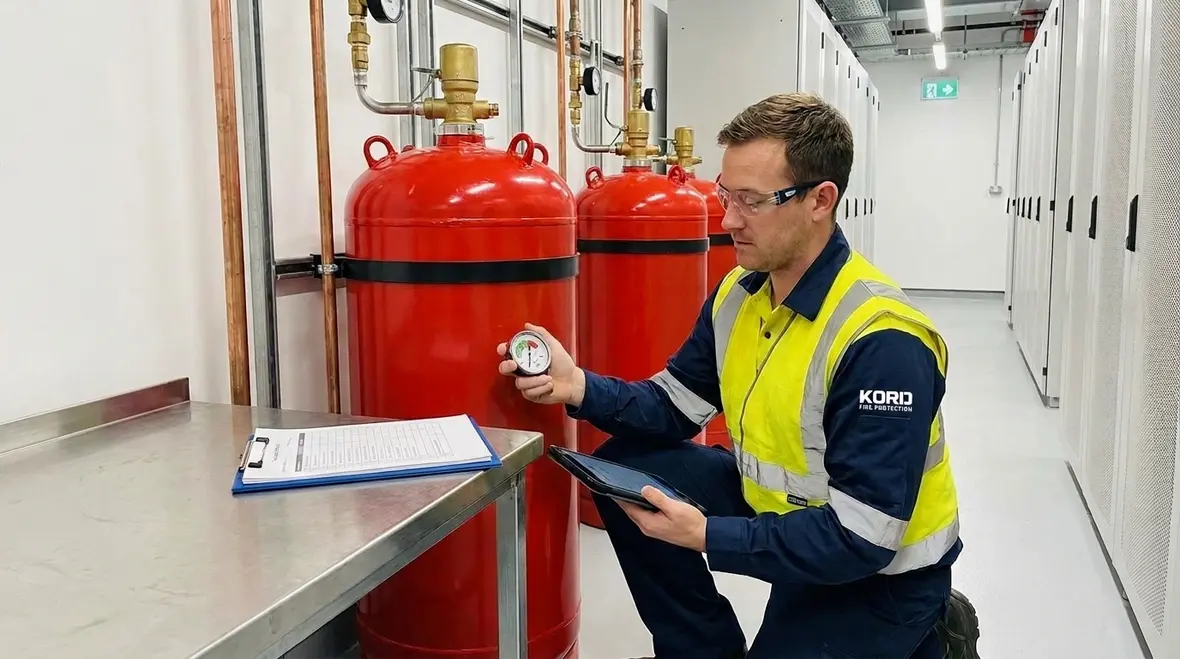
NFPA 12A Section 6.2: Container Testing for Halon 1301 Systems
Quick Answer: NFPA 12A Section 6.2 sets the container testing and verification expectations that protect system performance. It ties storage container condition to release reliability, acceptance criteria, and ongoing requalification intervals, helping owners meet inspection and maintenance obligations across commercial facilities.
Why Section 6.2 container testing matters for Halon 1301
Halon 1301 remains a highly effective total flooding fire extinguishing agent, but the system is only as dependable as its pressurized storage containers. NFPA 12A Section 6.2 focuses on confirming that each container remains fit for service and that the system will deliver the correct agent quantity when required. For owners and facilities, this means the Halon 1301 storage container test requirements must be treated as a reliability program, not a paperwork exercise. The practical compliance challenge is aligning inspection findings, container age, and service history with the right requalification pathway before expiration deadlines and without disrupting facility operations.
For facilities evaluating broader clean agent service planning, Kord Fire Protection also offers clean agent fire suppression system services that support installation, testing, and maintenance programs in critical environments.
For a broader context on how the standard applies from system design through maintenance, see: NFPA 12A overview.
What NFPA 12A Section 6.2 expects during container testing
Section 6.2 centers on validating the physical integrity and serviceability of the Halon 1301 storage containers used in clean agent systems. While the full text of the standard should be consulted for exact procedural language, the compliance intent is consistent: containers must meet the acceptance requirements for safe pressure containment and must continue to support proper discharge performance.
In practice, container testing typically verifies the following operational drivers:
- Mechanical integrity through examination and acceptance of container condition.
- Pressure boundary fitness so the container can withstand design and operating conditions.
- Valve and interface reliability to maintain proper connection integrity and correct agent delivery.
- System readiness so the release configuration performs as designed under required conditions.
For commercial, industrial, and retail facilities, the risk is not only delayed discharge due to a failed container, but also extended out of service periods if testing is scheduled without coordination. A strong compliance plan maps container test dates to inspection cycles, manages contractor availability, and ensures documentation is traceable for AHJ and insurance reviews.
How container testing is typically performed in the field
Container testing for Halon 1301 systems usually involves removal of the container from service, inspection by qualified personnel, and documentation of test results. The exact method and interval can depend on the container certification requirements and the system configuration, but common steps include:
- Pre staging and verification
Facility and system records are reviewed to confirm container identification, last test date, service history, and component configuration. - System isolation
The system is placed in a controlled maintenance state to prevent unintentional discharge or loss of protection during work. - Container handling and transport readiness
Containers are moved with appropriate safety controls, identification management, and protection of valves and pressure interfaces. - Examination and requalification
Inspection and testing are performed to confirm the container remains within acceptable criteria for continued service. - Return to service verification
Post test documentation is reviewed, valves and connections are checked, and system readiness is verified using the applicable maintenance procedures.
Operational failure points that cause compliance delays
- Missing traceable container records
When container identification or prior test documentation is incomplete, compliance timelines extend because verification must be repeated. - Valve interface degradation
Even when the container body meets acceptance, valve assemblies and seals may require attention to ensure safe, reliable discharge. - Inadequate coordination for outage windows
A container test scheduled without aligning with facility operations often results in incomplete work, delayed approvals, or extended system downtime. - Documentation gaps after maintenance
Systems often get “mechanically complete” but fail administrative sign off due to missing forms, labels, or test results.
Kord Fire Protection supports compliance teams by coordinating testing schedules, validating documentation completeness, and linking container test outcomes back to the system’s overall maintenance and inspection program. This helps commercial owners keep protection plans on track while reducing disruptive rework cycles.
Maintaining compliance: documentation and inspection after testing
NFPA 12A compliance does not end when the container is requalified. Container testing must connect back to system maintenance requirements, including recordkeeping and readiness checks that confirm the system remains capable of delivering Halon 1301 as intended.
What facilities must capture for audit readiness
- Container identification and test results including dates and requalification outcomes.
- Serviceability determination that the container meets acceptance criteria for return to service.
- Valve and connection verification after reinstallation, including checks for secure interfaces.
- System verification steps aligned with maintenance practices so the discharge configuration remains correct.
From an E-E-A-T perspective, the compliance reality for many commercial facilities is that AHJ and internal risk owners care about the “full chain” of evidence. That chain includes container test results, installation checks, and a clear record showing that the system was returned to protected service using controlled procedures. Kord Fire Protection helps teams close these documentation gaps by maintaining a structured maintenance history and by verifying that post test returns align with the applicable system readiness expectations.
Common scheduling mistakes and how to avoid them
Container testing creates planning pressure because it can require system downtime, coordination with licensed parties, and timely approvals. The following scheduling mistakes frequently lead to missed targets or last minute corrective actions:
- Using only annual calendar dates without reviewing container age, system configuration, and certification status.
- Assuming test results are automatically transferable without confirming container identification and system component alignment.
- Delaying documentation until the end which increases the chance of incomplete records and rework.
- Not defining a contingency plan for protection coverage during the work window.
A practical approach is to build container test requirements into a multi year compliance plan, then align specific container requalification dates with inspection cycles and maintenance staffing. This minimizes system downtime and supports smoother commercial facility operations in data centers, manufacturing, and high value retail environments.
Frequently Asked Questions
Get container testing compliance support from Kord Fire Protection
Halon 1301 storage container test requirements demand planning, documentation rigor, and coordinated execution. Kord Fire Protection helps commercial owners schedule container testing, verify post test system readiness, and maintain audit ready records across inspection cycles. Contact Kord Fire Protection to develop a practical compliance plan tied to your container history, system configuration, and facility uptime needs.

Join Our Newsletter!
Get the latest fire safety tips delivered straight to your inbox From our Newsletter.



