NFPA 1 Section 42.9 Marine Fueling Fire Safety Australia
Quick Answer
NFPA 1 Section 42.9 sets clear fire safety rules for marine fueling, helping reduce ignition risks during vessel refueling. For industrial, retail, and commercial sites across Australia, it supports safer operations, better training, and stronger site control. Kord Fire Protection can help turn those rules into practical, workable protection.
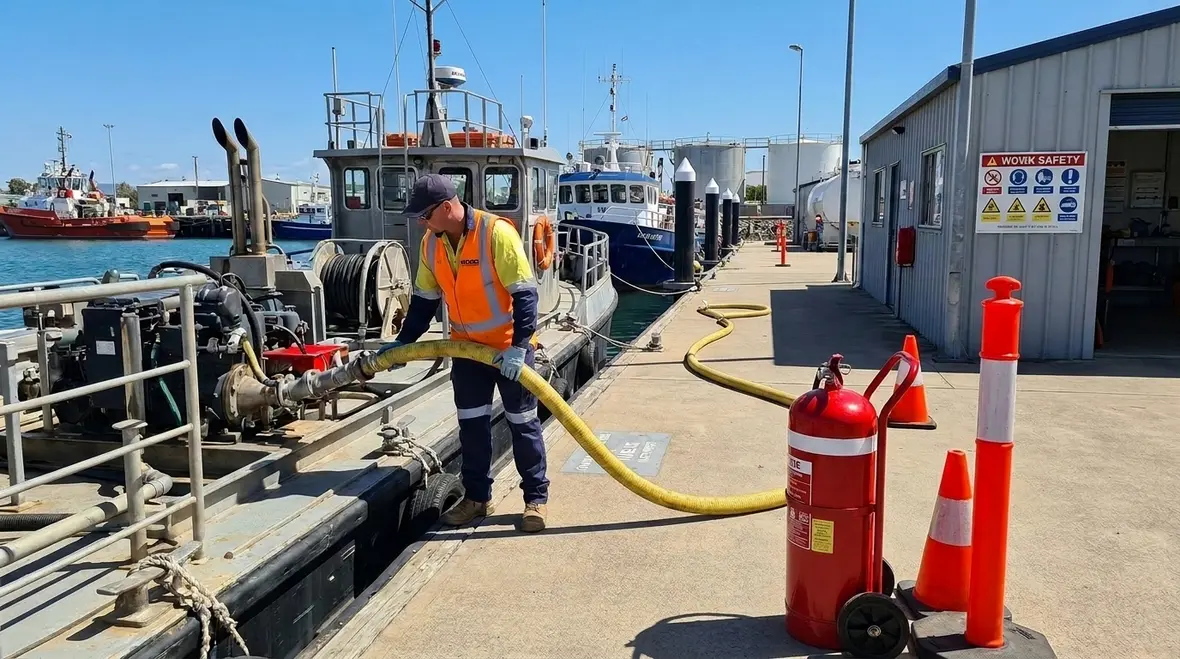
Marine fueling may look routine, yet one mistake can turn a calm dock into a very bad day very fast. That is why marine fueling NFPA guidance, the boat fueling fire code, and vessel refueling fire safety matter so much for ports, marinas, terminals, and commercial marine sites. NFPA 1 Section 42.9 gives a clear path for safe fuel handling, ignition control, and emergency readiness. For Australian businesses that manage boats, barges, work vessels, or fueling points, the stakes are high, and the rules matter. After all, nobody wants their fuel dock to become the next villain in a disaster movie.
For sites that also need broader compliance support near the planning stage, Kord Fire Protection’s fire protection service offering can fit naturally into wider site readiness work. It is a practical way to connect marine fueling risk controls with the bigger picture of inspections, maintenance, and operational continuity.
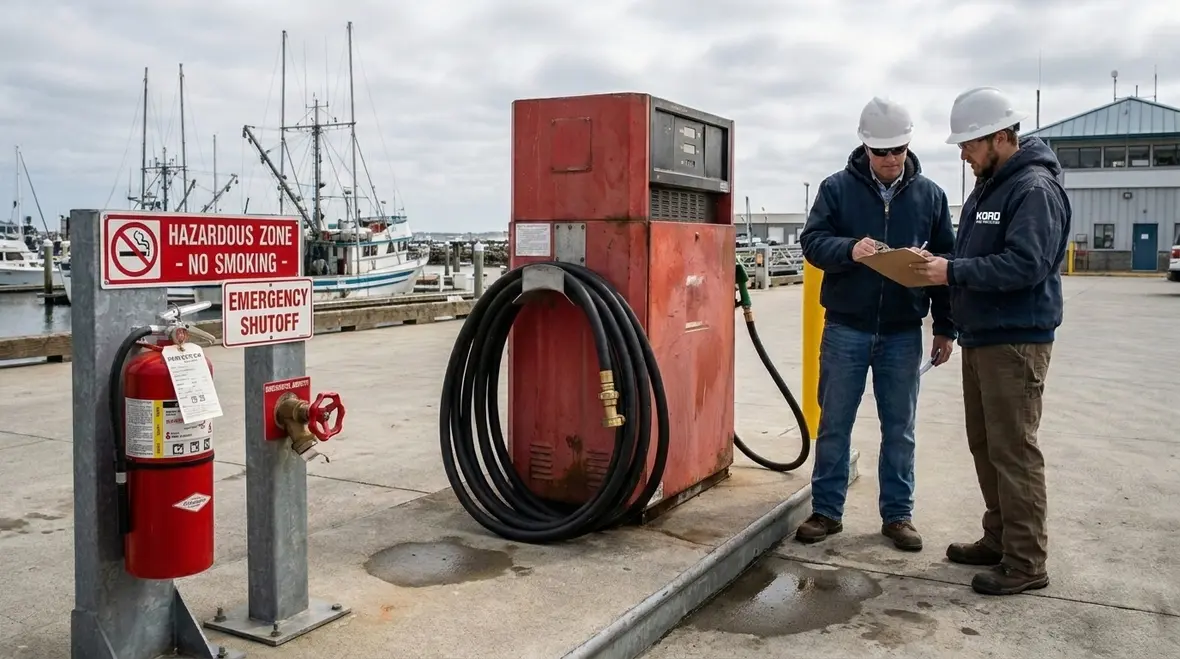
What NFPA 1 Section 42.9 covers
NFPA 1 Section 42.9 focuses on marine fueling operations and the fire risks that come with them. It guides how fuel is transferred, how sources of ignition are controlled, and how the site must stay ready for an emergency. In simple terms, it helps people avoid the classic “this should be fine” moment that often ends with alarms, damage, and paperwork.
The section supports safer fuel handling by requiring clear operating controls, safe equipment use, and strong site supervision. It also reinforces the need for fire extinguishers, safe access, and trained staff. For busy commercial marine sites, this framework helps reduce confusion and keeps fuel work more predictable.
Why structure matters at the dock
A fueling dock can look ordinary right up until it absolutely does not. That is part of the problem. Because marine operations repeat the same tasks day after day, people can start treating fueling like background noise. NFPA 1 Section 42.9 pushes against that mindset by making the transfer process deliberate, supervised, and controlled. It turns what could become an improvised routine into a defined safety procedure, which is exactly what high risk work needs.
Why marine fueling fire safety matters on busy sites
Fuel vapors can ignite fast, and a dock often has more risks than people first notice. Vehicles, pumps, engines, static electricity, nearby electrical gear, and human error can all create danger. Therefore, vessel refueling fire safety must treat every transfer as a high attention task, not a background chore.
For industrial and commercial operators, a fuel incident can stop work, damage assets, hurt staff, and trigger legal and insurance problems. In addition, the effect can spread beyond the dock and impact storage areas, plant systems, and nearby operations. Strong fire safety controls help protect business continuity as much as they protect people.
That is especially true on busy sites where fueling overlaps with deliveries, maintenance, vessel movement, contractor access, and daily operations that never seem to pause for anybody. One weak link in that chain can create the kind of incident report nobody wants to explain later. Good controls do not remove all risk, but they make it much harder for a minor mistake to become a major event.
Key controls in boat fueling fire code compliance
NFPA 1 Section 42.9 supports several core controls that matter during fueling. These include:
- Keeping ignition sources away from fueling zones
- Using trained staff to manage the transfer
- Maintaining fire extinguishing equipment near the point of use
- Ensuring fuel hoses, fittings, and pumps stay in safe condition
- Posting clear rules for shut down, no smoking, and emergency action
These controls may sound simple, yet simple rules often save the day. In fact, most serious fuel fires do not start with dramatic explosions. They start with small misses, like poor housekeeping, weak supervision, or someone treating a live fueling area like a coffee break.
The little things that become big things
A worn hose, a missing extinguisher, an unclear shutdown step, or a worker who assumes someone else is watching the transfer can each become the spark before the spark. That is why compliance is not just about having rules in a binder. It is about putting visible, physical, repeatable controls in place where fueling actually happens. The best safety systems are not mysterious. They are obvious, boring, and extremely effective, which is a pretty good combination when flammable liquids are involved.
How site teams can apply the rules in daily work
Good compliance begins before the hose connects. First, staff should inspect the area, confirm the right fuel type, and verify the vessel is ready for refueling. Next, they should control nearby traffic, stop unnecessary work, and keep all ignition risks out of the zone. During fueling, one person should stay focused on the transfer, because multitasking has a poor safety record.
After fueling, the team should check for leaks, secure caps, confirm equipment is safe, and restore the area only when the risk has passed. Therefore, marine fueling safety works best when the process becomes routine, consistent, and well documented.
Managers can strengthen that routine by using pre fueling checklists, post fueling signoff steps, and regular spot checks that verify the process is actually being followed rather than simply admired from a distance. Written procedures matter, but field habits matter more. If the team uses the same safe sequence every time, the chance of shortcuts drops and the chance of a clean transfer rises.
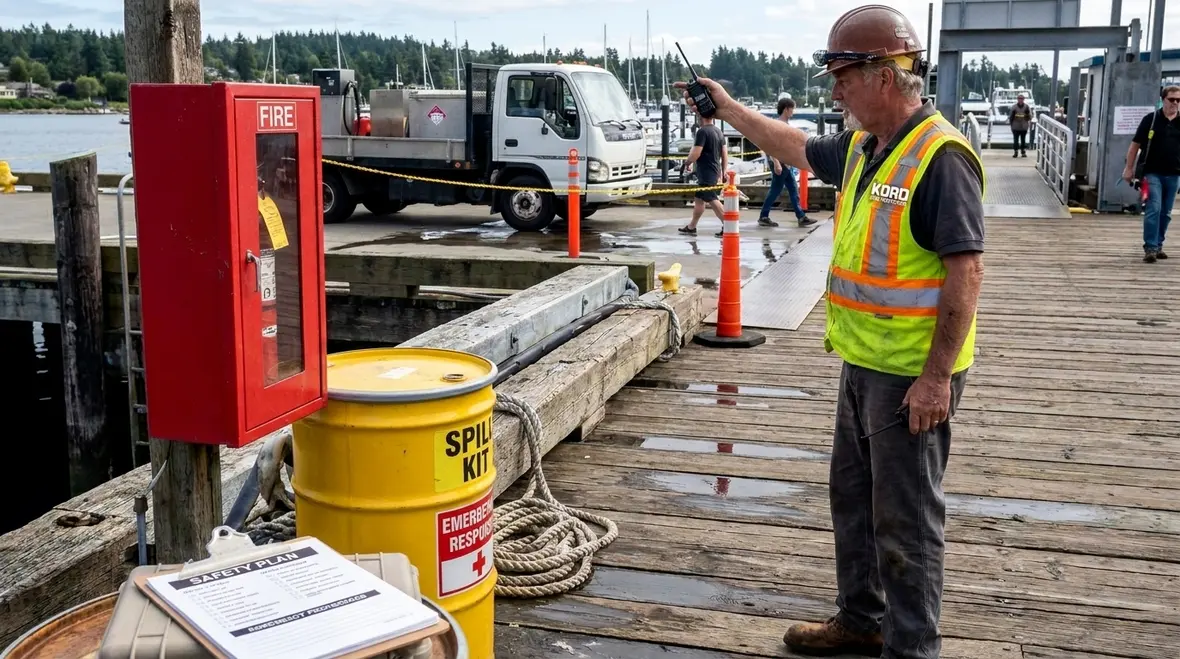
Operational priorities and business protection
Operational Focus
Staff training, inspection schedules, emergency steps, and equipment checks all support safer fueling. These steps lower the chance of fire and make response faster if something goes wrong. They also help crews stay calm under pressure because nobody has to invent the process while standing next to fuel vapors and hoping for the best.
Business Protection
Clear controls protect assets, reduce downtime, and support compliance across ports, marinas, depots, and marine service yards. That means fewer surprises and less chance of a very expensive headline. It also helps leadership keep operations moving without discovering too late that one neglected fueling point has become the weakest link on site.
Where Kord Fire Protection adds real value
Kord Fire Protection can become a vital partner in marine fueling fire safety by helping sites turn code language into practical action. Standards are useful, but real sites need real solutions. That is where expert support makes the difference.
Kord can help with fire system design, extinguisher coverage, inspection planning, and site risk reviews. In addition, Kord can support compliance programs that fit the needs of industrial, retail, and commercial marine operations across Australia. This includes aligning fire protection measures with fueling layout, traffic flow, staff roles, and emergency access. When a site needs more than theory, Kord brings the kind of help that keeps the ship floating, quite literally.
If your team is also reviewing broader code alignment, it makes sense to explore NFPA 1: A Comprehensive Guide to Fire Prevention and Safety as a related resource. It helps place Section 42.9 within the wider fire prevention framework, which is useful when marine fueling is only one part of a larger compliance plan.
How to strengthen compliance before the next fuel transfer
Sites should review fueling procedures, check equipment condition, and verify emergency tools are easy to reach. They should also train workers on shutdown steps, spill response, and fire extinguisher use. Furthermore, managers should inspect the fueling zone often, because fire safety fades fast when nobody is watching.
A strong compliance plan should include written rules, regular drills, and clear duties for each shift. As a result, teams can move faster, act with confidence, and avoid costly mistakes during vessel refueling fire safety tasks.
A practical review checklist
- Confirm the fueling area is clean, controlled, and free from avoidable ignition sources
- Verify hoses, pumps, and fittings are in safe working condition before every transfer
- Make sure extinguishers and emergency equipment are visible, accessible, and ready
- Assign one responsible person to monitor the transfer from start to finish
- Document issues, correct them quickly, and review trends before they repeat
None of that is glamorous, but glamorous is not the goal. Safe, repeatable, and well controlled is the goal. In marine fueling, boring procedures are usually the ones that keep everyone going home with the same number of eyebrows they arrived with.
FAQ
Conclusion
NFPA 1 Section 42.9 gives marine fueling sites a clear path to safer work. For Australian industrial, retail, and commercial operations, the right fire protection partner matters just as much as the rule book. Kord Fire Protection can help build safer systems, stronger compliance, and better peace of mind.
For sites that handle fuel every day, that is not just helpful. It is smart business. When fueling controls are clear, staff are trained, and emergency measures are ready, operations become safer, steadier, and much less likely to headline the wrong kind of story.

Join Our Newsletter!
Get the latest fire safety tips delivered straight to your inbox From our Newsletter.