NFPA 1 Section 32.10 Film Location Fire Safety and Fire Protection
Quick Answer
NFPA 1 Section 32.10 sets the fire safety baseline for film and television production sites, where crews, lights, generators, props, and temporary sets can raise risk fast. With the right planning, inspection, and protection, production teams can keep work moving, meet code, and protect people, gear, and the schedule.
Film sets look polished on camera, yet behind the scenes they can run hot, crowded, and busy. That is why film location fire safety, movie shoot location fire code, and production site fire protection NFPA matter from the first call sheet to the last wrap truck. In Australia, industrial, retail, commercial, and facilities teams often host productions in live spaces, so the fire plan must work around real operations without turning the site into a movie set from chaos central.
For sites that need broader support around inspections, readiness, and compliance planning, full fire protection services can fit naturally into production preparation without hijacking the schedule. Teams that want a wider code backdrop can also review NFPA 1: A Comprehensive Guide to Fire Prevention and Safety to connect this section with the bigger fire prevention picture.
What NFPA 1 Section 32.10 covers on a production site
NFPA 1 Section 32.10 gives clear direction for fire safety in film production locations. It focuses on how crews use temporary structures, electrical gear, special effects, open flame, fuel powered equipment, and crowded work areas. As a result, the rule helps reduce the chance of fire while keeping the site practical for production.
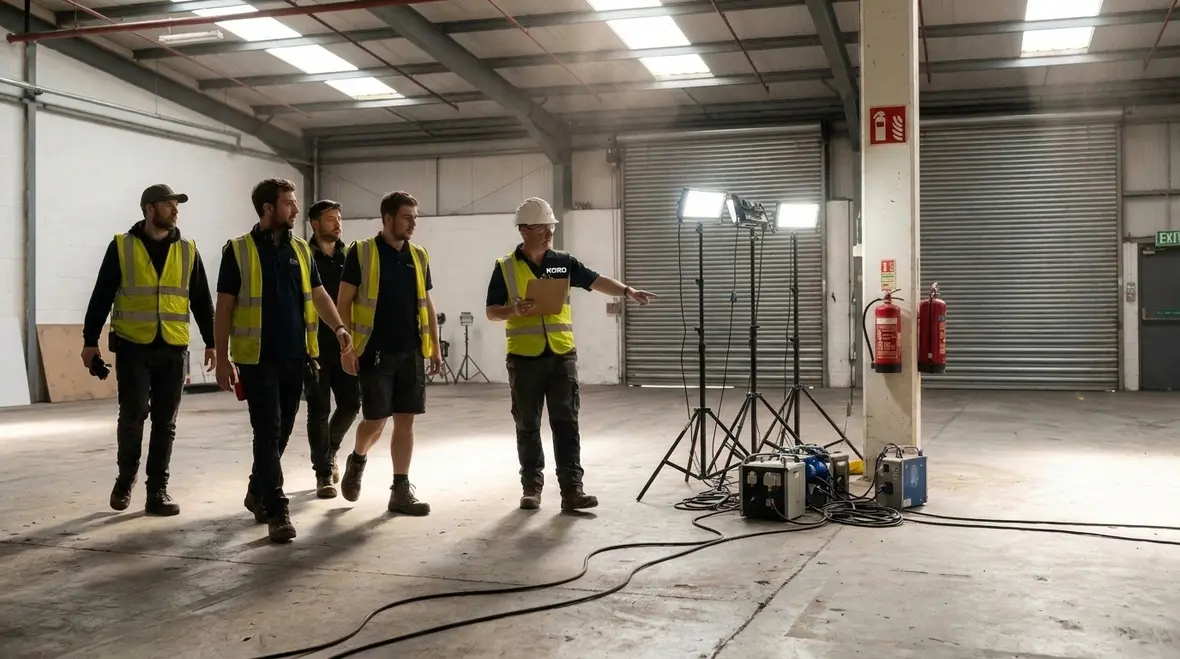
It also pushes teams to plan before the first take. For example, a production site should not wait until a smoke machine is “technically fine” while someone runs extension leads like spaghetti across a loading dock. Instead, the site needs early checks, safe layout planning, and clear control over ignition sources, exits, and suppression equipment.
Why these production conditions create real fire pressure
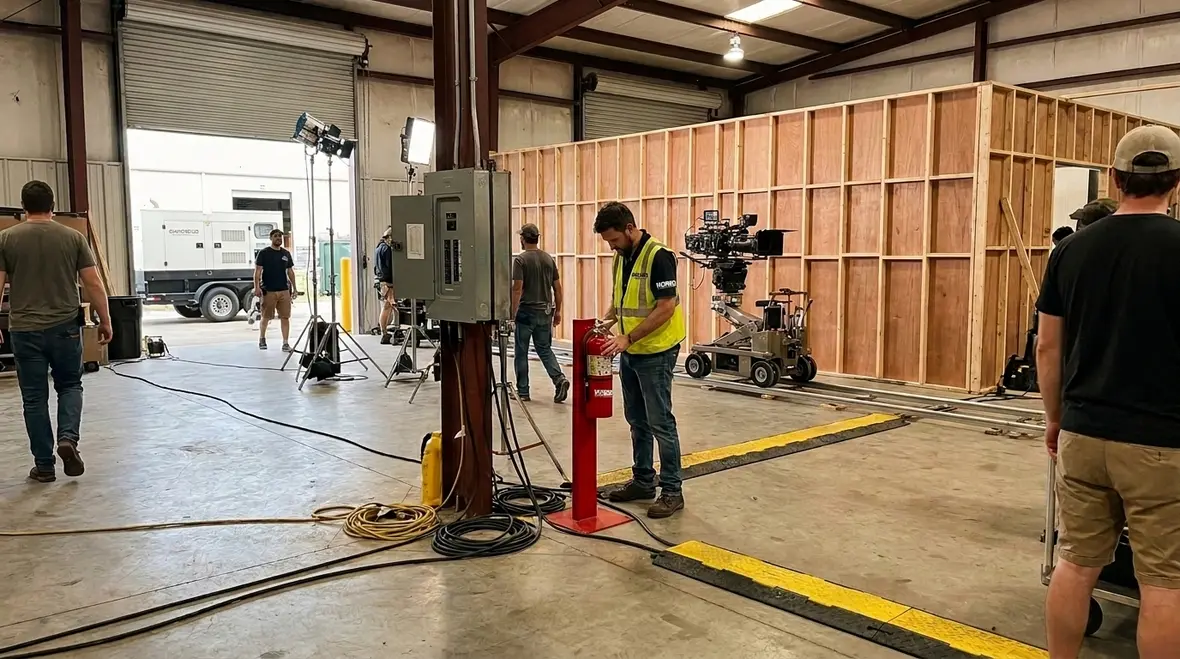
A film location can combine temporary wiring, portable generators, battery charging stations, scenic materials, catering equipment, haze effects, and a lot of people moving with purpose. None of that is automatically unsafe, but together it creates a site that changes by the hour. One corner may look like a normal warehouse at 8:00 a.m. and turn into a temporary set with lighting rigs, drapes, and power distribution by lunch. Fire safety has to keep up with that pace.
That is exactly why good controls need to be simple, visible, and enforced. If the plan only works when everyone has spare time and perfect memory, it is not a plan. It is wishful thinking with a clipboard.
Why film location fire safety matters on active commercial sites
Commercial and industrial locations bring added risk because they often stay operational during filming. That means stock, plant, vehicles, customer traffic, or warehouse activity can sit near production gear. Therefore, film crews and site managers must work as one team.
Good fire safety protects more than people. It also protects business continuity, property, equipment, and reputation. A small incident can delay a shoot, shut down a tenant area, or trigger a wider site response. And nobody wants the production note that says, “We lost the day to a generator and a bad attitude.”
Shared sites need shared decisions
When a live facility hosts a production, nobody gets to operate in a vacuum. The venue team knows the building systems, the production team knows the shoot demands, and contractors often control specialist gear. A safe result depends on all three talking early. Access routes, isolation rules, after-hours procedures, alarm interfaces, and shutdown windows should be sorted before equipment rolls in, not while someone asks where the nearest extinguisher went.
Keep tenant and production access paths clearly separated where possible
Confirm whether alarms, sprinklers, or suppression zones are affected by temporary sets
Coordinate loading dock, generator, and fuel areas away from routine business operations
Assign one point of contact from the facility and one from production for every shift
How to meet the movie shoot location fire code in practice
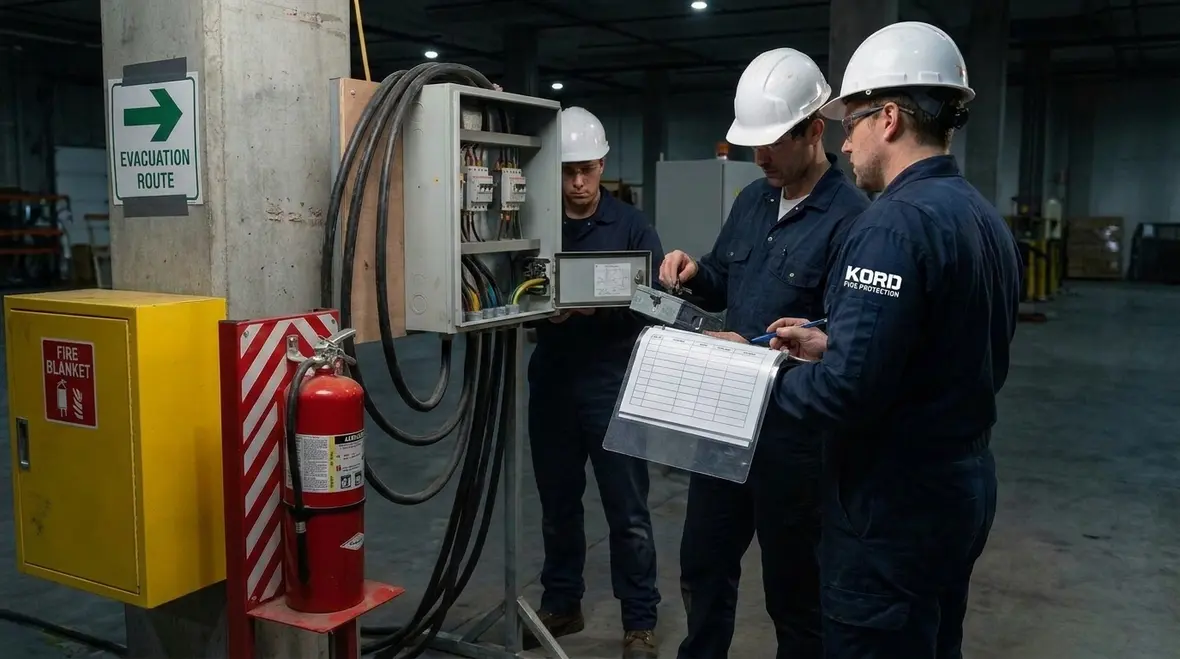
To follow the movie shoot location fire code well, the production team should start with a site specific risk review. This review should identify hot work, cooking, special effects, fuel storage, battery charging, and any live power or gas use. Then the site can set controls before filming begins.
Key steps include:
Checking exits, access paths, and assembly points
Keeping fire extinguishers close to the work zone
Separating ignition sources from fuel, fabric, and packed sets
Managing cables, leads, and temporary power with care
Controlling smoke, flame, and pyrotechnic use with permits and supervision
In addition, the site should brief every crew member and contractor. A short induction can prevent long headaches later. In this line of work, a five minute safety talk can save a five hour shutdown.
Practical controls that actually hold up during a busy shoot
The best control measures are not the fanciest ones. They are the ones people can spot, understand, and follow while carrying gear and answering three radios at once. Mark fire lanes. Label restricted storage. Identify who can approve effects or open flame. Check that battery charging is not tucked into a random corner next to cardboard and curtains. If power demand changes between setup and the actual scene, review it again. Production changes fast, and risk can change just as fast.
| Risk area | What good protection looks like |
| Electrical loads | Load checks, safe leads, no damaged cords, and proper power distribution |
| Special effects | Reviewed approvals, trained operators, and fire gear placed before filming |
| Temporary sets | Clear exits, stable materials, and no blocked paths behind scenic walls |
| Fuel and gases | Controlled storage, separation from heat, and restricted access |
This approach keeps production site fire protection NFPA aligned with how crews actually work. It also helps facility owners avoid last minute changes that cost time and money. Moreover, it creates a cleaner handoff between the site team and the production crew.
Where Kord Fire Protection becomes a vital partner
Kord Fire Protection can play a critical role in supporting film production locations across Australia. Because production sites often blend temporary activity with live operations, Kord can help site managers build a fire safety plan that fits the space, the schedule, and the local risk profile.
That support may include fire system checks, extinguisher placement guidance, inspection support, and advice for temporary production setups. Just as important, Kord can help teams interpret fire safety needs in a way that makes sense on site, rather than in a paperwork vacuum. In other words, Kord helps turn code into action, which is where the real magic lives.
How Kord supports crews, venues, and facilities teams
Kord Fire Protection can work alongside venue managers, industrial sites, retail centres, and commercial facilities to reduce fire risk before the camera rolls. That support matters because each location has different access limits, alarm needs, tenant rules, and shutdown windows.
As a result, Kord can help with:
Pre shoot fire risk planning
Inspection of suppression and alarm systems
Placement of portable fire equipment
Advice for temporary power and hot work controls
Coordination with site safety teams and production managers
This partnership keeps the production moving while protecting the host site. It also reduces the chance of confusion when crews, contractors, and facility staff all need to act fast at once. And in production, confusion is about as welcome as a rain delay during an outdoor finale.
What a strong site plan should include before filming starts
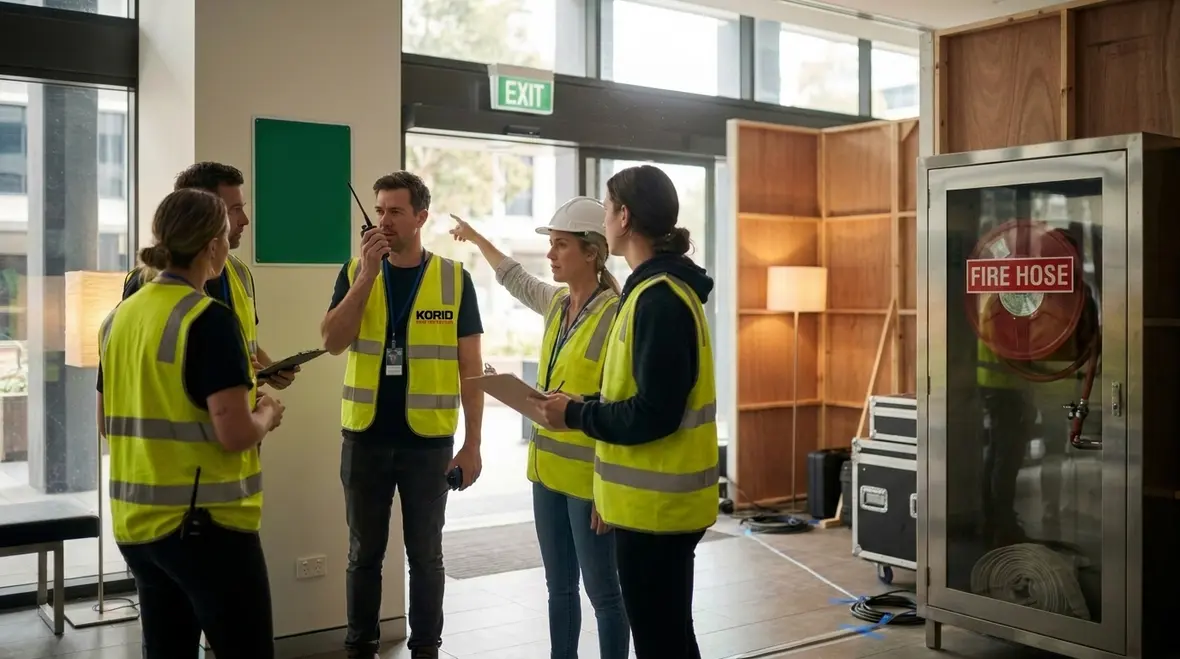
A strong site plan should cover who is responsible for each control, when checks happen, and how the crew responds if an alarm sounds. It should also confirm which activities need approval before they start. For example, smoke effects, flame effects, cooking scenes, and battery charging should never rely on guesswork.
In addition, the plan should include clear evacuation routes, emergency contact details, and a process for stopping work if conditions change. Since film sets move fast, the plan must stay simple enough for real people to follow under pressure. Fancy binders do not put out fires; trained people do.
A pre shoot checklist worth having on one page
Who approves effects, hot work, and temporary power use
Where extinguishers, hose reels, exits, and assembly points are located
Which building systems must stay online and which areas are off limits
How alarms are reported and who contacts emergency services if needed
What changes require work to stop and be reassessed before the next take
If that checklist is clear, the site is already ahead of most preventable problems. If it is vague, the crew will fill the gaps with assumptions, and assumptions are not exactly known for their fire resistance.
FAQ
Conclusion
Film production should move quickly, but fire safety should never lag behind the schedule. With NFPA 1 Section 32.10, a smart site plan, and support from Kord Fire Protection, productions can stay safe, compliant, and ready to roll.
For Australian facilities hosting film crews, the smartest move is simple: bring in Kord early and keep the set steady from first setup to final wrap. That way the only thing catching fire on set is the performance, not the risk register.

Join Our Newsletter!
Get the latest fire safety tips delivered straight to your inbox From our Newsletter.