NFPA 1 Section 33.3 Tire Storage Emergency Plan in Australia
Quick Answer
NFPA 1 Section 33.3 sets a clear path for tire storage fire safety by requiring a solid response plan, fast action, and trained teams. For industrial and commercial sites across Australia, a strong tire storage emergency plan lowers risk, improves control during a fire event, and keeps operations moving when things get hot, literally and otherwise.
For facilities refining their broader fire readiness, Kord Fire Protection’s full fire protection services provide a natural next step for inspection readiness, maintenance coordination, and practical support across active sites.
NFPA 1 Section 33.3 and Why It Matters for Tire Storage
NFPA 1 Section 33.3 gives facilities a practical way to manage fire risk in tire storage areas. Since tires can burn fast and create heavy smoke, a site needs more than good luck and a prayer to the safety gods. It needs clear outdoor tire storage emergency procedures, trained staff, and a plan that matches the layout, volume, and use of the site.
For warehouses, yards, retail distribution centres, transport hubs, and industrial storage sites, this section supports early action and fast coordination. In Australia, where many businesses store large tire volumes outdoors, this guidance helps teams respond with order instead of panic. That matters because tire fires spread quickly and can put workers, assets, and nearby operations at risk.
The value of the section is not just code language on a page. It pushes facilities to think through the awkward questions before smoke starts rolling. Who sounds the alarm first? Who meets emergency crews? What equipment must be shut down? Which routes stay clear? Those details decide whether the first ten minutes are controlled or chaotic, and tire fires are not known for rewarding indecision.
Why Emergency Planning Has to Be Site Specific
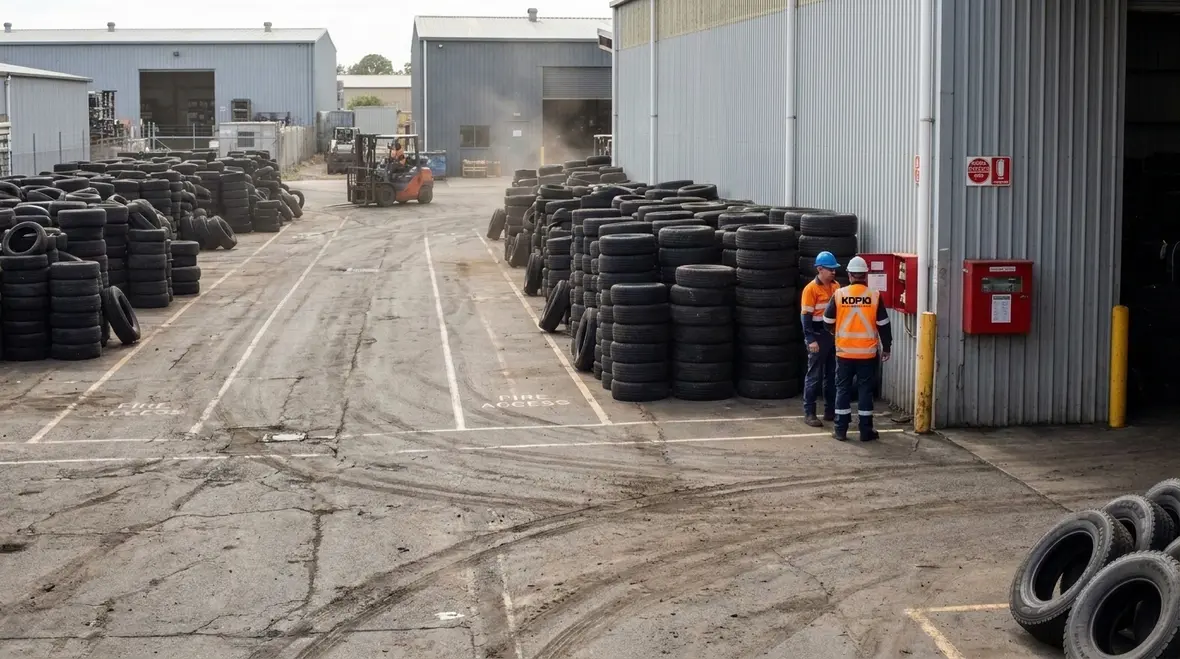
A tire yard with wide lanes, clear hydrant access, and modest stock levels has very different needs from a crowded outdoor storage area with stacked product, vehicle movement, and nearby structures. A generic emergency plan may look polished, but if it ignores the real layout, traffic flow, ignition sources, and staffing pattern, it becomes decorative paperwork. Fire does not grade on presentation. It grades on whether the plan works.
That is where a compliance-minded service partner becomes useful. Kord Fire Protection describes a practical, code-focused approach across inspection, maintenance, system readiness, and coordinated support, which fits the kind of operational planning these sites actually need. A response plan should be built around how the property runs on a normal day, because emergencies tend to arrive on those.
What a Tire Storage Emergency Plan Should Include
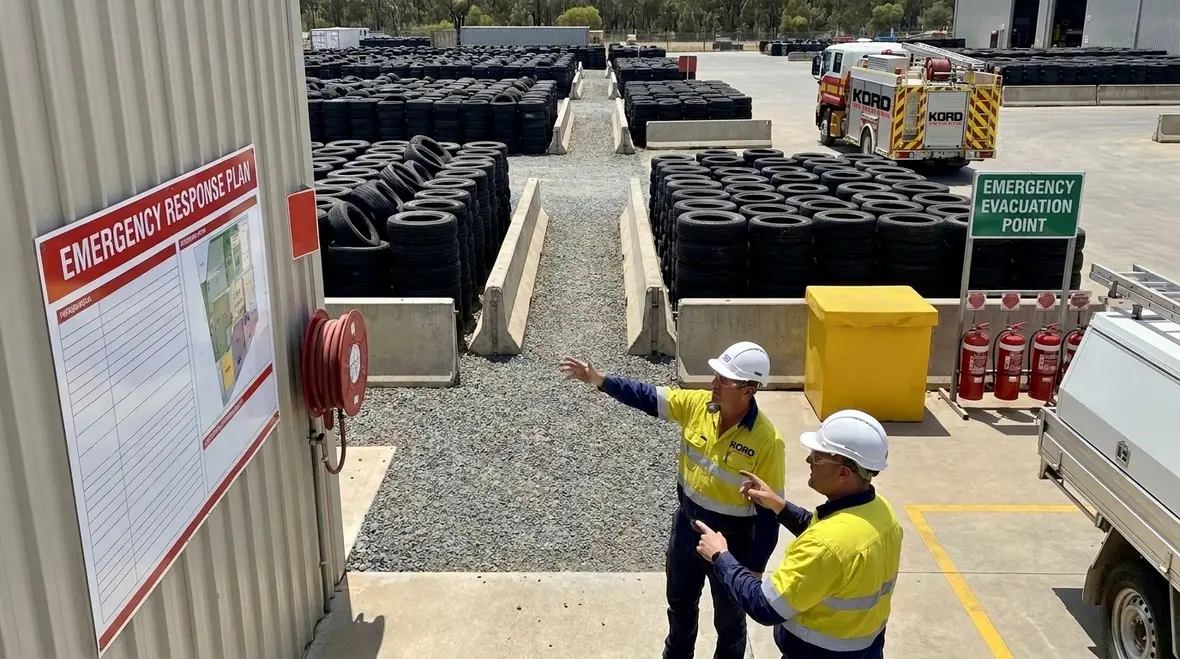
A strong tire storage emergency plan should not sit in a drawer like an old movie prop. It should guide real action. First, it should define who raises the alarm, who calls emergency services, and who takes charge on site. Then, it should explain how to isolate the area, protect people, and stop the fire from reaching other stock or buildings.
It should also cover site maps, access points for fire crews, water supply details, and shut down steps for forklifts, conveyors, or nearby equipment. In addition, it should list the right emergency contacts and the method for moving staff away from smoke and heat. The plan should match the actual storage setup, because a plan written for a small lot will not help much in a large outdoor yard with stacked tires and tight access.
The strongest plans also include trigger points. For example, they define when a minor incident becomes an evacuation event, when operations must stop completely, and when site leadership hands full control to emergency responders. These thresholds remove guesswork. Guesswork is fine for choosing takeaway, but it is not ideal beside a heating tire pile.
Core Elements That Keep the Plan Useful
Alarm activation steps that are simple and immediate
Emergency contact lists that stay updated and visible
Clear command roles for supervisors, wardens, and backup leads
Access maps for fire crews, water points, and hazard zones
Shutdown instructions for nearby plant and vehicle movement
Evacuation routes and muster locations away from smoke spread
Post-incident recording steps for review and improvement
How Tire Fire Response NFPA Guides Fast Action
Tire fire response NFPA guidance focuses on speed, control, and clear roles. That means teams should not waste time debating who does what while the fire grows legs. They should already know the first move, the backup move, and when to hand control to emergency responders.
Key actions often include immediate alarm activation, evacuation of exposed workers, and tight control of the area. Meanwhile, trained staff should avoid unsafe attempts to fight a fire that has already spread beyond a small stage. The goal is simple: protect people first, then protect the site, then protect business continuity. In many cases, that order saves far more than equipment ever could.
Fast action also depends on communication discipline. If radios fail, who switches to mobile calls? If one supervisor is off site, who becomes the fallback lead? If a truck is blocking the preferred entry point, who clears it and how fast? Response plans become stronger when they account for ordinary human messiness, because emergency scenes tend to amplify it with enthusiasm.
What Early Response Should Look Like
The first minutes should be direct and boring in the best possible way. Someone identifies the hazard, raises the alarm, contacts emergency services, and starts evacuation or area isolation according to the site plan. Another trained person meets responders or prepares accurate site information. If everyone knows the script, the response feels less like a scramble and more like a system doing its job.
Sites that already maintain broader fire protection infrastructure often have an advantage here. Kord Fire Protection’s service materials emphasize inspections, testing, maintenance, and readiness support across sprinklers, alarms, extinguishers, fire pumps, and suppression systems, which naturally complements emergency planning and faster coordination during a serious event.
Outdoor Tire Storage Emergency Procedures for Australian Sites
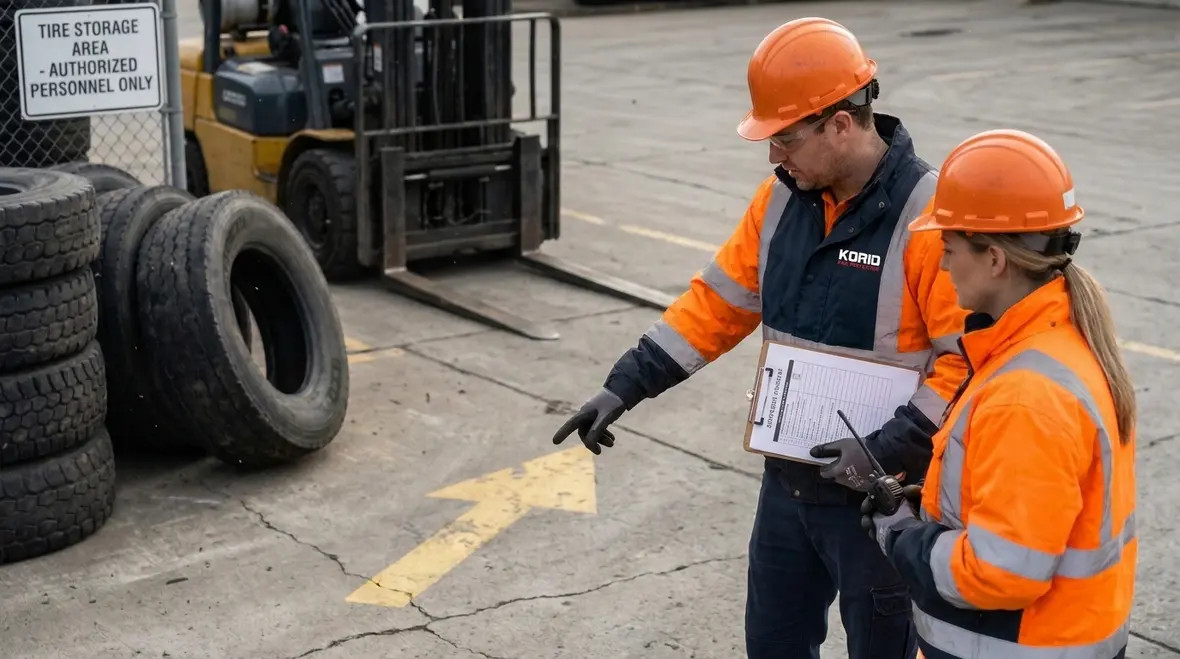
Outdoor tire storage emergency procedures need to fit Australian conditions, where heat, wind, and site spread can turn a small fire into a bigger problem fast. Therefore, the site should keep storage rows separated where possible, maintain clear vehicle access, and avoid blocked exits or cluttered fire routes. Dust, dry grass, packaging waste, and poor housekeeping can all make the situation worse.
Sites should also check how the local water supply and fire response access work during peak operations. If a fire truck cannot reach the hazard, the plan has a weak point. In addition, staff should know the muster area, the communication method, and the trigger for site shutdown. A calm, direct process reduces confusion, and confusion loves a fire scene like a villain loves a sequel.
Environmental conditions matter too. Wind can shift smoke and heat toward occupied zones faster than expected, while dry surroundings can help fire creep into nearby waste, pallets, or vegetation. That means emergency procedures should not only focus on the tire pile itself but also on the exposure risks around it. The wider site is part of the incident whether it volunteers or not.
Interlocking Prevention and Response
Emergency procedures work better when paired with everyday prevention. Good spacing, access control, inspection habits, and clean storage conditions all make the response side easier. This is one reason broader fire code understanding helps. Facilities wanting extra context can also review NFPA 1: A Comprehensive Guide to Fire Prevention and Safety as a supporting resource for the larger compliance picture.
Dual Column Overview of Key Response Priorities
People and Safety
Raise the alarm early
Move workers to a safe area
Keep staff away from smoke and heat
Call emergency services without delay
Property and Continuity
Protect nearby buildings and stored goods
Keep access open for fire crews
Shut down exposed operations
Record incident details for follow up
Why Training and Drills Make the Difference
Even the best tire storage emergency plan fails if no one knows how to use it. That is why regular training matters. Staff should practice alarm steps, area isolation, communication, and evacuation. They should also learn how tire fire response NFPA expectations shape their daily work, not just their emergency day.
Drills help people act faster and think clearer. They also show weak spots in the plan, such as poor radio coverage, blocked exits, or missing contacts. Then the site can fix the issue before a real fire tests it the hard way. After all, practice is cheaper than damage, and it rarely comes with headlines.
Training also builds confidence in the chain of command. When team members trust the procedure, they are less likely to improvise badly under pressure. That does not mean people turn into robots. It means the basics become automatic enough that attention can shift to the real variables on the day. That is exactly where drills earn their keep.
How Kord Fire Protection Can Support This Service
Kord Fire Protection can become a vital partner for sites that store tires across industrial, retail, and commercial settings in Australia. Their team can help develop a practical emergency response approach that aligns with site risks, storage layout, and compliance goals. Just as important, they can support planning, training, and response readiness so the business does not have to build the whole system alone.
With the right support, a site can improve emergency procedures, strengthen response time, and reduce the chance of confusion during an incident. Kord Fire Protection can also help identify gaps in the current setup and guide improvements that match the real world, not just the paperwork world. And as anyone in operations knows, paperwork may look neat, but fire does not care about neat.
That support can connect emergency planning with larger fire protection needs, whether the site needs alarm readiness, suppression strategy, inspection schedules, extinguisher servicing, or a more joined-up maintenance approach. The point is not to make the safety file thicker. The point is to make the site more prepared when response time suddenly becomes the most expensive thing in the yard.
FAQ
Conclusion
For Australian industrial and commercial sites, tire storage fire risk demands more than good intentions. A strong tire storage emergency plan, backed by tire fire response NFPA guidance and tested outdoor tire storage emergency procedures, builds real readiness.
Kord Fire Protection can help turn that plan into action, so the site stays safer, smarter, and far better prepared when every second counts.

Join Our Newsletter!
Get the latest fire safety tips delivered straight to your inbox From our Newsletter.