NFPA 1 Section 11.5: Heating Appliance Fire Safety for Australian Commercial and Industrial Sites
Quick Answer: NFPA 1 Section 11.5 sets a clear path for safer heating appliance use by reducing fire risks from fixed and portable units, poor placement, and bad upkeep. For industrial, retail, and commercial facilities across Australia, it supports safer operations, better compliance habits, and fewer costly shutdowns.
Heating systems may look harmless, yet they can become a serious fire risk when dust builds up, cords run wild, or equipment sits too close to storage. That is where heating appliance fire safety, space heater fire code, and portable heater fire protection come into play. NFPA 1 Section 11.5 gives facilities a practical framework for safer use, and it matters across warehouses, offices, retail floors, plant rooms, and other busy sites where heat and people share the same space. In other words, fire does not care if the heater is “just doing its job.”
Near the start of that planning, many teams also benefit from broader fire protection services that connect inspections, maintenance, detection, and suppression into one cleaner strategy. For readers wanting a wider code context, Kord Fire Protection also offers NFPA 1: A Comprehensive Guide to Fire Prevention and Safety, which pairs naturally with this section and helps put heater controls into the bigger picture.
What NFPA 1 Section 11.5 Means in Practice
NFPA 1 Section 11.5 focuses on heating appliances that can ignite nearby materials, overheat, or fail when poorly maintained. It addresses installation, clearances, approved use, and safe operation. As a result, facilities can reduce the chance of ignition before a small mistake turns into a large incident.
For commercial and industrial sites, this section matters because heating equipment often runs near stock, packaging, tools, staff walkways, and sensitive assets. Moreover, many sites use several heating types at once, which raises the chance of confusion, misuse, or missed maintenance.
Why this matters on real sites
In plain terms, the code asks one simple thing: keep heat where it belongs, and keep fuel away from it. Simple idea. Very unglamorous. Very effective. That practical focus is exactly why Section 11.5 works so well in warehouses, workshops, retail tenancies, plant areas, and office back of house zones. It does not rely on magic. It relies on spacing, sensible setup, and people not treating heaters like decorative furniture with a power cord.
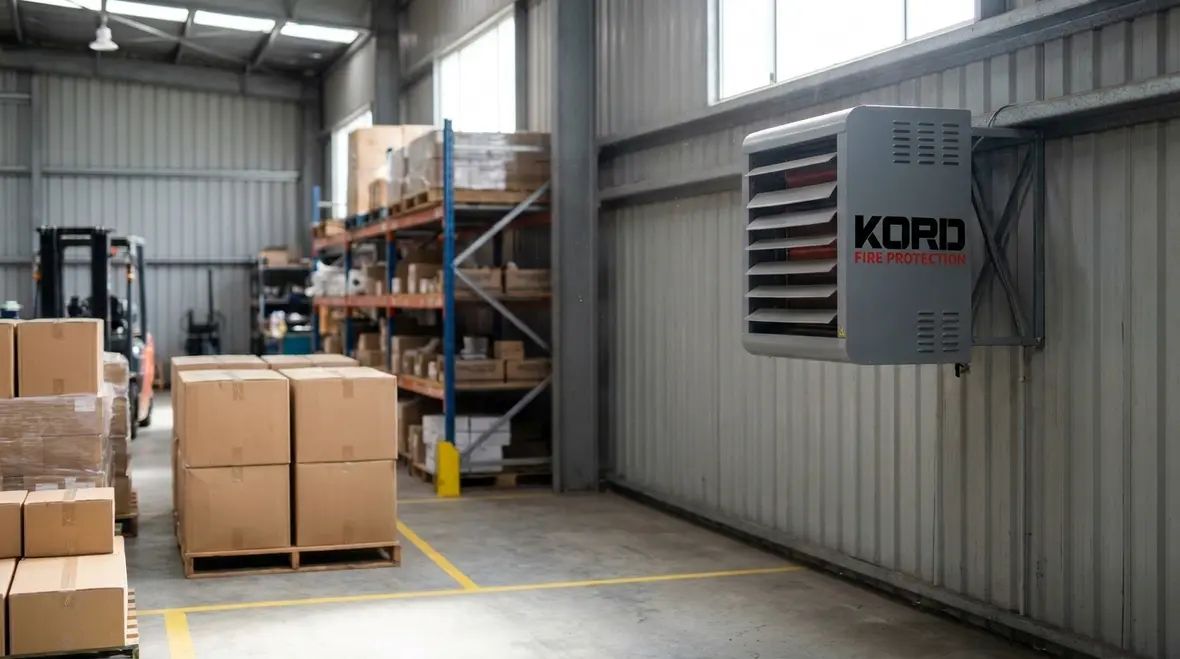
Why Heating Appliance Fire Safety Matters Across Facilities
Heating appliances can create risk in more ways than one. For example, a unit may overheat because of blocked airflow. Also, a damaged cord may arc near combustible material. In addition, dust, lint, cardboard, aerosols, and chemical vapours can all turn a routine heating setup into a fire trigger.
This is especially important in Australia, where facilities often manage large floor spaces, mixed use zones, and changing seasonal demands. Therefore, a site needs more than a “set and forget” mindset. It needs a clear control plan that covers inspection, placement, use, and shutdown.
Common risk points facilities should not ignore
- Heaters placed too close to shelving, stock, curtains, or partitions
- Portable units used without supervision in busy work areas
- Dust and debris collecting around vents and elements
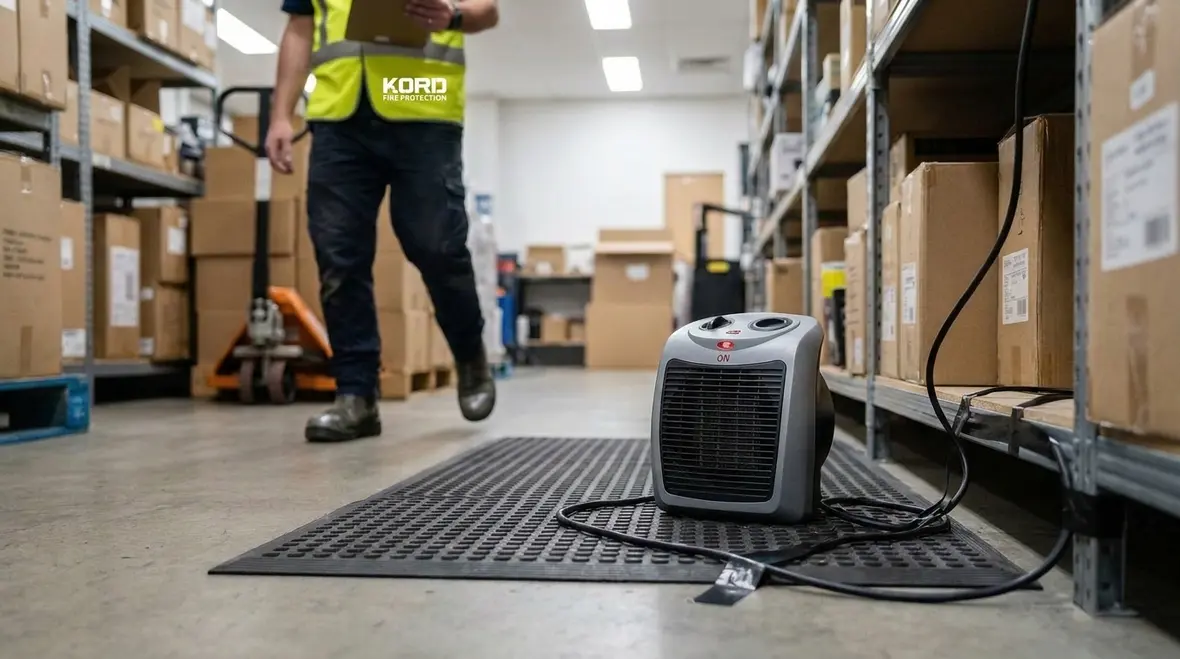
- Poor cable routing across walkways or under temporary fit outs
- Missing service records or ignored warning signs
Each of those points sounds small until it is not. That is the trouble with heater risk. It usually builds quietly, without any dramatic soundtrack or generous warning label floating through the air. One blocked vent, one stack of cartons, one overloaded outlet, and suddenly everybody is having a much worse afternoon than planned.
How the Space Heater Fire Code Guides Safer Use
The space heater fire code approach is all about control. It expects the site to treat portable and fixed heaters as active fire risks, not harmless comfort tools. Therefore, managers should check where the unit sits, what surrounds it, and who can access it.
For commercial sites, safe use often comes down to three things: placement, condition, and supervision. First, the heater must sit with proper clearance. Next, it must remain in good working order. Finally, the area around it must stay clear of clutter, cartons, and other ignition sources.
Placement, condition, and supervision all matter
Also, facilities should review whether the heater type matches the space. A unit that works well in one zone may fail in another. For example, a heater that seems fine in a clean office area may be a poor fit in a dusty workshop or storeroom. The code is not trying to spoil the fun. It is simply trying to stop a bad day from becoming a headline.
This is where policies earn their keep. If a site allows portable heaters, it should define approved models, where they may be used, who signs off on them, and when they must be shut down. Without those rules, heaters tend to wander. And equipment that wanders around a facility with hot surfaces is rarely the start of a great compliance story.
Portable Heater Fire Protection for Busy Operations
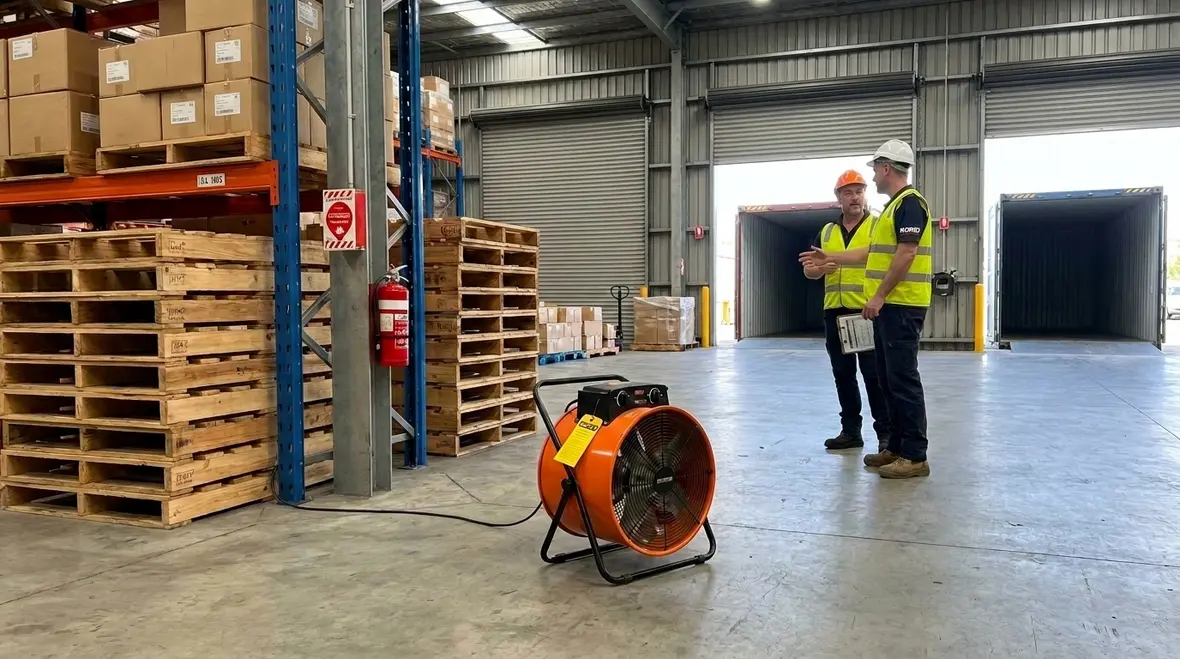
Portable heater fire protection becomes vital where staff move equipment, temporary work zones shift, or weather changes drive sudden heater use. Because portable units can move from one area to another, they need tighter controls than fixed systems.
Facilities should make sure portable heaters do not sit near paper stock, uniforms, chemicals, or packaging lines. Moreover, managers should set rules for after hours use, unattended operation, and device approval. A portable heater may look small, but its risk can be large when it sits beside the wrong material.
Portable units need stricter discipline
Good protection also includes routine checks. Staff should look for damaged plugs, loose fittings, blocked vents, signs of heat stress, and unstable placement. Furthermore, they should report faults quickly instead of waiting for “next week,” which in safety terms often means “right before the problem gets worse.”
Portable heaters also deserve special attention during temporary changes to the workplace. Seasonal stock shifts, pop up workstations, contractor activities, and short term partitions can all change clearances without anyone meaning to create risk. That is why a heater review should not stop at the appliance itself. It should include what moved around it since last week, last shift, or five minutes ago.
What Facilities Should Check During Inspections
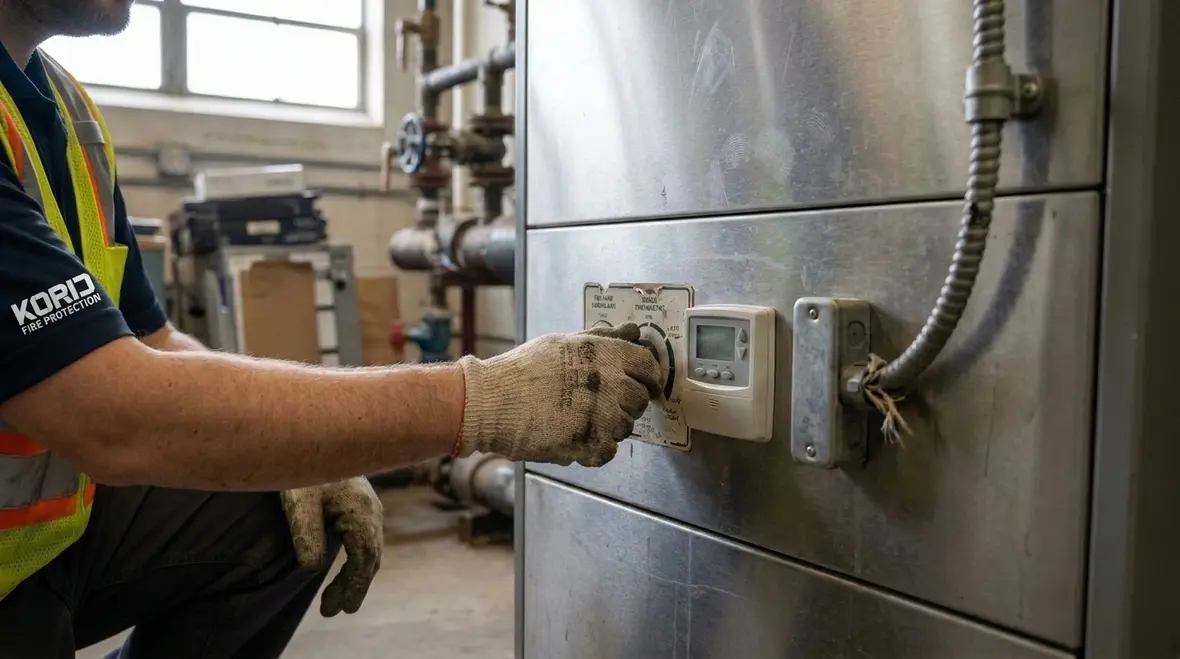
Inspection is where good intent becomes real protection. A site can use a dual focus approach to review both the appliance and the area around it.
Appliance check
- Confirm the heater matches the site use
- Look for damage, wear, or missing parts
- Test controls and shutoff features
- Verify service and test records
Area check
- Keep clear space around the heater
- Remove combustibles and stacked items
- Check for dust, vapour, or heat build up
- Confirm staff can access the unit safely
These checks help facilities catch problems early. In turn, they support compliance, reduce downtime, and protect people who have better things to do than explain a heater incident to the boss.
A strong inspection rhythm also improves documentation. When sites keep records of approval, testing, servicing, and corrective actions, they create a much clearer story of control. That matters during audits, internal reviews, and incident follow up. More importantly, it helps managers spot repeat issues instead of rediscovering the same heater problem every winter like it is some deeply annoying seasonal tradition.
How Kord Fire Protection Supports Compliance and Safety
Kord Fire Protection can become a vital partner for industrial, retail, and commercial facilities that need reliable support with heating appliance fire safety. Their team can help assess risk, improve controls, and strengthen site practices so heating systems do not become hidden fire hazards.
That support may include inspection planning, fire safety advice, maintenance coordination, and practical recommendations for high traffic spaces. Moreover, Kord Fire Protection can help sites align with fire safety expectations while keeping operations smooth and disruption low.
A practical partner beats guessing
For facilities managers, that partnership brings real value. Instead of guessing whether a heater setup meets the mark, they gain clear guidance from people who understand the fire risk picture. As a result, the site gets stronger protection and a better paper trail. Both are useful. One prevents trouble. The other proves someone was paying attention.
That same broader readiness mindset appears throughout Kord Fire Protection’s Australia focused content, including resources on compliance planning, system upgrades, suppression strategy, and coordinated controls across busy facilities. When heater safety is treated as part of the whole fire protection picture rather than a one off comfort issue, decisions become more consistent, hazards are easier to spot, and the site is far less likely to be caught off guard.
FAQ for Heating Appliance Fire Safety
Keep Heating Risks Under Control
Heating appliances should support business comfort, not business chaos. Therefore, facilities across Australia should treat heating appliance fire safety as a working part of their fire plan, not an optional extra. The more consistent the controls, the less likely a small heater issue grows into a shutdown, a damaged asset, or a very awkward investigation.
Kord Fire Protection can help strengthen that effort with practical service, clear advice, and dependable support. For safer sites, the next step is simple: review the risk, fix the gaps, and keep the heat where it belongs. It is not glamorous work, but neither is explaining how a heater defeated the budget, the schedule, and everyone’s patience.

Join Our Newsletter!
Get the latest fire safety tips delivered straight to your inbox From our Newsletter.