Missing Process Safety Information for PHA Reconstruction
Quick Answer: When technical data goes missing, facilities can still meet PHA needs by rebuilding process information from controls, interviews, drawings, photos, maintenance logs, and vendor documents. Teams then validate the rebuilt data against current operations and safe states. Kord Fire Protection’s full fire protection services can help align passive and active fire safety details that often sit beside PHA scope.
Some facilities lose technical data the way people lose chargers: it never happens until it really matters. And when a PHA compliance push lands on a team’s desk, missing or outdated documents can create delays, confusion, and risk. In the first place, the facility must address missing process safety information by reconstructing what the process is, how it operates, and what safeguards prevent escalation. Then, with calm, deliberate method, teams can rebuild process information and complete a practical PHA package that regulators and auditors can follow.
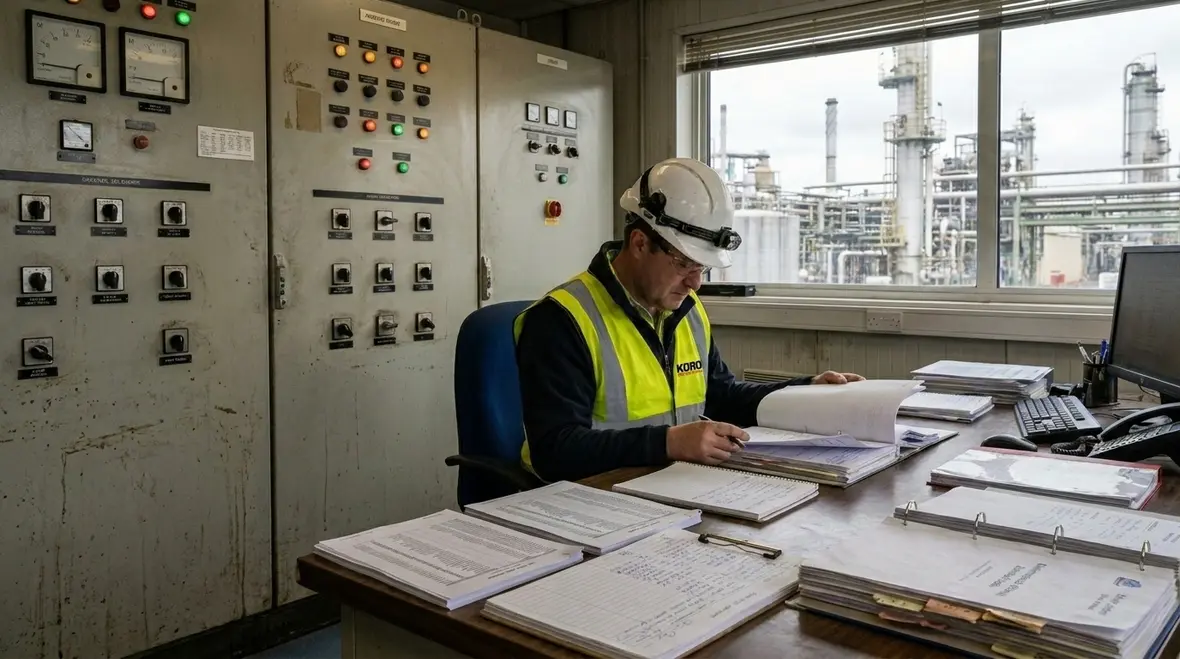
What to do when process records vanish
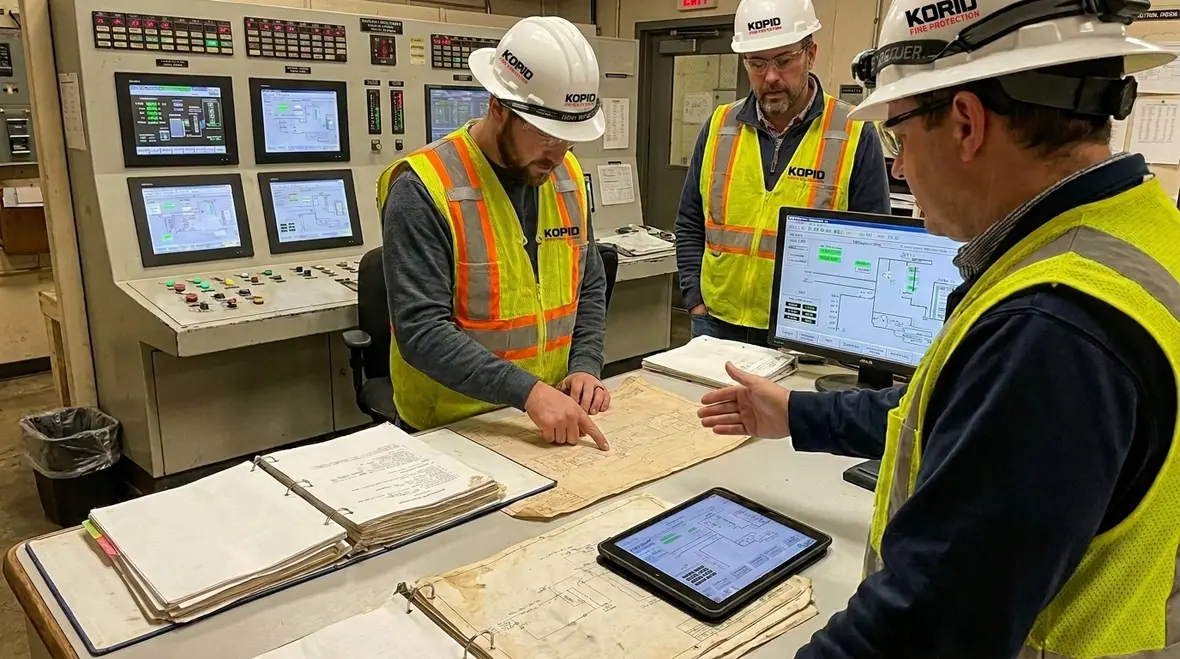
When data disappears, a team should not guess. Instead, it should rebuild the process story with evidence. First, they gather every source that can describe normal operation, abnormal conditions, and shutdown behaviour. Then they map that information to the specific PHA node, unit, or system.
Industrial and commercial sites often have blended records across departments. Therefore, teams must search beyond the obvious file cabinets. Maintenance may hold as found equipment lists, operations may keep shift notes, and HSE may keep older risk registers. In addition, contractors sometimes hold commissioning reports that never made it into the permanent archive. If the only thing left is a blurry photo and a prayer, well, that can still start a reconstruction. But it must get validated before it becomes “official”.
Start with evidence, not assumptions
That distinction matters more than teams sometimes admit. Missing information invites people to fill gaps with memory, habit, or “how it probably works.” Unfortunately, probably is not a control strategy. A useful reconstruction starts by identifying what can be seen, measured, exported, photographed, traced, or confirmed by more than one source. Once that evidence is gathered, the team can begin writing a reliable process baseline instead of building a very polished guess.
Reconstruct process information from what still exists
Reconstruction works best when it follows a simple principle: whoever created the information also left behind some trace. Accordingly, the team builds a structured set of process descriptions from multiple angles.
Key evidence sources to pull immediately
- Control system data: P&ID references, logic diagrams, alarm lists, setpoints, interlock status, and trend exports
- Equipment details: nameplates, maintenance history, manufacturer manuals, spare parts lists, and calibration tags
- Field verification: instrument locations, line sizes, insulation condition, relief device tags, and valve tagging
- Operational memory: shift lead interviews, training materials, and standard operating procedures
- Incident and near miss records: event reports, troubleshooting logs, and corrective action reports
Next, the team turns these pieces into a clean PHA-ready format. That means writing a clear process narrative that covers normal flow, operating modes, and what changes during startups, shutdowns, cleaning cycles, or batch switches. If a site runs multiple product types, they should document how the process configuration changes. Otherwise, the PHA ends up reviewing yesterday’s process, while the facility operates today’s one.
This is also a good point to pull in related fire protection context where it naturally affects hazard review. For facilities dealing with higher consequence areas, industrial fire suppression solutions for real hazards can help teams think through how suppression choices align with actual operating conditions rather than a generic template that looks nice in a binder and does very little in the moment.

Build a PHA compliant node map that auditors can follow
A strong PHA starts with a node map that makes sense. Therefore, the facility should break the system into logical sections such as receiving and transfer, storage, heating or cooling, mixing, filtration, utility tie-ins, and any transfer to downstream equipment.
When documents are missing, the node map must be built from physical layout and control behaviour. For example, if a valve tag exists but the P&ID does not, the team can still identify the function through interlocks, alarm points, and maintenance routines. At the same time, they must capture what happens during loss of power, loss of instrument air, or stuck valve conditions. Those “what if” details matter because they drive the risk review.
To keep this work audit-ready, the team should track evidence per node. In other words, they record which document or field finding supports each statement. This approach reduces the risk of later disputes. And yes, it also saves time when someone asks, “Who decided that?” Usually, it is nobody’s favourite question at a meeting. So, they should plan for it.
Make each node readable to someone new
If an auditor, consultant, or replacement manager cannot follow the logic without a guided tour, the node map is not finished. Each node should tell a small, complete story: what enters, what happens, what controls it, what can fail, and what state the process should reach if something goes wrong. The cleaner that story is, the stronger the later recommendations become.
Validate the reconstructed information against real operations
Rebuilding information is not a paperwork exercise. It needs validation. First, the team checks the reconstructed data against what the plant actually does. Then it confirms that safeguards function as intended.
Validation methods that work well
- Walkdowns: confirm line tags, instrument labels, control cabinet numbering, and relief discharge paths
- Functional tests: verify interlocks, shutdown logic, and alarm response sequences where safe and permitted
- Document triangulation: compare control data with operator notes and equipment manuals
- Gap review: list assumptions, highlight uncertainties, and close them with evidence
- Management review: ensure the reconstructed baseline matches current operating intent
In practice, validation helps catch the silent killers of PHA quality: “as described” versus “as installed.” For example, a relief device tag may exist, but the discharge may have been rerouted. Or an interlock might have been bypassed during a previous outage and never restored. When these gaps show up early, the team fixes them before the PHA team writes recommendations based on the wrong baseline.

Where fire protection details fit into PHA scope
Fire safety systems can quietly sit next to the process hazards, but they do not always get captured in the same way. Therefore, the PHA team should ensure that fire detection, suppression, and firewater arrangements are aligned with the reconstructed process story. This includes how systems respond during credible scenarios, where shutdown affects fire risk, and which barriers limit escalation.
In many sites, passive protection and active fire protection share interfaces with process equipment. For instance, cable routing and control cabinet protection can influence how safely the process transitions during an event. Suppression systems can also influence post-event recoverability, which matters when assessing emergency response actions.
This is where Kord Fire Protection can become a vital partner. They can support the rebuild and validation work by providing current fire protection documentation, system as installed status, and practical insights on interfaces that teams often overlook. Teams that need broader context on fire planning in production environments may also find manufacturing fire suppression planning with Kord Fire Protection useful as a companion resource. Meanwhile, the PHA team maintains process focus and uses that input to refine scenarios, safeguards, and recommendations. In other words, this partner approach reduces the chance that the PHA becomes a “great document” that fails the reality test on the floor.
Turn missing process safety information into a clean compliance package
Once the team reconstructs and validates, it must present the material in a way that supports PHA decisions. This means the facility should maintain a clear trail from evidence to conclusions.
What the compliance package should include
- Reconstructed process description for each node, including operating modes and credible upset conditions
- Evidence register showing where each key statement came from
- Updated instrument and equipment lists aligned to field tags and control system data
- Safeguard overview covering alarms, interlocks, shutdown states, and fire safety interfaces
- Assumption and gap log with actions, owners, and due dates to close uncertainties
- Version control so reviewers know what changed and when
Then, the team uses the reconstructed baseline to run the PHA in a structured way. They record findings, assign actions, and ensure that recommended safeguards are achievable. Also, they confirm that recommendations link back to the hazards and the missing process safety information context. That link matters because it shows the logic behind the risk reduction plan.
For California facilities that need a code reference alongside this work, teams can also review California Title 19 as part of their broader compliance documentation set.
FAQ
Next steps that protect people and timelines
If a facility faces missing records, it can still move forward without chaos. Start by gathering evidence, rebuild the process description by node, validate with walkdowns and safe checks, and document every assumption. Then, align safeguards, including fire protection interfaces, so the PHA reflects real protection. That combination turns a stressful records gap into a manageable project with a visible path forward.
For sites that need a practical partner, Kord Fire Protection can help tighten the safeguards story by supporting documentation alignment, system status review, and the fire protection details that too often get treated like side notes until they are suddenly the main plot. Contact the team to begin an evidence driven reconstruction plan that is useful in meetings, useful on the floor, and much less likely to cause future eyebrow raising.

Join Our Newsletter!
Get the latest fire safety tips delivered straight to your inbox From our Newsletter.