Los Angeles Fire Protection Requirements Guide
In a city where sunshine feels permanent and palm trees sway like they are posing for a postcard, safety often works quietly in the background. Yet beneath the glow of Hollywood lights and glass high rises sits a serious framework known as los angeles fire protection requirements commercial buildings. These rules shape how offices, warehouses, retail centers, and high occupancy spaces operate every single day. They are not suggestions. They are a carefully built system designed to protect lives, property, and business continuity.
Fortunately, property owners do not have to navigate this alone. Kord Fire Protection technicians often explain that compliance is less about red tape and more about readiness. When done right, fire protection becomes invisible, like a great film score. You do not notice it, but you would certainly miss it if it were gone.
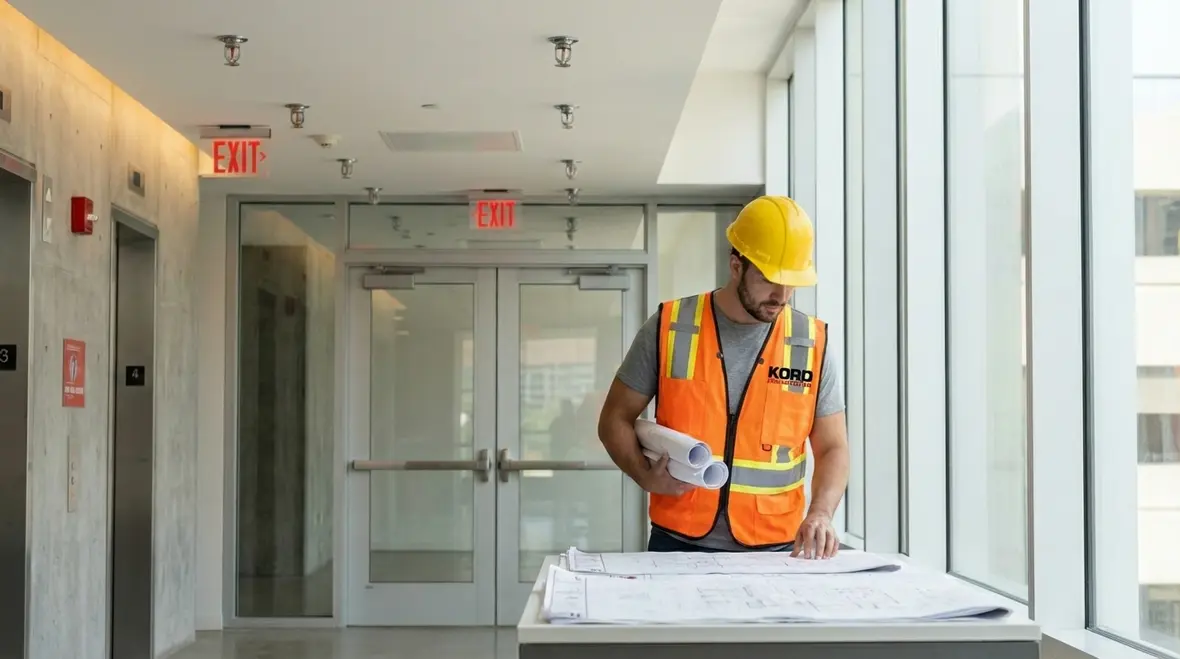
Understanding Fire Protection Requirements for Commercial Buildings in Los Angeles
Los Angeles enforces some of the most detailed fire codes in the country. Because the region faces earthquake risks, dense urban development, and wildfire exposure, the city takes prevention seriously. The Los Angeles Fire Department, along with state authorities, enforces codes based on the California Fire Code and local amendments.
These regulations cover building construction, occupancy type, fire suppression systems, alarms, and emergency planning. Moreover, inspectors look at how a building functions day to day. A sleek office tower in Downtown faces different standards than a warehouse in the San Fernando Valley. Therefore, understanding occupancy classification becomes the first step toward compliance.
Kord Fire Protection technicians often explain that codes act like a script. Each building has a role to play, and the script outlines what safety features must be in place. If a building changes use, such as converting a retail space into a restaurant, the fire protection plan must also change. Ignoring that detail can bring fines faster than a parking ticket on Sunset Boulevard.
For property owners who want a deeper dive into how spacing, clearances, and obstructions affect compliance, the Fire Sprinkler Clearance Requirements Los Angeles guide breaks down how inches of space can make the difference between a sprinkler doing its job and a system falling short.
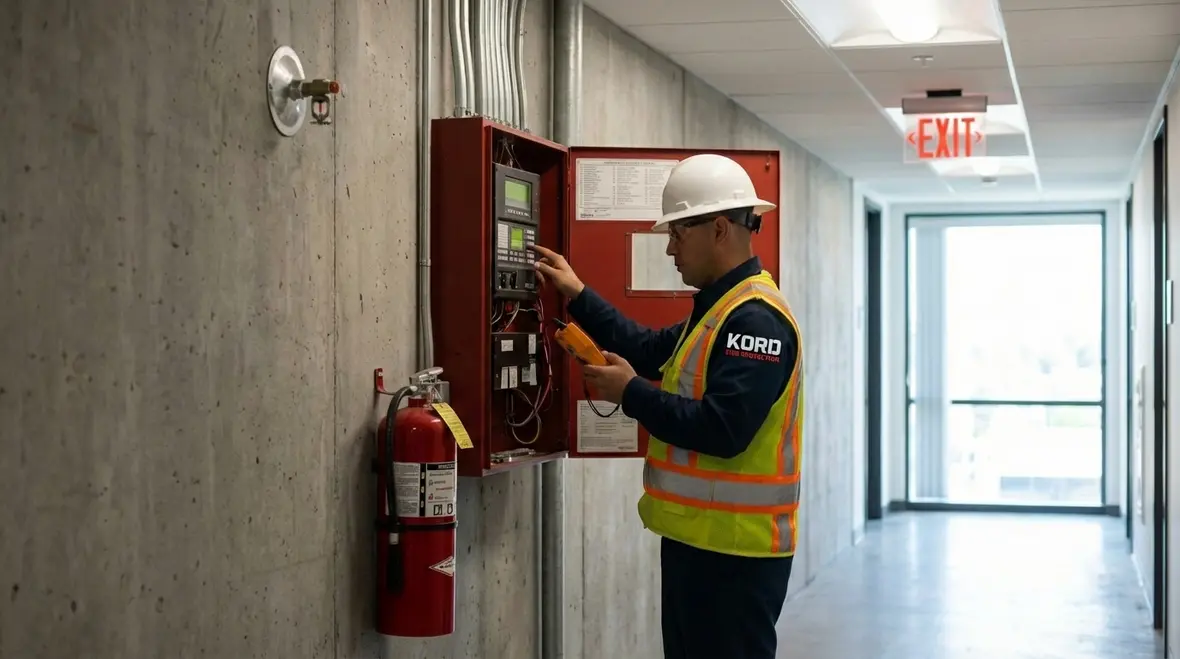
How do commercial buildings in Los Angeles meet fire code requirements?
They start with a clear plan. Architects and engineers design systems that align with city regulations from the earliest blueprint stage. However, compliance does not end when construction wraps up. In fact, it begins a new chapter.
Commercial properties must install and maintain systems such as:
Fire sprinkler systems
These automatic systems detect heat and release water to control flames. Many commercial buildings must have full coverage, while others may require partial systems based on size and occupancy. In many modern projects, concealed options like the self-retracting telescoping fire sprinkler combine aesthetics with code-compliant performance.
Fire alarm systems
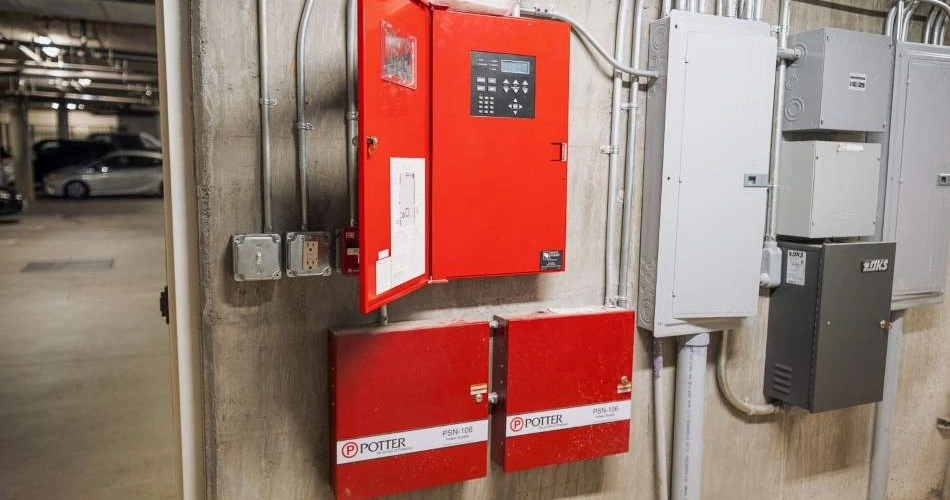
Alarms must include audible and visual signals. They connect to monitoring centers to ensure a quick response, especially in a dense city where seconds matter more than square footage.
Fire extinguishers
Strategically placed extinguishers must match potential fire hazards. For example, kitchens require different units than office spaces. Regular service is critical; if you are unsure about the timelines, Kord’s guide on how often a fire extinguisher needs to be serviced walks through real world examples.
Emergency lighting and exit signage
When power fails, these systems guide occupants safely out of the building. Clear, illuminated pathways become the difference between confusion and calm during an evacuation.
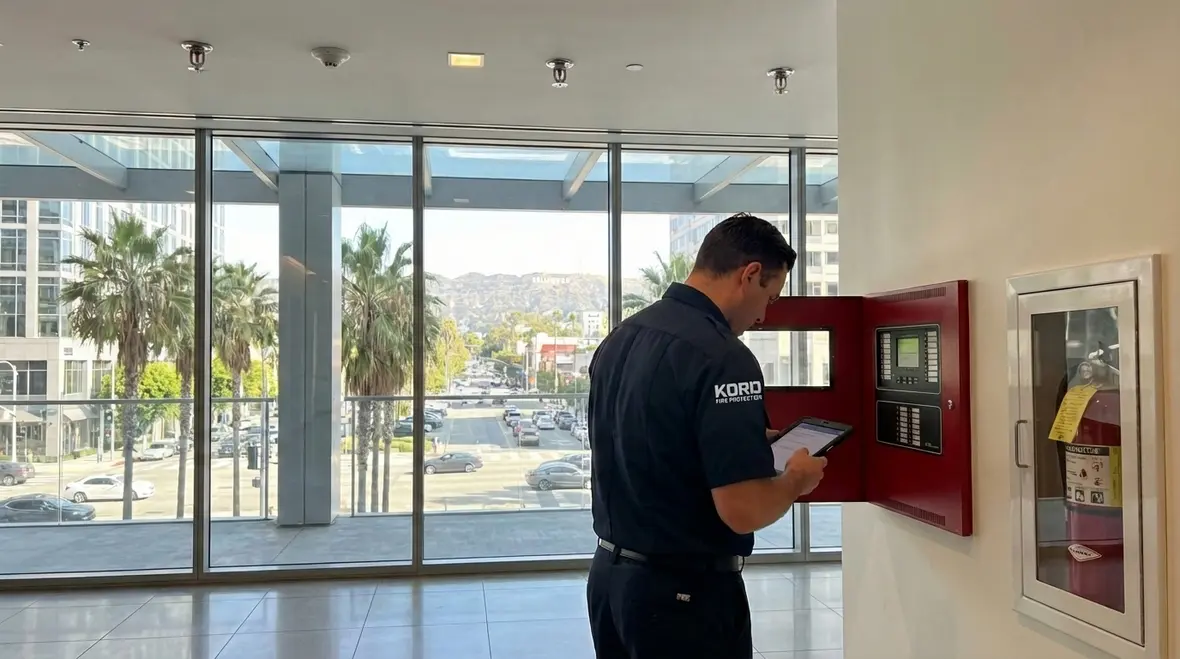
Additionally, regular inspections and testing keep these systems reliable. Kord Fire Protection technicians explain that maintenance is not optional. Sprinkler heads can corrode, batteries can fail, and alarms can malfunction. Routine service keeps small problems from turning into major disasters.
Sprinkler Systems and Water Supply Standards
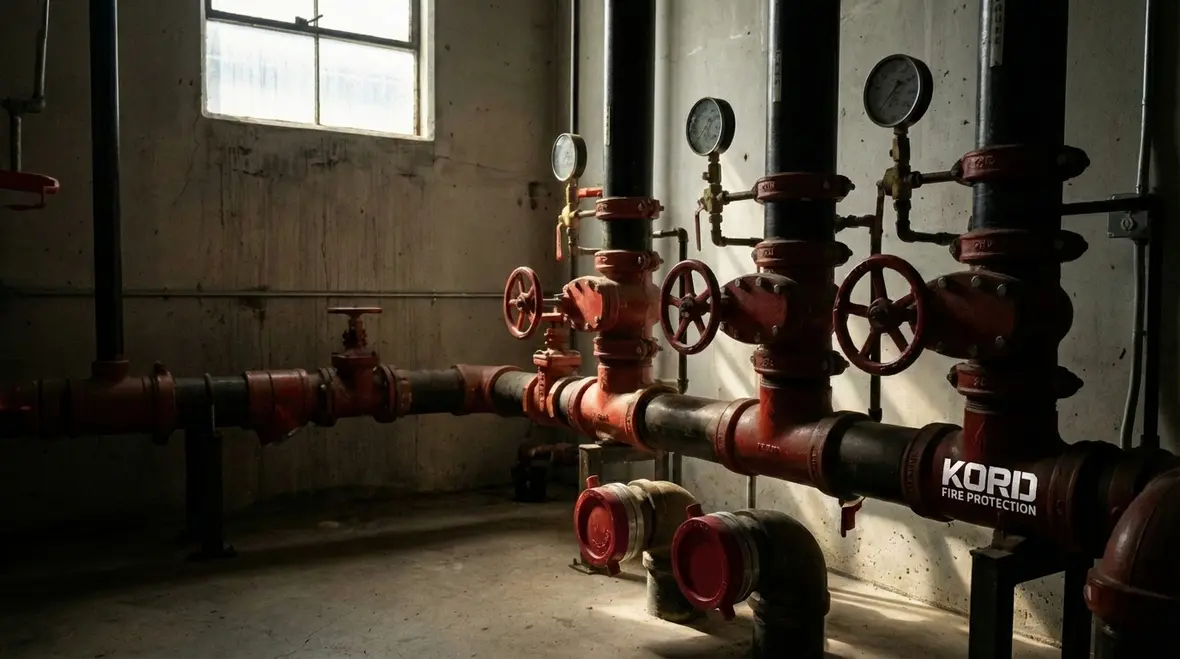
Water remains the hero in most commercial fire scenarios. Therefore, the city enforces strict rules for sprinkler design, installation, and water supply. High rise buildings often require standpipe systems that allow firefighters to connect hoses on multiple floors. Meanwhile, warehouses may need higher density sprinkler coverage due to storage hazards.
Furthermore, water flow testing ensures adequate pressure. A building may look impressive from the outside, but if the water supply cannot support the sprinkler demand, it fails compliance. Technicians measure flow rates, check backflow prevention devices, and verify that valves remain accessible and functional.
Kord Fire Protection technicians often describe sprinkler systems as silent guardians. They wait patiently, sometimes for decades. Yet when activated, they respond within seconds. That speed saves lives and reduces property damage dramatically. It also keeps insurance providers happy, which tends to make property owners smile.
Beyond the sprinklers: standpipes and pumps
In multi story and high rise properties, standpipe systems and fire pumps act as the backbone of water delivery. If you manage a taller structure in LA, exploring dedicated resources on standpipe systems and Regulation 4 fire pump testing can clarify exactly how your building is expected to perform during an emergency.
Fire Alarms, Monitoring, and Emergency Communication
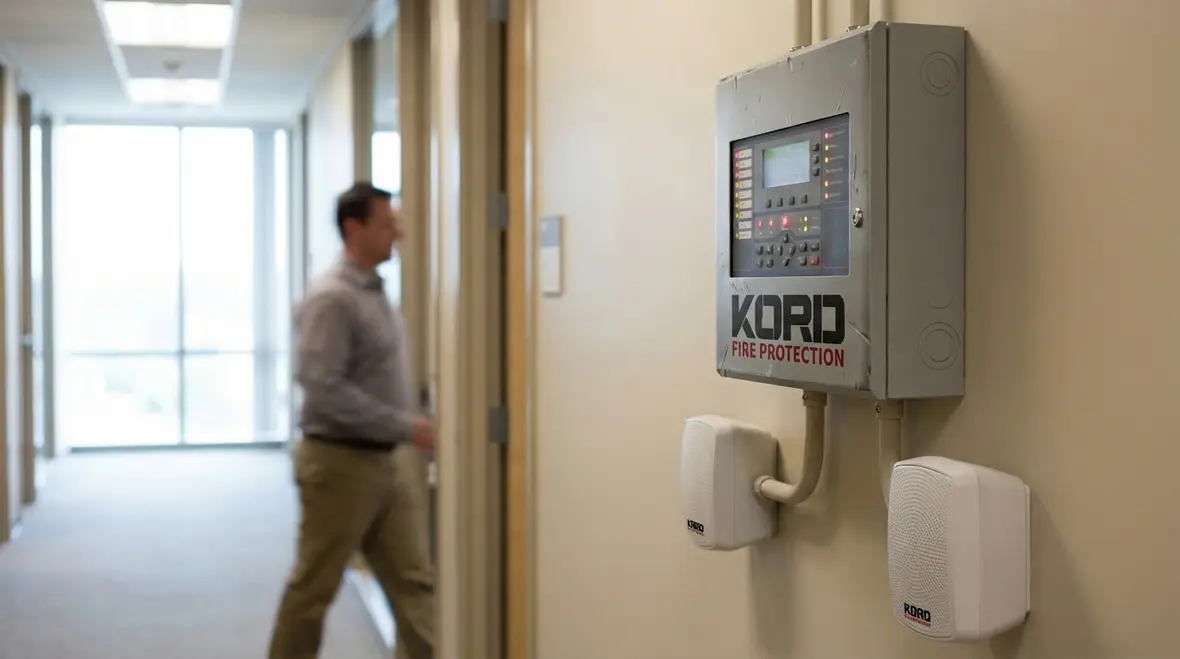
While sprinklers fight flames, alarms alert people. In commercial settings, time matters. Therefore, Los Angeles requires many buildings to connect fire alarm systems to a central monitoring station. Once triggered, the signal reaches emergency responders quickly.
Modern systems often include voice evacuation features. Instead of a simple bell, occupants hear clear instructions. This proves especially useful in large complexes such as shopping centers or office towers. Clear guidance reduces panic and speeds evacuation.
Moreover, regular testing ensures devices function correctly. Smoke detectors, pull stations, control panels, and notification appliances must undergo scheduled inspections. Technicians document each visit, because records demonstrate compliance during city inspections.
It may not feel glamorous. No one brags about their state of the art alarm panel at dinner parties. However, when an emergency strikes, that panel becomes the star of the show.
Dual Focus: Life Safety Systems and Structural Protection
Fire protection in commercial buildings balances two primary goals. On one side stands life safety. On the other stands property preservation. Although they work together, each has distinct requirements.
Life Safety Systems
- Clearly marked exits and unobstructed pathways
- Emergency lighting with battery backup
- Fire rated doors and walls to slow flame spread
- Occupant load limits and posted signage
Structural Protection Measures
- Fire resistant building materials
- Protected steel elements in high rise structures
- Compartmentalization to contain fire zones
- Smoke control systems in large buildings
Because Los Angeles includes many multi story and mixed use properties, compartmentalization plays a critical role. By dividing a structure into fire rated sections, designers prevent rapid spread. In effect, the building buys time for occupants to exit and firefighters to respond.
Kord Fire Protection technicians explain these layers like a well built fortress. First, detect the threat. Next, alert occupants. Then, suppress the flames. Finally, contain the damage. Each layer strengthens the next.
Inspections, Permits, and Ongoing Compliance
Compliance does not end after installation. In fact, routine inspections form the backbone of los angeles fire protection requirements commercial buildings. The city mandates periodic testing for sprinklers, alarms, extinguishers, and standpipes. Some inspections occur annually, while others follow quarterly or multi year schedules.
Additionally, businesses must obtain permits for system modifications. Renovating an office layout or adding storage racks may alter fire risk. Therefore, updates often require plan review and approval from the fire department.
Kord Fire Protection technicians frequently remind property managers that documentation matters. Inspectors review service tags, testing reports, and maintenance logs. Organized records show diligence. Missing paperwork, on the other hand, invites scrutiny.
Although inspections can feel stressful, they serve a clear purpose. They confirm that systems work when needed. In a city where traffic already moves slowly, no one wants emergency response delayed by preventable failures.
Chief’s Regulation 4 in Los Angeles
For many LA properties, Chief’s Regulation 4 testing adds another layer of oversight. From full system evaluations to specific services like Regulation 4 testing, owners must schedule and document these exams to avoid fines, closures, or last minute scramble when the fire department visits unannounced.
Special Considerations for High Risk Commercial Occupancies
Not all commercial buildings carry the same level of fire risk. Restaurants handle open flames and grease laden vapors. Manufacturing facilities may store chemicals. Entertainment venues host large crowds in confined spaces. Consequently, the city applies added safeguards.
Commercial kitchens must install hood suppression systems designed to extinguish grease fires quickly. These systems require semi annual inspections. Meanwhile, facilities storing flammable liquids must follow strict storage and ventilation rules.
Large assembly spaces, such as theaters or event halls, must calculate occupant loads carefully. Exits must support quick evacuation. Additionally, crowd management plans help prevent bottlenecks during emergencies.
Kord Fire Protection technicians often use a simple analogy. A small office fire is like a candle tipping over. A packed concert venue, however, resembles a scene from an action movie. The stakes rise quickly. Therefore, preparation must rise with them.
Why Professional Guidance Makes Compliance Simpler
Navigating city codes alone can feel overwhelming. However, experienced professionals translate technical language into practical steps. They assess building layouts, identify gaps, and recommend solutions that align with budget and regulations.
Moreover, professionals stay updated on code changes. Fire regulations evolve as technology improves and risks shift. What passed inspection ten years ago may not meet current standards. Staying proactive protects both occupants and investments.
Kord Fire Protection technicians take time to explain not just what the code requires, but why it exists. That understanding empowers property owners to make informed decisions. Instead of viewing compliance as a burden, many begin to see it as smart risk management.
FAQ About Commercial Fire Protection in Los Angeles
Building Confidence Through Compliance
Meeting fire code standards does more than satisfy regulations. It protects employees, customers, and long term business goals. In a region known for ambition and innovation, safety forms the quiet foundation beneath every success story.
Property owners who invest in proper systems, routine inspections, and expert guidance position themselves for stability. Kord Fire Protection technicians stand ready to explain requirements clearly and keep systems operating at peak performance.
If you are unsure where to start, connecting with a full service team that understands local codes, Chief’s Regulation 4, and complex occupancies can simplify everything. Explore Kord Fire’s Los Angeles fire protection services to map out design, installation, testing, and maintenance that fit your building and budget.
Connect with a trusted professional today and ensure your commercial building stands prepared, compliant, and confidently protected for whatever tomorrow brings.
Know Your Weapon Before You Fight the Flame
Kord Fire Protection is your go-to when it comes to all things fire protection. For over 20 years, we’ve been serving Southern California with the quality service and equipment to keep your home or business safe at all times. Our competitive prices reflect our unwavering commitment to protecting what matters most in the event of a fire emergency. Give us a call, send an email, or use that form!

Join Our Newsletter!
Get the latest fire safety tips delivered straight to your inbox From our Newsletter.