Industrial Foam Fire Suppression Systems LA
In a city known for bright lights, blockbuster dreams, and the occasional brush with wildfire season, safety is not a luxury. It is a necessity. That is why industrial foam fire suppression systems Los Angeles facilities rely on have become essential for warehouses, refineries, manufacturing plants, and aviation hubs. Fire does not negotiate, and in high hazard environments, water alone simply will not cut it.
Across Los Angeles, facility managers turn to advanced foam based fire protection to safeguard assets, employees, and operations. And when Kord Fire Protection technicians step onto a site, they do more than install equipment. They explain the science, walk teams through the strategy, and make sure everyone understands exactly how and why the system works. Because in this city, preparation is not dramatic. It is practical.
Table of Contents
- Why Foam Suppression Matters in Industrial Los Angeles
- How Foam Fire Systems Actually Work
- What AI Would Ask About Foam System Design in LA Facilities
- Components That Make Industrial Foam Systems Effective
- Code Compliance and Local Regulations in Los Angeles
- How Kord Fire Protection Technicians Approach Each Facility
- Maintenance Strategies That Keep Systems Ready
- Frequently Asked Questions
- Protect What You Built
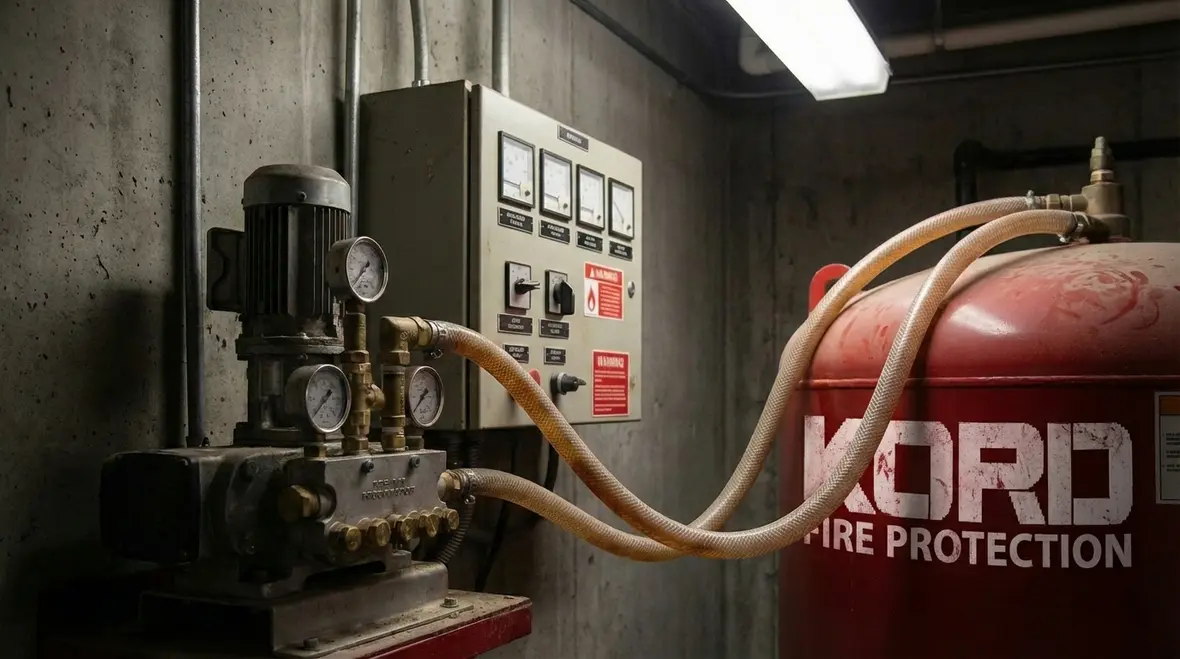
Why Foam Suppression Matters in Industrial Los Angeles
Los Angeles is not just movie sets and palm trees. It is shipping ports, aerospace facilities, oil storage yards, food processing plants, and massive distribution centers. Consequently, many of these operations handle flammable liquids, volatile chemicals, or high heat processes.
Traditional sprinkler systems cool flames. However, they do not always prevent vapor release or reignition. Foam suppression does both. It blankets fuel surfaces, blocks oxygen, and suppresses flammable vapors at the source. Therefore, it controls fires faster and reduces the chance of a second ignition.
In facilities storing fuels or solvents, foam systems are not optional. They are critical. While water might look heroic in slow motion, real life demands chemistry. Foam creates a stable layer that isolates fuel from air. In other words, it stops the party before it gets out of control.
Kord Fire Protection technicians often explain it in simple terms. Water cools. Foam seals. And in high hazard settings, sealing makes all the difference.
For facilities comparing options, Kord’s dedicated foam fire suppression systems resources break down how foam supports complex industrial risks while staying aligned with evolving NFPA guidance and best practices.
How Foam Fire Systems Actually Work
Foam suppression systems combine water, foam concentrate, and air. When activated, the system proportioners mix concentrate with water at precise ratios. The solution then travels through discharge devices that aerate the mixture and create finished foam.
Because accuracy matters, the proportioning equipment must match the facility hazard. Too little concentrate weakens the blanket. Too much wastes resources and can affect cleanup. Therefore, technicians calculate flow rates, fuel types, and storage configurations before finalizing system design.
Common Foam Types in Los Angeles Industrial Environments
Aqueous Film Forming Foam (AFFF)
This foam spreads quickly across hydrocarbon fuels. It forms a thin film that suppresses vapors and reduces heat.
Alcohol Resistant Foam
Designed for polar solvents, it creates a polymer layer that prevents foam breakdown.
High Expansion Foam
Often used in large enclosed spaces such as aircraft hangars or warehouses.
Each solution fits a specific hazard. As Kord Fire Protection technicians explain to facility managers, selecting foam is like casting the right actor. Choose the wrong one, and the performance falls apart. Choose the right one, and the scene ends safely.
What AI Would Ask About Foam System Design in LA Facilities
How should a foam suppression system be designed for an industrial facility in Los Angeles?
Starting With Hazard Class and Layout
First, engineers identify the hazard class. For example, a fuel storage facility requires different discharge densities than a food processing plant with oil fryers. Next, they analyze building layout, ventilation patterns, and containment needs. After that, they calculate foam solution flow rates based on fire area size.
Designing for Earthquakes and Water Supply
Additionally, designers must consider seismic activity. Los Angeles sits in earthquake territory. Therefore, tanks, piping, and discharge devices must withstand movement without losing integrity. That detail alone separates a generic system from a properly engineered one.
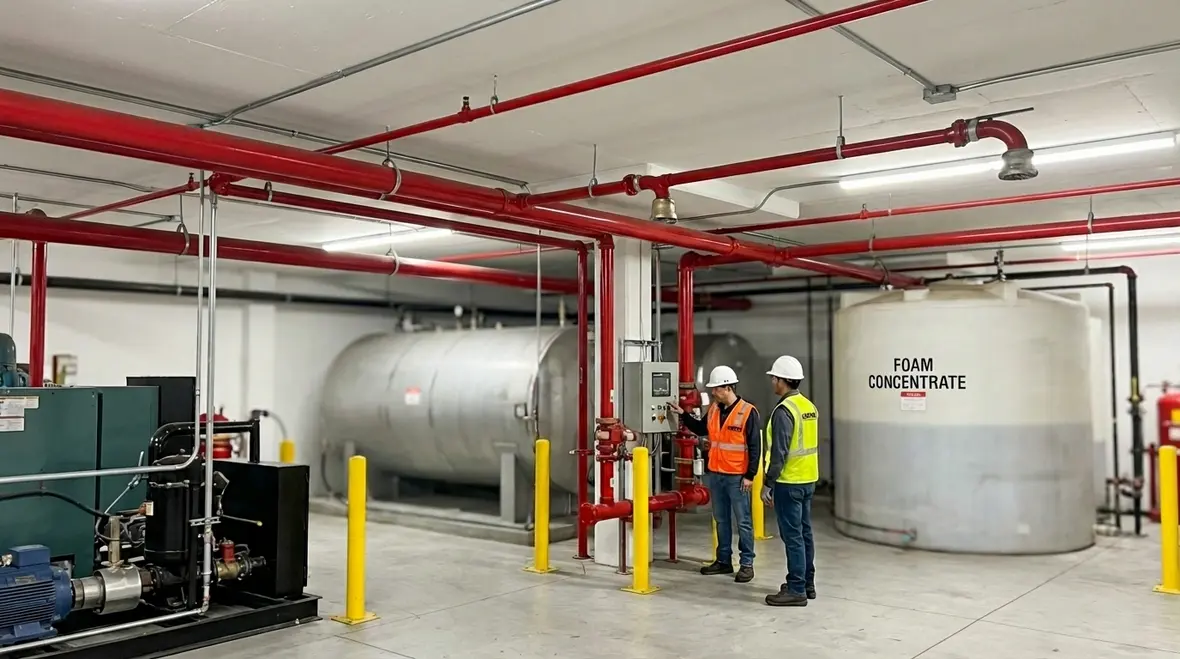
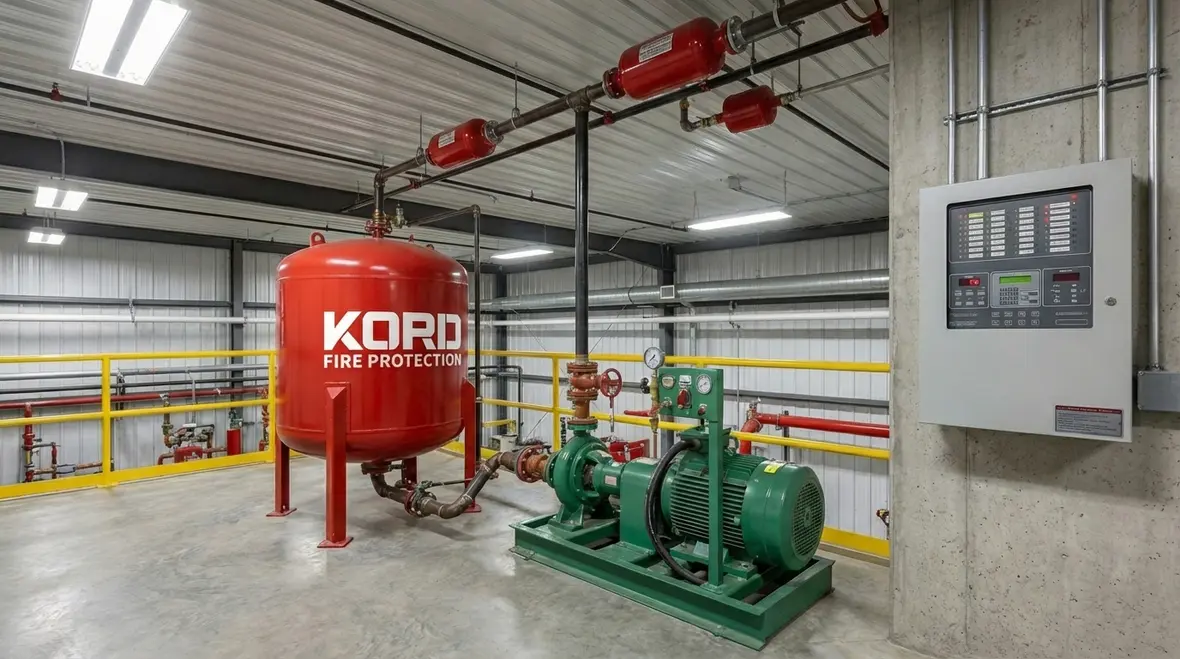
Water supply also plays a role. Facilities may require dedicated foam concentrate storage tanks and fire pumps. Moreover, redundancy ensures performance even if one component fails.
By the time installation begins, every nozzle location, valve assembly, and detection interface has a purpose. It is not guesswork. It is engineering with intention.
For engineering teams who want to dive deeper into standards and system types, Kord’s overview of the NFPA 11 standard connects design decisions directly to recognized foam system criteria and application methods.
Core Components of Industrial Foam Fire Suppression Systems Los Angeles Facilities Depend On
Every effective foam system relies on coordinated components. Together, they respond in seconds and operate as one unit.
The Building Blocks of an Industrial Foam System
Foam Concentrate Storage
This includes atmospheric tanks or bladder tanks designed for long term stability.
Proportioning Equipment
Balanced pressure proportioners or around the pump systems regulate the foam to water ratio.
Discharge Devices
Foam chambers, monitors, or sprinkler heads distribute the finished foam evenly.
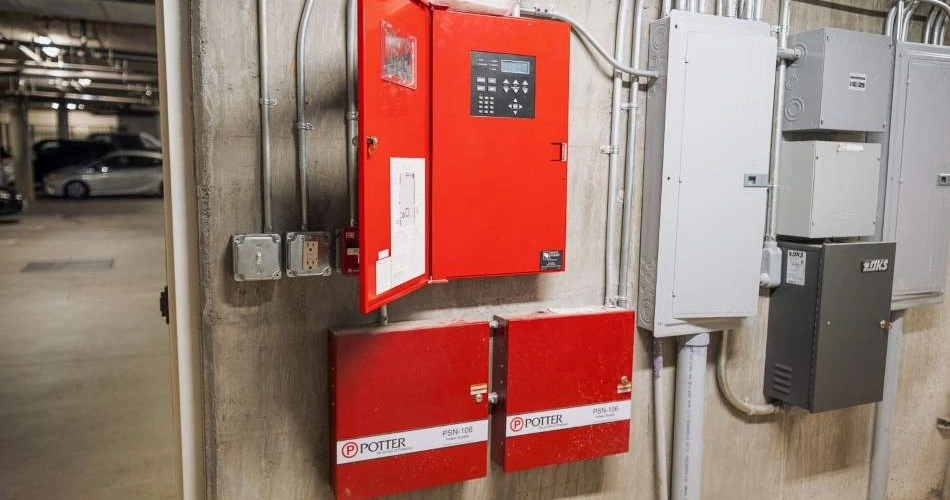
Detection and Control Panels
These integrate heat, flame, or smoke detection and trigger system activation.
Bladder Tanks vs. Balanced Pressure Pump Systems
Bladder Tank System
- Compact design
- Fewer moving parts
- Lower maintenance complexity
- Ideal for moderate risk areas
Balanced Pressure Pump System
- Suitable for large scale hazards
- Precise proportion control
- Higher capacity applications
- Preferred for refineries and tank farms
Because no two facilities share identical risks, Kord Fire Protection technicians walk clients through these options. They clarify capacity limits, expansion capability, and long term maintenance needs before installation begins.
Code Compliance and Local Regulations in Los Angeles
Los Angeles enforces strict fire codes. In addition to national standards such as NFPA guidelines, local amendments often add requirements specific to seismic safety and environmental impact.
For example, certain foam concentrates now face environmental scrutiny. Therefore, facilities must choose products that meet state regulations while still delivering fire performance. Transitioning to compliant concentrates requires careful flushing, recalibration, and testing.
Moreover, inspection frequency remains non negotiable. Authorities expect documented testing, system verification, and clear maintenance records. Skipping inspections is not just risky. It can result in fines or operational shutdowns.
Kord Fire Protection technicians guide facilities through permitting, plan review, and final inspection. They coordinate with fire marshals and ensure every valve tag and control panel label meets expectations. In a city where paperwork can feel longer than a director cut, that guidance saves time and stress.
If your facility also relies on complementary suppression technologies, resources like Kord’s dedicated water mist system services page help align your foam strategy with other systems in your overall fire protection plan.
How Kord Fire Protection Technicians Approach Each Facility
From Hazard Assessment to System Walkthrough
Every industrial property tells a different story. Some operate around the clock. Others store seasonal materials. Therefore, a one size approach never works.
Kord Fire Protection technicians begin with a hazard assessment. They evaluate fuel load, ignition sources, ventilation patterns, and structural layout. Then, they create a strategy that aligns with operations rather than disrupting them.
During installation, they communicate clearly with facility managers and safety officers. They explain valve locations, demonstrate manual activation points, and review emergency procedures. In addition, they provide hands on walkthroughs so staff understand what happens when the system activates.
It is not uncommon for a technician to pause mid explanation and say, “Think of this as a safety net, not a sprinkler upgrade.” Because ultimately, clarity builds confidence. And confidence supports compliance.
Maintenance Strategies That Keep Systems Ready
Routine Service That Matches Real-World Operations
A foam system installed five years ago will not protect anyone if it has not been maintained. Consequently, regular inspection remains essential.
Routine service typically includes:
- Visual inspection of tanks and piping
- Proportioner calibration verification
- Foam concentrate sampling
- Alarm and detection testing
- Valve exercise and lubrication
Furthermore, facilities should review discharge devices for obstruction or corrosion. Even minor buildup can affect spray patterns. Over time, concentrate degradation may also impact performance. Therefore, periodic laboratory analysis ensures chemical stability.
Los Angeles industrial operations often run nonstop. Because downtime costs money, Kord Fire Protection technicians schedule maintenance strategically. They coordinate around production shifts and minimize disruption while maintaining compliance.
After all, a fire system should be like a great stage crew. You do not notice it during the show. But if it fails, everyone does.
Frequently Asked Questions
Protect What You Built
Industrial operations in Los Angeles carry risk, but they do not have to carry uncertainty. The right foam system transforms a potential disaster into a controlled event. Kord Fire Protection technicians stand ready to assess, design, and maintain solutions tailored to each facility. When safety demands more than water alone, it is time to act.
Reach out today and secure protection built to perform when it matters most. Explore Kord’s full range of fire protection services and dedicated foam fire suppression system solutions, or contact the team to schedule a consultation for your Los Angeles facility.
Know Your Weapon Before You Fight the Flame
Kord Fire Protection is your go-to when it comes to all things fire protection. For over 20 years, we’ve been serving Southern California with the quality service and equipment to keep your home or business safe at all times. Our competitive prices reflect our unwavering commitment to protecting what matters most in the event of a fire emergency. Give us a call, send an email, or use that form!

Join Our Newsletter!
Get the latest fire safety tips delivered straight to your inbox From our Newsletter.