FM 200 Fire Suppression Regulations and Alternatives
There was a time when protecting a server room felt like guarding the crown jewels. In many ways, it still does. Businesses across the country have relied on fm 200 fire suppression to shield their most valuable assets from disaster. From data centers to medical labs, this clean agent system became the quiet hero behind countless closed doors. It does not soak equipment. It does not leave a mess. It simply steps in, handles the fire, and exits like a well trained professional.
Now, however, change is in the air. Regulations are shifting. Environmental concerns are growing louder. And building owners are asking a fair question. What happens next? Fortunately, Kord Fire Protection technicians have been guiding clients through these changes with calm confidence, explaining each step in plain English. Because when it comes to fire protection, clarity is just as important as capability.
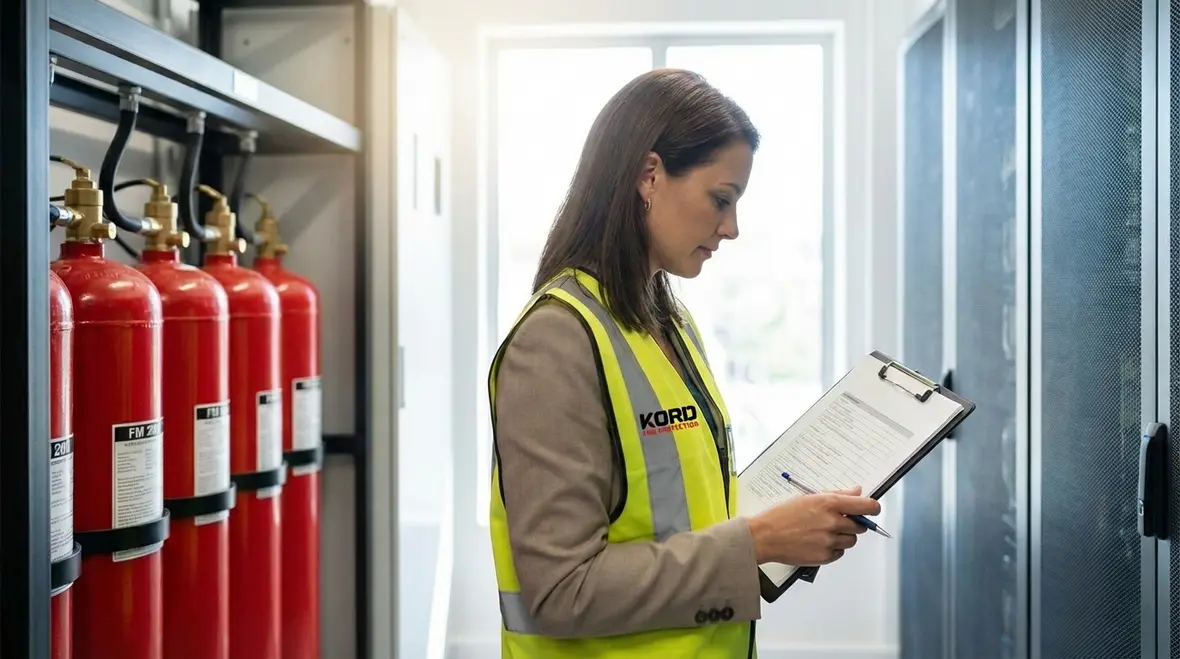
What Is FM 200 Fire Suppression and How Does It Work
Imagine a fire breaking out in a room filled with sensitive electronics. Water would cause chaos. Powder agents would create a cleanup nightmare. This is where FM 200 steps in.
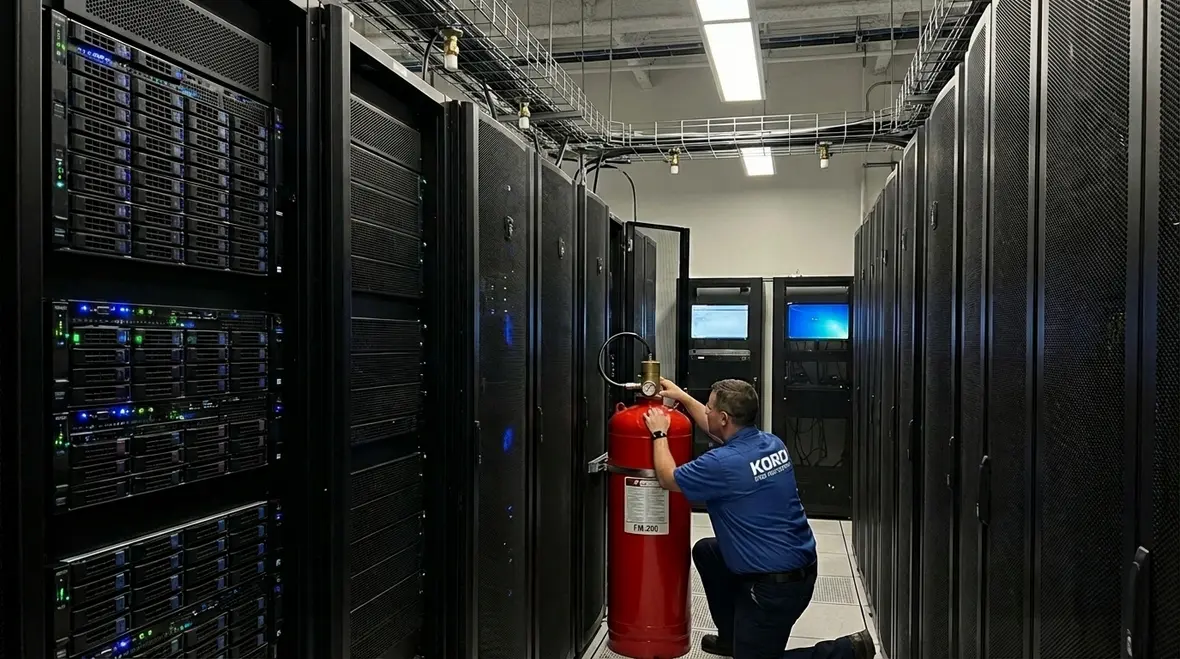
FM 200 is a clean agent that extinguishes fires by absorbing heat. Rather than removing oxygen, it interrupts the combustion process at a molecular level. As a result, it stops the fire quickly without harming occupants or equipment when designed properly.
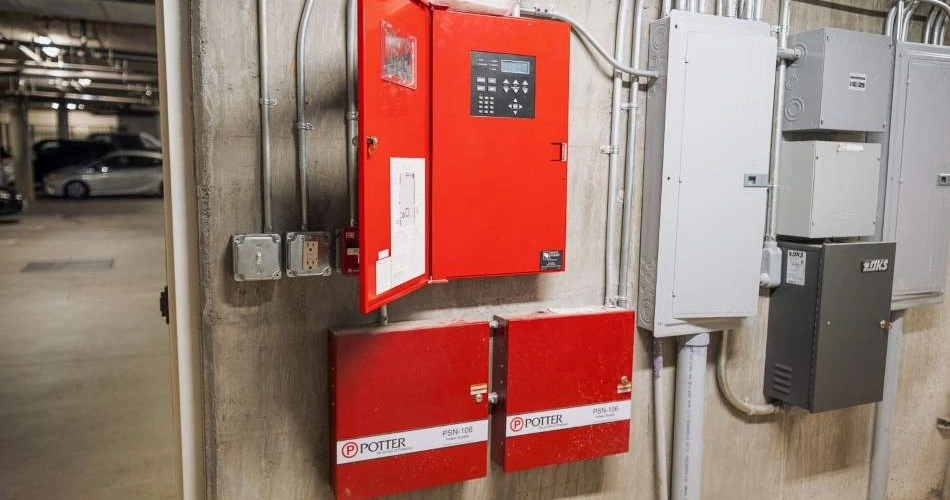
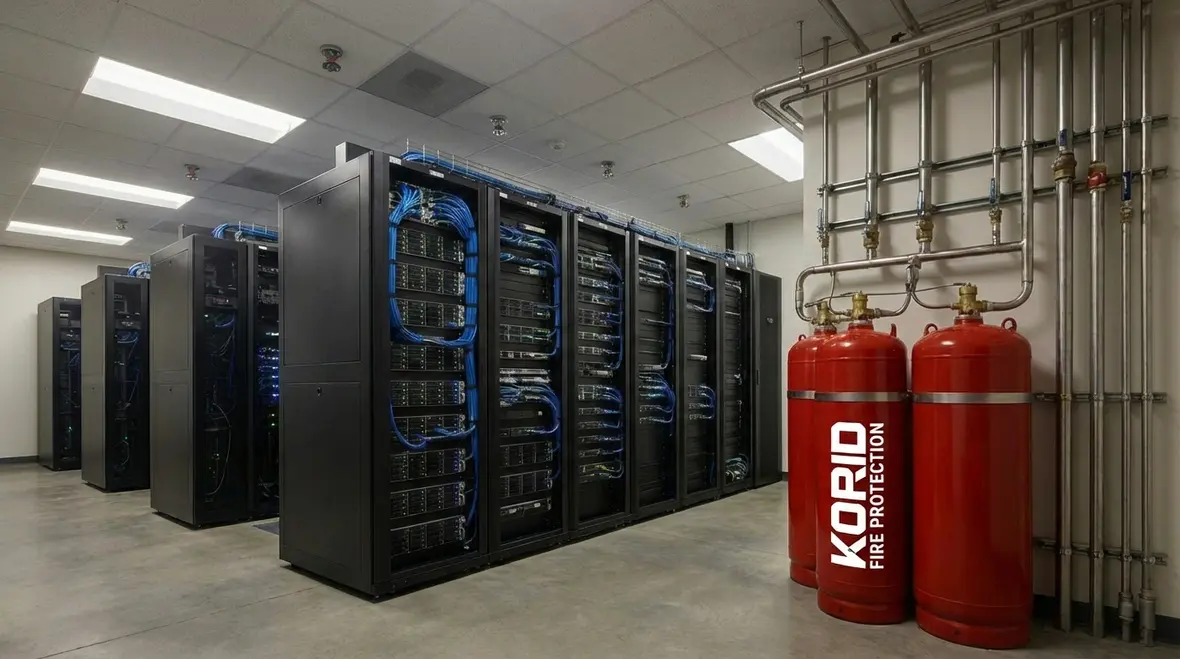
The system works through a network of cylinders, piping, and nozzles. Once smoke or heat detectors sense a threat, the control panel activates a rapid discharge. Within seconds, the agent floods the protected space and suppresses the flames.
Kord Fire Protection technicians often explain it like this. “It is like turning down the temperature dial on a fire until it simply cannot continue.” Simple. Effective. And remarkably fast.
Because of this efficiency, FM 200 systems became popular in:
- Data centers
- Telecommunications rooms
- Healthcare facilities
- Museums and archives
- Financial institutions
In each case, downtime equals money. Or history. Or patient safety. Therefore, fast suppression without collateral damage became the gold standard.
Why Businesses Chose This Clean Agent for So Long
Speed, Cleanliness, and Reliability
For years, building owners chose this system for three main reasons. First, speed. Second, cleanliness. Third, reliability.
Unlike traditional sprinklers, clean agent systems leave no residue. Consequently, businesses avoid expensive cleanup and equipment replacement. In addition, FM 200 discharges in less than ten seconds in most designs. That kind of speed matters when servers are humming and transactions are processing.
The Human Factor
There is also the human factor. When properly engineered, the agent remains safe for occupied spaces. That reassurance gave facility managers peace of mind. And peace of mind, as it turns out, is priceless.
Kord Fire Protection technicians frequently describe how clients appreciate the “invisible shield” aspect. The system sits quietly in the background, rarely noticed, yet ready to respond. It is a bit like a superhero in a business suit. No cape required.
If you want to see how FM 200 compares to other clean agents in more depth, Kord’s overview of different types of clean agent fire suppression systems breaks down options like Inergen, Novec 1230, and Fluoro-K in plain language.
What Is Changing with FM 200 Fire Suppression Regulations
Environmental Pressure on HFC 227ea
Now comes the part that makes facility managers lean forward in their chairs.
Environmental regulations are evolving. FM 200, known chemically as HFC 227ea, has a high global warming potential. Although it does not damage the ozone layer, regulators have focused on reducing hydrofluorocarbon emissions overall.
From Comfortable Status Quo to Phase-Down Reality
As a result, phasedown schedules and stricter reporting requirements are appearing in many regions. Production limits are tightening. Prices are rising. Supply chains are becoming less predictable.
Consequently, businesses are asking whether investing in new FM 200 systems makes long term sense. In some cases, maintaining existing systems remains viable. In others, retrofitting or replacing may prove more practical.
Kord Fire Protection technicians approach this topic with calm realism. They explain that while current systems are not suddenly illegal, planning ahead is wise. After all, waiting until a cylinder refill becomes difficult is not a strategy. It is a gamble.
For a deeper dive into timelines and phase-down details, their article on the FM-200 phase-out explained walks through regulations, costs, and long-term implications for building owners.
Comparing FM 200 to Modern Alternatives
Clean Agents vs. Inert Gases
As regulations shift, several replacement agents have stepped into the spotlight. Each offers distinct advantages. However, choosing the right option requires careful evaluation of room size, risk level, budget, and environmental goals.
Below is a side by side comparison to clarify the differences.
FM 200
Agent Type: HFC 227ea
Environmental Impact: Higher global warming potential
System Pressure: Moderate
Space Requirements: Compact cylinders
Regulatory Outlook: Increasing restrictions
Modern Alternatives
Agent Type: FK 5 1 12, Inert gases
Environmental Impact: Significantly lower
System Pressure: Varies, often higher for inert gases
Space Requirements: May require more storage
Regulatory Outlook: More future friendly
For example, FK 5 1 12 systems offer a much lower global warming potential. Therefore, many organizations view them as a forward thinking choice. On the other hand, inert gas systems use naturally occurring gases, which appeal to facilities focused on sustainability.
However, no solution fits every space. A data center with limited floor area may struggle with larger cylinder banks. Meanwhile, a high ceiling industrial room might adapt easily.
Kord Fire Protection technicians evaluate these factors carefully. They measure enclosure integrity. They calculate agent concentration. And they review discharge times. Because replacing a system is not like swapping a light bulb. It requires engineering precision.
Should Existing Systems Be Replaced or Maintained
Key Factors in the Decision
This is the question many owners quietly ask.
The answer depends on several factors. First, system age. Older components may approach end of life. Second, refill availability. If obtaining agent becomes costly or delayed, downtime risk increases. Third, corporate sustainability goals. Many organizations now track carbon impact closely.
When It Makes Sense to Stay the Course
Nevertheless, immediate replacement is not always necessary. In many cases, a well maintained system can continue operating safely for years. Regular inspections, hydrostatic testing, and enclosure integrity tests keep performance strong.
Kord Fire Protection technicians often remind clients that panic is rarely productive. Instead, they recommend a strategic review. They assess compliance. They estimate long term costs. Then they outline clear options.
It is a bit like deciding whether to keep a dependable car or upgrade to an electric model. Both can get you where you need to go. The key lies in understanding future needs.
How Kord Fire Protection Technicians Guide the Transition
From Education to Engineering
Change can feel overwhelming. However, with the right team, it becomes manageable.
Kord Fire Protection technicians start with education. They walk facility managers through regulatory updates. In addition, they explain environmental data without drowning clients in jargon. Because no one needs a chemistry lecture at eight in the morning.
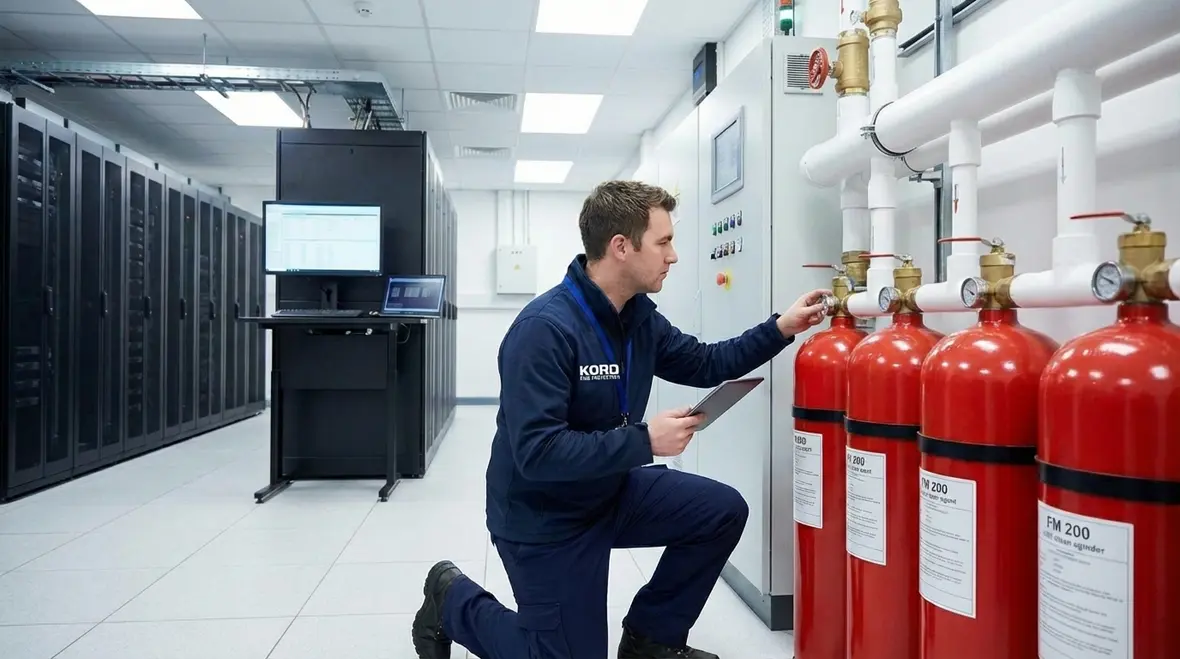
Next, they perform a full system assessment. This includes:
- Reviewing cylinder condition and pressure levels
- Testing detection and control panels
- Inspecting piping and nozzles
- Conducting room integrity testing
Afterward, they present practical paths forward. Some clients choose to maintain their current setup with enhanced monitoring. Others opt for phased upgrades to newer clean agents.
Throughout the process, technicians emphasize life safety above all. Equipment matters. Data matters. But people matter most. Therefore, every recommendation centers on code compliance and occupant protection.
And yes, they occasionally sprinkle in a light joke to ease tension. Fire codes may be serious business, but the conversation does not have to feel like a courtroom drama.
Planning for the Future of Fire Protection
Staying Ahead of Codes and Technology
The landscape of fire suppression continues to evolve. Environmental standards will likely tighten further. Technology will improve. Detection systems will become smarter.
Consequently, proactive planning separates prepared facilities from reactive ones. Organizations that evaluate options early avoid rushed decisions later.
Building a Future-Ready Strategy
Future ready fire protection strategies often include:
- Regular risk assessments
- Integration with building management systems
- Environmental impact tracking
- Budget forecasting for upgrades
By taking these steps, businesses remain resilient. They protect assets. They protect people. And they demonstrate responsibility to regulators and stakeholders alike.
FM 200 fire suppression systems played a significant role in modern fire safety history. Yet, as with all technology, evolution is inevitable. The goal is not to abandon what worked. Instead, it is to build upon it wisely.
FAQ
Conclusion
Fire protection should never feel uncertain. Whether maintaining a trusted system or exploring modern alternatives, informed decisions make all the difference. Kord Fire Protection technicians stand ready to assess, explain, and guide each step with steady expertise. When the safety of people and property hangs in the balance, experience matters.
If you are weighing your options for FM 200 or newer agents, consider scheduling a review of your current system or new project. Kord’s clean agent fire suppression services cover design, installation, upgrades, and maintenance for data centers, healthcare, and other mission critical facilities. Contact Kord Fire Protection today and move forward with clarity, confidence, and a plan built to last.
Know Your Weapon Before You Fight the Flame
Kord Fire Protection is your go-to when it comes to all things fire protection. For over 20 years, we’ve been serving Southern California with the quality service and equipment to keep your home or business safe at all times. Our competitive prices reflect our unwavering commitment to protecting what matters most in the event of a fire emergency. Give us a call, send an email, or use that form!

Join Our Newsletter!
Get the latest fire safety tips delivered straight to your inbox From our Newsletter.