Fire Safety System Documentation for Compliance
In every commercial building, behind the walls and above the ceiling tiles, there is a quiet promise. That promise lives in alarms, sprinklers, panels, extinguishers, and in something far less flashy but just as vital: Fire safety system documentation. Inspection reports, maintenance logs, compliance certificates, and service records tell the real story of a property’s safety. Within the first few minutes of any audit or insurance review, those records speak louder than the alarms themselves. As Kord Fire Protection technicians often explain to clients, the paperwork is not busywork. It is proof. It is protection. And when regulators or insurers come knocking, it can mean the difference between a calm conversation and a very expensive headache.

The Hidden Power Behind Regulatory Readiness
Regulators do not rely on good intentions. They rely on records. When a fire marshal walks into a facility, the first request is often for inspection logs and maintenance reports. Consequently, businesses that maintain accurate documentation can present clear evidence of compliance without scrambling.
Proper records demonstrate that inspections happened on schedule, deficiencies were corrected, and systems meet local codes. Moreover, they show consistency over time. A single inspection report proves very little. However, a well maintained archive of reports tells a story of ongoing responsibility.
Kord Fire Protection technicians frequently remind property managers that regulators look for patterns. If inspections occur at regular intervals and corrective actions appear documented and signed, the review process moves smoothly. On the other hand, missing signatures or skipped months can raise red flags faster than a faulty smoke detector at 3 a.m.
Therefore, regulatory readiness does not start the day of an inspection. It starts months and even years earlier with organized, accurate records. For many properties, that means pairing solid documentation habits with predictable testing and inspection schedules, such as those outlined in Kord Fire’s Fire System Testing Frequency California Guide.

How Proper Documentation Supports Insurance Compliance
Insurance companies love two things: reduced risk and clear proof. Without both, claims can turn into long debates. With detailed service records and inspection histories, however, those debates become shorter and far less dramatic.
When a loss occurs, insurers review whether the property owner met policy conditions. Did the fire alarm system receive regular testing? Were sprinkler systems inspected according to code? Were noted deficiencies repaired promptly? Documentation answers these questions quickly.
In addition, thorough records can help defend against claim denials. If an insurer questions whether a system functioned properly, documented maintenance and testing logs provide tangible proof of due diligence. That evidence can protect coverage and speed up payouts.
Kord Fire Protection technicians often explain this in simple terms: no documentation, no leverage. With documentation, the property owner stands on solid ground. And in the insurance world, solid ground is worth its weight in gold.
What Should Be Included in Fire Safety System Documentation?
Business owners often ask what exactly belongs in a complete record set. The answer is both straightforward and detailed. The documentation should cover every aspect of system performance and maintenance.
Core components include:
- Inspection reports that outline findings and code references
- Testing records with dates, results, and technician signatures
- Maintenance logs that describe services performed
- Deficiency reports noting issues and corrective actions
- Compliance certificates required by local authorities
- System modification records documenting upgrades or changes
Furthermore, these records should remain organized and accessible. Digital storage often improves retrieval speed, especially during audits. However, backups are critical. A computer crash should not erase years of compliance history.
Because codes evolve, documentation must also reflect updates. If a system upgrade occurs, the records should clearly show when and why. This clarity prevents confusion during inspections and ensures that nothing appears outdated or neglected.
Common Documentation Gaps That Trigger Trouble
Even responsible organizations can stumble. In many cases, the issue is not neglect but inconsistency. Unfortunately, regulators and insurers rarely grade on effort. They grade on evidence.
Typical gaps include:
- Missing technician signatures
- Unresolved deficiencies with no follow up record
- Skipped inspection intervals
- Outdated contact information
- Incomplete descriptions of repairs
Moreover, scattered paperwork creates unnecessary stress. A folder in one office and a spreadsheet on someone’s laptop rarely impress an auditor. Instead, centralized and chronological records show professionalism.
Kord Fire Protection technicians often use a lighthearted comparison. Trying to reconstruct years of inspections from scattered notes feels like assembling IKEA furniture without instructions. It might work eventually, but it will not be pleasant.

Fire Safety System Documentation and Long Term Risk Management
While compliance matters, documentation serves a broader purpose. It supports strategic risk management. Over time, inspection trends can reveal patterns. For example, recurring valve issues or repeated alarm faults signal underlying problems.
By reviewing documented history, facility managers can identify weak points and allocate budgets wisely. Instead of reacting to emergencies, they can plan proactive upgrades. Consequently, documentation becomes a tool for prevention rather than just proof.
In addition, consistent records help train new staff. When management changes, documented procedures provide continuity. The new team can review past reports and understand system layouts and previous challenges.
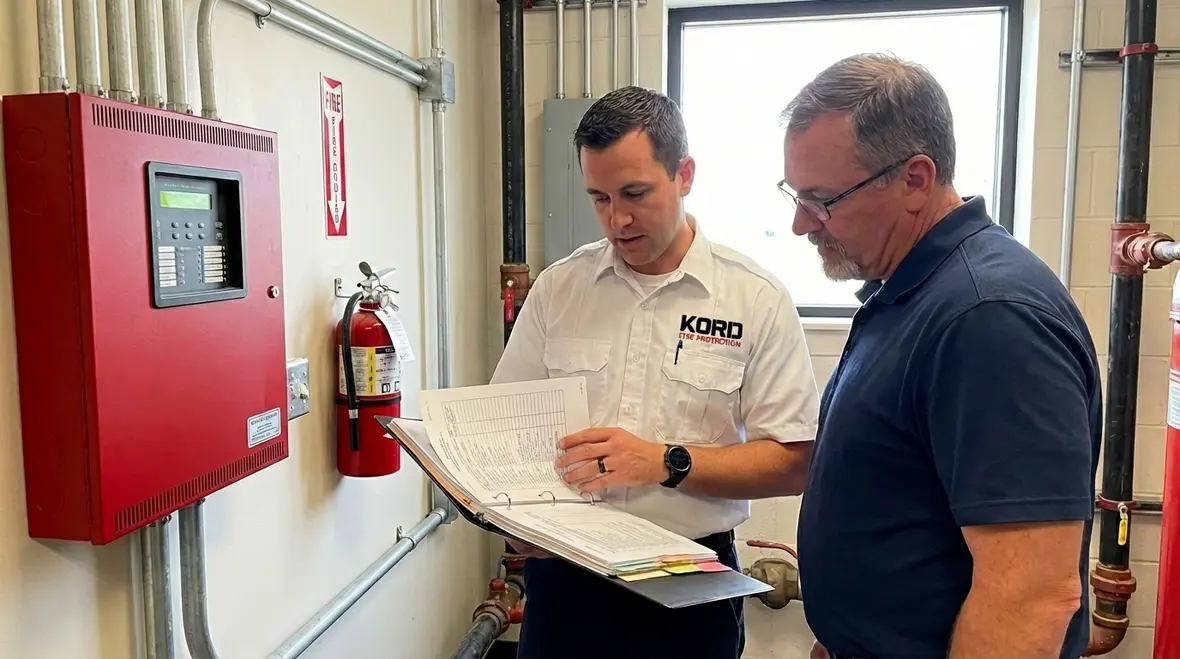
Kord Fire Protection technicians frequently walk clients through these historical insights. They explain how a well documented system tells a story over time. And in that story, patterns reveal risk before risk becomes loss.
Digital vs Physical Records: Which Works Best?
Some facilities still rely on binders filled with neatly labeled reports. Others embrace cloud based platforms. Both approaches can work, provided they remain organized and secure.
Digital systems offer fast search capabilities and remote access. Therefore, during an inspection, staff can retrieve documents within seconds. Additionally, digital timestamps enhance credibility.
Physical records, however, provide a tangible backup. When stored properly, they offer reliability without dependence on software. Ideally, businesses combine both methods. Digital for speed. Physical for redundancy.
Regardless of format, consistency remains key. Regular updates and secure storage prevent gaps. Because in the end, the medium matters less than the message: proof of care and compliance.

Two Perspectives on Documentation: Compliance and Culture
Compliance Perspective
- Meets regulatory requirements
- Supports insurance obligations
- Provides legal protection
- Reduces audit stress
- Demonstrates due diligence
Organizational Culture Perspective
- Encourages accountability
- Promotes safety awareness
- Improves communication
- Builds trust with stakeholders
- Strengthens operational discipline
When leadership treats documentation as a strategic asset rather than a chore, the entire culture shifts. Staff become more attentive. Reporting improves. And safety moves from checkbox status to shared responsibility.
Kord Fire Protection technicians often notice this difference immediately. In facilities where records receive respect, safety systems usually reflect that same care. Coincidence? Probably not.
Can Documentation Really Prevent Legal and Financial Fallout?
In short, yes. While records cannot stop a fire, they can significantly reduce the fallout afterward. When investigators review an incident, documented inspections and repairs demonstrate responsible management.
Without those records, liability questions grow louder. Plaintiffs may argue negligence. Insurers may question coverage. Regulators may impose fines. However, thorough documentation shows consistent effort to maintain safe conditions.
Therefore, documentation acts as a shield. It does not eliminate risk, but it reduces exposure. And in a world where litigation often moves faster than reason, that shield proves invaluable.
Frequently Asked Questions
Build Confidence Before the Next Inspection
Preparation always feels easier than panic. By investing in organized, accurate records, businesses strengthen regulatory readiness and protect insurance coverage. More importantly, they reinforce a culture of responsibility that extends beyond paperwork. Kord Fire Protection technicians stand ready to guide organizations through inspections, reporting, and long term compliance planning. Now is the time to review records, close gaps, and build confidence before the next audit arrives. Because when documentation speaks clearly, everyone listens.
If your documentation feels scattered or out of date, consider pairing an internal records cleanup with a professional system assessment. Resources like Kord Fire’s Fire System Testing Frequency California Guide and services such as routine fire pump inspections can help align day-to-day practices with what regulators and insurers expect to see on paper. A stronger paper trail today means fewer surprises tomorrow.
Schedule a fire system documentation and testing review with Kord Fire Protection to make sure your records, reports, and inspection frequencies all support confident compliance.
Know Your Weapon Before You Fight the Flame
Kord Fire Protection is your go-to when it comes to all things fire protection. For over 20 years, we’ve been serving Southern California with the quality service and equipment to keep your home or business safe at all times. Our competitive prices reflect our unwavering commitment to protecting what matters most in the event of a fire emergency. Give us a call, send an email, or use that form!

Join Our Newsletter!
Get the latest fire safety tips delivered straight to your inbox From our Newsletter.