Fire Pump Room Clearance and Ventilation Guide
Fire Pump Room Protection and Installation Guidelines
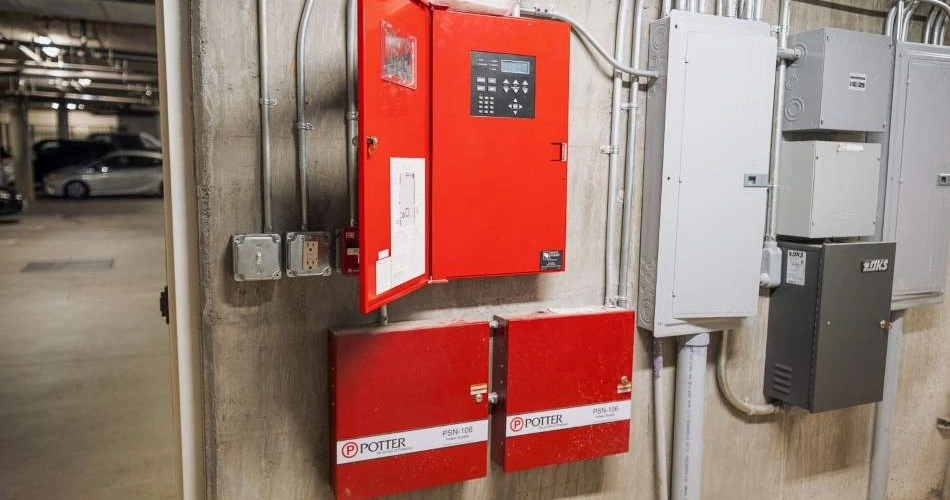
In cities like Los Angeles and Anaheim, fire safety is not a suggestion. It is a requirement backed by strict codes and serious consequences. Within the first phase of any compliant build, professionals must consider fire pump room clearance regulations Los Angeles and pump room ventilation requirements Anaheim. These local rules shape everything from spacing and airflow to electrical layout and emergency access. However, regulations are only part of the story. Proper design, installation, and protection of a fire pump room demand both technical skill and practical wisdom.
That is where Kord Fire Protection technicians step in. With the calm authority of someone who has seen it all, they explain each detail clearly, making even the most complex code requirement feel manageable. And yes, they do it without making anyone feel like they need a PhD in mechanical engineering to follow along.
Let us walk through what truly matters when protecting and installing a fire pump room.
Understanding the Role of a Fire Pump Room
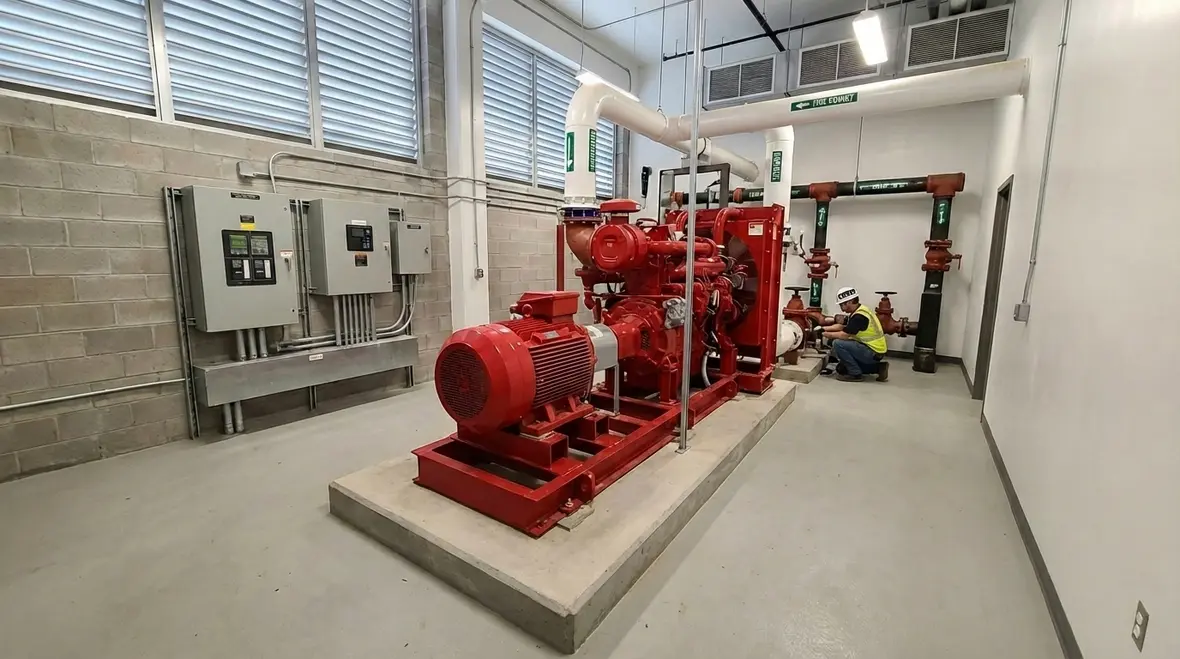
A fire pump room is not just a mechanical closet tucked away behind concrete walls. It is the heartbeat of a building’s fire protection system. When water pressure drops during a fire event, the pump activates and restores the flow needed for sprinklers and standpipes to perform. Without it, even the best sprinkler layout becomes little more than decorative plumbing.
Because of this critical role, designers must treat the space with intention. First, they must protect the pump from physical damage. Next, they must ensure it remains accessible for maintenance. Finally, they must shield it from environmental threats such as flooding or overheating.
Kord Fire Protection technicians often explain it this way: if the pump room fails, the entire system whispers when it should roar. That image tends to stick.
Fire Pump Room Clearance Regulations Los Angeles
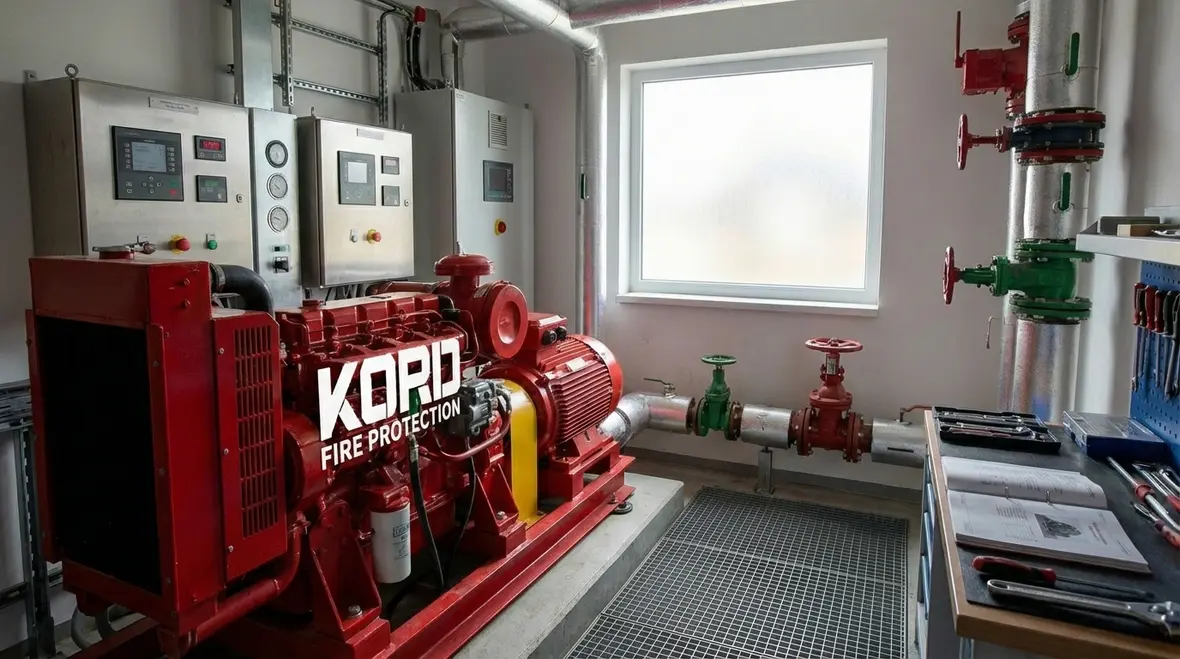
Los Angeles enforces detailed clearance standards around fire pumps, controllers, and related equipment. These rules are not arbitrary. Instead, they ensure technicians can service equipment safely and efficiently and help properties align with broader requirements like NFPA 20 and NFPA 25, which govern fire pump design, installation, and ongoing maintenance.
- Minimum working space around equipment
Adequate clearance allows technicians to inspect seals, valves, and electrical panels. Without space, routine maintenance becomes hazardous. Moreover, emergency repairs slow down when every movement requires a sideways shuffle. - Unobstructed access to doors and panels
Access paths must remain clear at all times. Storage boxes, spare materials, or that one mysterious crate someone keeps meaning to move should never block entry. During inspections, officials pay close attention to this point. - Proper room dimensions
Clearances must account for pump size, controller panels, and future servicing needs. Designers cannot simply measure the equipment footprint and call it a day. They must think ahead.
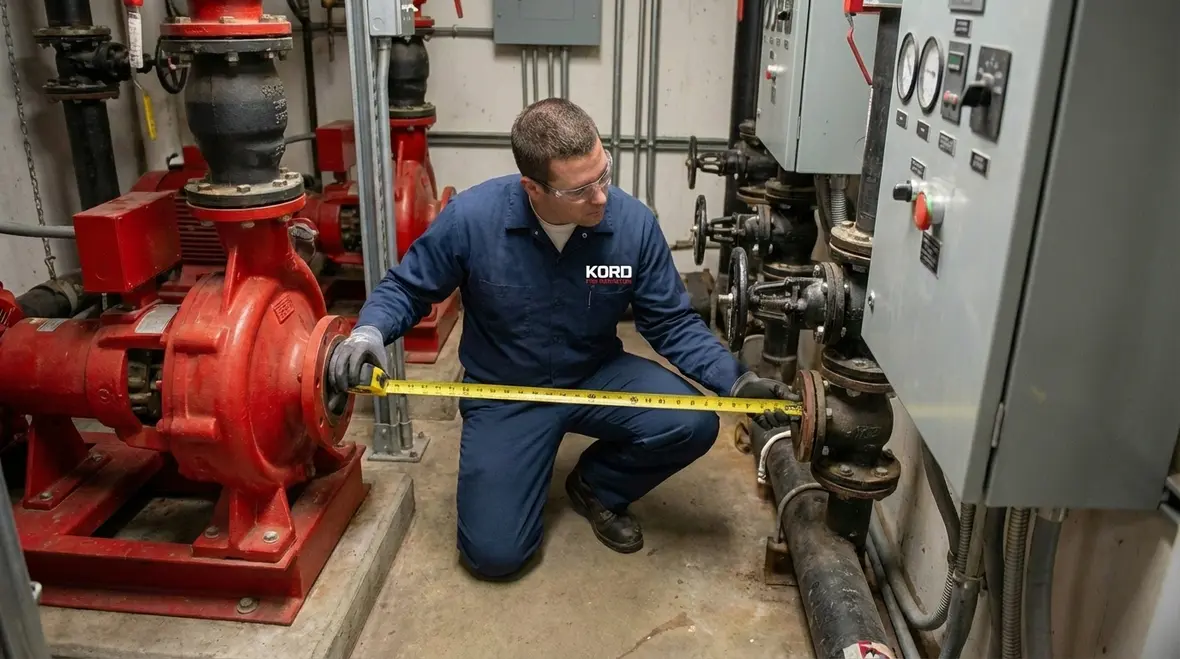
Kord Fire Protection technicians regularly guide property owners through these requirements. They review layouts and explain how fire pump room clearance regulations Los Angeles affect real world design decisions. As a result, projects move smoothly through inspections rather than stalling over avoidable issues. For related clearance concerns elsewhere in the building, owners often reference resources like Kord Fire’s overview of fire sprinkler clearance requirements Los Angeles, which echoes the same theme: space is a safety feature, not wasted square footage.
Additionally, compliance protects more than code approval. It protects the technicians who will one day stand in that room, tools in hand, ensuring the system works when lives depend on it.
How Much Space and Access Does a Fire Pump Room Really Need?
This is a question clients often ask, usually with a hopeful tone that suggests the answer might be smaller than expected.
In truth, space requirements depend on the pump type, driver type, and controller configuration. However, certain principles always apply.
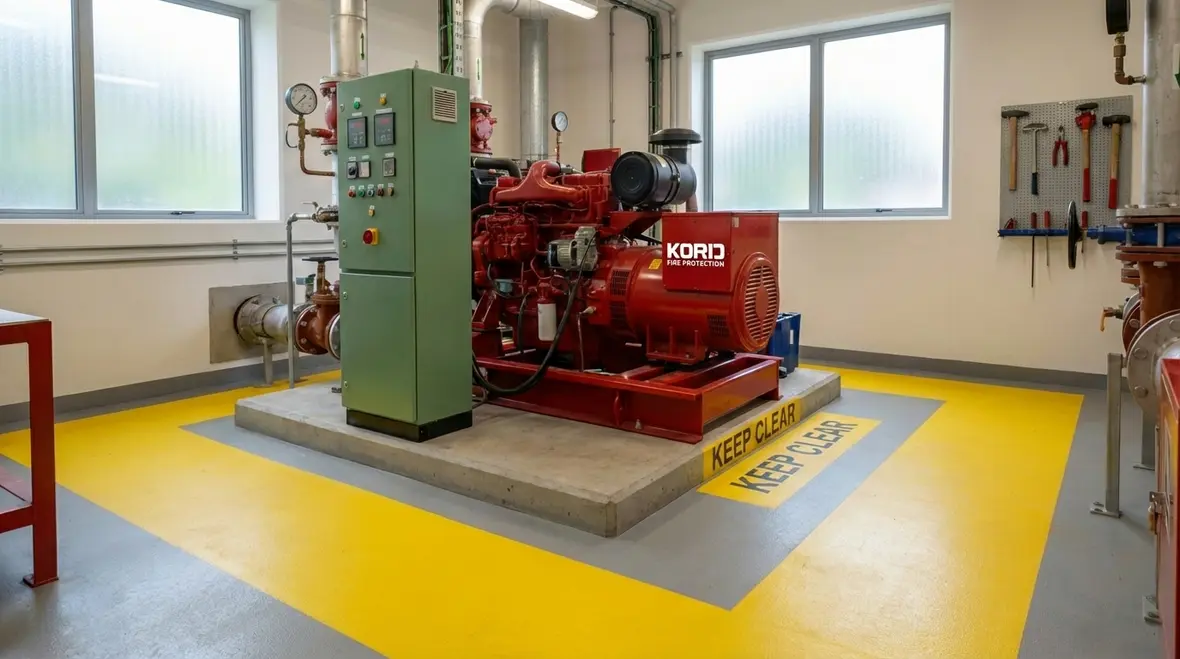
- Provide clear working space in front of electrical components so technicians can safely test controllers and wiring.
- Allow room for valve operation and pipe servicing, including space to swing hand wheels and remove components.
- Ensure doors open fully without obstruction to support quick entry and fast egress.
- Plan for equipment removal so that if a pump or controller needs replacement, technicians do not need to remove a wall to extract it.
Furthermore, emergency access must remain straightforward. In a crisis, no one wants to navigate a maze worthy of an action movie. The layout should support fast entry and clear visibility. Kord Fire Protection technicians emphasize planning for the worst day, not the best. Because on the best day, no one needs the pump. On the worst day, everyone does.
Pump Room Ventilation Requirements Anaheim
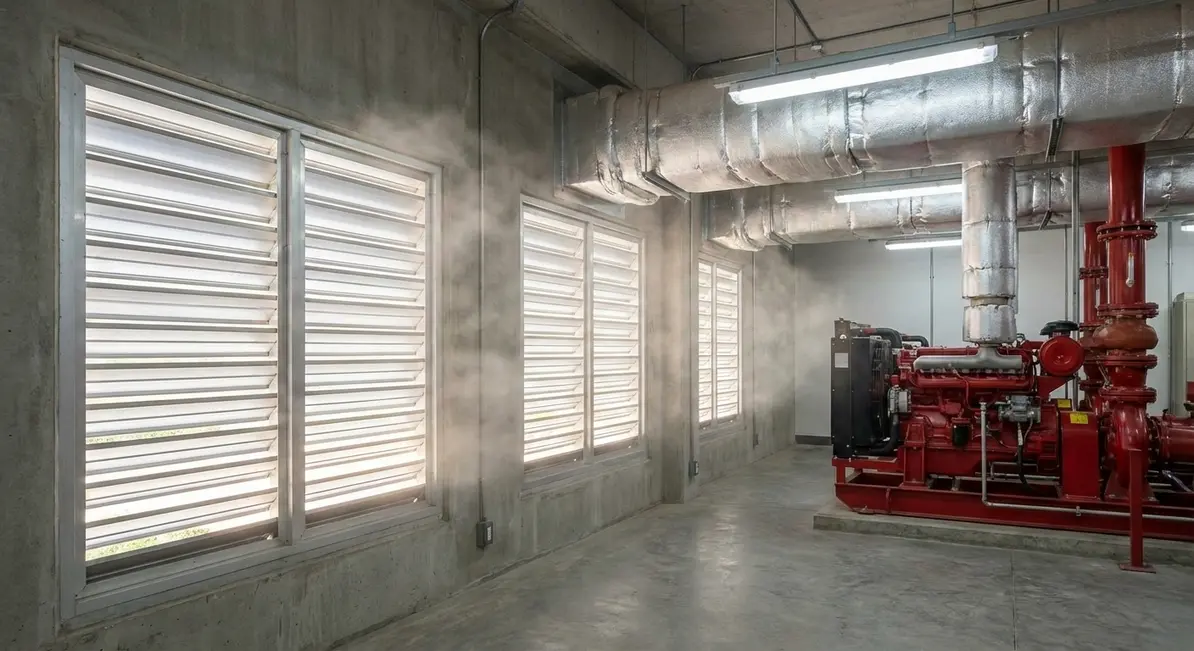
A fire pump generates heat. Electric motors warm up under load, and diesel driven pumps produce even more heat due to combustion. Therefore, ventilation is not optional. It is essential.
Local codes outline pump room ventilation requirements Anaheim to prevent overheating and ensure reliable operation. These requirements often address air intake size, exhaust pathways, and temperature limits within the room, and they are typically coordinated with NFPA 20’s direction on fire pump room environment and NFPA 25’s expectations for keeping systems in reliable operating condition.
- Maintain acceptable operating temperatures
High temperatures reduce motor efficiency and can damage components. Therefore, airflow calculations must match equipment specifications and expected ambient conditions. - Support combustion air for diesel pumps
Diesel engines require sufficient oxygen. Without adequate air supply, performance suffers. In extreme cases, engines may stall. - Remove exhaust gases safely
Exhaust systems must route fumes outside without leaking into occupied spaces. Safety and health depend on it.
Kord Fire Protection technicians evaluate ventilation early in the design phase. They consider louvers, fans, duct paths, and climate conditions. In Anaheim, where temperatures can climb, proper ventilation becomes even more critical. After all, the pump room should not feel like a sauna auditioning for a summer blockbuster.
Installation Best Practices from the Field
Codes provide the framework. Experience provides the insight. Over years of installations, seasoned technicians develop practices that go beyond minimum standards.
- Solid foundations
Fire pumps must sit on stable, level bases to prevent vibration. Excess vibration can loosen connections and shorten equipment life. Therefore, concrete pads must meet both structural and dimensional specifications. - Precise piping alignment
Poor alignment creates stress on pump flanges. Over time, that stress leads to leaks or mechanical failure. Precision at installation prevents problems years later. - Electrical moisture protection
Even minor water intrusion can corrode terminals and disrupt controls. Proper sealing, conduit routing, and elevation help prevent damage. - Clear labeling and intuitive layout
In an emergency, clarity saves time. Technicians should identify valves and breakers instantly. No one should play guessing games while alarms sound.
Kord Fire Protection technicians often share stories from past projects. They describe small oversights that turned into costly fixes. Yet they also explain how careful planning avoided shutdowns and penalties. Their steady guidance turns technical checklists into practical strategy.
Protection Against Environmental and Structural Risks
A fire pump room must remain functional under extreme conditions. Therefore, designers must anticipate threats.
- Flood Protection
If the building sits in a flood prone area, elevate equipment above potential water levels. Install drainage systems to prevent standing water. Because a submerged fire pump offers little comfort during an emergency. - Seismic Bracing
In regions prone to seismic activity, proper bracing becomes vital. Secure piping and equipment to withstand movement. Inspections often focus on this element. - Fire Resistance
Ironically, the room that houses fire protection equipment must also resist fire. Fire rated walls and doors help ensure the pump continues operating during an event. - Security Controls
Limit access to authorized personnel. Unauthorized tampering can disable systems or create hazards.
Because each project differs, Kord Fire Protection technicians tailor recommendations to site conditions. They combine regulatory knowledge with on site assessment. As a result, protection strategies align with both local code and real world risk.
Design and Compliance Overview
This side by side view highlights an important truth. Smart design supports compliance. Meanwhile, compliance reinforces smart design. When both align, projects move efficiently from plan review to final approval.
| Design Focus | Compliance Focus |
| Adequate room size for equipment and servicing | Adherence to local clearance standards |
| Ventilation planning for heat and exhaust | Meeting local airflow and temperature limits |
| Stable foundations and vibration control | Seismic bracing where required |
| Moisture protection and drainage | Flood mitigation per regional code |
| Clear labeling and access pathways | Unobstructed inspection access |
Maintenance Planning Starts at Installation
Installation does not mark the end of responsibility. In fact, it marks the beginning of a long service life. Therefore, maintenance planning must start early.
Technicians schedule regular inspections to test pump performance, verify pressure levels, and confirm controller function. They also review ventilation systems to ensure airflow remains adequate over time. Dust buildup, blocked louvers, or failing fans can reduce performance. For many owners, this ongoing care takes the form of structured programs like Kord Fire’s dedicated fire pump service, which covers inspection, repair, and documented testing.
Additionally, they document each inspection. Clear records support compliance and simplify future troubleshooting. When issues arise, historical data often reveals patterns.
Kord Fire Protection technicians explain maintenance with a calm reminder. The pump may sit quietly for years. Yet when called upon, it must perform flawlessly. Routine testing ensures it does not forget its lines when the curtain rises.
FAQ
Conclusion and Next Steps
Fire pump room protection and installation demand careful planning, strict compliance, and experienced hands. From clearance and ventilation to structural safeguards and maintenance strategy, every detail matters. Kord Fire Protection technicians bring clarity, skill, and steady guidance to each project. For property owners and developers who value safety and smooth approvals, now is the time to consult professionals who treat fire protection not as a checkbox, but as a promise.
If you are reviewing fire pump room clearance regulations Los Angeles or pump room ventilation requirements Anaheim and wondering where to start, you do not have to tackle them alone. Kord Fire’s dedicated fire pump service team designs, installs, inspects, and maintains pump systems across Southern California, integrating NFPA standards with local code expectations. Schedule a consultation to evaluate your existing pump room or plan a new one so that, when the system is called to perform, it does not whisper — it roars.
Know Your Weapon Before You Fight the Flame
Kord Fire Protection is your go-to when it comes to all things fire protection. For over 20 years, we’ve been serving Southern California with the quality service and equipment to keep your home or business safe at all times. Our competitive prices reflect our unwavering commitment to protecting what matters most in the event of a fire emergency. Give us a call, send an email, or use that form!

Join Our Newsletter!
Get the latest fire safety tips delivered straight to your inbox From our Newsletter.