Anechoic Chamber Fire Suppression Solutions
In the quiet, padded silence of a high performance testing space, sound goes to disappear. Anechoic chambers absorb reflection, swallow echo, and create an environment so controlled it feels almost unreal. Yet even in these carefully engineered rooms, risk still exists. That is why fire suppression for anechoic chambers must be designed with precision. It must protect without interfering. It must deploy without disrupting sensitive equipment. And increasingly, engineers turn to retractable telescoping sprinkler heads to meet that demand. Kord Fire Protection technicians often explain it this way: the system must be present, but never in the way. Like a good stagehand in a Broadway show, it waits in the wings until the spotlight calls.
What follows is a deep look into how these specialized sprinklers work, why they matter, and how they elevate fire protection in acoustic and RF testing environments. Settle in. Even a topic like this deserves a story.

Understanding Fire Suppression for Anechoic Chambers
Anechoic chambers are not ordinary rooms. They feature acoustic foam wedges, RF absorbing panels, precision wiring, and sensitive measurement devices. These materials often have specific flame spread ratings, yet many are still combustible. Therefore, engineers must approach fire suppression in acoustic testing rooms with careful planning.
Traditional sprinkler heads, while reliable in warehouses and office spaces, create challenges here. Fixed sprinkler heads can disrupt sound testing patterns. They may interfere with RF measurements. Additionally, exposed hardware can alter acoustic performance. Consequently, the solution must adapt to the environment rather than force the environment to adapt to it.
Kord Fire Protection technicians frequently emphasize that protecting a chamber is not about adding more hardware. Instead, it is about integrating protection into the architecture itself. That is where retractable telescoping sprinkler heads come into play. For a deeper dive into self-retracting technology, many facility managers also explore Kord Fire’s self-retracting telescoping fire sprinkler solutions to understand how concealment and performance work together in specialty environments.
Why protection must stay “invisible” until the moment it is needed
In these precision spaces, anything that changes the acoustic profile, reflects RF signals, or introduces turbulence into the environment can invalidate test results. The challenge is to design fire suppression that behaves almost like the chamber walls: present, reliable, but unnoticed until a real emergency occurs.
What Is a Retractable Telescoping Sprinkler Head?
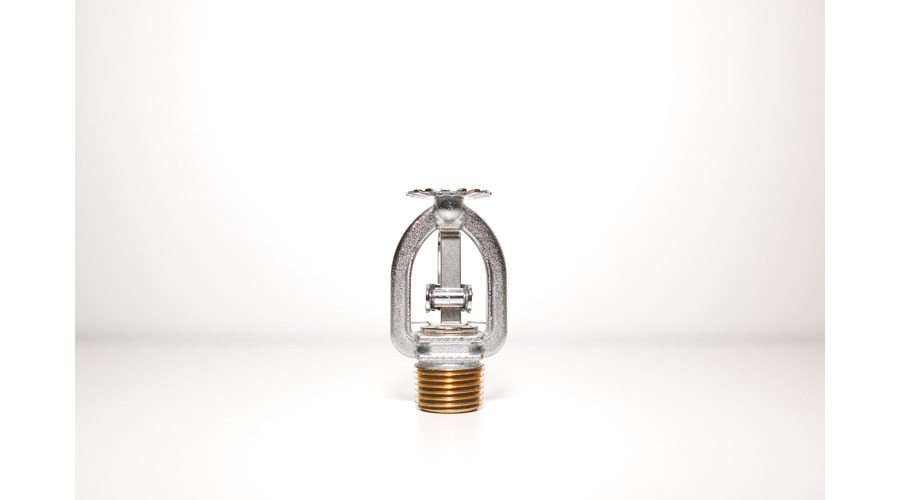
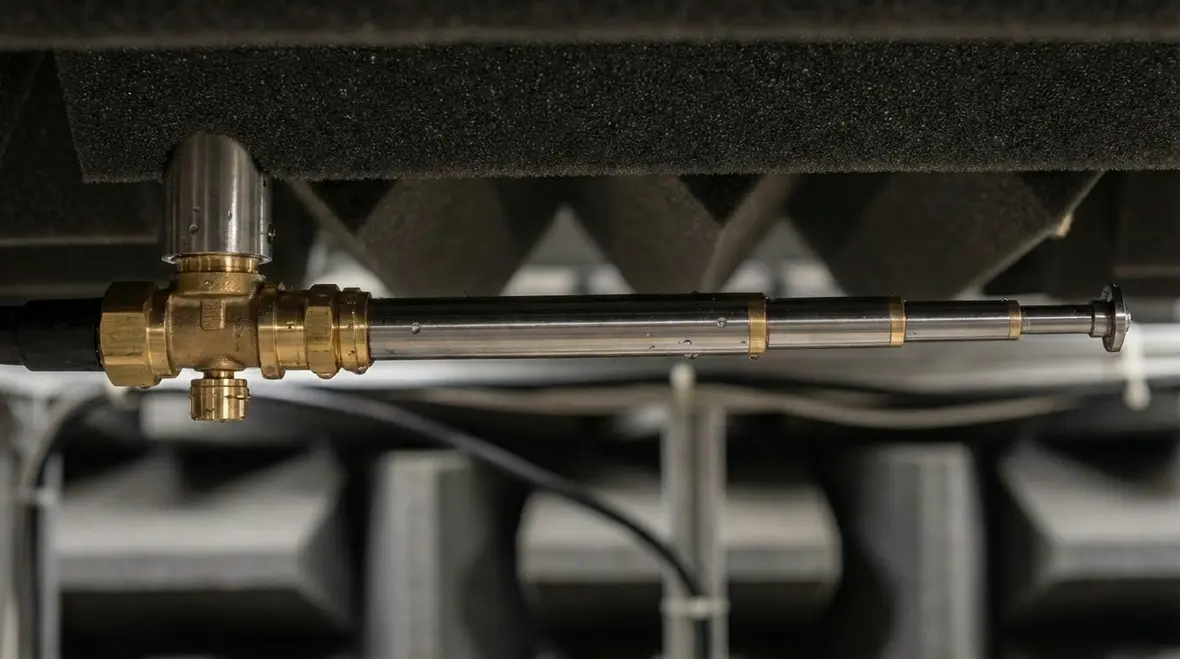
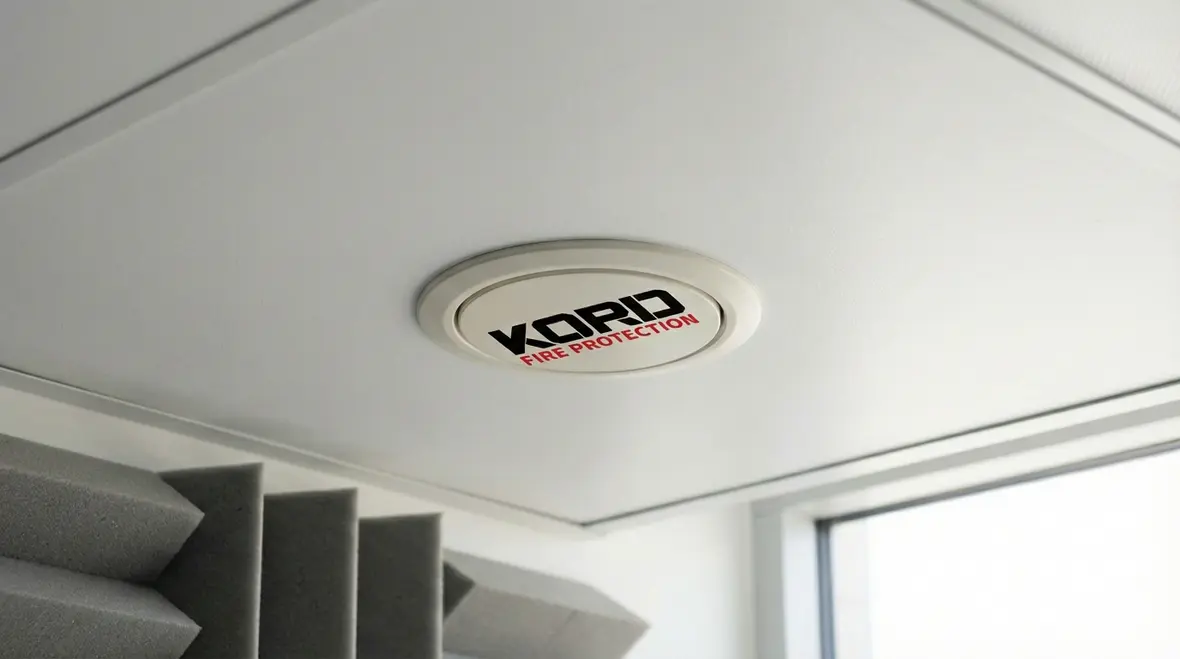
A retractable telescoping sprinkler head is a concealed fire protection device designed to remain flush or hidden within the ceiling structure until activation. When heat triggers the system, the head extends downward into its operational position and discharges water in a controlled spray pattern.
Think of it as the James Bond of sprinklers. It stays hidden, says very little, and then performs flawlessly when the moment demands it.
However, the engineering behind it is not cinematic fantasy. It relies on mechanical precision, thermal activation elements, and carefully calibrated extension systems. Once heat reaches a specified threshold, the concealed cover drops, and the telescoping assembly extends to ensure proper water distribution below ceiling obstructions or acoustic wedges.
Because of this extension capability, designers can maintain flat ceiling planes in testing chambers without sacrificing coverage. In turn, this preserves both the acoustic integrity and the required fire suppression performance.
How retractable sprinklers stay out of the way
Most anechoic and RF chambers are meticulously modeled before construction. Retractable telescoping sprinklers fit into those models as low-profile, recessed elements that do not protrude into the chamber volume until a fire event. That allows engineers to maintain clean lines in their simulations and real-world layouts while still meeting stringent fire code requirements.
Why Traditional Sprinklers Fall Short in Test Chambers
Standard sprinkler systems were never designed with sound isolation or RF testing in mind. While they excel in commercial spaces, they present several issues in specialized chambers.
Acoustic reflections and measurement errors
First, protruding sprinkler heads can reflect sound waves. Even minor reflections can compromise acoustic measurements. In highly calibrated environments, a small reflective surface can introduce data inconsistencies.
RF interference and exposed metal hardware
Second, RF test chambers demand minimal metal exposure. Fixed sprinkler hardware can create unwanted interference or signal distortion. Therefore, engineers must limit exposed conductive surfaces to what is absolutely necessary for safety and code compliance.
Shadows created by deep acoustic wedges
Third, chamber interiors often feature deep acoustic foam wedges. If a traditional sprinkler sits above those wedges, water distribution becomes uneven. As a result, parts of the room may receive inadequate coverage during a fire event.
Kord Fire Protection technicians often explain this with a simple analogy. Installing the wrong sprinkler in a chamber is like putting a ceiling fan in a wind tunnel. It technically works, but it defeats the purpose of the room.
Benefits of Retractable Telescoping Sprinkler Head Guide Systems
Retractable telescoping systems solve these problems with deliberate design. They protect the space while respecting its function.
1. Preserved acoustic integrity
Because the sprinkler remains concealed until activation, it does not disrupt sound absorption patterns. Consequently, engineers maintain precise acoustic conditions without compromise.
2. Improved water distribution below wedges
When deployed, the telescoping mechanism extends below acoustic wedges or obstructions. Therefore, water reaches the protected hazard area effectively. This design reduces shadowing and ensures compliance with fire codes.
3. Reduced RF interference and metal exposure
Since the head remains hidden during normal operation, exposed metal surfaces stay minimal. As a result, RF test results remain accurate and consistent.
4. Code compliance in specialized spaces
Fire suppression in RF shielded rooms must meet strict regulatory standards. Telescoping heads allow designers to achieve required spacing and spray patterns without altering chamber geometry. They support the same NFPA-driven design methodology used in other systems while adding the flexibility that specialty spaces demand.
5. Clean aesthetic and functional design
Although aesthetics may not top the priority list in a lab, a flush ceiling simplifies maintenance and cleaning. Additionally, it supports a controlled environment free from unnecessary protrusions. In high-value R&D and test facilities, that clean visual line also reflects the level of engineering discipline behind the space.
How Kord Fire Protection Technicians Approach Installation
Kord Fire Protection technicians approach each chamber as a unique project. No two facilities share identical dimensions, materials, or testing requirements. Therefore, a one size fits all solution simply does not work.
Site evaluation and coordination with your design team
First, technicians evaluate chamber layout, including ceiling height, wedge depth, and equipment placement. Next, they review hazard classifications and applicable standards. After that, they determine appropriate sprinkler spacing and activation temperature ratings.
Importantly, they coordinate with acoustic engineers and RF specialists. This collaboration ensures that the fire suppression system integrates seamlessly into the chamber design.
Owner education and long-term reliability
Technicians also explain to facility managers how the telescoping mechanism operates. They demonstrate extension ranges, cover plate behavior, and inspection procedures. Because of this education process, clients gain confidence in both performance and maintenance requirements.
As one technician likes to say, a concealed sprinkler should be boring. It should sit quietly for years, then do its job perfectly once. No drama. No surprises. Just dependable protection.
How Do Retractable Sprinklers Activate Inside Acoustic Foam Ceilings?
This question comes up often, especially among facility designers working on new construction.
Heat-sensitive elements and telescoping motion
Retractable telescoping sprinklers use heat sensitive elements, typically glass bulbs or fusible links. When ambient temperature rises to a predetermined point, the element releases. Consequently, the cover plate drops away.
Immediately after release, internal spring or mechanical components allow the sprinkler assembly to extend downward. This extension places the deflector below obstructions such as acoustic wedges. Then water discharges in a pattern engineered to meet code requirements.
Why heat, not sound, drives activation
Because the system relies on heat detection rather than smoke detection, it activates only when necessary. Furthermore, proper spacing and hydraulic calculations ensure that discharge density meets hazard classifications.
Kord Fire Protection technicians remind clients that although the chamber absorbs sound, it does not absorb heat. Fire behavior remains governed by physics. Therefore, accurate activation thresholds remain critical in these spaces.

Technical Considerations for Engineers and Facility Managers
Designing fire suppression in acoustic testing rooms requires more than selecting the right sprinkler head. Engineers must evaluate several technical factors.
Hydraulic calculations
Water flow and pressure must account for extended head positioning. Because telescoping heads extend into the hazard space, designers must verify that discharge patterns align with code density requirements.
Obstruction analysis
Acoustic wedges can create irregular surfaces. Therefore, careful modeling ensures that spray patterns cover the intended area without gaps.
Temperature ratings and real operating conditions
Testing chambers may operate under controlled climate conditions. However, equipment inside can generate localized heat. Consequently, activation temperature must reflect realistic operating scenarios.
Integration with preaction systems
Many chambers use preaction systems to reduce accidental discharge risk. In such cases, telescoping heads integrate with detection systems and control valves to provide layered protection.
Inspection and maintenance access
Although concealed, these sprinklers still require inspection. Designers must provide safe access without disturbing chamber calibration. Partnering with a full-service provider like Kord Fire, who already delivers comprehensive fire protection services, helps ensure inspection routes, shutoff valves, and test connections are all thought through from day one.
Side by Side Comparison for Decision Makers
Below is a simplified comparison that Kord Fire Protection technicians often share when explaining options to project stakeholders.
Traditional Fixed Sprinklers
• Visible below ceiling plane
• May reflect sound waves
• Potential RF interference
• Limited reach below deep wedges
• Standard commercial use
Retractable Telescoping Sprinklers
• Concealed until activation
• Preserves acoustic performance
• Minimal exposed metal
• Extends into hazard space
• Designed for specialized environments
While both systems meet fire safety standards when applied correctly, only one aligns naturally with the demands of high performance test chambers.
FAQ: Retractable Sprinklers in Anechoic and Test Chambers
Conclusion: Precision Protection Without Compromise
Protecting a controlled testing environment demands more than standard solutions. Retractable telescoping sprinkler heads offer discreet, reliable performance tailored to sensitive spaces. With guidance from Kord Fire Protection technicians, facilities can achieve code compliant protection while preserving acoustic and RF integrity. If your organization operates a chamber where silence matters, partner with experts who understand both fire safety and precision engineering.
Reach out today and ensure your protection system performs as flawlessly as your testing environment. To explore how these systems fit into your broader safety strategy, visit Kord Fire’s full fire protection services page or schedule a consultation with their fire sprinkler specialists through the fire sprinkler services team. Precision spaces deserve precision fire protection—and that starts with the right partner.
Know Your Weapon Before You Fight the Flame
Kord Fire Protection is your go-to when it comes to all things fire protection. For over 20 years, we’ve been serving Southern California with the quality service and equipment to keep your home or business safe at all times. Our competitive prices reflect our unwavering commitment to protecting what matters most in the event of a fire emergency. Give us a call, send an email, or use that form!

Join Our Newsletter!
Get the latest fire safety tips delivered straight to your inbox From our Newsletter.