Fire Extinguisher Inspection Cost and Pricing Guide
Fire Extinguisher Inspection Cost: What Drives Pricing and How to Budget
Every business owner eventually asks about fire extinguisher inspection cost. It usually happens after a reminder notice, a safety audit, or that one employee who watches too many disaster movies and suddenly cares about compliance. Whatever the trigger, the price of inspection matters. It affects budgets, insurance, and most importantly, safety. Fortunately, when Kord Fire Protection technicians explain the details, the numbers stop feeling mysterious and start making sense. They break it down calmly, clearly, and without the dramatic soundtrack.
This guide walks through what drives pricing, what businesses can expect to pay, and how to budget wisely without cutting corners. Because when it comes to fire safety, guessing is not a strategy.
Understanding Fire Extinguisher Inspection Cost
To understand pricing, one must first understand what an inspection actually includes. Many assume it involves a quick glance and a signature. In reality, trained technicians perform a series of checks to ensure every unit works when needed.
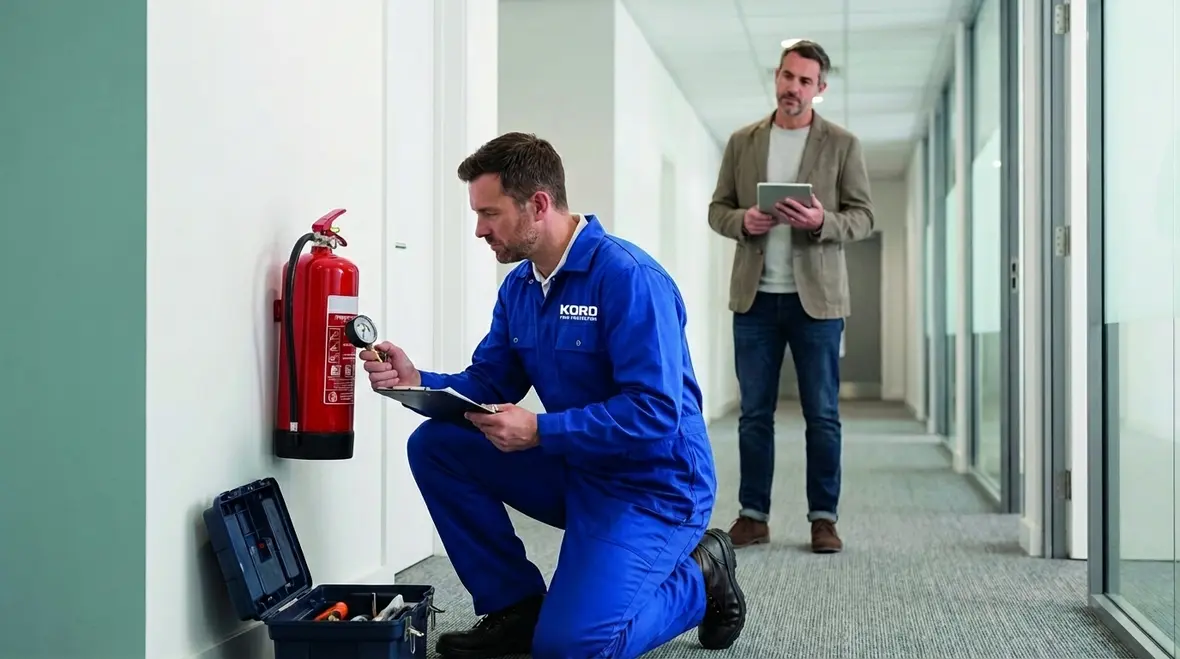
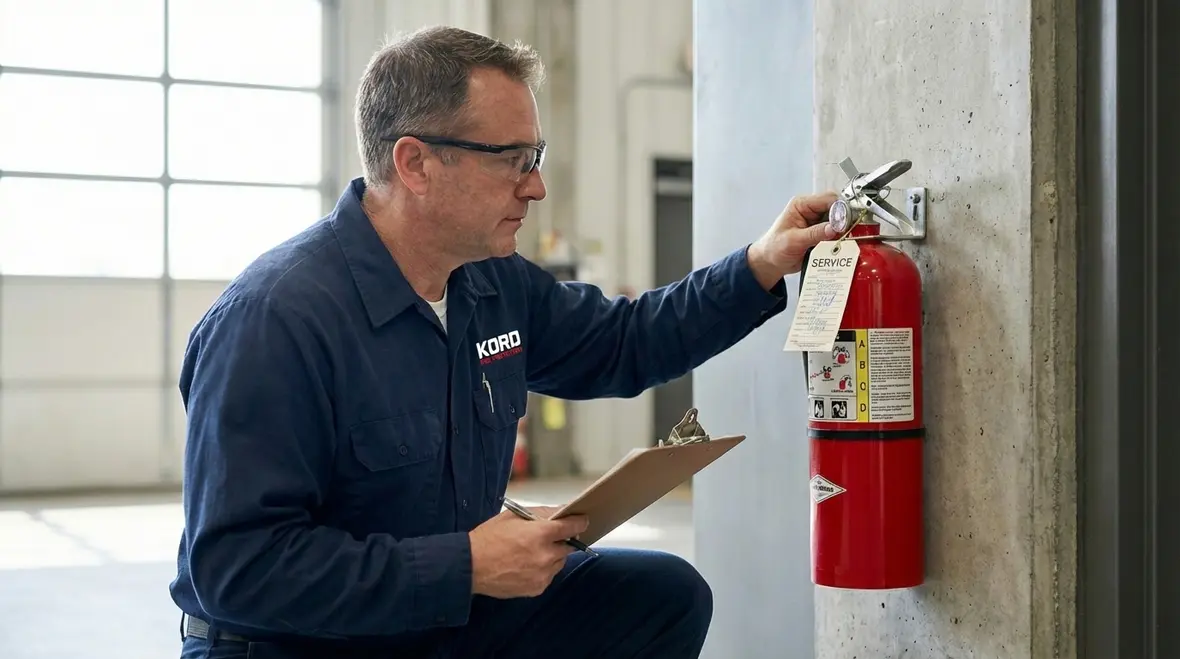
During a standard annual inspection, a technician verifies pressure levels, checks the gauge, inspects the hose and pin, confirms proper mounting, and ensures the extinguisher matches the hazard classification of the space. Additionally, they examine the cylinder for corrosion or damage and confirm that service tags are up to date.
Naturally, all of this takes time and expertise. Therefore, the fire extinguisher service pricing reflects more than a quick visit. It reflects compliance with national safety standards and local codes. Resources like NFPA 10 portable extinguisher guidelines and Kord Fire’s own breakdowns of monthly inspection and annual service help show what’s involved behind the scenes.
Kord Fire Protection technicians often explain that inspections are like annual physicals. Most of the time, nothing dramatic happens. However, when something is wrong, catching it early makes all the difference. No one wants to discover a faulty extinguisher during an emergency. That would be like finding out your parachute is decorative.
If you want a deeper dive into how often inspections and servicing should happen, Kord’s guide on how often fire extinguishers need to be serviced connects the schedule to real world risk and maintenance planning.
What Factors Influence the Price?
Several elements shape the final invoice. While pricing varies by region, the drivers remain consistent.
Number of Units
The more extinguishers a facility has, the more time the technician needs on site. However, many companies offer volume pricing. Therefore, the cost per unit may decrease as the number increases.
Type of Extinguisher
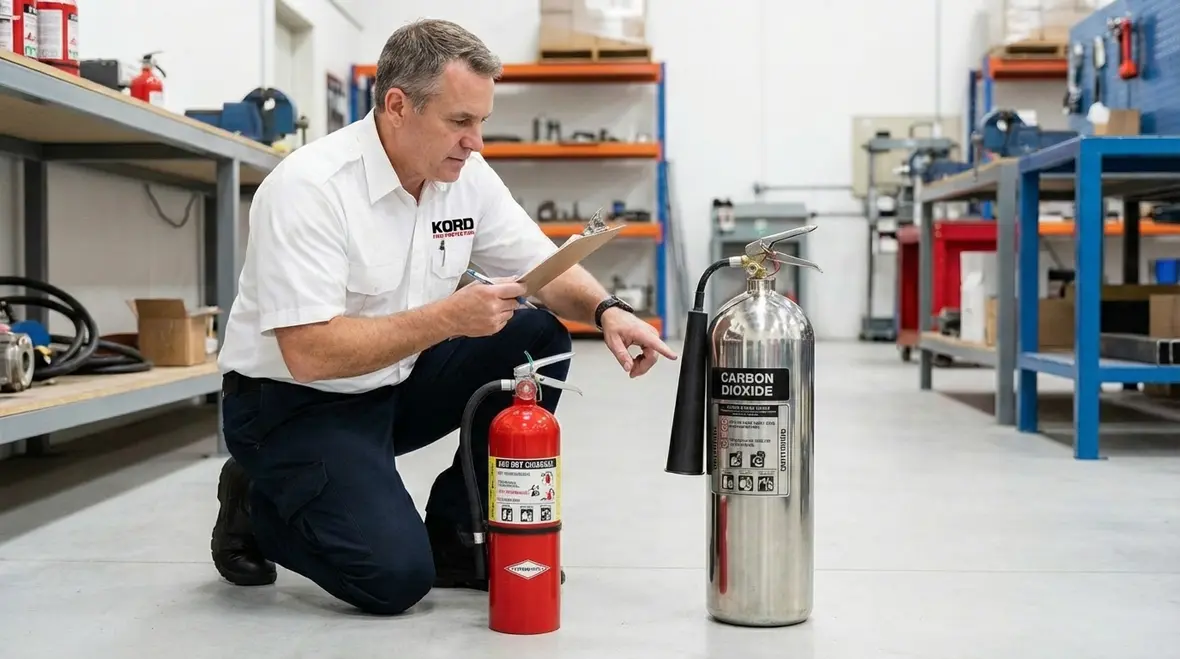
Different extinguishers require different service procedures. For example, dry chemical units follow a different inspection path than clean agent or CO2 models. Some specialty extinguishers demand more detailed checks, which may increase inspection rates.
Frequency of Service
Annual inspections are standard. However, certain environments require more frequent checks. High risk settings such as commercial kitchens or industrial sites may need additional servicing. Consequently, overall fire safety inspection pricing rises with frequency. Long term requirements like six year tear downs and hydrostatic testing also factor into the bigger picture of cost.
Location and Accessibility
If extinguishers sit in easy to reach areas, the job moves quickly. Conversely, units placed in hard to access spaces require more time. Travel distance also plays a role. Remote facilities may include additional service fees.
Repairs and Replacements
Inspection fees cover evaluation, not major repairs. If a unit fails pressure tests or shows damage, additional charges may apply for parts or replacement. Although this adds to the invoice, it prevents much larger risks later.
Kord Fire Protection technicians often remind clients that inspection pricing reflects labor, certification, insurance, and compliance knowledge. It is not simply about checking a box. It is about protecting lives and property.
Average Cost Ranges Businesses Can Expect
Business owners often want numbers. While exact figures vary by region and provider, typical annual inspection rates fall within a predictable range.
On average, the fire extinguisher inspection cost per unit may range from a modest service fee to a higher rate for specialty models. Many providers charge a base trip fee plus a per unit rate. Therefore, a small office with five extinguishers will likely pay less overall than a warehouse with fifty.
Additionally, multi year maintenance requirements affect long term budgeting. For example, internal examinations and hydrostatic testing occur at specific intervals. These services cost more than standard annual checks because they involve disassembly and pressure testing equipment.
However, when spread over several years, the annualized expense often feels manageable. In fact, compared to potential fire damage or insurance penalties, inspection fees look remarkably reasonable. Even the most budget conscious manager usually agrees once the math becomes clear.
If you want to see how these recurring services stack up, Kord’s dedicated pages for monthly inspection & annual service, six year break down/tear down, and hydrostatic testing outline when each service kicks in and why they matter over the life of your extinguishers.
Budgeting Smartly for Fire Safety Compliance
Budgeting for inspections should not feel like predicting the weather. With a structured plan, businesses can manage costs smoothly.
Build a Clear Inventory
First, create a detailed inventory of all extinguishers. Include type, location, and last service date. This provides a clear picture of upcoming maintenance needs.
Use Service Agreements
Next, request a service agreement. Many providers offer scheduled maintenance programs. As a result, pricing becomes predictable. Instead of surprise invoices, businesses receive consistent, planned billing.
Bundle Fire Protection Services
Additionally, group services when possible. If alarms, sprinklers, and extinguishers require inspection, coordinating them reduces travel charges. Bundled services often lower overall fire protection maintenance cost.
Kord Fire Protection technicians frequently advise clients to think long term. Preventive care almost always costs less than emergency response. It is the same logic as changing oil in a car. Skip it long enough, and the engine makes decisions for you.
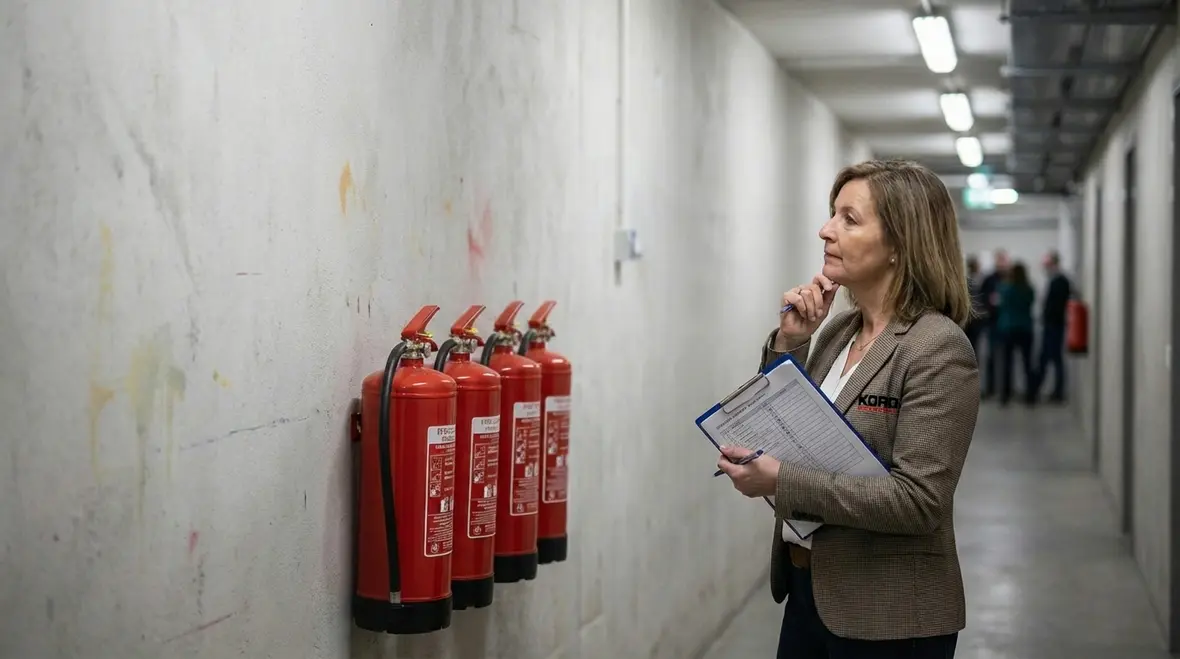
Dual Overview: What You Pay For and Why It Matters
Service Component
Visual inspection and tag update
Pressure and gauge check
Hose and nozzle examination
Mounting and accessibility review
Internal maintenance at required intervals
Hydrostatic testing
Why It Impacts Pricing
Confirms compliance and documents service history
Ensures the unit will discharge properly during an emergency
Detects cracks, clogs, or wear that reduce performance
Verifies placement meets code and allows quick access
Prevents hidden corrosion and mechanical failure
Confirms cylinder integrity under pressure
Although each line item seems small, together they create a safety net. Remove one piece, and the system weakens. Therefore, inspection rates reflect a complete process rather than a single action.
Why Professional Technicians Make a Difference
Some may wonder whether in house staff can handle inspections. While monthly visual checks by employees are encouraged, certified annual inspections require trained professionals.
Kord Fire Protection technicians bring technical training and up to date code knowledge. Moreover, they understand local regulations that vary by jurisdiction. This prevents costly compliance gaps.
They also document everything thoroughly. Proper documentation matters during insurance audits and fire marshal visits. Without it, even a perfectly functional extinguisher may fail compliance standards.
Furthermore, technicians often spot broader safety concerns. For example, they may notice blocked exits, improper signage, or outdated units. While these observations extend beyond basic inspection, they improve overall safety.
In a calm, steady voice, they explain what they find and why it matters. Clients walk away informed rather than overwhelmed. And yes, occasionally they hear a lighthearted comment about how the extinguisher has a better maintenance schedule than most gym memberships.
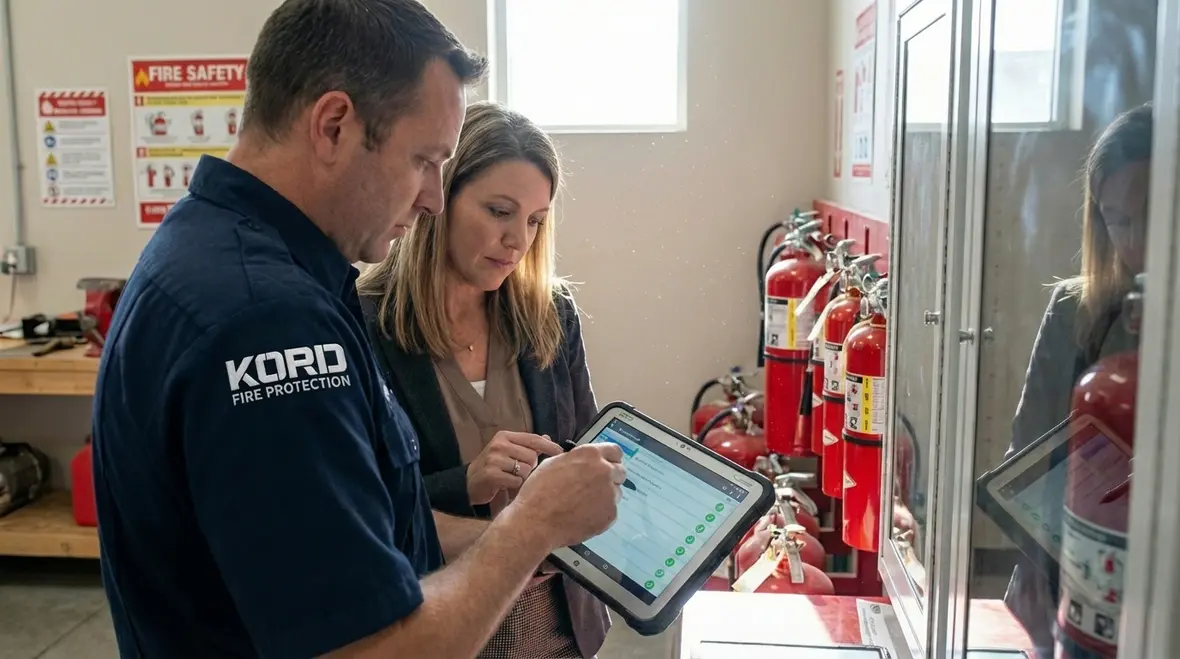
Common Misconceptions About Inspection Pricing
Myth One: All inspections cost the same
In reality, building size, extinguisher type, and regional labor rates all affect pricing. A small retail shop and a manufacturing plant will not share the same service fee.
Myth Two: Skipping a year saves money
Although skipping may reduce short term expenses, it risks fines and higher long term repair costs. Additionally, non compliant properties may face insurance issues.
Myth Three: New extinguishers do not need inspection
Even new units require annual checks. Manufacturing defects, pressure loss, or tampering can occur at any time. Therefore, routine inspections remain essential.
When technicians patiently explain these points, clients usually nod in agreement. After all, safety shortcuts rarely age well.
How Businesses Can Reduce Long Term Costs
Standardize and Simplify
Reducing fire protection expenses does not mean cutting corners. Instead, it involves strategic planning.
Standardize extinguisher models where possible. Managing fewer types simplifies maintenance and may reduce service complexity.
Train Staff on Monthly Checks
Train staff to perform monthly visual checks correctly. Early detection of missing pins or low pressure prevents larger repair bills later.
Keep Access Clear and Work with a Trusted Partner
Maintain clear access to all units. When technicians can reach extinguishers easily, service time decreases. As a result, labor costs remain lower.
Finally, build a relationship with a trusted provider. Consistent service history often leads to smoother scheduling and fewer emergency calls. Over time, predictable maintenance stabilizes the overall fire extinguisher inspection cost and reduces surprises. For many businesses in California, partnering with Kord through their fire extinguisher service & certification program turns a stressful line item into a routine, reliable part of operations.
FAQ: Fire Extinguisher Inspection and Pricing
Conclusion: Plan Today, Protect Tomorrow
Understanding inspection pricing removes uncertainty and replaces it with control. When businesses plan ahead, track inventory, and partner with experienced professionals like Kord Fire Protection technicians, safety becomes simple and predictable. Schedule a professional evaluation, review your current equipment, and build a clear maintenance plan. Because in the quiet moments before any emergency, preparation speaks loudest.
And it speaks in a calm, confident voice that says, everything is ready. If you’re responsible for a facility in California and want help turning codes and inspection schedules into a clear, affordable plan, consider connecting with Kord’s local fire protection teams or their dedicated fire extinguisher service & certification specialists. A short conversation today can prevent a very long recovery tomorrow.
Know Your Weapon Before You Fight the Flame
Kord Fire Protection is your go-to when it comes to all things fire protection. For over 20 years, we’ve been serving Southern California with the quality service and equipment to keep your home or business safe at all times. Our competitive prices reflect our unwavering commitment to protecting what matters most in the event of a fire emergency. Give us a call, send an email, or use that form!

Join Our Newsletter!
Get the latest fire safety tips delivered straight to your inbox From our Newsletter.