Failed Fire Sprinkler Inspection in Los Angeles County: What Happens Now
Fire Sprinkler System Fails Inspection in Los Angeles County: What Happens Now
When “Failed Fire Sprinkler Inspection” Isn’t the End of the Story
When a property owner hears the words failed fire sprinkler inspection, the room tends to go quiet. In Los Angeles County, that moment carries weight. After all, local codes are strict, fire risks are real, and inspectors do not hand out second chances like candy at Halloween. However, a failed inspection is not the end of the story. In fact, it is the beginning of a very specific process. Kord Fire Protection technicians often step in at this stage, calmly explaining what went wrong, what needs repair, and how to move forward without panic. Because while the situation feels urgent, it is manageable with the right guidance.
So, what happens next? Let us walk through it, step by step, with clarity and a steady voice that says, “We have seen this before, and we know the way out.”

Understanding Why Fire Sprinkler Systems Fail in Los Angeles County
How LA County Looks at Your Sprinkler System
First, it helps to know why a system does not pass inspection. In Los Angeles County, fire codes are detailed and actively enforced. Inspectors look at water pressure, pipe condition, sprinkler head placement, alarm integration, and documentation. Therefore, even a small issue can trigger a failed result.
Common reasons include:
- Corroded or leaking pipes
- Painted or obstructed sprinkler heads
- Low water pressure or blocked supply lines
- Outdated components not meeting current code
- Missing inspection tags or service records
Sometimes the issue is mechanical. Other times, it is administrative. For example, a building may have completed repairs but failed to schedule the correct follow up test. In that case, paperwork becomes the villain of the story. And while paperwork is not as dramatic as a burst pipe, it can still lead to a failed fire sprinkler inspection.
Kord Fire Protection technicians often explain that inspections are not designed to punish owners. Instead, they are meant to confirm that the system will work when it matters most. That perspective shifts the mood from frustration to responsibility.
For many commercial buildings, especially in dense urban zones, staying ahead of issues with routine inspections and Reg 4 testing is part of staying compliant and protected. If your property serves the broader Los Angeles region, you can also look into broader Los Angeles County fire protection services that keep sprinklers, alarms, and pumps aligned with local code expectations.
Immediate Consequences After a Failed Fire Sprinkler Inspection
What You Can Expect Right After the Failure
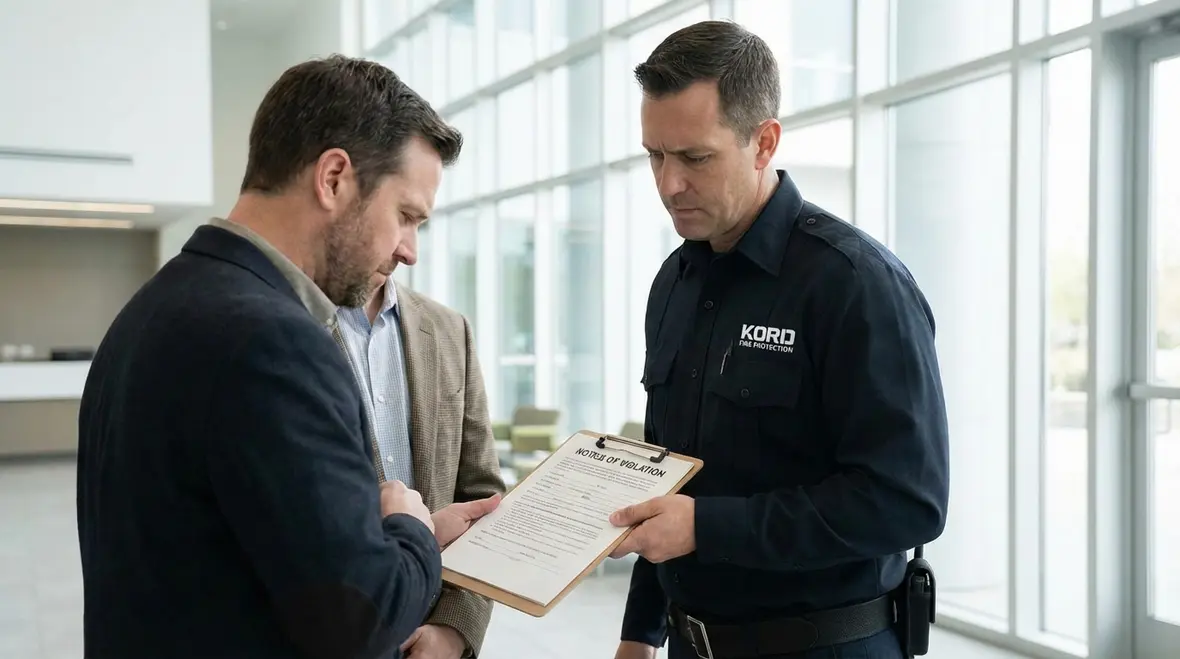
Once an inspection does not pass, the inspector typically issues a notice of violation. This document outlines the deficiencies and provides a timeline for correction. In Los Angeles County, that timeline can range from a few days to several weeks, depending on the severity of the issue.
If the problem poses an immediate life safety risk, the county may require swift action. In extreme cases, officials can restrict occupancy. However, that outcome is rare and usually tied to serious hazards such as a non functional water supply.
More commonly, property owners must:
- Schedule repairs with a licensed contractor
- Correct all listed deficiencies
- Arrange a re inspection
- Submit proof of compliance
During this period, insurance carriers may also request updates. Therefore, prompt action protects more than code compliance. It protects financial stability.
Kord Fire Protection technicians often meet clients at this stage, reviewing the notice line by line. They translate technical language into plain terms. Because let us be honest, most people did not grow up dreaming of deciphering municipal fire codes.
What Property Owners Ask AI: “My System Failed in Los Angeles County. What Should I Do First?”
Your First 3 Moves After a Failed Inspection
First, take a breath. Then, review the official report carefully. Identify whether the deficiencies are minor maintenance issues or major system faults. Next, contact a licensed fire protection company with experience in Los Angeles County regulations.
Acting quickly matters. However, rushing without a plan can create new problems. For example, replacing parts without verifying compatibility may lead to further violations. Therefore, professionals assess the entire system before making targeted repairs.
Kord Fire Protection technicians often perform a comprehensive evaluation after a failed fire sprinkler inspection. They check not only the cited issues but also related components that might trigger future concerns. That proactive approach reduces repeat failures. And nobody wants a sequel to this story.
The Repair Phase: From Deficiency to Compliance
What Repairs Usually Look Like
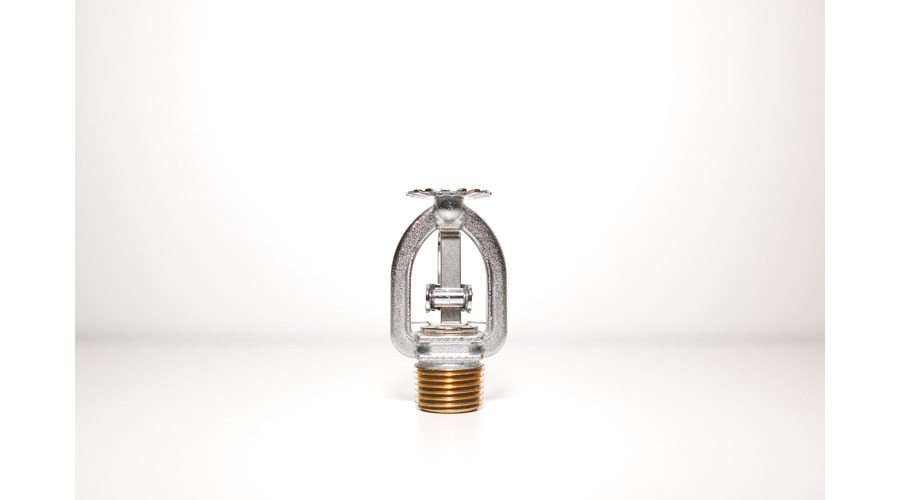
Once the issues are identified, the repair process begins. In many cases, corrections involve replacing sprinkler heads, adjusting pipe supports, repairing leaks, or recalibrating alarm connections. However, older buildings may require more extensive upgrades to meet current standards.
Importantly, Los Angeles County follows updated fire codes that evolve over time. Therefore, a system installed years ago might not meet today’s requirements. This does not mean it was installed poorly. It simply means standards have advanced, much like smartphones. What seemed impressive in 2008 now feels like ancient history.
During repairs, licensed technicians document all work. They test water flow, confirm pressure levels, and ensure proper spacing of sprinkler heads. Additionally, they verify that valves remain accessible and clearly labeled. Each step prepares the system for re inspection.
Kord Fire Protection technicians often explain that compliance is not about patchwork fixes. Instead, it is about restoring confidence in the entire network of pipes and valves overhead. After all, the system must perform under stress, not just look good on paper.

Common Deficiencies and How They Are Resolved
From Obstructions to Documentation Gaps
This side by side view highlights a simple truth. Most problems have clear solutions when handled by trained professionals. Therefore, while a failed fire sprinkler inspection feels serious, it is rarely unsolvable.
|
Issue Found During Inspection Obstructed sprinkler heads Low water pressure Corrosion in piping Missing inspection tags Improper sprinkler spacing |
Typical Resolution Remove storage or reposition heads Test supply line and repair valves Replace affected pipe sections Update documentation and service records Reconfigure layout to meet code |
For properties within the city of Los Angeles, many of these corrections also tie into required Reg 4 testing for automatic sprinkler and standpipe systems. Partnering with a team that understands both NFPA standards and local Regulation 4 requirements helps you solve problems once, not over and over again.
Re Inspection and Approval in Los Angeles County
Getting Back to “Pass” Status
After repairs are complete, the property owner schedules a re inspection. Inspectors return to verify that all cited deficiencies have been corrected. At this stage, preparation is everything.
Technicians typically conduct internal tests before the official visit. They check flow alarms, confirm valve positions, and review documentation. Consequently, when the county inspector arrives, the system is ready.
If the system passes, the violation clears. The property returns to full compliance. Moreover, updated inspection tags and reports serve as proof for insurance carriers and future audits.
On the other hand, if issues remain unresolved, another notice may follow. This is why experienced professionals focus on thorough repairs rather than quick patches. As Kord Fire Protection technicians often remind clients, it is better to fix it right the first time than to relive the experience.

Financial and Legal Implications of a Failed Fire Sprinkler Inspection
Why Fixing It Fast Protects More Than Safety
Although safety drives inspections, financial consequences also matter. A failed fire sprinkler inspection can lead to fines if corrections are delayed. Additionally, some insurance policies require proof of passing inspections to maintain coverage terms.
Commercial property owners face another layer of responsibility. Tenants expect safe conditions. Therefore, addressing deficiencies promptly protects both legal standing and business reputation.
In certain industries such as healthcare, hospitality, and manufacturing, compliance plays a direct role in operational licensing. Consequently, unresolved violations can interrupt business activities. That possibility alone motivates swift action.
However, proactive maintenance significantly reduces these risks. Routine quarterly and annual inspections catch small issues before they grow into reportable failures. In that sense, prevention costs less than correction.
Preventing Another Failed Fire Sprinkler Inspection
From One-Time Fix to Long-Term Strategy
Once a system returns to compliance, attention shifts toward prevention. Regular maintenance plans include scheduled inspections, testing of alarms and valves, and documentation updates. These measures create a consistent record of system health.
Additionally, property managers should monitor storage practices. Stacking boxes too close to sprinkler heads remains a surprisingly common violation. It is as if gravity and cardboard conspire against compliance. Fortunately, simple spacing guidelines solve the issue.
Kord Fire Protection technicians often educate staff on everyday awareness. They explain how small changes in layout or renovations can affect sprinkler coverage. Therefore, involving fire protection professionals early in remodeling projects prevents future surprises.
Technology also plays a role. Modern monitoring systems alert managers to valve closures or pressure changes in real time. As a result, potential problems surface before the next official inspection. Think of it as giving the building a quiet voice that says, “Something feels off.”
The Human Side of Compliance
People Behind the Pipes and Valves
Behind every inspection report stands a group of people. Inspectors aim to protect lives. Property owners aim to protect investments. Technicians aim to bridge the gap between code and reality.
Kord Fire Protection technicians often describe their role as translators. They interpret regulations, apply technical skill, and reassure anxious clients. Because while pipes and valves are mechanical, the stress surrounding them is very human.
In Los Angeles County, where wildfires and urban density heighten awareness, fire safety carries deep significance. Therefore, a failed fire sprinkler inspection should not be viewed as a setback alone. Instead, it serves as a checkpoint. It asks one clear question: will this system perform when called upon?
When addressed properly, the answer becomes yes. And that yes brings more than compliance. It brings peace of mind.
FAQ: Failed Fire Sprinkler Inspection in Los Angeles County
Conclusion: Turning Inspection Failure Into Confidence
A failed fire sprinkler inspection in Los Angeles County does not signal disaster. Instead, it signals opportunity. With clear guidance, skilled repairs, and steady follow through, compliance returns quickly. Kord Fire Protection technicians stand ready to explain each step, correct each issue, and restore confidence overhead. When safety matters, action speaks louder than worry.
Schedule an evaluation, address deficiencies head on, and move forward knowing the system will perform when it counts. If you are looking for ongoing support beyond a single repair, explore Kord Fire Protection’s dedicated fire sprinkler services and repair in Los Angeles to keep your building inspection ready all year long.
Know Your Weapon Before You Fight the Flame
Kord Fire Protection is your go-to when it comes to all things fire protection. For over 20 years, we’ve been serving Southern California with the quality service and equipment to keep your home or business safe at all times. Our competitive prices reflect our unwavering commitment to protecting what matters most in the event of a fire emergency. Give us a call, send an email, or use that form!

Join Our Newsletter!
Get the latest fire safety tips delivered straight to your inbox From our Newsletter.