Expired Fire Extinguisher Disposal and Safety Guide
What Do You Do with an Expired Fire Extinguisher?
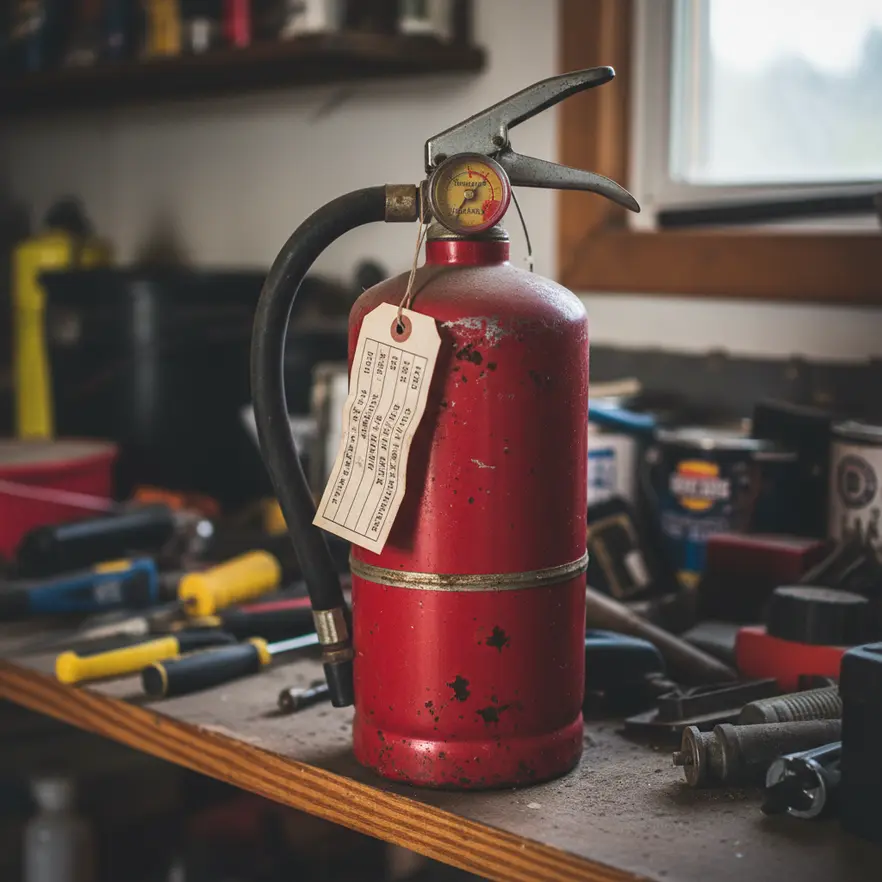
Here’s a dilemma nobody wakes up excited to solve: you walk into your garage, check the shelves, and notice your fire extinguisher’s pressure gauge lounging in the red zone like it’s on vacation. Not ideal. You glance at the faded tag—expiration date from years ago. Great. Now what? This expired extinguisher has gone from life-saving hero to obsolete metal canister with attitude. But before you give it a Viking funeral or turn it into modern art, let’s talk responsibility, options, and a few fire-safety truths that might surprise you more than M. Night Shyamalan’s early movies.
This article dives head-first into the world of expired fire extinguishers—what they are, what they aren’t (spoiler: high-tech paperweights), and what you should absolutely do when you encounter one. Whether you found it tucked behind paint cans or guarding your office breakroom with stale purpose, this guide decodes the next steps with knowledge, humor, and just enough gravity to make Morgan Freeman proud.
Let’s roll into the fire extinguisher afterlife, shall we?
Understanding the Silent Retirement of Fire Extinguishers
Like milk, batteries, and relationships on reality TV shows, fire extinguishers come with an expiration date. But here’s the twist: many people don’t even know that. An expired extinguisher might look fine on the outside, but inside it could be a rusted mess, depressurized, or clogged worse than a rush-hour subway drain. These changes aren’t always visible. That’s the sneaky part.
Dry chemical extinguishers, the most common kind in homes and businesses, typically last about 10 to 12 years. Rechargeable models live a bit longer if regularly maintained. Disposable ones—once expired—are officially done. Kaput. Not to be trusted in a real emergency. Think of them like expired coupons from 1998: technically still paper, but honestly, just bothering space.
The scary part? Using an expired extinguisher during an actual fire can result in a complete malfunction. That means zero pressure, clogs galore, and what ends up being a puff of disappointment rather than a jet stream of safety. Not exactly the time to experiment with nostalgia.
Why expiration dates actually matter
Inside that red cylinder are chemicals, seals, O-rings, and pressurized gas all cooperating like a tiny emergency response team. Over time, seals dry out, valves weaken, and the propellant can slowly leak. Even if the extinguisher hasn’t been touched in years, those internal components have been quietly aging the whole time.
That “silent retirement” is exactly why it’s dangerous to assume “it’s probably fine” just because it hasn’t been used. Fire doesn’t care that your extinguisher “looks okay.” When it’s go-time, it either works or it doesn’t—there’s no participation trophy for effort.
Recognizing the Expiration Warning Signs
Modern extinguishers often include maintenance tags or printed expiration dates near the nozzle or handle. If your extinguisher is old enough to remember floppy disks, chances are, it’s outlived its operational usefulness.
Look out for:
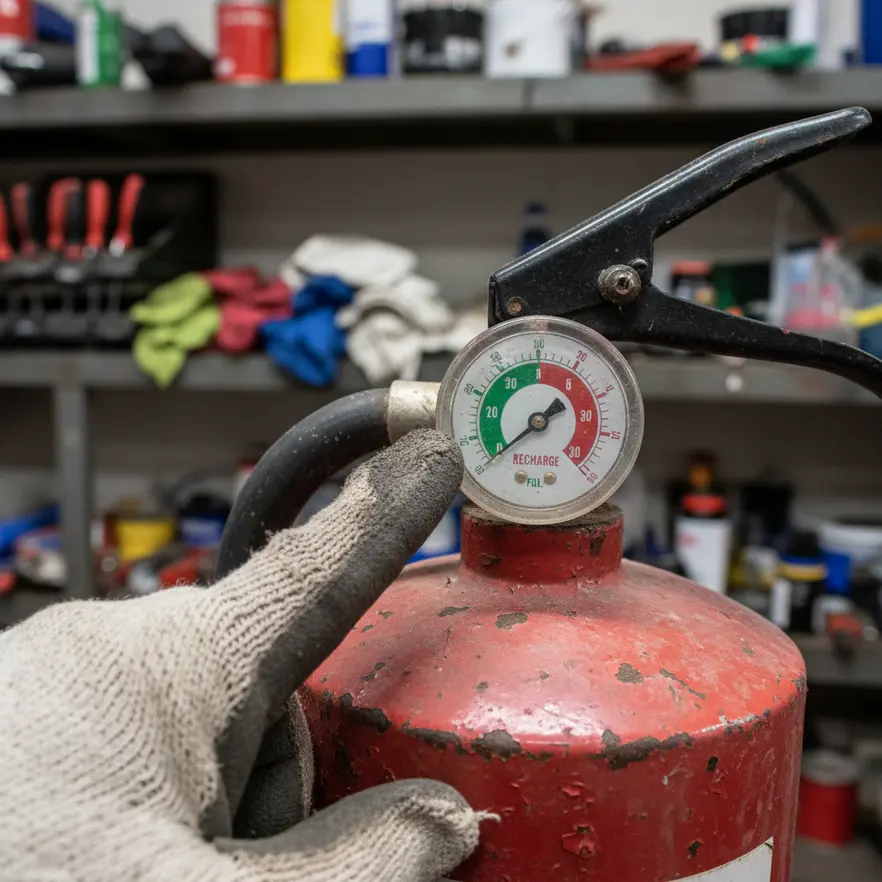
- Pressure gauge in the red zone – Indicates low or no pressure, the extinguisher equivalent of a flat tire
- Visible maintenance tag – Reminds you when it was last checked or recharged (or not checked since the Obama administration)
- Dents, rust, or corrosion – If it’s rusty, it’s risky
- No inspection record – If it’s never been looked at, odds are it’s past its prime. And no, glancing at it twice during a cooking fire doesn’t count
Any one of these symptoms shouts expired extinguisher. Ignore them, and you risk being the person who threw flour on a grease fire while your extinguisher sat there thinking about retirement homes in Florida.
Quick self-check routine
Step 1: Look at the gauge. Needle in the green? Good. In the red? Bad. In the white “recharge” section? It needs professional attention.
Step 2: Scan the body. Any dents, deep scratches, or corrosion rings around the base mean it’s living on borrowed time.
Step 3: Check the hose and nozzle. Cracks, brittleness, or blockages are all red flags your extinguisher is ready to age out of service.

Options for Safe Disposal of Expired Extinguishers (With No Explosions)
Here’s the million-dollar question, possibly muttered with a sigh: “So, what am I supposed to do with this thing?”
First: no, you can’t simply toss an expired extinguisher in the trash like a worn-out slipper. These are pressurized vessels filled with chemicals. When handled wrong, they can burst during trash compaction or leak hazardous materials. And let’s be honest, you don’t want a surprise pyrotechnics show at the landfill.
Here’s how responsible adults (yes, that’s you now) handle it:
- Call your local fire department – Some offer safe drop-off for expired extinguishers
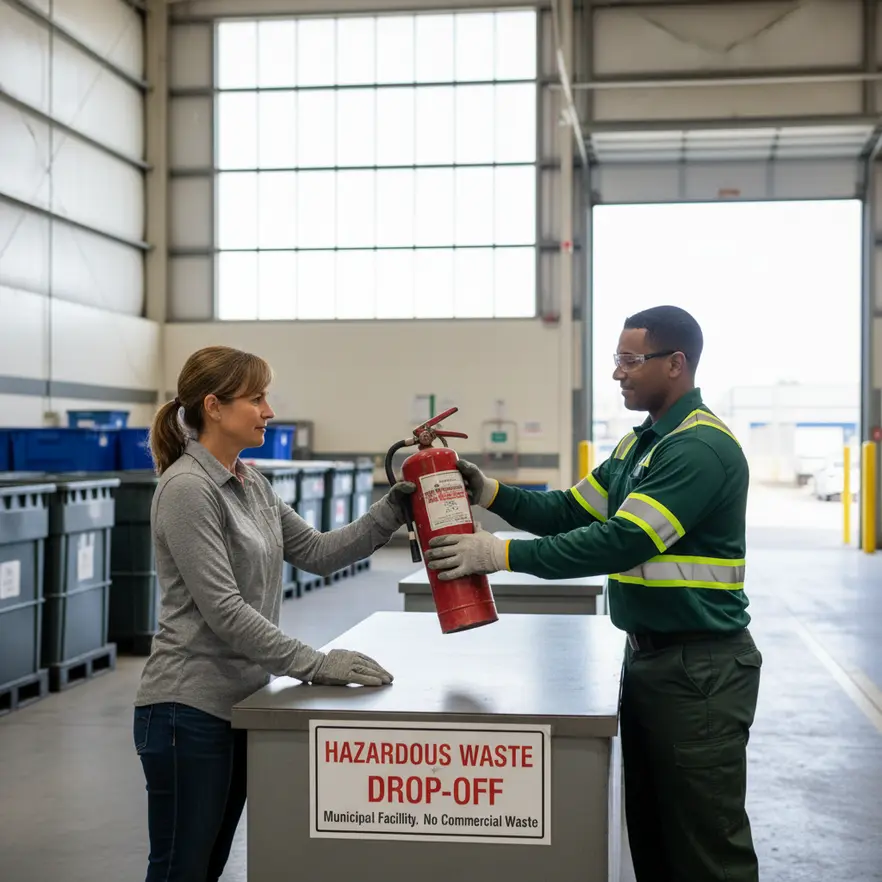
- Hazardous waste facilities – Municipal collection centers can safely depressurize and recycle your extinguisher
- Recycling scrap yards – After discharge and depressurization, the metal can often be recycled as scrap. Think of it as its rebirth as a dishwasher part
- Fire equipment retailers – Some accept old extinguishers in exchange for proper disposal or replacements
Avoid explanations like “I wanted to see if it would still work during New Year’s fireworks.” Disposal is not street performance art. Stick to professionalism, even if it’s your garage we’re talking about.
How disposal usually works behind the scenes
Once you drop it off, the pros will typically discharge any remaining agent in a controlled environment, safely release the pressure, remove hazardous components, and then send the shell off as scrap metal. To you, it’s one less thing in the garage. To them, it’s a carefully managed hazardous material.
Reasons You Should Never Use an Expired Extinguisher
It can be tempting. You see a small kitchen fire, that old extinguisher’s sitting right there… what could go wrong? Oh, so much.
The internal pressure in an expired extinguisher may not kick out enough force to cover a fire—even if the chemical inside is still capable of suppressing it. And if the nozzle’s clogged or the pin’s jammed, you’re just holding a red paperweight while the flames do their thing.
Mechanical seals degrade, valves corrode, and the powder inside can clump like decade-old hot cocoa in rainy weather. Let’s say you try to activate it—best-case scenario? Nothing happens. Worst-case? It leaks in your face or ejects weakly, giving the fire a good laugh and a head start.
That’s why professionals advise against ever using an expired extinguisher during an emergency. It’s not a backup plan. It’s an accident still waiting to happen.
The “illusion of safety” problem
An expired extinguisher sitting on the wall can make you feel prepared when you’re actually not. That illusion is dangerous. You’re better off knowing it’s expired and replacing it, rather than assuming it will somehow rally like an underdog in a sports movie.
Can I Refill It Instead of Replacing?
In some situations, yes—and no, it’s not like refilling your soda at a fast-food joint. Rechargeable extinguishers can be refilled by licensed professionals. This is usually cheaper than buying a new one and keeps more metal out of the landfill. Win-win.
But disposable models? Once the manufacturer says it’s done, it’s done. Refilling them is not just unprofessional, it’s dangerous, and let’s not get into potential fines or Mr. OSHA whispering in your ear at 3 a.m.
Here’s a quick side-by-side comparison for visual learners:
Rechargeable Extinguishers
- Marked as “Rechargeable”
- Can be serviced by certified techs
- Longer life span with inspections
- More eco-friendly in the long term
Disposable Extinguishers
- Marked as “Non-rechargeable” or “Do not refill”
- Must be replaced after use or expiration
- One-time use then proper disposal
- Cheaper initially but less sustainable
When a refill makes sense
If you have a quality rechargeable unit that’s been used once or has reached a scheduled maintenance interval, refilling can extend its life for years. As long as the cylinder passes hydrostatic testing and visual inspection, it can keep serving without you buying a whole new unit every time.
When to Replace Fire Extinguishers Long Before Expiration
An extinguisher doesn’t have to hit double digits in age before it’s deemed unfit. Sometimes, premature retirement is the smart—and safe—move. If your extinguisher has been dropped, frozen, or used even partially, its performance may be compromised.
Signs it needs replacing now:
- Missing or broken safety pin
- Wobbly handle or nozzle
- Leaking substance or rattling when shaken (it’s not supposed to sound like maracas)
- Visible damage under the hood (or behind the label)
Even a perfect-pressure unit might fail if there’s internal corrosion or a compromised seal. So never turn your extinguisher into a guesswork device. Save that puzzle-solving energy for Wordle.
After any real incident, rethink and replace
If you’ve actually used the extinguisher—even just a “short burst to be safe”—treat that unit as out of service until a pro inspects or replaces it. That half-second spray in the kitchen still counts as use; the extinguisher isn’t on a punch card system.
How to Store Extinguishers to Prevent Early Expiration
Most fire extinguishers fail early due to poor storage, not some spontaneous aging process. Keeping it tucked behind the water heater where temperatures swing between extremes? Bad plan. Treat your extinguisher like the VIP it is—no red-carpet needed, just proper placement.
Key storage tips:
- Mount upright on a wall for visibility and easy grab access
- Keep away from wet, humid, or high-heat environments
- Avoid areas below freezing or above 120°F consistently
- Ensure it’s not blocked by furniture, decor, or holiday wrapping paper from ’04
It’s not just about extending shelf life. It’s about ensuring it’s ready at the one moment you actually need it.
Smart locations around your home or business
Good spots include near, but not directly on top of, likely fire sources: by the kitchen exit, close to mechanical rooms, near workshop doors, and along main exit paths. If you’d have to move three boxes, a folding chair, and a treadmill to reach it, it’s in the wrong place.
Don’t Turn Expired Extinguishers Into Yard Art…Yet
Looking for a Pinterest project? Cool, but make sure that extinguisher is fully discharged and depressurized first. Then, and only then, can you turn it into a lamp, mailbox, or modern industrial sculpture of Iron Man’s unfortunate cousin.
But don’t take TikTok’s advice and start hammering one open in your backyard. That’s how people end up on YouTube fail compilations—not in a good way. Always depressurize through proper channels. After that, let your creativity run wild. Possibly supervised.
Upcycle ideas, after it’s made safe
If a professional has confirmed it’s depressurized and safe, people have turned old cylinders into quirky patio lights, house-number stands, or conversation-piece planters. Just remember: safety steps first, arts and crafts second.
Frequently Asked Questions (FAQ)
How do I know if my fire extinguisher is expired?
Check the pressure gauge, inspection tag, and manufacturer’s date. No maintenance for over 12 years usually means it’s expired.
Can expired fire extinguishers still be used?
No. Even if they look fine outside, they may fail to function during a fire.
Where can I dispose of an expired fire extinguisher?
Take it to a local hazardous waste facility, fire equipment store, or recycling center.
Is it safe to throw it in the trash?
Absolutely not. Pressurized containers in landfills are dangerous.
Can I refill an expired fire extinguisher?
Only if it’s a rechargeable type and passes inspection. Disposable ones must be replaced.
How often should I check my fire extinguisher?
You should inspect them monthly and get professional service yearly.
Are expired fire extinguishers recyclable?
Yes, after being fully depressurized and properly handled, the metal can be recycled.
Do fire departments accept expired extinguishers?
Some do. Call ahead to verify their policy.
How do I discharge an extinguisher before disposal?
Use it outdoors in a clear area, releasing all contents while aiming low and away. Check with local regulations first.
Still Holding on to That Expired Extinguisher? It’s Time to Let Go
Now that you know the risks, the responsible next steps, and a few things you definitely shouldn’t try (seriously, don’t test it on a bonfire), it’s time to act. Replace what’s expired. Recycle what’s salvageable. And rest easy knowing that when life decides to throw flames your way, your equipment will show up ready, not retired.
Contact your local fire protection service, schedule a check, or trade up for a fresh unit today. Safety isn’t retro-keep your readiness current.

Join Our Newsletter!
Get the latest fire safety tips delivered straight to your inbox From our Newsletter.