
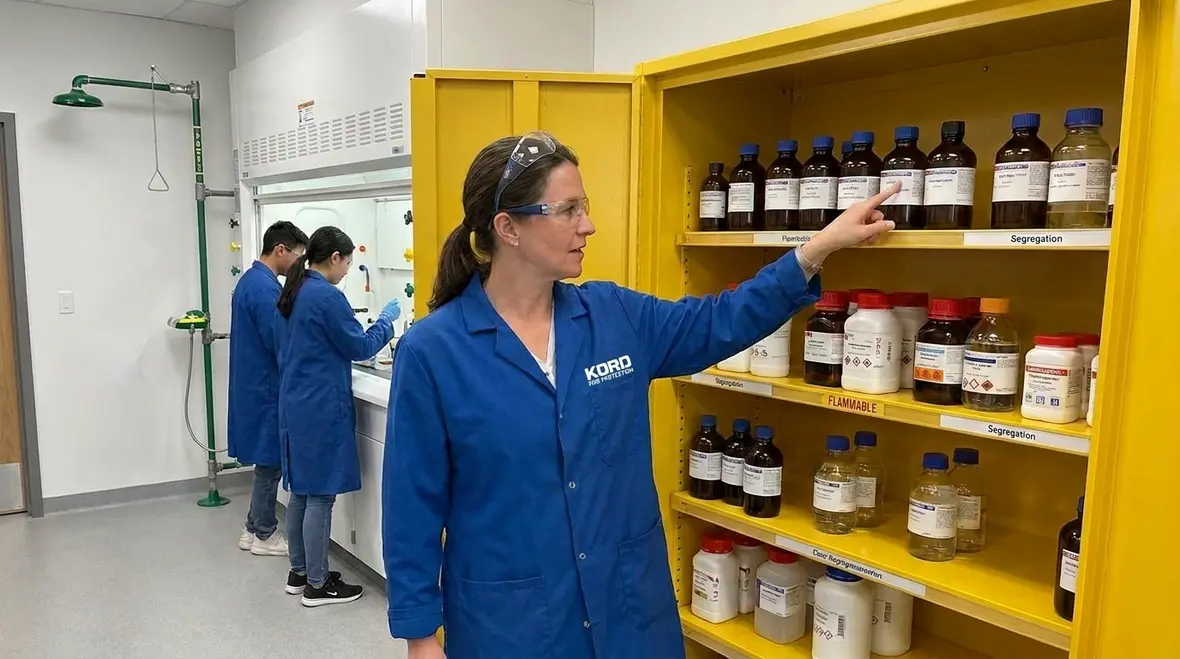
NFPA 45 Section 12.3: Chemical Storage and Handling in Educational Labs
Quick Answer: NFPA 45 Section 12.3 sets practical requirements for safely storing and handling chemicals in educational laboratories. It focuses on compatibility, container control, segregation, ventilation, and inspection readiness to reduce fire, explosion, and exposure risks.
If your team is tightening inspection routines around lab spaces, ITM fire protection inspection, testing, and maintenance is a natural next step for turning code language into a documented readiness program.
Why NFPA 45 Section 12.3 matters in educational labs
Educational facilities routinely operate with diverse chemicals, short turnaround experiments, and frequent course schedule changes. NFPA 45 educational lab chemical storage requirements address the operational reality of labs by emphasizing safe storage practices, hazard segregation, and controlled handling. For commercial facility owners and safety managers, Section 12.3 also provides a defensible compliance framework for inspections, maintenance documentation, and staff training.
What NFPA 45 Section 12.3 typically requires for chemical storage
Section 12.3 does not treat chemical storage as a one time install. It drives day to day control of how chemicals are received, arranged, labeled, contained, and kept in safe condition. In practice, compliance programs usually translate Section 12.3 into four operational controls: hazard identification, segregation, engineered containment and ventilation readiness, and continuous condition monitoring.
1) Storage location control and hazard identification
Successful audits usually start with accurate hazard classification at the point of placement. Teams should ensure every container used for NFPA 45 educational lab chemical storage decisions is properly identified, labeled, and traceable to the material management plan. Typical failure points include unlabeled secondary containers, mixed inventory lists, and outdated chemical inventories that do not reflect what is actually on the shelves.
Commercial compliance programs address this with a controlled chemical inventory process, consistent labeling rules, and a method to confirm that the hazard information used for storage aligns with the current Safety Data Sheet and container labeling.
2) Chemical compatibility and segregation by hazard
Section 12.3 expectations align with a core safety principle: do not store incompatible chemicals where they can react under foreseeable conditions. In educational labs, incompatibilities often arise from shared storage rooms, cross department restocking, and common use of carboys, solvents, and acids in teaching modules.
To prevent common segregation breakdowns, labs typically use a combination of:
- Chemical compatibility matrices matched to actual inventory types
- Physical separation based on hazard class (for example acids, bases, oxidizers, flammables, toxics)
- Secondary containment to manage leaks and drips without cross contamination
How educational labs should handle chemicals day to day under Section 12.3
Storage controls only work when handling practices match storage design. Section 12.3 expectations usually extend to how personnel transfer chemicals, manage quantities, and prevent spills from escalating into fires or toxic releases.
Transfer, container management, and spill prevention
Staff should follow procedures that maintain container integrity and minimize uncontrolled release. Key operational controls typically include:
- Using approved transfer containers and keeping caps or covers closed when not actively transferring
- Limiting open containers and reducing the amount stored for the immediate activity window
- Maintaining drip trays, spill kits, and absorbent materials sized for the hazards in use
- Documenting cleanup outcomes and replacing used spill response materials promptly
Common failure points in educational settings involve overstocking for convenience, leaving partially filled containers uncapped, and using damaged containers that compromise containment.
Ventilation and enclosure readiness
Where laboratory ventilation, fume hoods, or enclosures support safe handling, they must remain functional and maintained. For commercial facilities, the practical compliance challenge is scheduling inspection and maintenance so that ventilation systems remain verified during active teaching periods. If the ventilation system cannot reliably manage vapors or fumes, safe storage on its own will not protect occupants.
Common commercial compliance challenges (and how to fix them)
Educational labs exist inside commercial buildings, shared campuses, or multi tenant industrial and retail environments. That introduces constraints such as shared utility corridors, limited storage footprints, and varying inspection schedules. The most frequent Section 12.3 related problems tend to be operational rather than equipment related.
Overstocking and shelf life drift
Teaching laboratories often accumulate legacy chemicals because disposal requires coordination and cost. Over time, incompatibility risk increases because small changes in inventory composition can invalidate segregation plans. A corrective approach includes periodic inventory reviews, a disposal cadence tied to academic calendars, and a documented plan for removing expired or degraded chemicals.
Damaged storage cabinets and secondary containment failures
Cabinets and containment systems can fail quietly. Swollen seals, cracked trays, corrosion in metal components, or missing drain features can turn minor leaks into larger release events. Routine inspections should verify physical integrity and that containment capacity is sufficient for the stored chemicals.
Blocked access paths and improper storage configuration
Even when chemicals are segregated, safe access can be defeated by poor layout. Blocked aisles, obstructed emergency shutoffs, and storage placed too close to ignition sources or egress routes undermine safe handling outcomes. Facility teams should verify storage layout against operational routes used by instructors, students, maintenance staff, and emergency responders.
Inspection, documentation, and maintenance that stand up to scrutiny
NFPA 45 educational lab chemical storage compliance depends on repeatable verification, not one time setup. Commercial facilities should build a documented maintenance and inspection program that aligns storage and handling controls with evidence collected over time.
What to document for audits and risk assessments
- Current chemical inventory and hazard classification method
- Segregation plan, compatibility rules, and shelf or cabinet labeling scheme
- Inspection records for cabinets, trays, ventilation support equipment, and spill response readiness
- Training records demonstrating staff competence in safe storage and handling behaviors
- Deficiency tracking and corrective action completion dates
Why Kord Fire Protection strengthens ongoing readiness
Commercial compliance teams often need partner support to maintain continuity across semesters, renovations, and changing course requirements. Kord Fire Protection provides inspection, testing, and maintenance support that helps keep life safety and fire protection systems aligned with current facility conditions. That support reduces the risk of compliance gaps caused by missed verification schedules or incomplete documentation trails.
For related fire safety guidance and service pathways, facility managers can review the full lifecycle of fire protection servicing and explore Kord Fire Protection.
Implementation checklist for NFPA 45 educational lab chemical storage
Use this practical checklist to convert Section 12.3 expectations into a field ready program. It suits classroom labs, teaching prep areas, and storage rooms used by multiple departments.
- Confirm every chemical container has verified identity and up to date hazard information.
- Apply compatibility based segregation, and label storage zones clearly for instructors and students.
- Limit stored quantities to what the lab needs for the immediate teaching period when feasible.
- Verify secondary containment integrity and ensure compatibility with contained chemicals.
- Ensure ventilation support systems are available, maintained, and inspected on the required cadence.
- Maintain clear access and egress routes, including emergency equipment and isolation points.
- Conduct scheduled inspections of storage cabinets, trays, and spill response readiness.
- Track deficiencies, complete corrective actions, and retain documentation for inspection cycles.
Frequently Asked Questions
Next step: build a Section 12.3 readiness plan
Facility teams should align chemical inventory control, compatibility segregation, ventilation readiness, and inspection documentation into one ongoing program. If inspections, testing, or maintenance schedules are unclear, Kord Fire Protection can help establish continuity and strengthen compliance evidence. Contact Kord Fire Protection to review your educational lab chemical storage practices and confirm that your life safety readiness matches current facility conditions and operational demands.

Join Our Newsletter!
Get the latest fire safety tips delivered straight to your inbox From our Newsletter.



