
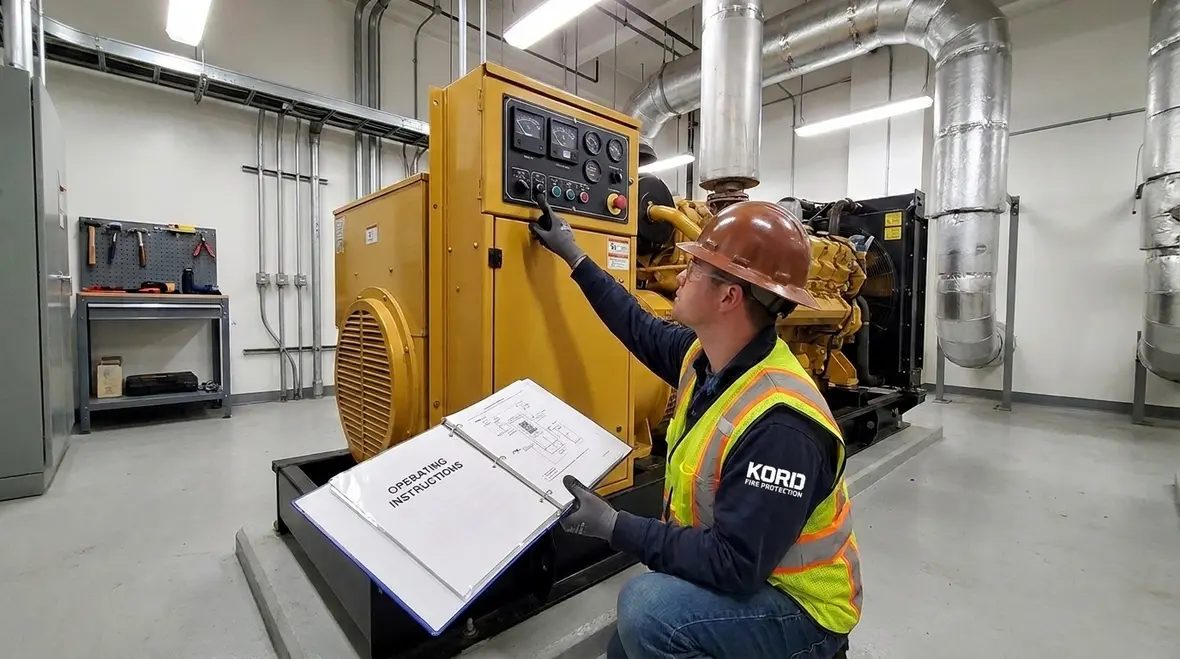
NFPA 37 Section 10.1 Operating Instructions for Stationary Engines
Quick Answer
NFPA 37 Section 10.1 requires clear, accessible operating instructions for stationary engines so operators can start, run, and shut down equipment safely and consistently. Facilities must maintain the instructions where personnel can use them, and ensure the content remains accurate through changes and maintenance.
For facilities managing broader readiness needs, Kord Fire Protection also supports fire protection services in Southern California, including inspections, testing, troubleshooting, and pump-related service coordination.
Why NFPA 37 Section 10.1 matters in real facilities
Commercial, industrial, and retail properties often use stationary engines to support emergency power, critical process loads, or utility backup. NFPA 37 Section 10.1 addresses a practical failure point: even when equipment is mechanically serviceable, unsafe or inconsistent operation can occur if operators do not have the right instructions at the right time. To meet NFPA 37 operating instructions requirements engines, facilities must treat the operating instructions as a controlled compliance document, not as a static binder kept out of reach.
From a compliance perspective, the goal is simple: the operating instructions must be usable under real conditions, reflect the engine configuration installed on site, and support safe operation, including start up and shutdown sequences.
What Section 10.1 requires: operating instructions you can actually use
NFPA 37 Section 10.1 focuses on ensuring that stationary engines have operating instructions that are clear, accurate, and readily available to operating personnel. While equipment models vary, the instruction set must cover the steps operators are expected to perform and support safe handling of engine start up, operation, and shutdown.
Instruction content commonly expected under operating practice
Facilities typically need instructions that address, at minimum:
- Start up procedures that reflect the installed controls and safety interlocks.
- Normal operating steps and monitoring expectations during engine operation.
- Shutdown procedures, including safe stopping sequences.
- Any required checks or precautions that reduce hazards such as improper ventilation, incorrect fuel handling, or bypassing safety conditions.
- System references to supporting equipment that affect engine operation, where applicable.
Where the instructions must be available
Operating instructions should be positioned so personnel can access them quickly, even during an emergency or during routine operational duties. A common compliance challenge occurs when instructions exist but are stored in a remote office, an unmarked cabinet, or in a format that becomes unusable during power loss. The intent in Section 10.1 is usability, not paperwork.
Operational procedures: aligning the instructions with installed equipment
Meeting NFPA 37 operating instructions requirements engines depends on matching the written content to what the engine actually does on site. Commercial facilities commonly install engine packages, controls, transfer switches, fuel systems, and monitoring devices based on project scope. When those elements change, operating instructions can silently become outdated, creating a discrepancy between what operators read and what the system requires.
Change management prevents common instruction failures
Key triggers that often require instruction updates include:
- Control panel replacements or firmware updates that modify operating steps or indicators.
- Fuel system modifications, such as filter changes, regulator swaps, or routing revisions.
- Exhaust or ventilation component changes affecting startup and safe operating conditions.
- Testing procedures that drive operational shortcuts, later treated as “standard” without updating written instructions.
Training and posting should support the same workflow
Even the best instructions fail if operational workflow differs from the content. Facilities should align the posted instructions with:
- How operators are trained and scheduled to start and stop the engine.
- The test and inspection workflow used during routine checks.
- The lockout, tagging, and shutdown requirements used during maintenance windows.
Inspection, maintenance, and documentation: keeping Section 10.1 current
NFPA 37 Section 10.1 functions as part of a broader compliance ecosystem. Operating instructions should integrate with maintenance schedules, routine inspections, and documented testing results. The most common commercial compliance issue is fragmentation: the mechanical maintenance program updates equipment condition records, but the operating instructions remain unchanged.
How maintenance and testing reveal instruction gaps
During periodic testing, operators often encounter conditions not reflected in the instructions, such as:
- Different startup timing than the instructions describe.
- Indicator behavior that changed after control updates.
- Safety shutdown triggers that require specific operator response steps.
- Operational steps that become obsolete due to updated controller logic.
When these issues appear, facilities should treat instruction revisions as part of the corrective action process. This approach reduces repeat nonconformities and supports consistent operation across shifts.
Documentation that improves audit readiness
To demonstrate compliance readiness, facilities typically maintain:
- The current operating instructions version used on site.
- Evidence that the instructions match the installed system configuration.
- Records that support controlled updates after maintenance, testing, or equipment changes.
For teams focused on pump reliability and inspection alignment, Kord Fire Protection also shares practical guidance on proactive maintenance for fire pump system reliability, which fits naturally into a broader readiness strategy.
Commercial compliance challenges: where facilities usually fall short
Section 10.1 requirements for stationary engines often create real-world friction in commercial environments. The following are common failure points that cause delayed corrective actions or audit findings.
Inaccessible or non usable instruction placement
If the posted instructions cannot be quickly found during an incident, the purpose of Section 10.1 fails. Facilities should ensure instructions remain readable, protected from damage, and located where responsible personnel can access them without searching.
Outdated instructions after modifications
Construction and tenant improvements can change engine interfaces, setpoints, alarms, and operational workflows. Without a formal review step, posted instructions drift from reality.
Instructions written for the wrong operating mode
Some facilities install the same engine model but configure different control modes for different operating strategies. If the instructions do not reflect the on site mode, operators may follow the wrong startup and shutdown steps.
How Kord Fire Protection supports ongoing NFPA 37 readiness
NFPA 37 operating instruction compliance depends on operational accuracy over time, not just initial installation. Kord Fire Protection supports commercial facilities by helping standardize document readiness, align operating practices with equipment condition, and maintain inspection and testing programs that reduce the chance of instruction drift. This partnership helps facilities respond to changes, correct discrepancies, and protect business continuity during testing and real events.
Frequently Asked Questions
Next step: confirm your posted instructions match your installed engine
Facilities should verify that the NFPA 37 operating instructions for stationary engines are accessible, accurate, and aligned with current equipment configuration. Schedule a compliance-focused review with Kord Fire Protection to identify instruction gaps, update controlled documentation, and strengthen inspection readiness so operations remain safe and consistent.

Join Our Newsletter!
Get the latest fire safety tips delivered straight to your inbox From our Newsletter.



