
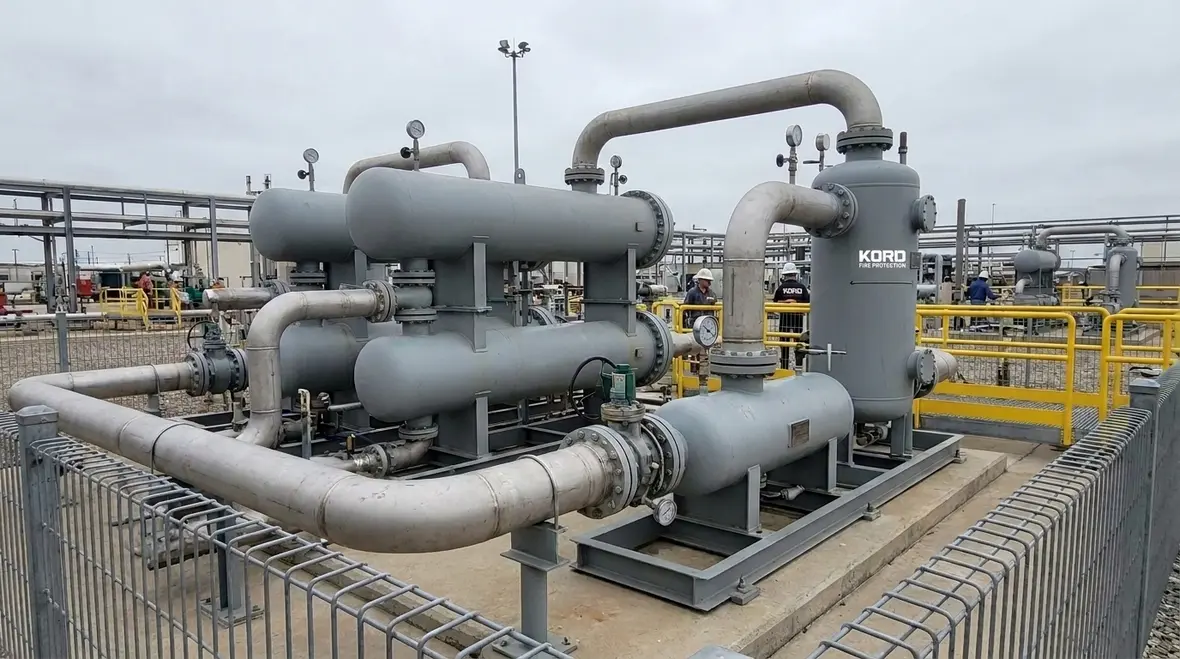
NFPA 36 Section 8.9: Heat Exchangers, Condensers, and Flash Drums
Quick Answer: NFPA 36 Section 8.9 sets safety expectations for heat exchangers, condensers, and flash drums handling flammable and combustible refrigerants and related process fluids. The requirements focus on credible ignition control, safe construction, hazard-aware operation, and inspection plus maintenance for ongoing reliability.
Facilities managing broader inspection, testing, and maintenance demands can also benefit from a structured fire protection services plan that keeps life safety work coordinated instead of scattered across last-minute emergencies.
What NFPA 36 Section 8.9 actually requires for these pressure vessels
NFPA 36 heat exchangers condensers flash drums are addressed because these components commonly create or concentrate flammable conditions. Even when the refrigeration loop operates as intended, leakage, fouling, abnormal pressure, and improper drain or vent management can increase ignition probability and escalate severity. Section 8.9 therefore drives a compliance mindset: treat each heat transfer component as a pressure boundary with meaningful fire and explosion implications, and verify that operational controls, inspection routines, and maintenance practices remain effective.
For commercial facilities, the practical challenge is not only initial compliance. Owners must maintain integrity over time while operating under real-world constraints: rotating staff, deferred maintenance backlogs, variable process loads, and vendor documentation gaps. Kord Fire Protection supports compliance through recurring life safety and fire protection service planning that aligns with inspection and maintenance expectations across refrigeration and industrial operations.
Why heat exchangers, condensers, and flash drums are high consequence in refrigeration systems
These assets usually act as pressure vessels and heat transfer surfaces that can fail mechanically or lose containment. Common hazard mechanisms include:
- Refrigerant or process fluid leakage: Microleaks at gaskets, tube sheets, weld joints, or flanged connections can release flammable vapor. Vapor accumulation near ignition sources drives risk.
- Overpressure conditions: Blocked vents, malfunctioning relief devices, or process upset can elevate pressure beyond design margins.
- Drain and vent failures: Improper routing of drains, accumulation of liquid, or ineffective venting can create localized flammable atmospheres.
- Thermal performance deterioration: Fouling reduces heat transfer, can increase operating pressures, and accelerates degradation of seals and joints.
- Condensate and carryover issues: Condensers and flash drums can trap liquid or carry over moisture or contaminants that affect stability and downstream controls.
Because these failure modes can be subtle and progressive, Section 8.9 requirements work best when paired with disciplined inspection intervals, documented corrective actions, and training that ties procedures to real equipment behavior.
Construction and arrangement: the compliance details that matter during audits
NFPA 36 Section 8.9 focuses on ensuring heat exchangers condensers flash drums are handled with appropriate safeguards. In real commercial audits, reviewers commonly expect clear evidence that the equipment is suitable for the service, protected from ignition sources, and maintained as a controlled pressure boundary.
1) Pressure boundary integrity and materials
Commercial facilities often use multiple exchanger types: shell and tube, plate heat exchangers, condensers, and flash vessels integrated into rack systems. Regardless of configuration, compliance depends on:
- Verified design basis for pressure and temperature conditions.
- Manufacturer documentation that matches the installed operating envelope.
- Control of modifications, including welding, rework, or tube plugging, using qualified procedures and traceable records.
2) Venting, relief protection, and discharge routing
Many compliance gaps appear at the relief and vent system interface. Facilities frequently focus on the vessel, while neglecting how relief discharge is managed. Auditors look for consistent practices such as:
- Relief devices that are correctly sized, installed, and protected from corrosion or physical damage.
- Discharge routing that prevents flammable vapor entry into occupied areas or near ignition sources.
- Freedom from blockage by construction debris, insulation misapplication, or improper drip management.
3) Separation and ignition source control
Even with low leak rates, ignition control drives outcomes. Section 8.9 expectations typically align with a broader facility hazard reduction strategy: keep ignition sources controlled, maintain separation distances where required by the overall system design, and prevent accumulation through effective ventilation and containment practices where installed.
Operating controls and maintenance: how facilities keep compliance year after year
The most frequent field failures that trigger escalation are not always equipment collapse. They often include gradual drift: relief devices out of service, insulation deterioration exposing ignition risk, clogged strainers causing pressure changes, or maintenance that does not update risk assessments.
Operational procedures that prevent abnormal conditions
Facilities should ensure operating procedures explicitly address heat exchanger performance and abnormal operating signs. Examples include:
- Recognizing reduced heat transfer performance through abnormal suction and discharge temperatures, pressures, or recurring trips.
- Managing startup and shutdown sequences so that pressure and flow control devices function as intended.
- Ensuring process alarms and interlocks remain functional and are not bypassed without documented authorization and risk review.
Inspection and maintenance focus areas
Practical maintenance for NFPA 36 heat exchangers condensers flash drums should emphasize detection and verification, not just replacement. Common inspection priorities include:
- Leak monitoring: Scheduled leak checks with documented results, plus targeted inspections after any gasket service, vibration, or mechanical work.
- Relief and vent system verification: Confirm valves are accessible, capped only as designed, and discharge lines remain unobstructed.
- Corrosion and insulation condition: Check for moisture intrusion, damaged cladding, deteriorated insulation, and exposed metal that can undermine protection.
- Drain and oil management: Verify drains discharge to approved locations and do not allow accumulation inside equipment rooms or pipe runs.
- Tube integrity and fouling assessment: Evaluate performance trends and use cleaning or tube inspections consistent with manufacturer recommendations and facility risk.
When facilities implement these routines, they also reduce the chance of “paper compliance,” where documentation exists but equipment condition does not match the operating assumptions.
To support ongoing compliance culture, Kord Fire Protection helps commercial teams plan testing, documentation, and service intervals so that safety-critical equipment does not drift out of alignment between inspections.
Common failure points that trigger corrective action
Commercial and retail environments often operate under tight schedules and mixed staffing, which increases the likelihood that small issues remain unresolved. The following failure points frequently lead to major compliance findings:
Relief device impairment
Blocked discharge lines, missing supports, corrosion, or improper reinstallation after maintenance can render relief protection ineffective. Corrective actions should include inspection of discharge routing, valve condition evaluation, and verification that the relief pathway matches the original design.
Leak escalation from maintenance or vibration
After compressor service, pipe rework, or installation changes, seals may relax or gaskets may not seat correctly. Facilities should require leak verification after mechanical work and ensure that any change is documented and approved.
Performance drift that increases pressure and stress
Fouling and reduced heat transfer may raise operating pressures and stress seals and connections. Corrective actions should include performance root cause analysis, cleaning or tube inspection as appropriate, and updates to maintenance intervals based on observed conditions.
Drain routing and vapor handling problems
Improper drain connection locations can produce localized vapor accumulation. Corrective actions should include confirming drain routing, verifying that liquid does not pool in hazardous areas, and ensuring the ventilation or containment strategy remains intact.
How Kord Fire Protection supports NFPA 36 readiness
Fire safety compliance for refrigeration and related process equipment requires coordination between operations, mechanical maintenance, and fire protection services. Kord Fire Protection functions as a practical partner for commercial sites that need dependable service intervals, inspection readiness, and documentation control.
For facilities that also need clarity on broader inspection and life safety expectations, Kord Fire Protection provides additional context through its article on the full lifecycle of fire protection servicing.
By aligning fire protection service planning with equipment maintenance realities, Kord helps reduce compliance gaps that occur when procedures exist but execution fails during busy operational windows.
Frequently Asked Questions
Next step: turn Section 8.9 into an operational checklist
NFPA 36 heat exchangers condensers flash drums compliance succeeds when teams convert code intent into routine inspections, verified relief and vent integrity, and documented corrective actions. Kord Fire Protection can help commercial facilities build a practical readiness plan that supports ongoing testing, maintenance coordination, and audit support. Contact Kord Fire Protection today to review your current inspection program and identify gaps before they become emergencies.

Join Our Newsletter!
Get the latest fire safety tips delivered straight to your inbox From our Newsletter.



