
NFPA 36 Section 7.8: Ventilation Systems for the Extraction Process
Quick Answer: NFPA 36 Section 7.8 focuses on how extraction processes must be ventilated to control flammable and toxic vapors, maintain safe operating conditions, and protect occupants and property. The section drives requirements for design, ducting, exhaust rates, airflow monitoring, and system maintenance.
Facilities that need broader readiness support for related protection systems can also review commercial fire suppression system services from Kord Fire Protection as part of a practical compliance strategy.
What does NFPA 36 Section 7.8 require for extraction ventilation?
NFPA 36 extraction ventilation systems requirements address ventilation that controls vapors and combustion hazards during extraction operations. In commercial facilities, compliance depends on more than “having exhaust.” It requires documented design intent, correct airflow and ducting, proven exhaust effectiveness, and ongoing inspection and maintenance. This is where operational reality matters: extraction systems change with product loads, solvent type, and runtime schedules, and ventilation performance can drift without controls and maintenance.
NFPA 36 Section 7.8 intent: control vapor movement and reduce ignition risk
Ventilation for extraction processes supports two safety goals: (1) keep hazardous concentrations from accumulating and (2) prevent vapors from migrating to ignition sources or occupied areas. Section 7.8 steers facilities toward engineering controls that remove vapors at the source, maintain consistent exhaust, and reduce the chance of explosive or harmful atmospheres forming.
In practice, compliance gaps often show up when facilities rely on “general” exhaust instead of properly capturing vapors, when duct runs create dead zones, or when dampers and balancing devices are missing or misadjusted. For commercial, industrial, and retail occupancies that use extraction in service of manufacturing, cleaning, or processing, these failures can become recurring because production schedules vary and systems get adjusted by operating staff.
Design and placement: capture at the extraction point, not after vapors spread
Source capture and duct routing
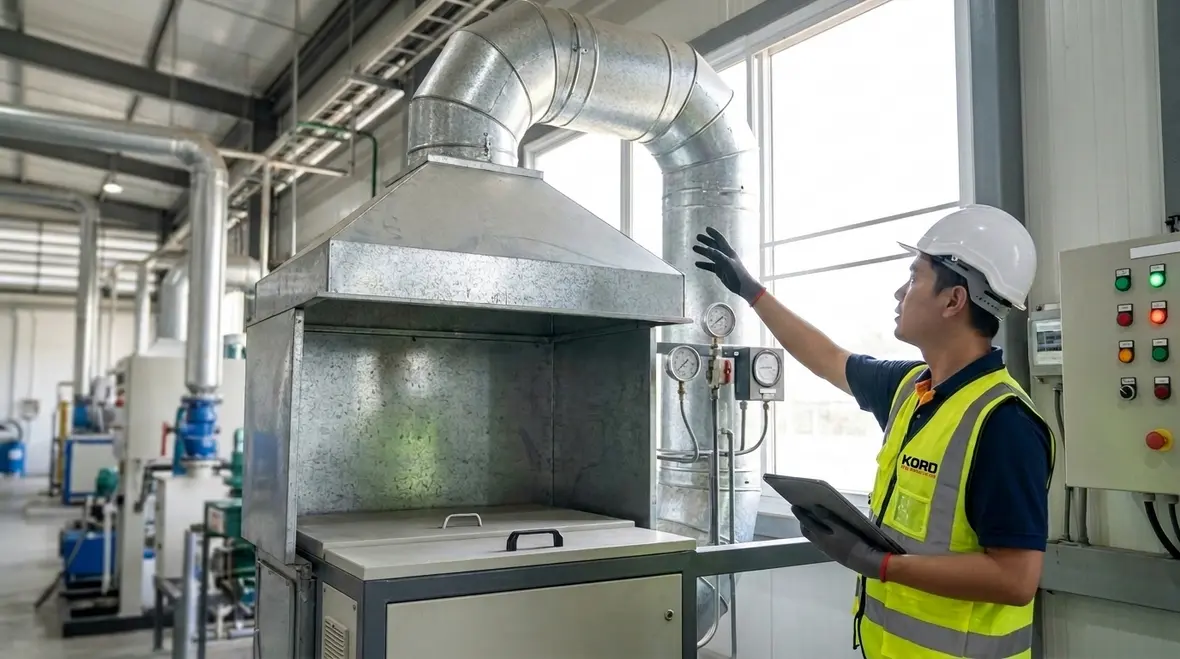
NFPA 36 Section 7.8 emphasizes extraction ventilation that removes vapors where they are generated. Source capture relies on correct hooding or enclosure of the extraction process, duct routing that prevents condensation and blockage, and exhaust that does not create cross drafts that move vapors into other work areas.
Common operational failure points include:
- Extraction equipment modifications without ventilation recalculation (for example, new lids, altered openings, or changed material handling)
- Ducts that accumulate residue, especially where vapors condense
- Improperly sized ductwork that reduces effective capture velocity
- Blocked or partially closed dampers that were “left as found” after repairs
Airflow balance and system stability
Ventilation that varies unpredictably can undermine safe operating conditions. Section 7.8 expects systems to deliver reliable performance as operating conditions change. Commercial facilities typically need balancing to confirm consistent exhaust delivery, and controls that prevent ventilation from dropping below safe levels during extraction cycles.
Facilities also need to understand what happens during transitions: startup, solvent charging, extraction runtime, and shutdown. Each phase can change vapor loading. If airflow monitoring or interlocks are not properly configured, operators may unknowingly operate extraction with insufficient exhaust.
Exhaust effectiveness: airflow rates, pressure conditions, and monitoring
Ventilation systems for extraction processes must maintain conditions that prevent hazardous vapor accumulation. Compliance typically depends on verifiable performance criteria, such as airflow rates at exhaust points, correct pressure relationships, and operational verification during extraction.
Airflow verification and field performance
To meet NFPA 36 extraction ventilation systems requirements, facilities should treat airflow verification as an essential compliance activity, not a one time commissioning item. Field conditions change due to filter loading, fan wear, duct obstructions, and process changes. Verification should include measurements that confirm the system delivers the intended capture performance during real extraction operations.
Controls and alarms for safe ventilation status
Where ventilation status affects safe operation, facilities should use monitoring that provides clear feedback to operators and supports safe shutdown logic where applicable. A common failure pattern is a ventilation fan that continues running while the duct path becomes obstructed or dampers drift. Airflow or pressure monitoring helps detect these conditions before vapors accumulate.
Maintenance, inspection, and readiness: keep ventilation from drifting out of compliance
NFPA 36 ventilation systems for extraction are only as safe as their ongoing condition. Maintenance must address both mechanical components and performance factors that directly influence vapor control.
What to inspect and why it matters
- Fans and motors: verify alignment, belt or drive integrity where applicable, and unusual vibration or noise that can reduce delivered airflow.
- Ductwork and fittings: check for condensation buildup, residue, corrosion, and loose joints that can leak vapors.
- Dampers and louvers: confirm full travel, correct positioning, and dependable operation of control linkages.
- Filters and collection components: confirm rated performance and maintenance intervals that avoid excessive pressure drop.
- Penetrations and hoods: verify that openings match the intended capture design and that enclosures remain intact.
Documented maintenance and “as built” alignment
A major compliance challenge arises when “as maintained” does not match “as built.” Facilities should keep ventilation schematics, device schedules, and balancing reports current. If equipment layout or process chemistry changes, the ventilation system often needs re verification. Kord Fire Protection supports commercial compliance programs with service planning, inspection coordination, and documentation workflows that align ventilation performance with ongoing fire and life safety expectations.
For additional commercial fire safety guidance related to fire protection system readiness, see Kord Fire Protection resources for practical compliance support.
Common compliance mistakes and how facilities correct them
Facilities frequently encounter repeat issues because ventilation systems involve multiple disciplines: mechanical engineering, operations, electrical controls, and maintenance. The following mistakes typically lead to audit findings or operational risk:
- Assuming ventilation is “set and forget” when process and environment change throughout the year
- Skipping airflow field verification or using measurements that do not represent extraction conditions
- Allowing unofficial duct modifications that change capture effectiveness
- Delayed maintenance on filters, fans, or dampers until performance failures become obvious
- Insufficient operator training on ventilation status, startup sequence, and safe shutdown expectations
Corrective action usually includes rebalancing, restoring intended duct configurations, validating controls logic, and implementing a maintenance cadence tied to performance indicators. Kord Fire Protection helps facilities keep ventilation and related life safety systems inspection ready through structured compliance support. For a related read, see Fire Suppression System Impairments, Spot and Restore Readiness.
Frequently Asked Questions
Next step: make extraction ventilation compliance measurable
Confirm your ventilation system supports safe vapor control during extraction cycles by validating airflow performance, verifying controls status, and maintaining duct and fan integrity on a documented schedule. Contact Kord Fire Protection to plan inspections, testing, and maintenance support that keep your facility aligned with NFPA 36 expectations and reduce operational surprises.

Join Our Newsletter!
Get the latest fire safety tips delivered straight to your inbox From our Newsletter.



