
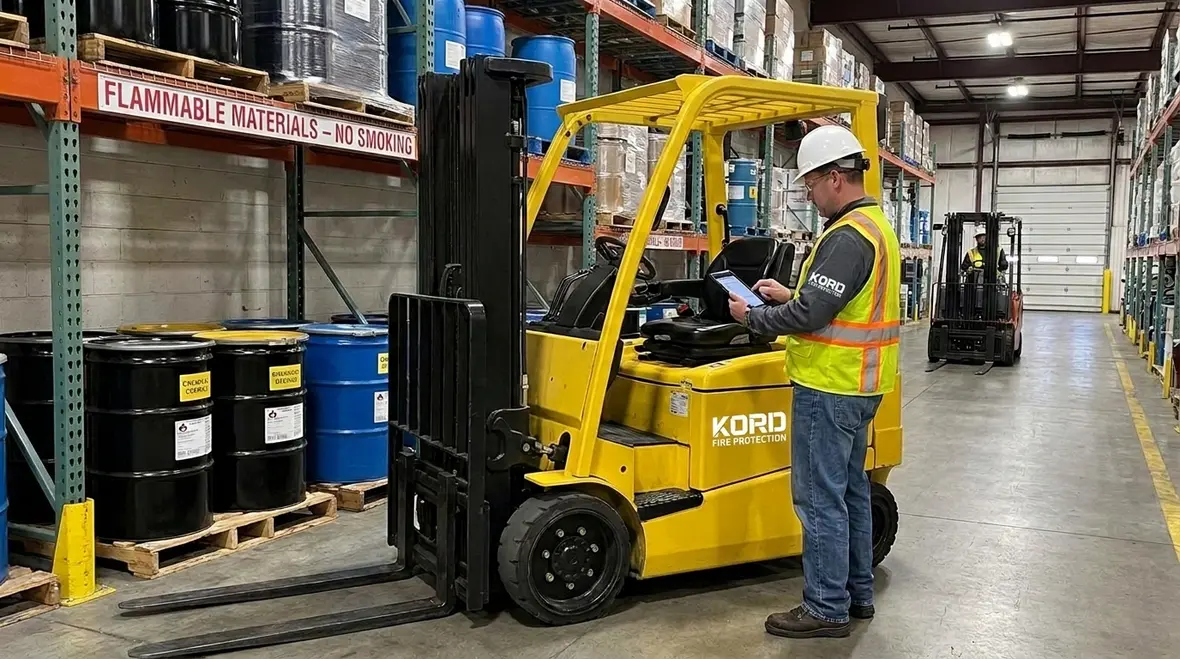
NFPA 35 Section 7.6: Power-Operated Industrial Truck Requirements
Quick Answer: NFPA 35 Section 7.6 sets detailed safety expectations for power-operated industrial trucks used in hazardous industrial processes. It focuses on ignition source control, safe operating practices, training, and inspection and maintenance. Facilities must implement compliant equipment selection and ongoing checks to reduce fire and explosion risk.
Why NFPA 35 power-operated industrial truck requirements matter in chemical and processing areas
Commercial and industrial facilities handling flammable or combustible materials rely on strict controls for ignition sources. Even “routine” material handling activities can introduce ignition pathways through exhaust, hot surfaces, electrical arcing, mechanical sparks, or improper operation. For facilities operating under NFPA 35, NFPA 35 power-operated industrial truck requirements help ensure trucks used in process areas do not undermine hazard controls that protect people, buildings, and inventories.
In practice, the compliance challenge is not just buying compliant equipment. It is maintaining consistent performance over time, confirming operational readiness, and ensuring truck movement patterns align with your fire and explosion risk controls. Kord Fire Protection supports facilities by integrating inspection and testing into ongoing compliance programs, so safety expectations do not degrade between scheduled reviews.
For facilities that already coordinate broader fire protection readiness, Kord Fire Protection’s fire protection services can fit naturally into a more disciplined compliance program without turning truck safety into a side quest nobody documents properly.
Where Section 7.6 applies and what facilities must manage
NFPA 35 Section 7.6 addresses power-operated industrial trucks where their operation can impact fire and explosion hazards. Typical facility contexts include:
- Chemical and process manufacturing areas
- Solvent storage and transfer zones
- Paint mixing, coating, and drying support areas
- Packaging rooms handling flammable products
- Loading and staging areas adjacent to hazardous processes
Facilities must manage the complete system, not only the truck. That includes how the truck is used, where it travels, how it is inspected, and how defects are handled before the unit returns to service. Compliance is often lost due to inconsistent operator practices, deferred repairs, and weak verification of ignition source controls.
Ignition source controls: equipment selection and protection features
Power-operated trucks create multiple potential ignition sources depending on energy type, construction, and condition. Section 7.6 expectations generally align with the principle that trucks must not create unacceptable ignition hazards in the areas where they operate.
Key risk pathways facilities must control
- Electrical ignition sources: damaged wiring, loose connections, degraded insulation, malfunctioning controls, or exposed energized components.
- Hot surface ignition: exhaust systems, turbo or muffler failures, overheated braking components, or heating near electrical components.
- Mechanical sparks: friction or impact damage, worn parts contacting metal, or improper wheel and brake conditions.
- Fuel and vapor interactions: leaks from fuel systems and off-normal operation when trucks operate near flammable vapor zones.
Common commercial compliance pitfalls
Many facilities struggle with repeat failure patterns:
- Trucks approved for one area are used in another without verifying the hazard classification and ignition control expectations.
- Charging practices do not match facility controls for ventilation, segregated storage, or safe charging locations.
- Maintenance records exist, but defect resolution is not tracked to completion before return to service.
- Operators report intermittent issues, but the unit is not removed from service until inspected.
These gaps are not theoretical. They show up during audits as missing documentation, inconsistent screening of route changes, or failure to verify that the truck’s ignition control features remain effective after repairs.
Operating procedures and training: preventing ignition by behavior and process
NFPA 35 requirements expect facilities to use power-operated industrial trucks safely as part of a controlled operations program. That means training and procedural enforcement matter as much as hardware selection.
Training and authorization
Facilities typically must ensure operators are trained and authorized for the specific truck types and the tasks they perform. Effective programs include:
- Understanding how the truck can create ignition sources under abnormal conditions
- Safe driving and maneuvering practices in process areas
- Rules for speed, route use, and separation from high hazard zones
- Correct loading and unloading practices to prevent spills and mechanical damage
Procedures that reduce fire load and ignition risk
High performing facilities implement practical, field-tested procedures such as:
- Route planning that avoids unnecessary travel through high vapor concentration zones
- Clear rules for reporting defects immediately and removing the truck from service
- Spill response coordination so leaks and residue are controlled quickly
- Defined restrictions for charging and maintenance locations
When training is not reinforced, the process area becomes a “shortcut route.” That is where ignition hazards increase, especially around transfer points and open handling operations.
Inspections, maintenance, and return to service: making compliance repeatable
Inspection and maintenance systems determine whether trucks remain compliant after months of service. The operational reality is that component wear, loose connections, and damaged insulation can develop between scheduled service intervals.
Inspection points facilities should emphasize
A robust program typically includes attention to:
- Battery and charging systems, including secure connections and condition of cables
- Electrical panels and protective covers to prevent exposure to energized parts
- Exhaust system integrity for internal combustion trucks, including mufflers and piping
- Braking and wheel assemblies to prevent mechanical friction hazards
- Fuel lines, caps, and fittings for leaks and damaged hoses
Defect control and “do not operate” rules
Even when a defect seems minor, it can create ignition conditions. Facilities should implement a documented return to service standard so that:
- Operators remove trucks from service for defined safety defects
- Maintenance verifies repairs and records the work before re use
- Root cause analysis is applied to repeated failures
Operational consistency is the difference between an inspection checklist and real risk reduction. Kord Fire Protection helps commercial facilities maintain the discipline required for ongoing compliance by supporting safety documentation, verification workflows, and fire prevention coordination tied to equipment risks.
Internal audits, documentation, and facility-wide alignment
NFPA 35 compliance succeeds when the truck program connects to your broader fire and explosion prevention program. Facilities should align truck controls with:
- Hot work and ignition control procedures
- Ventilation and vapor management controls
- Spill prevention and spill response plans
- Fixed extinguishing system readiness and inspection cadence
- Contract maintenance vendor expectations and reporting
To strengthen oversight, facilities often use internal audits that verify not only whether trucks are “approved,” but also whether the program maintains control under real operations, including route changes, temporary staging, and seasonal process changes.
If you are building or updating your compliance program, you can also explore Kord Fire Protection’s approach to commercial fire safety services through this internal resource: Kord Fire Protection.
Frequently Asked Questions
Conclusion and call to action
NFPA 35 Section 7.6 demands more than a one-time equipment decision. Facilities must enforce safe operation, verify ignition control effectiveness, and maintain a disciplined inspection and return to service process. Kord Fire Protection can help commercial and industrial sites keep truck related fire risk controls aligned with ongoing compliance through coordinated safety support and program reinforcement. Contact Kord Fire Protection today to strengthen your NFPA 35 readiness.

Join Our Newsletter!
Get the latest fire safety tips delivered straight to your inbox From our Newsletter.



