
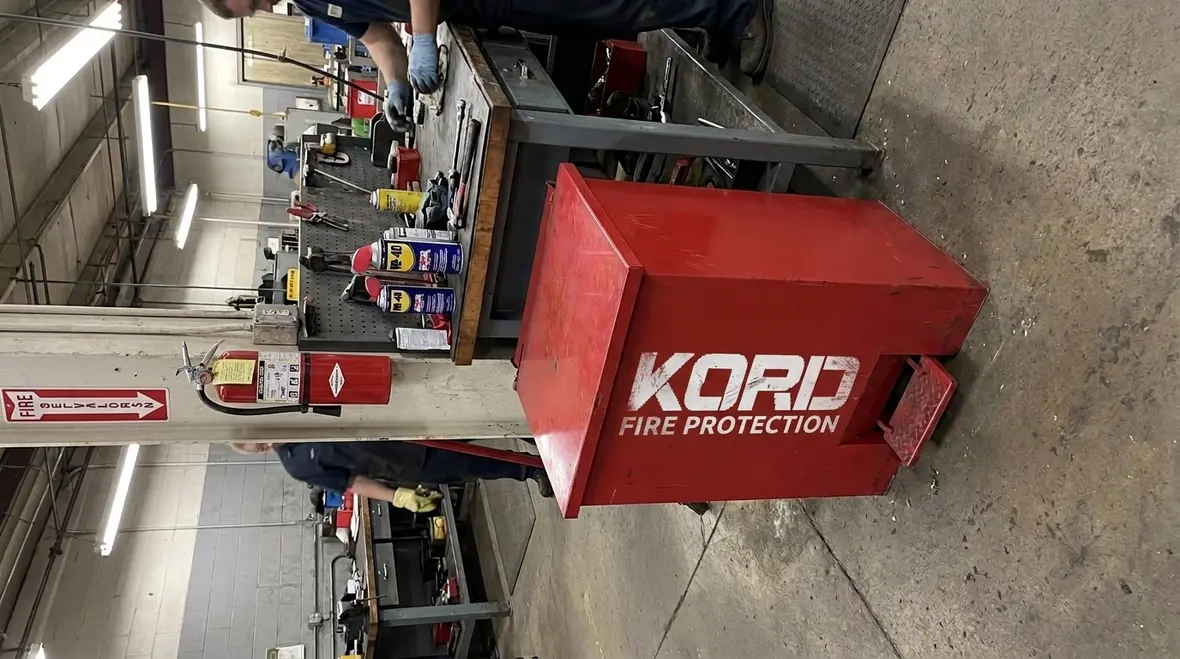
NFPA 34 Section 10.3: Waste Containers for Solvents and Residues
Quick Answer: NFPA 34 Section 10.3 sets out how facilities must store and control solvent and residue waste in suitable containers. The rule emphasizes container compatibility, safe closing practices, spill prevention, and ongoing maintenance so waste does not become an uncontrolled ignition or fire exposure source.
If your team is tightening up inspection routines, ITM fire protection inspection, testing, and maintenance is a practical place to start, especially when waste handling compliance needs to stay aligned with broader fire protection readiness.
Why NFPA 34 solvent waste container requirements matter in real facilities
Commercial, industrial, and retail operations often generate solvent and residue waste through cleaning, equipment maintenance, surface prep, and light manufacturing. These wastes can include flammable or combustible liquids, contaminated rags, residues, and mixed debris. NFPA 34 solvent waste container requirements reduce the likelihood that waste containers become an ignition source or a pathway for fire spread.
In practice, compliance failures usually come from common operational breakdowns: the wrong type of container, damaged lids, overfilled units, incorrect waste segregation, missing signage, or containers left open during busy work. Kord Fire Protection supports recurring compliance through inspection, training support, and maintenance verification to keep systems reliable over time.
What Section 10.3 is trying to control
NFPA 34 Section 10.3 focuses on controlling solvent and residue waste long enough for it to be safely transported, recycled, or disposed. The intent is to prevent three high consequence conditions:
- Ignition exposure: Waste vapors and residue can accumulate if containers are not properly closed or are incompatible with the waste.
- Fire escalation: Fire can spread from waste waste streams to nearby combustibles when containers are overfilled, improperly stored, or not positioned to reduce impact.
- Loss of containment: Spills and degraded materials can turn a controlled waste stream into a continuing flammable liquid release.
Because solvent waste characteristics vary, the compliance approach must be operational, not just procurement based. The facility must verify container suitability, handling practices, and maintenance status under day to day conditions.
How facilities select containers for solvent waste
Container selection drives many compliance outcomes. NFPA 34 solvent waste container requirements generally align with these core decision points used by compliant facilities:
1) Use containers compatible with the solvent and residue
Containers must withstand the chemical action of the waste they hold. Compatibility concerns are more than corrosion. Solvents can attack seals, degrade plastics, embrittle liners, and compromise lid gaskets. When seals fail, containers can vent vapors unintentionally or leak contaminated liquid during handling.
2) Ensure lids close reliably and remain closed during operation
A container that stays partially open defeats the purpose of a waste container program. Facilities typically implement a closed lid expectation with controlled opening only when adding waste. Routine operational audits often find lid mechanisms blocked by debris, bent hinges, missing gaskets, or lids that do not seat fully.
3) Match container design to the waste state and handling method
Solvent waste may appear as liquid waste, contaminated rags, residue slurry, or mixed debris. Each waste state changes how vapors are released and how spills occur during transfers. A facility needs a container design that matches that waste stream while supporting safe daily handling.
Where rags or similar combustible materials are involved, the program must also account for spontaneous ignition risk that can occur when certain oily or solvent contaminated materials are stored improperly. Container selection and handling procedures must address that risk through correct containment and operational discipline.
Where and how containers must be used day to day
Even with correct equipment, NFPA 34 solvent waste container requirements are typically enforced through operational evidence. Inspectors and internal fire protection reviews look for consistent behavior and controlled placement.
Placement that reduces exposure and supports safe movement
Facilities should locate waste containers to minimize exposure to ignition sources and avoid creating additional hazard loads in egress critical areas. Placement should also support safe access for normal work and scheduled waste removal. Common failure points include containers placed near hot work areas, next to electrical equipment with inadequate spacing, or stored in locations where they receive repeated mechanical impacts.
Controlled fill levels and disciplined removal timing
Overfilled containers increase spill risk and can reduce lid closure effectiveness. Busy maintenance and production areas often create a pattern where containers reach unsafe levels before scheduled pickup. A compliant program uses a fill limit rule and a removal schedule that prevents overflow. Container fill levels should be checked during routine rounds, not only during disposal events.
Handling practices that prevent vapor release and contamination spread
Facilities should train employees to add waste only when the lid can close immediately afterward. Personnel should also prevent contamination of the outside of the container. External contamination can lead to ignition exposure and complicate safe transport and disposal handling.
Kord Fire Protection can help align these controls with the realities of commercial workflow, including documentation expectations and maintenance verification that supports audits.
What inspections should verify (and what usually fails)
Compliance is sustained through inspection and maintenance. The highest value approach is to use a repeatable checklist tied to the container’s function: chemical resistance, closure integrity, spill control, and readiness for transport.
Closure integrity and gasket condition
Inspect lid operation, hinge condition, and gasket or seal integrity. Gaskets can harden, tear, or swell from solvent contact. A small seal defect can lead to vapor release and odor complaints that often precede more serious safety issues.
Container condition, liners, and chemical damage
Verify no bulging, thinning, cracking, or active corrosion. For lined containers, check liner integrity before it fails under repeated wetting and drying cycles. Damage may not be obvious until a transport event or a spill exposes the defect.
Capacity management and labeling practices
Confirm that containers remain within safe capacity limits and that signage supports correct waste stream segregation. Mislabeling is a frequent operational drift issue that leads to mixed waste streams and incompatibility risk.
Corrosion at welds and supports
Inspect bottom seams, weld joints, and supporting components. Solvent residue can accumulate at joints and accelerate corrosion, particularly in areas exposed to cleaning chemicals or outdoor humidity.
Program durability depends on keeping container hardware in serviceable condition. Kord Fire Protection helps commercial sites implement maintenance and inspection discipline so container performance stays within intent.
How to document compliance for audits and internal reviews
Many facilities lose compliance points due to weak documentation rather than equipment absence. A strong file supports that NFPA 34 solvent waste container requirements are not aspirational but implemented and verified.
- Container inventory: Identify container types, locations, and waste streams they support.
- Inspection records: Capture closure checks, condition assessments, and corrective actions.
- Training evidence: Document employee training on container handling and fill limit expectations.
- Waste removal schedule: Show pickup frequency and overflow prevention practices.
- Corrective action logs: Track failures such as damaged lids, incompatible containers, or repeated overfill events.
For teams building stronger documentation habits, Kord Fire Protection’s commercial fire safety audit process offers useful context for how inspection records, corrective actions, and internal reviews support compliance over time.
Internal reviews should verify that the program keeps pace with operational changes, such as new solvents, modified cleaning methods, or added equipment lines. A procurement change without a container compatibility reassessment is a common risk driver.
Frequently Asked Questions
Next step: confirm container compliance in your facility
NFPA 34 solvent waste container requirements succeed only when equipment and operations stay aligned. Kord Fire Protection can support your program with practical inspections, maintenance verification, and documentation support tailored to commercial workflows. Contact Kord Fire Protection to review container locations, closure reliability, fill control practices, and corrective actions so your waste container program remains audit ready and fire safe.

Join Our Newsletter!
Get the latest fire safety tips delivered straight to your inbox From our Newsletter.



