
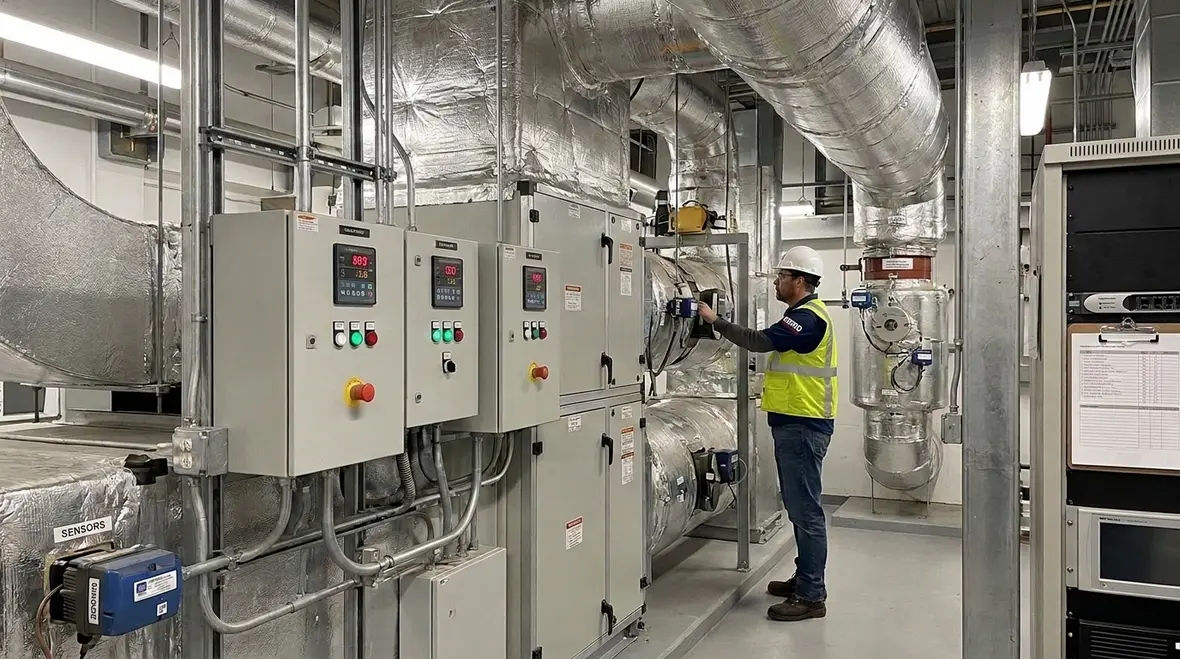
NFPA 34 Section 7.6: When Exhaust Recirculation Is Allowed
Quick Answer: NFPA 34 permits exhaust recirculation only under tightly controlled conditions designed to prevent unacceptable accumulation of flammable, combustible, or otherwise hazardous atmospheres. Facilities must verify design limits, operating controls, and continuous monitoring and must maintain the system so performance never degrades.
If your team is tightening inspection routines and documentation across fire and life safety systems, it can help to review inspection, testing, and maintenance best practices early in the process so recirculation controls do not get treated like an afterthought. ([kordfire.com](https://kordfire.com/itm-fire-protection-inspection-testing-maintenance/?utm_source=openai))
Why NFPA 34 Section 7.6 Matters in Commercial Operations
In commercial, industrial, and retail facilities, exhaust recirculation systems can reduce energy costs and improve HVAC performance. However, these benefits do not override life safety and fire prevention requirements. NFPA 34 Section 7.6 governs NFPA 34 exhaust recirculation allowed conditions by requiring that the recirculated exhaust does not create conditions that increase fire or explosion risk, either during steady operation or during abnormal events such as filter loading, fan shutdown, or control malfunctions.
From a compliance perspective, the biggest challenge is not just initial design. Inspectors and AHJs typically focus on whether the facility can demonstrate that the system will remain within acceptable parameters over time, with procedures for testing, monitoring, corrective actions, and maintenance.
What “Allowed” Means Under Section 7.6
NFPA 34 does not treat recirculation as an all or nothing allowance. The standard establishes conditions that must be met to keep hazards from being introduced into spaces or into process equipment. In practice, allowed use depends on the facility meeting performance and safety requirements such as:
- Limiting the concentration of combustible or flammable constituents in the recirculated stream.
- Maintaining proper dilution and control so hazardous atmospheres do not form in the exhaust handling system or downstream areas.
- Ensuring the exhaust recirculation system is interlocked, monitored, and designed to prevent unsafe operation under upset conditions.
- Providing safeguards that respond predictably if fans, dampers, or monitoring instruments fail.
Because exhaust composition can vary with product usage, operating modes, occupancy patterns, and maintenance state, Section 7.6 effectively demands an engineered control approach, not a “set it and forget it” approach.
Operational Controls: The Core of NFPA 34 Exhaust Recirculation Compliance
Facilities that successfully pass plan review and field inspection usually treat the recirculation system like a safety critical subsystem. That means the system includes controls and operational logic that prevent recirculation when it would increase risk.
Interlocks and “Fail Safe” Behavior
NFPA 34 expectations typically translate to interlocks that stop or inhibit recirculation when critical parameters fall out of acceptable bounds. Common failure points include:
- Fans running without proper airflow balance, causing under dilution.
- Dampers stuck in partial positions, leading to incorrect mixing ratios.
- Control valves or actuators that drift over time, altering flow and concentrations.
- Bypass modes that allow recirculation during maintenance or commissioning unless restricted.
Monitoring and Verification
Compliance depends on demonstrating that monitoring is accurate, functioning, and acted upon. Facilities often implement continuous or periodic measurement of relevant parameters, then tie those measurements into alarms, shutdown sequences, or operator prompts. From a maintenance standpoint, verification is frequently where deficiencies appear, such as:
- Sensor drift not detected by calibration schedules.
- Blocked sampling lines causing false “safe” readings.
- Alarm setpoints not aligned with design intent or field conditions.
Design and Installation Considerations That Influence Acceptance
Even when a facility has strong operating procedures, acceptance often hinges on how the system is built and how well it matches the hazard assumptions in the design. Key design and installation factors include air distribution, duct routing, mixing, and segregation between exhaust handling and occupied areas.
Airflow Balance and Mixing
Exhaust recirculation can only be safe when the system produces predictable dilution. Poor mixing or incorrect airflow balance can concentrate hazardous constituents in the wrong locations. Typical commercial and industrial issues include improper duct sizing, unaccounted for pressure losses, and changes in equipment loading that alter airflow patterns after initial commissioning.
System Segregation and Access for Maintenance
Inspectors often look for clean access to dampers, fans, filters, and sampling ports. Systems that require extensive disassembly reduce the likelihood that maintenance will occur on time and correctly. In retail and industrial settings, where uptime is critical, maintenance planning must include realistic access and documented inspection criteria.
Maintenance, Testing, and Documentation: Where Compliance Is Won
NFPA 34 exhaust recirculation allowed conditions are only as reliable as ongoing maintenance and documented testing. Many facilities fail compliance not due to bad engineering, but because the system does not remain in the intended operating state.
Common Inspection and Maintenance Gaps
- Filter performance degradation: recirculation can become unsafe if the system no longer provides expected dilution.
- Damper inspection neglect: sticking or misalignment can allow recirculation when it should not occur.
- Calibration lapses: sensors without current calibration and documented verification may produce unreliable readings.
- Control logic drift: field modifications or tuning changes that unintentionally weaken interlocks.
How Kord Fire Protection Supports Ongoing Compliance
Kord Fire Protection helps commercial facilities maintain defensible compliance through inspection support, documentation readiness, and maintenance-oriented testing. This approach matters because AHJs and internal EHS teams typically need more than a checkbox. They need traceable results, calibration evidence where applicable, and confirmation that interlocks and shutdown sequences perform as designed. For teams managing multiple sites, this consistency reduces operational disruption while supporting safety goals. Kord Fire says it focuses on code-compliant inspections, scheduled testing, preventive maintenance, and tailored service plans for commercial and industrial properties, which makes the fit here natural. ([kordfire.com](https://kordfire.com/?utm_source=openai))
If you manage process and ventilation systems across properties, you can also strengthen your internal fire safety management by reviewing related guidance from Kord Fire Protection. Start with this internal resource: Kord Fire Protection services. ([kordfire.com](https://kordfire.com/?utm_source=openai))
Frequently Asked Questions
Take Action Now
Facilities should verify that their design basis and operating procedures align with NFPA 34 Section 7.6, then confirm that interlocks, monitoring, and maintenance records keep the system within the NFPA 34 exhaust recirculation allowed conditions. Engage Kord Fire Protection to assess readiness, strengthen documentation, and support practical testing so your facility stays inspection ready and operationally stable.

Join Our Newsletter!
Get the latest fire safety tips delivered straight to your inbox From our Newsletter.



