
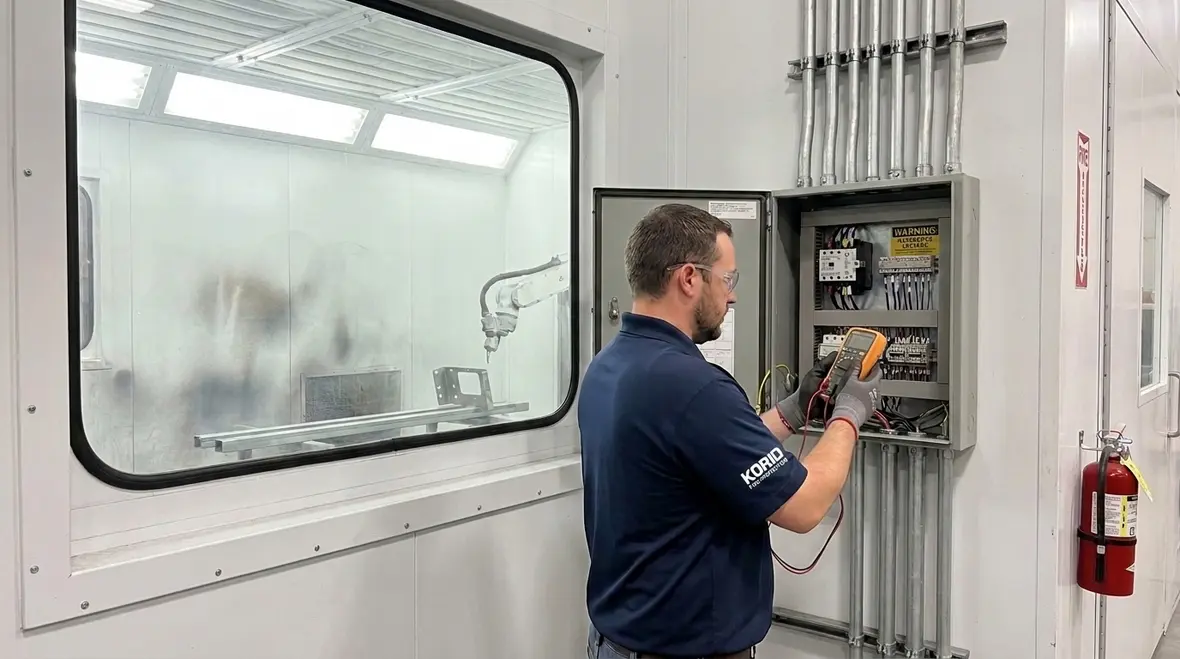
NFPA 33 Section 6.1 Scope: Electrical and Other Ignition Sources
Quick Answer
NFPA 33 Section 6.1 defines how facilities control electrical and other ignition sources that can ignite flammable vapors, gases, or dusts. It requires ignition source identification, risk control measures, and ongoing verification through installation standards, inspections, and maintenance to prevent failures and unintended energization.
What does “NFPA 33 electrical ignition sources scope” actually cover?
In practical terms, the NFPA 33 electrical ignition sources scope addresses anything that can create sufficient energy to ignite a flammable atmosphere during spray operations, handling, and associated processes. Section 6.1 focuses on ignition sources beyond just open flames, including electrical systems and equipment that can fail, overheat, spark, arc, or discharge static.
Commercial and industrial facilities commonly run into compliance challenges here because ignition sources rarely stay “static” after installation. Changes in production speed, maintenance practices, wiring modifications, equipment aging, and housekeeping can all alter ignition risk. A defensible compliance program therefore treats ignition controls as an operational lifecycle, not a one-time installation requirement.
Facilities that need broader inspection coordination can also explore fire protection services in Southern California to align ignition source controls with routine testing, repairs, and code-compliant documentation.
Where Section 6.1 fits in the NFPA 33 hazard control chain
NFPA 33 is structured around controlling ignition sources and managing flammable atmospheres associated with spraying and handling. Section 6.1 sits early in the ignition control framework and drives the facility to do the following:
- Identify electrical and other ignition sources that may be present in or near hazardous processes.
- Apply design and installation controls to limit ignition potential.
- Implement operational controls, including safe work practices and equipment management.
- Verify performance over time through inspections, testing, and maintenance.
For many facilities, the most overlooked part is “verification.” A compliant system on day one can become noncompliant after worn components, misaligned enclosures, loose terminations, or incorrect replacement parts introduce new ignition pathways.
Electrical ignition sources: the mechanisms Section 6.1 targets
Section 6.1 addresses ignition sources that can produce ignition through several energy release mechanisms. Inspectors and auditors typically evaluate not only equipment type, but also condition, installation integrity, and operational behavior. Common electrical ignition pathways include:
1) Arcing and sparking from connections, switches, and terminations
Loose conductors, degraded insulation, contaminated terminals, and improper rework can create arcing or high resistance heating. These failures often occur after maintenance events such as panel modifications, equipment moves, or troubleshooting.
2) Overheating due to motors, bearings, and mechanical load
Electrical equipment can ignite when surfaces reach temperatures that can ignite the atmosphere. Factors include seized bearings, belt misalignment, fan obstruction, overloaded circuits, and aging components.
3) Static electricity and uncontrolled discharge
Transfer operations, fluid movement, pneumatic conveying, and certain handling practices can generate static. Without proper bonding, grounding, and control of material flow practices, discharge can become an ignition source.
4) Fault currents and abnormal electrical conditions
Short circuits, ground faults, and failed protective devices may energize circuits unexpectedly or leave equipment in a hazardous state. A compliance program needs clear controls for protective device selection, calibration verification, and replacement practices.
5) Improper equipment selection for the hazardous location
Equipment installed in areas requiring hazardous location consideration must match the risk profile. A frequent operational failure point involves “like-for-like replacement” that is not truly equivalent in temperature rating, enclosure integrity, or protection method.
Other ignition sources beyond electricity: what facilities still must control
Section 6.1 does not treat electrical hazards in isolation. The “other ignition sources” concept matters because many ignition pathways are secondary results of electrical or operational issues. Typical categories include:
- Mechanical impact and friction sources, including failing bearings or improperly maintained rotating equipment.
- Hot surfaces caused by blocked airflow, exhaust issues, or deteriorated insulation.
- Open flames or heat producing activities performed near spray areas without appropriate controls.
- Hot work practices that create ignition risk even when the electrical systems remain unchanged.
For retail paint departments, small industrial shops, and commercial spray lines, the operational challenge is often cross discipline: fire protection expectations must coordinate with production, maintenance, and contractors performing repairs.
How to implement practical compliance: inspection, testing, and maintenance
Facilities typically demonstrate compliance best when they can show how ignition control controls remain effective between inspections and after maintenance. A strong program aligned to NFPA 33 electrical ignition sources scope usually includes the following operational elements.
1) Documented ignition source inventory and change control
Maintain a current inventory of ignition-relevant equipment and circuits in and around spray processes. Include control interfaces such as disconnects, interlocks, ventilation fans, pumps, and associated electrical distribution.
Then manage change using a formal process. Any panel modification, motor replacement, wiring change, or enclosure alteration should trigger a review of ignition source risk and verification requirements.
2) Scheduled inspections that focus on failure points
Inspection should emphasize indicators that correlate with ignition events:
- Loose or corroded terminations and evidence of overheating at lugs and breaker connections.
- Worn enclosures, damaged seals, and gaps that compromise intended protective integrity.
- Fan obstruction, airflow restriction, and motor surface temperature rise signs.
- Grounding and bonding continuity issues, including bonding jumper damage.
3) Verification of protective devices and abnormal condition controls
Protective devices are only as effective as their settings, calibration, and installation integrity. A maintenance plan should include verification intervals for protective function and documented corrective actions when tolerances drift.
4) Housekeeping and contamination control as an ignition strategy
Dust accumulation, overspray buildup, and residue can degrade equipment and create new ignition pathways through overheating or surface contamination. For many commercial facilities, housekeeping performance correlates directly with electrical and mechanical ignition risk.
5) Contractor management and training
Contractors frequently perform work that introduces new ignition sources, including temporary lighting, troubleshooting leads, and noncompliant replacements. Facilities should require orientation, permit coordination, and strict controls for temporary electrical equipment in spray areas.
For facilities seeking a reliable compliance partner, Kord Fire Protection supports ongoing testing, inspection documentation, and practical maintenance planning. This helps teams maintain compliance continuity across production cycles, renovations, and routine repairs.
To strengthen your overall compliance framework, review related guidance from the sprinkler and fire protection perspective at Kord Fire Protection and align ignition control activities with the facility’s broader life safety program.
For related context on how NFPA 33 applies across spray operations, see NFPA 33 Section 1.3 application guidance and NFPA 33 Section 1.2 purpose guidance.
Common audit findings and how to prevent them
Most nonconformities connected to NFPA 33 electrical ignition sources scope do not involve a single “wrong” purchase. They involve condition, documentation, and recurring maintenance gaps. Common findings include:
- Outdated equipment documentation that does not reflect current configurations or circuit layouts.
- Inconsistent maintenance records for motors, fans, grounding, and enclosure integrity.
- Uncontrolled temporary power during troubleshooting or work completion.
- Improper replacements using components with incorrect temperature ratings or protection characteristics.
- Grounding and bonding degradation due to mechanical damage, corrosion, or omitted rework steps.
Prevention requires a disciplined loop: identify ignition sources, enforce controls, verify performance, and document the outcomes. Facilities that treat this as an operational standard reduce both incident risk and compliance friction.
Frequently Asked Questions
Conclusion and CTA
Electrical ignition controls under NFPA 33 Section 6.1 require more than proper initial equipment selection. Facilities must manage ignition risk through documented inventories, change control, targeted inspections, and maintenance that prevents arcing, overheating, and static discharge from developing into ignition events. Kord Fire Protection helps commercial and industrial teams sustain compliance with practical testing, inspection support, and lifecycle maintenance planning. Contact Kord Fire Protection today to build a defensible NFPA 33 compliance program.

Join Our Newsletter!
Get the latest fire safety tips delivered straight to your inbox From our Newsletter.



