
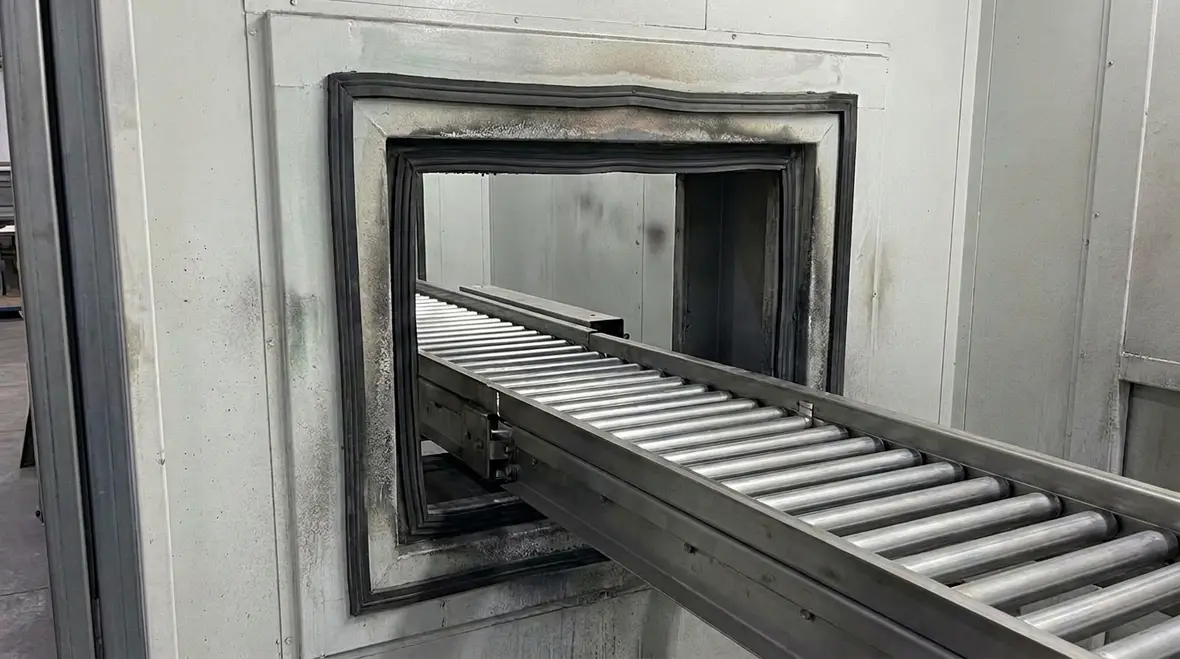
NFPA 33 Section 5.4: Conveyor Openings in Spray Area Boundaries
Quick Answer
NFPA 33 Section 5.4 addresses how conveyor openings may be installed through spray area boundaries without compromising fire and explosion protection. The requirements focus on limiting passage of spray aerosols, maintaining boundary integrity, and ensuring openings are effectively controlled, sealed, and inspected over time.
Conveyor systems often support continuous production in coating, finishing, and spray applications. However, any path between a spray area and adjacent spaces can undermine the intent of fire and explosion risk controls. This is why the NFPA 33 conveyor openings spray area requirements in Section 5.4 matter operationally, not just technically. When facilities treat openings as “mechanical penetration only,” they frequently miss the boundary integrity and inspection discipline the standard expects.
For facilities building a broader inspection and maintenance program around these boundary details, fire sprinkler inspection and maintenance support can fit naturally into a more complete compliance strategy.
What Section 5.4 is trying to prevent
NFPA 33 Section 5.4 exists to keep spray operations confined within defined spray area boundaries. Conveyors can create unplanned routes for vapor, mist, and combustible residues through gaps around penetrations, worn seals, poorly designed skirts, or ineffective closure devices. Over time, these conditions can change because of vibration, thermal cycling, overspray loading, and maintenance practices.
In practical terms, the hazard pathway usually looks like this:
- Spray aerosol or mist generation within the spray area
- Transport through conveyor opening gaps around rails, flights, skirts, or transfer mechanisms
- Migration to adjacent spaces where ignition sources and housekeeping conditions may be different
- Reduced effectiveness of boundary controls due to seal degradation and improper reassembly
Facilities that manage these risks early usually combine correct initial design with a maintenance plan that includes seal condition verification, dust control, and closure testing.
Key compliance concept: boundary integrity around penetrations
The core requirement is that conveyor openings in spray area boundaries must not defeat the purpose of the boundary. A “boundary” is not only the wall or partition. It also includes the complete assembly around an opening, including doors, closures, gasketing, skirts, and any sealing features intended to prevent uncontrolled release or passage.
Common boundary integrity failure points include:
- Gap growth from conveyor misalignment or settlement of supporting structures
- Seal abrasion from conveyor movement, overspray buildup, or vibration
- Skipped components during repair, such as missing fasteners, incorrect gasket material, or incomplete reinstallment
- Accumulated overspray that interferes with closure operation or prevents uniform contact pressure
- Uncontrolled standby mode where closures do not activate during certain operating states
From an inspection and audit standpoint, authorities having jurisdiction and internal safety teams typically look beyond the drawing. They verify that the installed condition matches the fire protection intent and stays that way during normal operations and maintenance cycles.
Design and installation considerations for conveyor openings
Section 5.4 implementation usually starts with a clear understanding of how the conveyor penetrates the spray area boundary and how the facility manages opening control during all production modes: start up, normal run, changeover, and shutdown.
1) Minimize the opening and control the interface
The design should reduce the size and exposure of the penetration path while controlling the interface between moving parts and the boundary assembly. Tight interfaces reduce aerosol migration and make it easier to maintain consistent sealing contact.
2) Use closure and sealing features that tolerate spray exposure
Seals, skirts, and closures must tolerate overspray loading, temperature swings, and cleaning chemicals used in the facility. “Correct at commissioning” is not enough. The system should still control migration after weeks or months of real production.
3) Prevent gaps from developing during vibration and thermal cycling
Conveyors transfer loads and experience repeated vibration. Boundary assemblies should include design allowances for movement and alignment control. If the conveyor shifts, the seal strategy must still function.
4) Ensure safe access without breaking the protection scheme
Maintenance access often leads to temporary removals. Facilities should implement procedures that require reinstallation of seals and closure components before operation resumes, with verification steps documented.
Commercial installations, especially in retail, industrial, and distribution settings, frequently face schedule pressure for downtime and cleaning. That pressure can cause shortcuts that later manifest as boundary leakage. A well-defined installation standard plus a disciplined maintenance method prevents most “recurring gap” problems.
Operational procedures and inspection points that protect compliance
Even with correct initial design, conveyor openings require ongoing management. NFPA 33 compliance typically relies on a combination of inspection, testing, cleaning discipline, and documented maintenance.
Daily and shift level checks
- Verify conveyor interface areas remain free of excessive overspray buildup that could compromise closure action.
- Check for visible gaps around the opening boundary assembly.
- Confirm closures or sealing features return to their intended position after start up and during operating transitions.
Planned maintenance verification
- Inspect seals and gaskets for wear, hardening, cracking, or abrasion.
- Confirm proper alignment of conveyor rails and flights relative to the boundary interface.
- Verify that replaced components match original design intent and material compatibility.
- Document overspray cleaning frequency and methods that do not damage protective assemblies.
Functional verification after repairs
Repairs represent one of the highest risk periods for boundary failures. Facilities should require functional checks that confirm the opening control remains intact after maintenance, including any closure mechanism verification and a post maintenance inspection for gaps.
For facilities managing multiple lines and frequent changeovers, a repeatable checklist supports consistency across shifts and contractors. Kord Fire Protection supports many commercial clients by aligning inspection routines with the installed fire protection strategy, helping reduce drift between drawings and field condition.
For related facility fire safety planning and system support, see Kord Fire Protection contact options to discuss inspection and ongoing compliance needs.
Common failure modes seen during audits and retesting
Audits often reveal repeat patterns. These issues can look “minor” because the conveyor still runs, but they can be significant from a fire and explosion risk control perspective.
| Failure mode | Why it matters | Typical root cause | Preventive action |
|---|---|---|---|
| Worn or hardened gasket seals | Creates uncontrolled aerosol and vapor paths | Chemical exposure, aging, poor material selection | Use compatible materials, schedule seal replacement, verify contact pressure |
| Overspray buildup interfering with closure | Prevents closure from fully engaging | Cleaning schedule not aligned to production volume | Adjust cleaning frequency, inspect closure surfaces during shifts |
| Conveyor misalignment develops over time | Increases gaps at the boundary interface | Vibration, foundation settlement, improper maintenance alignment | Require alignment checks and documented post repair verification |
| Incomplete reassembly after service | Reduces boundary protection effectiveness | Missing fasteners, incorrect gasket placement | Use part control, install checklists, and sign off before restarting |
When these issues persist, they often trigger broader questions about housekeeping control, ventilation impacts, and ignition source management. That is why conveyor opening compliance often cannot be treated in isolation.
How to manage compliance across commercial lines and facilities
In multi-tenant or multi-line operations, Section 5.4 compliance becomes an asset management problem as much as a code issue. Facilities typically succeed by standardizing documentation and making field verification routine.
- Maintain as-built documentation showing boundary and opening assemblies, including closure and sealing components.
- Train maintenance teams on the specific risks of disturbing seals and closure elements.
- Coordinate contractors so repair work includes fire protection component reinstallment and verification.
- Track inspection findings by conveyor line so recurring issues are corrected at the system level.
Kord Fire Protection assists commercial facilities by supporting ongoing inspection and maintenance alignment, which helps maintain boundary integrity throughout the life of the equipment. This includes practical guidance that supports safer operations and reduced compliance drift across industrial and retail environments.
To plan an inspection or compliance review, use this Kord Fire Protection contact pathway.
Frequently Asked Questions
Conclusion and Call to Action
Conveyor openings in spray area boundaries can undermine NFPA 33 risk controls if sealing and closure performance degrade or are poorly reassembled after maintenance. Facilities should standardize as-built documentation, implement shift and planned inspections, and verify opening control after any repair. If your operation includes conveyors, transfer points, or frequent maintenance shutdowns, contact Kord Fire Protection to support inspection planning, testing, and ongoing compliance maintenance for NFPA 33 related boundary controls.

Join Our Newsletter!
Get the latest fire safety tips delivered straight to your inbox From our Newsletter.



