
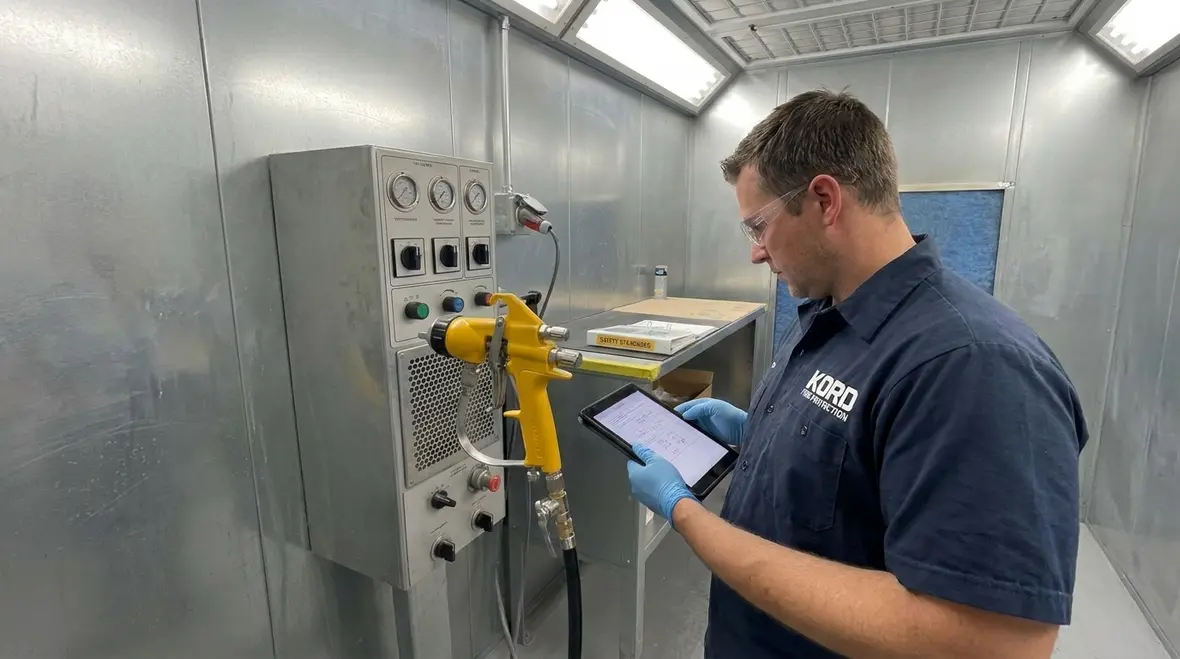
NFPA 33 Section 2.3: Non-NFPA Publications Referenced by the Spray Code
Quick Answer: NFPA 33 Section 2.3 identifies the non-NFPA standards it relies on for spray application safety requirements. Compliance depends on finding the exact referenced editions, then aligning design, installation, operation, inspection, and maintenance practices in accordance with those documents.
Facilities that want stronger inspection readiness and cleaner records should also review Fire Protection System Documentation Checklist, since referenced-standard compliance falls apart fast when the paperwork does.
What does NFPA 33 Section 2.3 actually do?
NFPA 33 Section 2.3 exists to control cross references. Instead of restating every technical requirement, NFPA 33 points to other standards for topics such as system performance criteria, electrical considerations, compressor or air requirements, materials, testing methods, and documentation practices. In practical terms, NFPA 33 non-NFPA referenced publications become mandatory by incorporation, meaning the referenced edition and its intent carry legal and enforcement weight when NFPA 33 is used as the governing code.
Commercial facilities often assume “the latest safe practice” applies. That assumption becomes a common failure point during plan review, insurance inspections, and Authority Having Jurisdiction (AHJ) walk-throughs. Facilities must manage referenced standards as controlled compliance documents, not as optional guidance.
How referenced publications become enforceable requirements
NFPA codes generally function as minimum requirements, and referenced publications specify the detailed technical basis. Under Section 2.3, the spray code design, installation, and operating requirements often require compliance with the referenced standard’s specific sections, figures, and test criteria.
Key compliance mechanism: edition control
The most operationally significant challenge involves edition tracking. NFPA 33 ties requirements to a specific referenced edition. If a facility uses a different edition for training, inspection checklists, or maintenance procedures, the documentation may not match what the code expects.
-
Plan review risk: Inconsistent referenced edition wording in submittals can trigger corrective actions before permitting.
-
Inspection risk: AHJs and insurance inspectors may request evidence that the referenced sections were followed, including test methods and acceptance criteria.
-
Maintenance risk: Contractors sometimes update procedures to align with current industry practice, unintentionally drifting away from the NFPA referenced edition.
Operational alignment: more than “having the standard”
Many facilities purchase PDFs of referenced standards but fail to translate them into field-ready controls. Effective compliance converts referenced requirements into:
-
Written operating procedures for spray application zones
-
Inspection and testing frequencies
-
Clear acceptance criteria and documentation formats
-
Maintenance mechanics for wear items, calibration points, and performance checks
Common referenced topics that drive real-world spray facility risk
While the exact list of non-NFPA standards varies by code cycle, the types of topics referenced under NFPA 33 Section 2.3 commonly affect ignition control, engineered ventilation and protective systems, equipment integrity, and safe operating practices.
1) Electrical and ignition source controls
Spray operations create environments where ignition control is critical. Referenced electrical standards often influence how equipment is selected, installed, and inspected in spray areas. Field issues frequently include:
-
Improper classification and labeling of equipment installed within or adjacent to spray zones
-
Missing or damaged seals, conduit entries, and covers after maintenance
-
Unverified grounding and bonding continuity after modifications
2) Ventilation performance and integrity
Ventilation arrangements must achieve intended hazardous atmosphere control. Referenced requirements often guide testing approaches and acceptance criteria. Common failure points include:
-
Fans or ductwork that drift out of performance due to particulate loading
-
Incorrect damper positions following service or after construction changes
-
Ventilation interlocks that bypassed or left in an incorrect state after troubleshooting
3) System testing, maintenance, and documentation
Referenced publications frequently establish how systems should be tested and how results should be recorded. In commercial and retail painting or coating operations, documentation breakdown is a recurring pattern:
-
Test reports missing required fields (date, equipment ID, measured values, acceptance determination)
-
Calibration records not linked to the specific system components
-
Inconsistent maintenance intervals across shifts or contractors
How facilities should manage NFPA 33 Section 2.3 compliance day to day
Section 2.3 compliance works best when treated like a document control and maintenance management program. For commercial, industrial, and retail properties, a practical approach reduces inspection findings and accelerates corrective actions.
Step-by-step process that works
-
Extract the referenced standard list from the current NFPA 33 edition applied at the facility.
-
Capture the exact edition year for each referenced standard and store it in a controlled compliance register.
-
Map references to facility components such as spray booths, ventilation systems, electrical devices, pumps, hoses, and controllers.
-
Translate requirements into inspection checklists with measured criteria and pass fail determinations.
-
Implement training and maintenance alignment so service teams do not “modernize” procedures beyond the referenced edition requirements.
-
Audit documentation quality before inspections, focusing on traceability and completeness.
Where teams often get stuck
Facilities commonly struggle with crosswalks between the code’s language and the referenced standard’s technical sections. Another frequent gap involves multi-contractor environments where different vendors install, maintain, and test different system parts. The facility owner or safety manager must enforce a single, controlled compliance framework across all parties.
Inspection and maintenance: the failure points that inspections uncover
During AHJ or insurer reviews, inspectors typically focus on evidence that referenced requirements are applied consistently. The following issues frequently trigger findings even when equipment appears “installed correctly.”
1) “Installed” does not mean “verified”
Equipment can be present but not functioning within the acceptance criteria established by referenced requirements. Verification requires documented testing, not visual confirmation.
2) Maintenance changes that break compliance
Spray areas undergo frequent service events: replacement of nozzles, hoses, filters, controls, and electrical components. Changes can unintentionally alter system performance or violate installation conditions described by referenced publications.
3) Documentation drift
Maintenance logs may not reflect the referenced standard requirements. For example, records may capture that an item was “checked” without capturing the measured values, calibration references, or acceptance statements required by the applicable standard.
If your organization needs a compliance partner that understands how referenced standards translate into field inspection practices, Kord Fire Protection supports ongoing testing, inspection readiness, and maintenance support for commercial fire and life safety programs. For additional context on how fire protection documentation supports operational compliance, see Fire Safety System Documentation for Compliance.
Frequently Asked Questions
Take action now: tighten referenced-standard compliance
Review your facility’s current NFPA 33 edition and extract every item listed under Section 2.3. Then verify that your inspection checklists, testing procedures, and maintenance documentation match the exact referenced editions and acceptance criteria. Kord Fire Protection can help commercial operators maintain inspection-ready documentation, execute verification testing, and support maintenance programs that align with the spray code and its incorporated standards. Contact Kord Fire Protection to schedule a compliance review.

Join Our Newsletter!
Get the latest fire safety tips delivered straight to your inbox From our Newsletter.



