
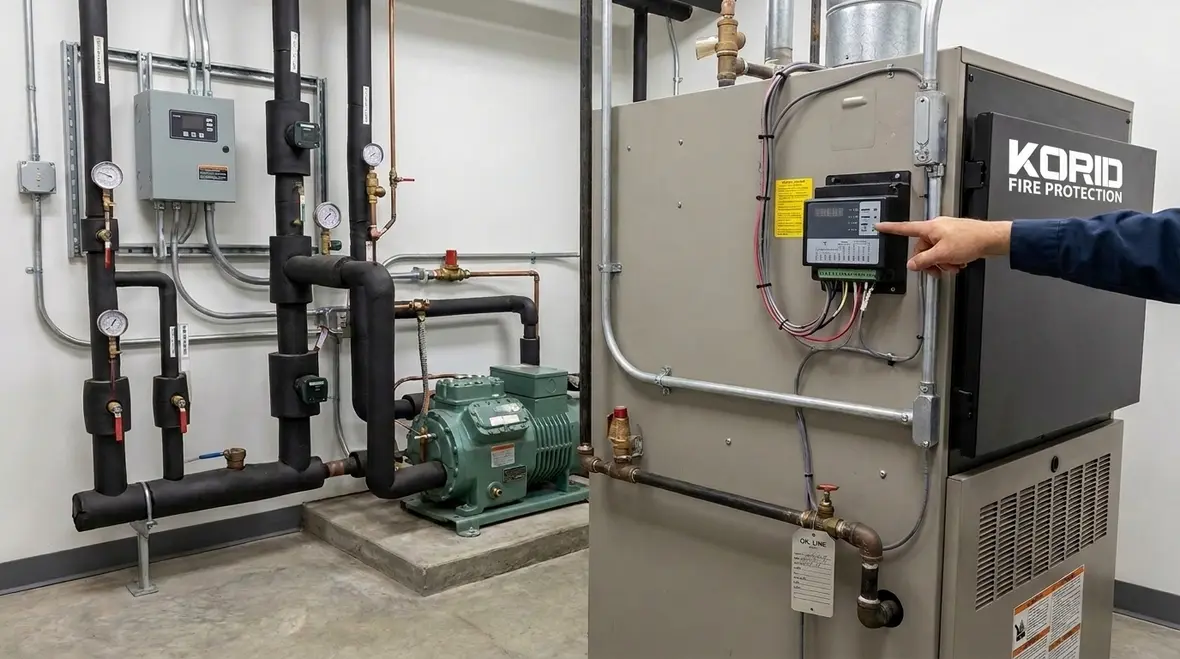
NFPA 31 Section 10.10: Oil Furnaces Used With Refrigeration Systems
Quick Answer
NFPA 31 Section 10.10 sets specific installation and operational expectations for oil furnaces connected to refrigeration systems. The core requirements focus on safe fuel delivery, reliable ignition and combustion, protected controls, and documented inspection and maintenance practices to prevent unsafe operating conditions in commercial facilities.
For facilities coordinating broader life safety work around mechanical upgrades, Kord Fire also provides fire protection services in Southern California that help property teams stay organized on inspections, repairs, installations, and compliance planning. ([kordfire.com](https://kordfire.com/fire-protection-services-southern-california/?utm_source=openai))
What NFPA 31 Section 10.10 targets in furnace and refrigeration integrations
NFPA 31 addresses oil burning equipment that may operate in settings where refrigerants, heat loads, and mechanical controls affect furnace operation. In a NFPA 31 furnace refrigeration system installation, the intent is to prevent furnace operation hazards that can result from improper system control interactions, unsafe oil piping conditions, or failure of protective devices.
In commercial, industrial, and retail environments, the biggest compliance challenges typically involve the interfaces. Facilities often commission refrigeration systems first, then add heating to solve comfort or process needs. That sequence can create overlooked coupling points between furnace controls, pressure switches, safety shutdowns, and fuel train operation. Section 10.10 requires the installation to behave as designed and to remain safe through normal cycling, maintenance, and unusual operating conditions.
How Section 10.10 applies to the fuel train and control interfaces
When an oil furnace is used with a refrigeration system, the furnace often serves a secondary heat role such as space heating, supplemental process heat, or reheating tied to plant operation. NFPA 31 Section 10.10 centers on ensuring that control and safety functions stay reliable and do not create a bypass pathway.
Key integration points that auditors commonly scrutinize
-
Operating sequencing: The refrigeration system should not drive furnace operation into an unsafe mode or prevent safety checks from completing.
-
Fuel delivery reliability: Oil supply piping, valves, filters, and suction or feed conditions must support stable burner operation without introducing air entrainment or excessive pressure drops.
-
Safety interlocks: Controls that stop ignition or stop burner operation during unsafe conditions must not be defeated by wiring changes made during refrigeration commissioning.
-
Shutdown behavior: When refrigeration calls end or critical pressure or temperature conditions change, furnace control response must remain fail safe.
Common failure points during installation
In practice, the most frequent problems involve subtle control wiring and mechanical conditions rather than the burner itself. Typical issues include:
-
Improper relay logic that masks a safety lockout.
-
Oil piping run configurations that allow heat transfer from refrigeration components, leading to vapor formation or inconsistent metering.
-
Air leaks or poor seating on valves that only appear during low load cycling.
-
Inadequate access for inspection of filters, strainers, and flame monitoring components.
Installation fundamentals for a compliant NFPA 31 furnace refrigeration system installation
A compliant project aligns three disciplines: oil burner requirements, refrigeration system behavior, and the facility’s maintenance and testing program. Section 10.10 requires the furnace installation to remain safe as systems cycle through normal operations and abnormal conditions.
Plan the interface before you wire
Before final electrical connections, the design team should confirm:
-
Which device initiates the furnace call for heat and which device permits ignition.
-
Where interlocks are located so they cannot be overridden by convenience controls.
-
Whether control logic includes timed purge and proof of flame steps consistent with the burner and fuel train design.
This front loaded review reduces the rework that frequently occurs after commissioning, when refrigeration technicians complete their scope and the heating contractor must correct sequencing or wiring that already caused undesired burner behavior.
Oil piping and protection measures that matter in integrated systems
In refrigeration adjacent installations, oil piping and component placement require extra care because temperature gradients and vibration sources can influence oil flow and safety device performance. Installers should verify:
-
Oil piping supports, routing, and clearances maintain mechanical integrity through refrigeration vibration and movement.
-
Valves and filters remain accessible for routine service without disturbing electrical and control wiring.
-
No check valves, strainers, or regulators are installed in a way that prevents safe relief or creates dead leg conditions.
Protect controls from operational conditions
Controls must remain within their intended operating environment. Refrigeration installations can create localized moisture, condensation risk, and temperature cycling. The furnace control system should include:
-
Enclosures and cable routing designed to resist moisture ingress.
-
Proper strain relief and separation from refrigerant lines where heat and condensation can impact wiring insulation.
-
Clear labeling so maintenance personnel can identify interlock circuits without guesswork.
Inspection, testing, and maintenance practices to keep the installation safe
Compliance does not end at commissioning. Facilities must maintain the furnace and its interface to the refrigeration system. Inspectors expect performance continuity through scheduled checks, especially for burner safety controls and flame supervision.
What to test as systems cycle
During commissioning and recurring maintenance, technicians should verify that the furnace responds correctly to refrigeration system states. That includes:
-
Confirming correct burner startup and shutdown sequence under normal operating calls.
-
Verifying safety lockout behavior when simulated interlock conditions occur.
-
Checking flame monitoring response using approved test procedures for the burner model.
-
Inspecting fuel train components such as filters, valves, and strainers for restricted flow and contamination.
Where maintenance is often deferred and why it becomes a compliance risk
In integrated facilities, maintenance is commonly postponed because downtime feels expensive and refrigeration must keep running. However, deferred burner maintenance tends to produce:
-
Unstable ignition and intermittent flame failure.
-
Fuel metering changes that lead to smoke or improper combustion.
-
Interlock and relay drift that can alter safe sequencing.
Kord Fire Protection supports commercial operators by establishing a routine inspection and testing rhythm that aligns with how the furnace truly cycles in a refrigeration connected environment. This helps facilities demonstrate responsible maintenance, reduces call backs, and supports audit readiness.
Practical compliance guidance for commercial facilities
Commercial and industrial operators typically face the same operational pressures: tight equipment rooms, shared service paths, and fast turnover between contractors. A successful NFPA 31 furnace refrigeration system installation approach should include clear ownership of interface circuits and documented verification.
Documentation that withstands scrutiny
Auditors look for more than “it runs.” Facilities should maintain:
-
As built wiring diagrams showing interlocks between furnace and refrigeration controls.
-
Start stop sequence notes describing expected system states.
-
Records of burner service, safety testing, combustion checks, and filter maintenance.
-
Service access plans so future maintenance does not require bypassing protections.
Use experienced oil burning equipment guidance early
For a practical installation view that supports consistent workmanship and safer commissioning, facility teams can reference this internal guide: NFPA 31 practical guide to oil burning equipment installation. It helps teams align oil burner practices with inspection expectations and reduces integration errors that appear later.
Frequently Asked Questions
Call to action
For commercial projects, Kord Fire Protection helps confirm that the NFPA 31 furnace refrigeration system installation stays safe from commissioning through ongoing maintenance. Engage the team early to review interface logic, verify safety interlocks, and build an inspection and testing schedule that matches how the equipment actually cycles. Contact Kord Fire Protection today to support compliance, reduce operational risk, and protect audit readiness.

Join Our Newsletter!
Get the latest fire safety tips delivered straight to your inbox From our Newsletter.



