
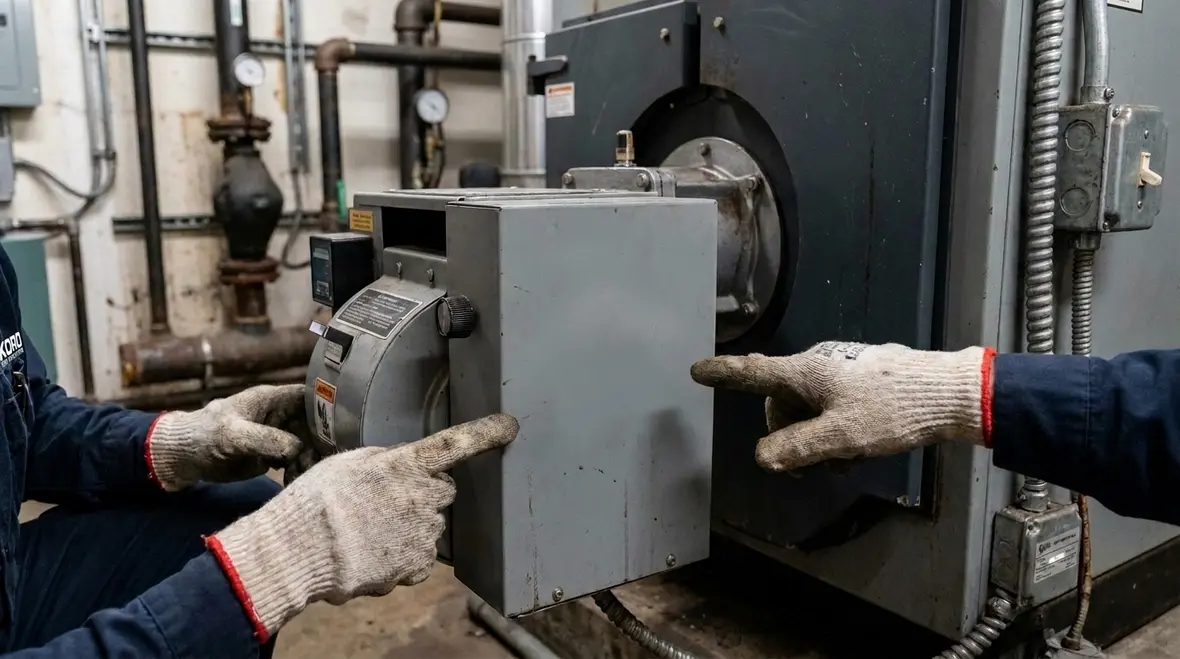
NFPA 31 Section 10.3: Posting Operating Instructions on Oil Equipment
Quick Answer: NFPA 31 Section 10.3 requires owners and operators to post clear operating instructions on or near oil burning equipment so trained personnel can operate and respond correctly. Proper “NFPA 31 posting instructions oil equipment” must reflect the installed equipment and remain legible, accessible, and maintained.
For a broader installation context, it helps to review NFPA 31: A Practical Guide to Oil-Burning Equipment Installation, which connects equipment setup, labeling, and real-world compliance planning in a way that fits naturally with Section 10.3.
Facilities that want a wider compliance mindset can also explore Kord Fire Protection’s commercial fire suppression services for a practical example of how inspection, maintenance, and operational readiness are handled across life safety systems.
Why Section 10.3 matters in real facilities
NFPA 31 Section 10.3 focuses on human factors. When an oil burner, control, or related accessory does not start correctly, or a safety device trips, responders and operators need immediate guidance that matches the actual installation. In commercial, industrial, and retail occupancies, this requirement supports consistent operation during shift changes, maintenance cycles, abnormal operating conditions, and emergency response coordination.
Facilities often assume the “instructions” requirement is satisfied by generic manuals kept in a binder or behind a counter. NFPA 31 posting instructions oil equipment typically mean instructions must be posted at the equipment location or otherwise applied in the manner the standard requires, so the correct steps are visible where actions occur.
What NFPA 31 Section 10.3 requires to be posted
Section 10.3 addresses “operating instructions” for oil equipment. While the exact wording and scope may vary with equipment type and system configuration, compliance generally hinges on three practical outcomes:
Instructions are specific to the installed oil burning equipment. The posted content should align with burner model, control scheme, and operational sequence.
Instructions are positioned for immediate use. Staff should be able to reference them at the equipment without needing to search for documents.
Instructions remain legible and maintained. Laminated, durable signage often performs better in mechanical rooms where oil vapors, dust, and cleaning agents are present.
From a fire safety operations perspective, the key risk is not that personnel ignore the instructions. The risk is that personnel follow the wrong steps because the instructions do not match what is actually installed. That mismatch can contribute to improper restart attempts after a lockout, delayed service response, or unsafe manipulation of valves and controls.
Where and how to post the instructions for best compliance
Commercial facilities usually have tighter access control, more standardized maintenance practices, and more staff turnover than owner operated sites. Section 10.3 therefore rewards clear placement and durable posting. To meet the compliance intent, facilities should apply the following approach:
Placement at the point of action
Post the instructions where the operator performs the startup and where the system components are visible or accessible. Typical locations include:
Adjacent to the burner control area in the boiler or burner room.
Near the service switch and primary isolation valves, where the operator can cross reference the posted steps with visible components.
On the equipment enclosure or near the burner firing controls if the room layout makes “at a glance” access necessary.
Legibility and resistance to damage
Mechanical rooms are harsh environments. Use durable signage or protected labeling that resists:
Oil residue and soot contamination
Cleaning chemicals and routine wash downs
Heat exposure and fade that reduce readability
Alignment with actual equipment settings
If the burner control is replaced or the operational sequence changes due to upgrades, posted content must be updated. Facilities frequently update the equipment and forget the signage. That gap creates a failure point during inspections and, more importantly, during incidents.
For a broader installation context, Kord Fire Protection provides a practical commercial focus on oil burning equipment installation considerations here: NFPA 31 practical guide to oil burning equipment installation. That resource supports consistent compliance planning that includes labeling, operational readiness, and service workflow setup.
Operational procedures that posting instructions should support
When the posting works well, it supports safe, repeatable operator actions. The posted “operating instructions” should be designed to help staff perform routine steps and respond to abnormal conditions without improvisation.
Startup and normal operation
At minimum, the posted instructions should support normal startup flow and identify the correct control points. Operators should not need to consult a remote binder to verify sequence order or the correct position of switches and valves.
Shutdown and safe condition
Clear shutdown steps help staff avoid leaving systems in uncertain states. In practice, this prevents unintended restart conditions and supports orderly service access, especially when multiple trades work in the same equipment area.
Lockout, reset, and abnormal response
One of the most common commercial failure patterns occurs after burner lockout. Staff may attempt repeated resets to “try again” without diagnosing the cause. Posted instructions can reduce that behavior by specifying the reset sequence, identifying when to call for service, and guiding safe response actions.
For compliance and safety assurance, Kord Fire Protection typically verifies that posted content, maintenance logs, and actual burner control operation remain consistent after:
Burner replacement or control module upgrades
Nozzle, pump, or fuel line modifications
Accessory changes that alter the operating sequence
After corrective maintenance following burner flame or safety trips
Common compliance challenges during inspections
Even well run facilities can struggle with NFPA 31 posting instructions oil equipment during audits. The challenges usually fall into a few predictable categories.
Generic signage that does not match the installed unit
A generic “lighting instructions” label can look correct but fail the intent of the standard if it does not match the burner control type, reset method, or component layout. Inspectors often verify “at the equipment” details that correspond to the posted content.
Posting location that is technically present but operationally inaccessible
Instructions may exist, but they might be placed behind panels, inside cabinets, or in an area that is difficult to access during normal shift operation. Section 10.3 compliance depends on operational practicality, not just physical existence of text.
Stale documentation after service work
Facilities frequently change burners, controls, or fuel train components while subcontractors handle the mechanical scope. The signage update becomes a missed administrative step. Kord Fire Protection coordinates compliance verification as part of ongoing service, helping close that administrative gap.
Damage, fading, or illegibility
If signage is soot covered, delaminated, or illegible due to heat and cleaning chemicals, it stops being usable instructions. Inspectors can treat this as noncompliance because the requirement is meant for on scene reference under operational stress.
How Kord Fire Protection supports ongoing compliance
NFPA 31 compliance for oil burning equipment is not a one time task. It requires periodic verification across installation details, operator readiness, and maintenance consistency. Kord Fire Protection supports commercial facility owners and operators through field verification of posted content and the practical relationship between instructions, equipment configuration, and safe operating procedures.
This service approach helps facilities maintain an auditable compliance posture and reduces operational uncertainty during burner lockouts, seasonal startups, and routine equipment tuning.
Frequently Asked Questions
Next steps
Facilities should confirm that their NFPA 31 posting instructions oil equipment are posted at the correct location, updated after any equipment changes, and remain legible in the mechanical environment. Kord Fire Protection can verify signage alignment with the installed burner setup and support ongoing compliance through service and inspection readiness. Contact Kord Fire Protection to schedule a compliance review tailored to your commercial equipment inventory.

Join Our Newsletter!
Get the latest fire safety tips delivered straight to your inbox From our Newsletter.



