
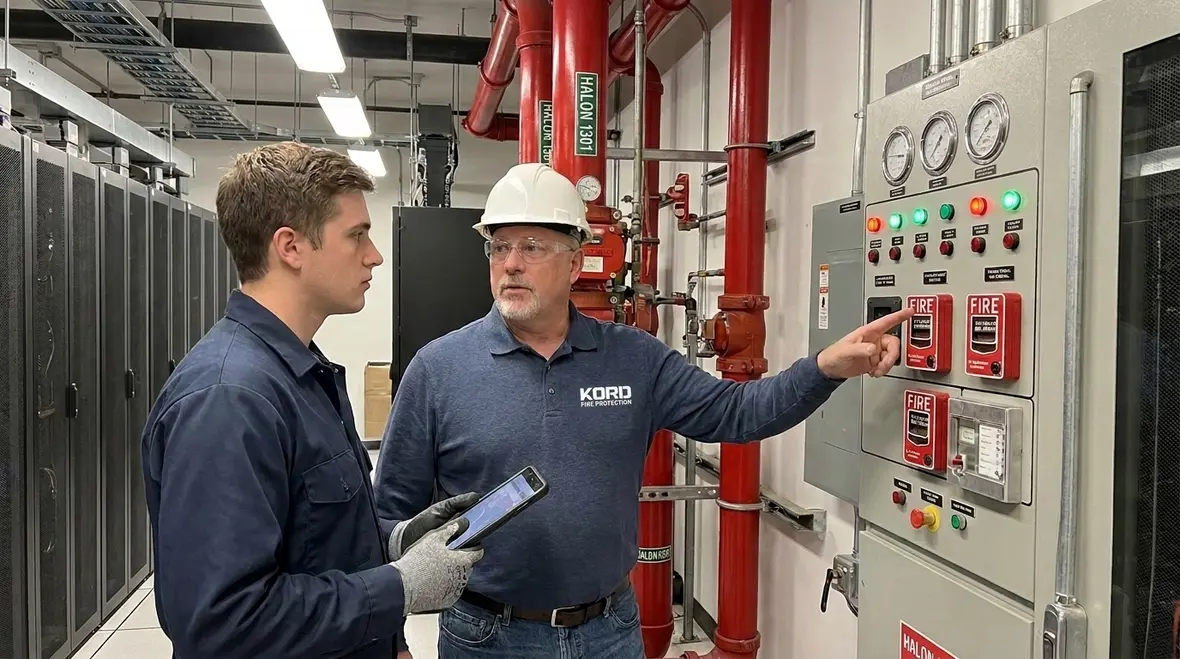
NFPA 12A Section 6.6: Operator Training for Halon 1301 Systems
Quick Answer: NFPA 12A Section 6.6 requires that personnel trained to operate, inspect, test, and respond to Halon 1301 flooding systems understand hazard control, actuation procedures, and emergency coordination. Training must match assigned duties, be documented, and kept current to maintain system reliability.
Why Halon 1301 system operator training requirements matter in the field
Halon 1301 systems deliver rapid, total flooding suppression that can protect life and property, but they also introduce unique operational risks. In real commercial facilities, the most common failures do not involve “whether the system can work,” they involve whether the right people can operate it correctly during unusual conditions such as delayed maintenance, partial impairments, or unexpected alarm sequences. For that reason, Halon 1301 system operator training requirements focus on disciplined procedures and controlled decision making, not generic fire extinguisher familiarity.
For operators and supervisory staff, the training outcomes typically include correct recognition of system status, safe handling of system related equipment, understanding the functional intent of controls, and execution of the proper response path when alarms occur.
What NFPA 12A Section 6.6 expects from operator training programs
NFPA 12A Section 6.6 centers on assignment based training. Operators and other designated personnel must be trained for the tasks they will perform, including operation, routine inspection activities within assigned limits, response to alarms, and coordination with emergency response. The training program should reflect the facility’s specific system configuration, including cylinder arrangement, release hardware, detection interface, control panel functions, and any manual controls.
A practical compliance approach uses a training matrix that maps job roles to required knowledge and verified competencies. This reduces the risk that staff are “trained in theory” but cannot demonstrate the actions required during real events, such as acknowledging a pre release warning, confirming evacuation signals, or recognizing an inhibited or impaired condition.
Facilities that want support beyond the standard language can also review Kord Fire Protection’s clean agent fire suppression system services to connect operator training with the kinds of installed equipment and field support these systems typically require. For system owners and facilities managers looking for the big picture of how the standard is organized, Kord Fire Protection provides an NFPA 12A overview.
Training content operators must understand before they touch controls
Commercial and industrial environments often use multiple suppression zones, remote control locations, and integrated building alarm interfaces. NFPA 12A Section 6.6 operator training should cover the specific mechanisms that drive system response and the human steps that must match those mechanisms.
1) System status, display, and control panel interpretation
Operators must be able to read the system indications and distinguish normal, supervisory, alarm, and fault states. They should understand how detector signals translate into release sequences, how pre discharge signals are presented, and what “system not ready” conditions mean operationally. Misinterpretation here can lead to delayed evacuation or inappropriate attempts to reset a system without proper authorization.
2) Alarm response and evacuation coordination
Halon 1301 discharge is not a controlled local intervention like portable extinguishers. Training must reinforce evacuation and hazard communication procedures as the primary objective. Operators should know who initiates evacuation confirmation, how to manage door positions and access restrictions in the discharge area, and how to avoid contaminating safe zones during or after discharge operations.
3) Manual release, abort, and inhibit functions
Many Halon 1301 systems include manual controls or abort functions depending on design and zoning concepts. Operators must understand the intent and allowable use of these features, the conditions under which they apply, and the documented process for restoring readiness. Training should also address the difference between maintenance actions and operational actions, including who may perform each.
4) Boundary setting for inspections and maintenance support
Operators are often asked to “do quick checks” between formal service visits. NFPA 12A aligned training should clarify what an operator can verify, what requires a licensed technician, and what must be escalated immediately. This prevents well intentioned staff from changing system settings, interfering with detection pathways, or masking impairments that will later cause a non discharge condition.
Common commercial compliance challenges that reveal training gaps
Even when a facility has a written inspection schedule, operator readiness can lag behind due to staffing turnover, contract changes, construction activities, and system modifications. The following issues repeatedly appear in commercial audits and day to day operations, showing why Halon 1301 system operator training requirements should be treated as an operational control, not a one time event.
Turnover and role confusion
Facilities frequently rotate security, shift supervisors, and control room personnel. When training records are not tied to job roles and refresh cycles, new staff can fail to recognize system status indications or assume they can take operational shortcuts.
Temporary impairments during maintenance
Detectors can be taken out of service during construction, control wiring can be disturbed, and release circuits can be placed in a test mode. If operators do not know how to interpret and act on “impaired” indications and restoration completion steps, the facility can unintentionally remain unprotected.
Multiple zones and shared annunciation
In retail and industrial operations, a single building alarm interface may display alerts for several suppression zones. Training must ensure operators can identify which zone is involved, what area evacuation applies to, and how to prevent accidental cross zone confusion during emergency response.
Delayed understanding after discharge events
After a discharge, organizations often focus on restoration of normal operations and lose track of procedural lessons. Operator training should include post event actions such as confirming alarms clear properly, coordinating cleanup, and avoiding system reset attempts that bypass correct service procedures.
How facilities should document and verify operator training
NFPA 12A Section 6.6 expects a training process that can stand up to operational scrutiny. That typically requires documentation of who was trained, what they were trained on, and when training occurred. Verification strengthens compliance because it proves capability, not attendance.
Recommended compliance artifacts
- Role based training matrix aligned to duties such as operator, supervisory response, and maintenance support
- Training records that identify the system zone(s) and the specific equipment interfaces covered
- Competency checks that reflect real panel indications and realistic emergency scenarios
- Refresh schedules tied to turnover, system modifications, and periodic service milestones
- Clear escalation procedures for impaired states and conflicting system indications
Kord Fire Protection commonly supports facilities by aligning the training program with actual installed equipment, field interfaces, and maintenance practices. This approach reduces “paper compliance” and helps operators respond correctly during abnormal system conditions.
Operational best practices Kord Fire Protection recommends for ongoing readiness
Training alone does not guarantee readiness. Systems change over time, and operator knowledge decays without reinforcements. The most effective compliance programs combine instruction, field verification, and recurring maintenance coordination.
Integrate training with inspection and maintenance cycles
When technicians perform inspections, they should reference operator facing impacts such as panel status interpretation, known nuisance conditions, and how to confirm restoration to normal. When operators understand what technicians are checking and why, the entire program becomes more resilient.
Use scenario based refreshers
Operators benefit from drills focused on the sequence of events they will see, including pre discharge warnings, alarm acknowledgment processes, and controlled response boundaries.
Maintain zone labeling and access control
Clear zone identification supports correct evacuation and reduces hesitation. Label integrity and consistent access control are practical risk mitigations that reinforce training content.
Frequently Asked Questions
Next step: ensure your operator training aligns with the installed system
NFPA 12A Section 6.6 works best when training, inspection results, and maintenance practices align to the actual control panel, zone layout, and operational response plan. Kord Fire Protection can help commercial facilities validate training documentation, refine role based instruction, and support ongoing compliance through coordinated service and field verified readiness. Contact Kord Fire Protection today to review your current program and strengthen Halon 1301 system readiness.

Join Our Newsletter!
Get the latest fire safety tips delivered straight to your inbox From our Newsletter.



