
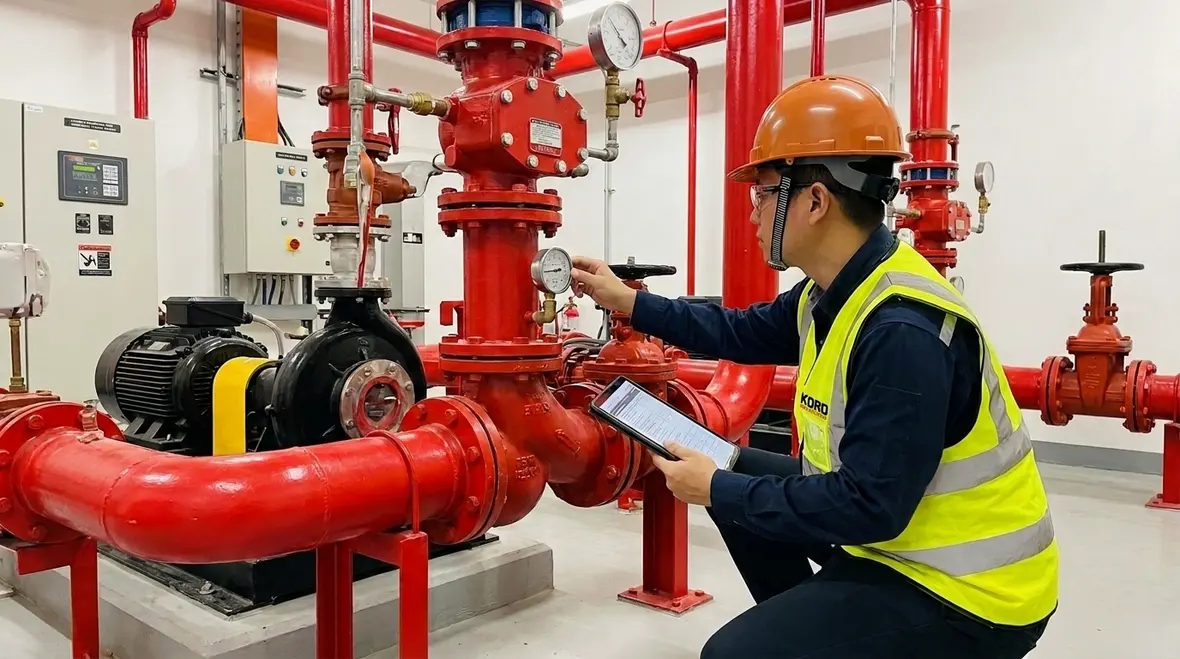
NFPA 13E Section 1.2: The Purpose Behind Fire Department Operations in Protected Properties
Quick Answer: NFPA 13E Section 1.2 explains why fire department operations focus on protecting life, property, and incident stability when responding to hazards in protected premises. It frames how maintenance, testing, and system performance support operational safety and effectiveness.
Facilities looking to connect this operational intent with practical service planning can also review Kord Fire Protection’s fire sprinkler system service page for a grounded look at inspections, maintenance, repairs, and readiness work in the field.
Why Section 1.2 Exists in the First Place
NFPA 13E Section 1.2 sets the foundation for how the standard treats fire protection systems as part of the incident response environment. The purpose of NFPA 13E recommended practice is not purely “system reliability” in isolation. Instead, it connects water based and related protected property features to the realities fire departments face during alarms, investigation, and firefighting.
Commercial facilities must recognize that successful operations depend on predictable system behavior, usable water supplies, properly supervised control functions, and reliable status information. When those elements are neglected, firefighters face uncertainty that increases operational risk.
What “Fire Department Operations” Means During Real Incidents
In protected properties, fire department operations extend beyond initial arrival. Incident command must coordinate actions such as hazard assessment, line deployment, ventilation decisions, forcible entry, and water application strategy. NFPA 13E Section 1.2 supports these operational needs by emphasizing that protected property arrangements must remain functional, consistent, and defensible under stress.
1) Predictable system performance supports safer command decisions
Fire departments cannot treat automatic sprinkler and water based features as a black box. Inspection and testing requirements help ensure that system components respond as designed, including within acceptable tolerances for flow, pressure, and actuation timing. Predictable performance supports tactical decision making, such as whether supplemental water supply is required or whether fire attack can rely on the system’s discharge pattern.
2) Clear status information reduces uncertainty
Operations depend on what responding personnel can verify quickly. Impairments, supervisory conditions, and device status must be identified and managed. When a facility has unknown shutoffs, open valves, failed supervisory switches, or outdated impairment records, responders lose time validating whether protection features are available.
3) Incident stability depends on maintenance of critical functions
During active operations, stability matters. Stuck controls, bypassed components, or inaccurate monitoring can create conditions that undermine firefighting efforts and increase exposure. Section 1.2 reinforces that protected property operations must support incident stability, not just “code compliance on paper.”
How Facilities Translate Section 1.2 Into Compliance Work
For commercial, industrial, and retail sites, the operational purpose described in Section 1.2 becomes practical through inspection, testing, and maintenance (ITM) programs. Those programs should align with the system’s actual risk profile and the facility’s operating conditions.
Key compliance challenges that commonly break the chain
Impairments that linger too long: Valves shut for maintenance, failed monitoring, or incomplete restoration create gaps between protection intent and on site reality.
Inadequate water supply validation: Supply issues may be dormant until a testing event or a real incident reveals insufficient pressure or flow.
Control and supervisory device failures: Supervisory switches, tamper switches, and alarm interfaces can drift out of specification.
Occupancy and hazard drift: Changes to storage height, rack layout, commodity classification, or process materials can alter system effectiveness, even when the sprinkler system remains “unchanged” on a drawing.
Maintenance documentation gaps: Incomplete records delay corrective action and hinder the facility’s ability to demonstrate readiness when required.
Commercial teams reduce these risks by implementing a structured ITM schedule with clear restoration targets and verified system status following any impairment. For guidance on automatic sprinkler system fundamentals and installation considerations, facility owners can reference: NFPA 13 overview for automatic fire sprinkler system installation.
Where Systems Fail Operationally, and Why Section 1.2 Matters
Section 1.2 matters because it frames system reliability as a firefighter operational requirement. Typical failure points often fall into categories that directly affect incident outcomes.
Water delivery reliability
Water based systems must deliver water to the fire area when actuated. Failure modes can include blocked piping, closed valves, air or obstructions in certain system arrangements, and improper setup of water supply components. When these failures occur, fire departments may spend critical time determining whether the system is actually providing suppression.
Detection and actuation interface
Even when sprinkler heads are available, the surrounding detection and signaling ecosystem can fail to communicate conditions clearly. Supervisory alarm mismatches, monitoring panel issues, and incorrect device labeling complicate command decisions and can cause delays in confirming system activation or impairment status.
Control logic and cross connections
Facilities frequently modify electrical controls, fire alarm interfaces, dampers, and other building systems over time. Without disciplined commissioning and post change verification, these modifications can interfere with fire department operations by introducing unexpected behavior, delayed actuation, or loss of coordinated functions.
For Australian facilities with local regulatory overlays, it remains essential to align ITM practices with ongoing sprinkler system service expectations. Kord Fire Protection supports sprinkler service and ongoing compliance activities through: Australian fire sprinkler services.
How Kord Fire Protection Supports Section 1.2 Outcomes
NFPA 13E Section 1.2 drives expectations that protection features must support fire department operations. Kord Fire Protection positions its service model around that operational intent by focusing on test readiness, restoration discipline, and documented verification.
What a high quality service program looks like
Planned ITM aligned to facility risk: Service scopes match the building’s hazard environment and occupancy profile, not just generic intervals.
Impairment management and restoration verification: When systems are taken out of service, restoration includes confirmed return to monitored readiness.
System wide checks that support firefighter usability: Teams validate operational dependencies that impact response effectiveness and incident stability.
Clear reporting for stakeholders: Documentation supports compliance audits, maintenance planning, and corrective action prioritization.
For owners and facility managers, this approach turns the purpose described in Section 1.2 into measurable results that reduce operational uncertainty during an emergency.
Frequently Asked Questions
Call to Action
Review your facility’s fire protection ITM program against the operational purpose outlined in NFPA 13E Section 1.2. Ensure impairments are controlled, restoration is verified, and documentation is audit ready. Contact Kord Fire Protection to assess system readiness, identify operational failure points, and build a maintenance plan that supports fire department operations with confidence.

Join Our Newsletter!
Get the latest fire safety tips delivered straight to your inbox From our Newsletter.



