
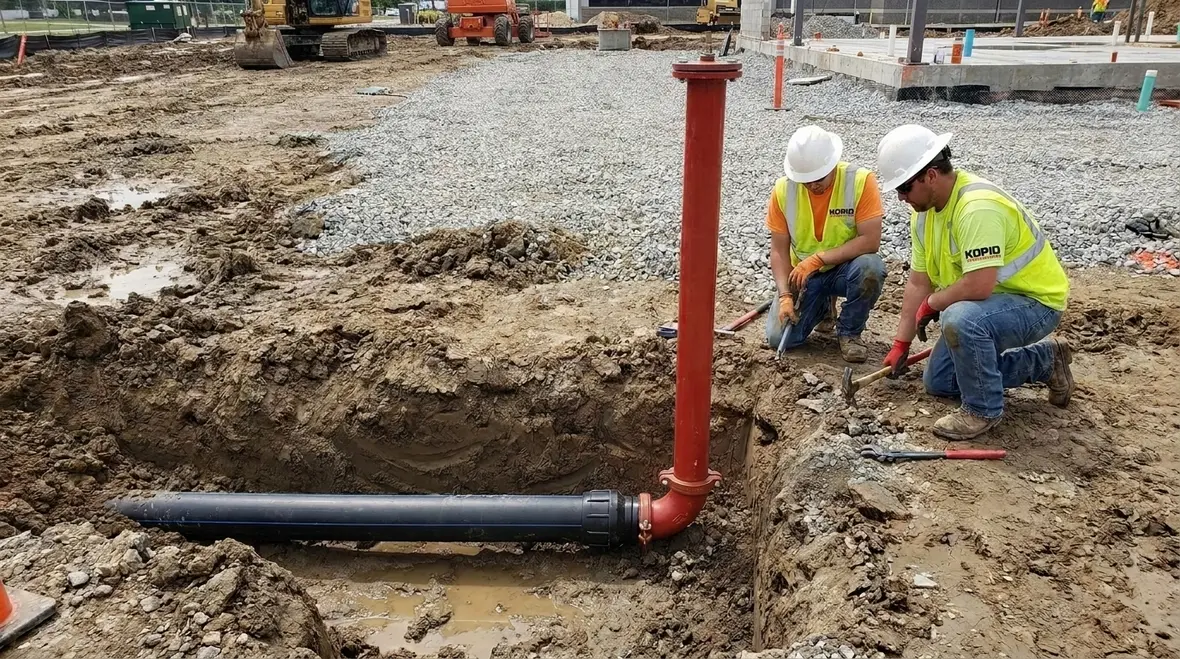
Underground vs. Aboveground: How NFPA 13R Section 5.3 Splits Piping Requirements at the 4-inch Mark
Quick Answer: NFPA 13R Section 5.3 separates underground and aboveground sprinkler piping rules and uses a 4 inch threshold to define which segments carry stricter installation and protection expectations. The intent centers on reliability, corrosion control, and maintainability for commercial and multifamily occupancies.
For teams also reviewing broader supply-side performance, it helps to understand commercial fire sprinkler water supply pressure testing and service, since pressure behavior and buried supply reliability tend to show up together during inspection planning and troubleshooting.
What NFPA 13R Section 5.3 Actually Triggers at 4 Inches
NFPA 13R Section 5.3 addresses how sprinkler system piping requirements change depending on whether piping runs are considered underground or aboveground, and it establishes a practical breakpoint at the 4 inch mark. In the field, that means designers and installers must identify not only where pipe is located, but also which pipe sizes are included in the applicable rules.
For teams mapping the layout, the key compliance question is whether the system includes an NFPA 13R 5.3 underground supply pipe 4 inch segment. When it does, the installation must meet the rules tied to the underground supply conditions, including expectations related to protection against physical damage, corrosion, and future impairment. When it does not, aboveground-oriented requirements typically govern those segments.
Why NFPA 13R Draws the Line Between Underground and Aboveground
Underground runs introduce risks that aboveground piping avoids. Water and soil interaction can drive corrosion or coating breakdown. Mechanical exposure during landscaping, utility work, and hardscape renovations can cause physical damage. Thermal and moisture gradients can also affect joint performance and the long term integrity of protective materials.
Aboveground piping generally benefits from visual verification during inspection. Leaks, corrosion, and poor support typically become apparent sooner. Underground piping often cannot be inspected directly once buried, so compliance requirements focus on installation quality, material suitability, and protection that reduces the chance of hidden failure.
How the 4 Inch Threshold Impacts Real Installation Decisions
The 4 inch mark becomes a practical sorting tool during plan review, installation layout, and documentation. In many commercial, industrial, and retail facilities, water supply piping often connects to pumps, standpipes, or main drain arrangements that route service supply to remote sprinkler risers.
Typical field impacts when a 4 inch underground supply pipe is present
Material and protection choices tighten: Contractors must ensure the underground segment receives the required corrosion resistance and physical protection strategy for buried conditions.
Joint and fitting selection matters more: Buried joints and transitions become higher risk locations. Improper joint preparation, coating damage, or poor bedding can create failure points that are difficult to detect.
Routing and depth verification becomes critical: Layout changes after excavation can lead to noncompliant burial depths, inadequate cover, or compromised protection.
As-built documentation must align with the rule triggers: Inspection and future service crews need accurate drawings showing which segments qualify under NFPA 13R 5.3 underground supply pipe 4 inch criteria.
Common failure points observed during maintenance and compliance work
Coating damage during installation: Scrapes from handling or trench work can break down corrosion protection.
Inadequate support or bedding: Pipe settlement can strain joints and lead to microleaks.
Unexpected utility conflicts: Reroutes for other utilities can place piping in different exposure conditions than originally designed.
Deferred repairs: Small underground leaks can progress unnoticed until they impact system performance during inspection or emergency readiness checks.
Because those failure points hide below grade, commercial sites typically benefit from a documented inspection and maintenance plan that explicitly addresses buried piping risks and serviceability constraints.
Operational Compliance: Design, Installation, and Inspection Workflow
NFPA 13R compliance does not end at the drawing set. The strongest outcomes come from process control across submittals, installation checkpoints, and acceptance testing.
1) Preconstruction review for rule alignment
Fire protection teams should verify the routing and sizing of supply segments early. They should confirm which portions are categorized as underground supply versus aboveground piping and ensure the system includes no ambiguity around the 4 inch mark. Where the design includes transitions, the team should document how each segment meets the appropriate requirements for its location.
2) Installation controls during excavation and backfill
Protect pipe and coatings before placement: Handle materials to prevent coating abrasions and verify protective wraps or coverings are intact.
Confirm cover and bedding: Ensure trench conditions support proper pipe alignment without overstressing joints.
Maintain separation from other utilities: Avoid heat, chemical, or mechanical exposure that can compromise integrity.
Document changes: Any field changes that affect pipe size, routing, or depth should be captured as revised as-built information.
3) Acceptance and ongoing inspection readiness
During inspections, the practical challenge involves verifying that the buried segment remains compliant even though it cannot be visually confirmed after backfill. That is why strong documentation practices and disciplined installation QA improve inspection confidence.
For an overview of system installation considerations and how components interact during commissioning, refer to NFPA 13 overview and automatic fire sprinkler system installation. While the article focuses on NFPA 13, many installation quality and operational readiness themes carry directly into 13R projects, especially around workmanship, system configuration, and inspection preparation.
Maintenance Planning for Commercial Sites with Buried Supply Segments
Facilities with underground supply piping must prioritize maintainability and leak response readiness. Even when NFPA 13R piping requirements are met at install time, commercial operations change. Landscaping, parking lot repairs, and utility work can alter exposure conditions over time.
Best practice maintenance actions
Inspection scheduling that accounts for site changes: After major civil work, confirm the system documentation still matches field conditions.
Serviceability planning: Ensure access points and shutoff locations support practical isolation without excessive excavation.
Monitoring and trending: Use system performance observations, pressure and flow behavior during testing, and alarm history to spot early indicators of underground issues.
Documentation updates: Keep as-built drawings aligned with installed piping size and routing, especially around the 4 inch mark trigger areas.
Kord Fire Protection supports commercial owners and managers by coordinating compliance-aligned testing, documentation validation, and ongoing inspection readiness. When maintenance teams can quickly identify the buried supply segments that matter most, repair downtime and disruption to ongoing operations typically decrease.
NFPA 13R and Cross-Reference Considerations for Fire Pump and Water Supply Systems
In many commercial facilities, sprinkler systems interface with water supply hardware that can include pumps and control valves. Where NFPA 13R systems are supported by pump rooms or combined water supply configurations, the buried supply piping rules become part of a larger reliability picture.
For additional context on pump systems and fire water infrastructure, consult Fire Pump System Components Explained Guide. Integrating supply-side reliability with sprinkler piping compliance helps operators maintain consistent system performance during annual inspections and emergency scenarios.
Frequently Asked Questions
Conclusion and Call to Action
NFPA 13R Section 5.3 uses the underground versus aboveground distinction, and the 4 inch mark serves as a practical compliance breakpoint. To avoid hidden nonconformities, confirm routing, sizes, and documentation during design and installation, then maintain a disciplined inspection and maintenance workflow. Contact Kord Fire Protection to support ongoing compliance testing, as-built validation, and service planning for buried supply segments so your system stays reliable when it matters most.

Join Our Newsletter!
Get the latest fire safety tips delivered straight to your inbox From our Newsletter.



