
NFPA 13 Section 19.3 — Special Design Approaches for Sprinklers
NFPA 13 Section 19.3 Special Design Approaches for Sprinklers
Quick Answer: NFPA 13 Section 19.3 enables recognized exceptions to standard sprinkler layouts by applying NFPA 13 special design approaches sprinklers that preserve fire protection performance. These approaches require rigorous documentation, AHJ approval, and validated testing to ensure coverage, hydraulics, and occupancy protection in commercial facilities.
If you want the broader code context before diving into Section 19.3, review NFPA 13 automatic fire sprinkler system installation. And if your project is moving from design questions into field execution, Kord Fire’s fire sprinkler system service team can help tie special design intent back to installation, testing, and compliance-ready documentation.
Scope and Purpose of Section 19.3
The provisions in this section address conditions where conventional sprinkler placement and hydraulic calculations are impractical due to space constraints, complex occupancies, or architectural features. The intent is to preserve equivalent protection while allowing alternative layouts or device configurations. The term NFPA 13 special design approaches sprinklers is used to describe these flexible methods within the standard. These approaches rely on thorough design analysis, verification, and coordination among engineers, installers, and the authority having jurisdiction (AHJ).
Key Special Design Approaches and When They Apply
Common paths designers use when standard layouts do not fit
- Hydraulically equivalent designs: Achieve the required water supply and coverage using alternative hydraulics that produce the same suppression performance as standard layouts.
- Alternative sprinkler configurations: Employ different head types, orientations, or spacing patterns that maintain protection objectives while accommodating site constraints.
- Nonstandard spacing and protected area adjustments: Modify coverage criteria and compartment boundaries to fit architectural features, with rigorous justification and testing.
- Supplemental protection schemes: Integrate additional devices or strategies, such as area separation or room based protections, to maintain equivalent protection levels.
Documentation, Verification, and Approval Process
Implementing a special design approach requires comprehensive submittals and validation. Design calculations, hydraulic analyses, product data sheets, and test data must be documented and archived. The AHJ reviews these submittals, conducts or reviews commissioning tests, and issues approval only after confirming that the performance criteria are equivalent to the prescriptive design. A formal commissioning report verifies coverage areas, flow rates, and drainage behavior as required by the approving authority.
Installation, Commissioning and Maintenance Practices
Installation must follow manufacturer instructions and NFPA 13 requirements, with attention to the specifics of the approved special design approach. Commissioning activities include system verification tests, flow tests, functional checks of detection and alarms, and confirmation that each coverage area meets the agreed performance targets. Ongoing maintenance entails regular inspections of sprinkler heads, hangers, pipes, and any supplemental devices, along with updates to as built drawings and hydraulic calculations whenever changes occur.
Commercial Facility Considerations and Compliance Challenges
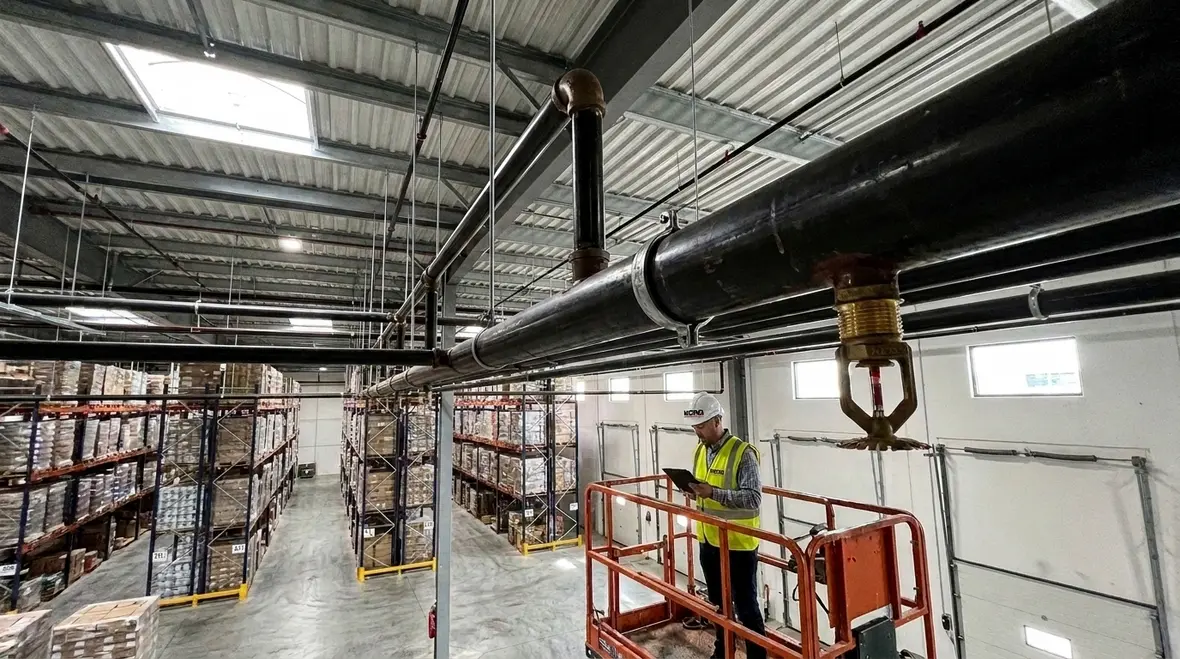
- High pile storage and warehouse layouts frequently require alternate layouts and verified hydraulics to ensure reliable protection.
- Retail environments with tight aisles demand precise documentation and coordination between architects, contractors, and fire protection professionals.
- Mezzanines, atriums, and irregular geometries introduce complexity in coverage calculations and require rigorous AHJ coordination.
- Maintenance programs must track changes to occupancy and storage configurations that could affect hydraulics or coverage over time.
Kord Fire Protection: Your Partner for Compliance
Kord Fire Protection provides design reviews, installation, inspection, testing, and ongoing maintenance for systems employing NFPA 13 special design approaches sprinklers. The team coordinates with AHJs, conducts commissioning and performance verification, and maintains up to date documentation to support compliance in commercial, industrial, and retail facilities. Kord positions itself as a proactive partner to manage the complexities of the 19.3 process and sustain long term protection.
Frequently Asked Questions
Conclusion and Call to Action
To move forward with compliant 19.3 practices, reach out to Kord Fire Protection for a comprehensive assessment, design review, installation, testing, and ongoing maintenance services. Our team will verify hydraulics, coverage zones, and documentation to maintain compliance in commercial, industrial, and retail facilities.

Join Our Newsletter!
Get the latest fire safety tips delivered straight to your inbox From our Newsletter.


