NFPA 1 Section 43.7 for Organic Peroxides in Coatings
Quick Answer
NFPA 1 Section 43.7 sets clear fire safety rules for organic peroxides used in coatings. These materials can ignite fast, react badly with heat, and demand tight handling. For industrial, retail, and commercial sites across Australia, Kord Fire Protection can help build safer storage, better compliance, and fewer surprises on the job.
Facilities that handle peroxide based coatings often need more than common sense and a decent shelf label. They need process discipline, temperature awareness, emergency planning, and fire protection that actually matches the hazard. Near the top of that planning, many sites also benefit from broader full fire protection services that tie inspections, suppression, alarms, and compliance support together without making the whole job feel like a paperwork obstacle course.
NFPA 1 Section 43.7 and Why It Matters for Coatings
NFPA 1 Section 43.7 focuses on organic peroxides, which are common in coating systems, curing agents, and other two part products. These chemicals can behave like the dramatic guest at a family dinner: stable until they are not. Because they can self react, release heat, and intensify fire, facilities need clear controls from the moment the product arrives.
For sites that handle spray coatings, protective finishes, or industrial repair products, organic peroxide coatings NFPA guidance helps reduce risk. It also supports safer workflows for plural component coating fire code requirements and two part coating fire safety planning. In other words, the rule is not just paperwork with a badge. It shapes how people store, move, and use these materials every day.
That matters because coating operations rarely fail in one big theatrical moment. More often, problems build through small misses: a warm storage area, a container parked too close to incompatible stock, a rushed transfer, or a worker who knows the task but not the chemistry. NFPA 1 Section 43.7 helps push those weak points into the light before they turn into a headline nobody asked for.

What Organic Peroxides Mean in Coating Work
Why these materials deserve extra respect
Organic peroxides appear in many coating systems because they help products cure and harden correctly. However, they can be sensitive to heat, friction, contamination, and poor storage conditions. Therefore, a facility that uses them must understand the product type, the container, and the actual process in use.
In industrial and commercial settings, the risk grows when teams mix product types, crowd storage areas, or ignore temperature control. A coating room can look neat and still hide danger. That is why NFPA 1 Section 43.7 matters. It gives a safety structure that helps teams keep the process under control rather than letting the process run the show like a badly written sequel.
Where coating sites usually get into trouble
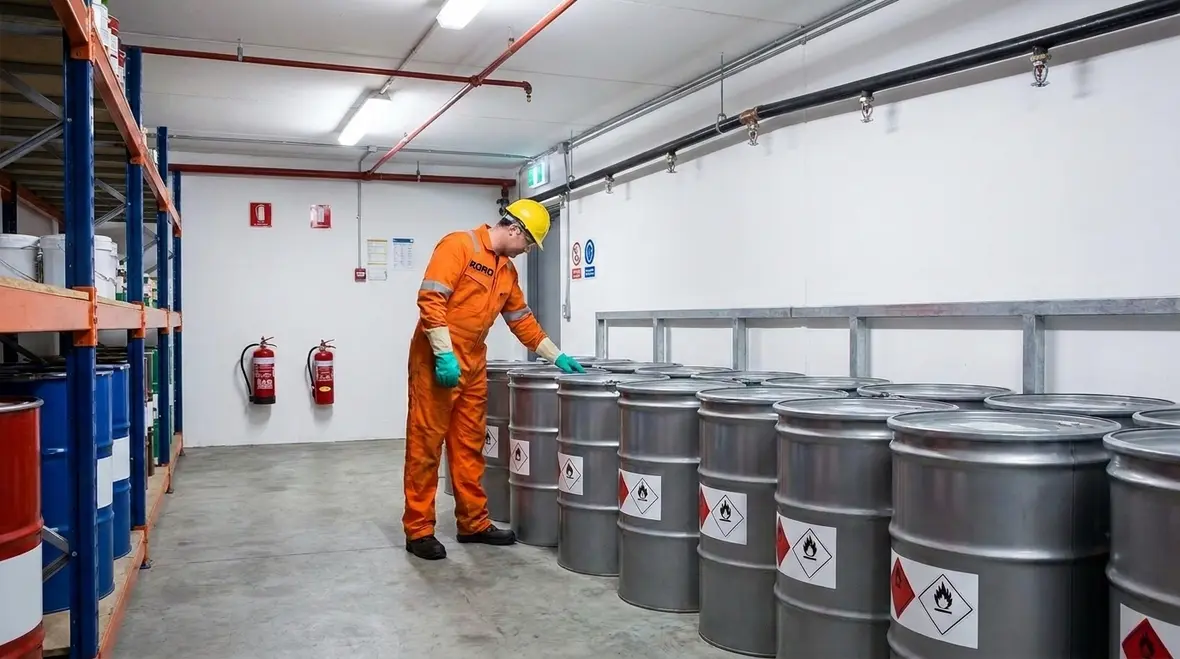
- Storing peroxide components where temperatures swing too far
- Placing reactive materials near ignition sources or incompatible stock
- Assuming a tidy room is automatically a safe room
- Relying on habit instead of written handling steps
- Treating labels like decoration instead of operational instructions
The fix is not glamorous, but it works. Sites need product awareness, storage discipline, staff training, and protection systems that support the way the coating process actually runs. That can include suppression planning for higher risk areas, especially where ignition potential, chemical load, or valuable equipment make a bad day much more expensive than it needs to be.
How the Rule Shapes Safe Storage and Use
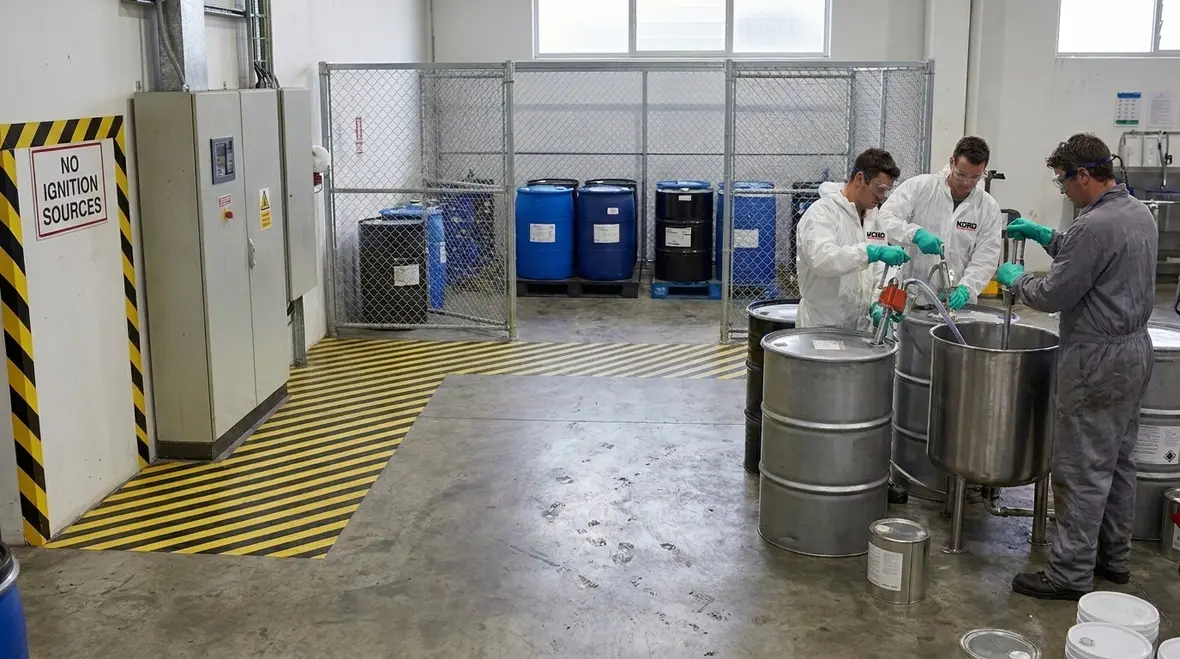
NFPA 1 Section 43.7 drives several practical steps. First, it supports proper separation from heat sources, ignition sources, and incompatible chemicals. Next, it pushes for the right storage limits, labeling, and access control. Finally, it encourages teams to train workers so they know what the product needs before they ever open the drum or cart.
For coating operations, this means a safer layout, cleaner handling, and better emergency readiness. It also means fewer chances for a small mistake to become a large fire event. That matters across factories, warehouses, maintenance shops, commercial facilities, and retail support sites across Australia.
Key compliance points facilities should review
- Storage temperature control for peroxide based products
- Separation from flammable liquids and ignition sources
- Clear labeling and access limits
- Training for mixing, transfer, and cleanup tasks
- Emergency response planning for spill or fire events
Facilities that are already reviewing broader code topics may also find it useful to connect this topic with NFPA 1: A Comprehensive Guide to Fire Prevention and Safety. That article helps frame Section 43.7 inside the larger fire code picture, which is handy when managers are trying to turn a single requirement into a site wide approach instead of a lonely checklist sitting in a binder.
| Area | What to review |
| Storage | Temperature, ventilation, separation, access |
| Use area | Mixing controls, ignition sources, housekeeping |
| Training | Worker knowledge, labels, response steps |
| Emergency planning | Spill control, fire response, escalation paths |
How Kord Fire Protection Can Help
Turning code into something a real site can live with
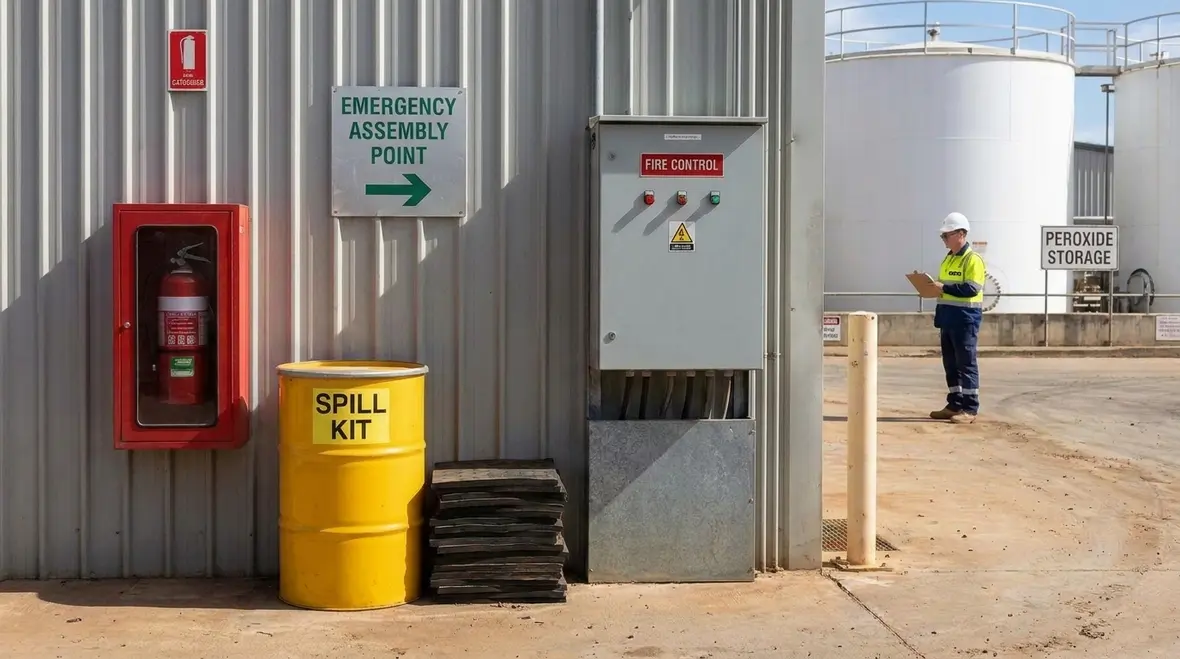
Kord Fire Protection can become a vital partner because compliance is not only about knowing the rule. It is about building a site that can actually live with the rule. That means helping teams assess hazards, review layout concerns, and align fire safety systems with coating operations that use organic peroxides.
For businesses handling high risk coatings, Kord Fire Protection can support fire protection planning, code awareness, and practical site advice. As a result, a facility can improve safety without slowing down production more than needed. That balance matters, because no one wants fire risk pretending to be a workflow problem with a hard hat.
Sites with chemical handling, special process zones, or sensitive equipment may also benefit from looking at special hazard fire suppression planning. That kind of support fits naturally where peroxide related risks need faster response and a more tailored protection strategy than a generic setup can offer.
What Australian Facilities Should Look at First
Australian industrial, retail, and commercial sites should start with a simple review. They should identify where organic peroxide products are stored, how they move through the site, and which workers touch them. Then they should compare current practices against fire safety expectations and coating process needs.
That first review should be practical, not dramatic. Walk the storage area. Check temperatures. Review separation. Confirm that labels are visible and meaningful. Look at transfer points, cleanup routines, spill readiness, and how new staff are trained. If the answer to any of those is “we usually just do it this way,” then congratulations, you have found the part that deserves attention.
Why Two Part Coating Fire Safety Needs More Than Common Sense
Two part coating fire safety can fail when teams rely on habit instead of process. A worker may know the job, yet still miss a storage issue or a reaction risk. Therefore, facilities need written procedures, site specific controls, and regular checks. This is where good fire protection guidance pays off in a very real way.
NFPA 1 Section 43.7 does not exist to slow business. It exists to keep coating work moving without turning the site into a cautionary tale on the evening news. With the right controls, teams can protect people, property, and production.
Conclusion
NFPA 1 Section 43.7 gives coating operations a clear path to safer handling of organic peroxides. For Australian facilities, the smartest move is to review storage, training, and fire systems now.
Kord Fire Protection can help turn code into practical action, so the site stays safe, compliant, and ready for work. That is a much better ending than trusting luck and hoping the coating room never auditions for chaos.

Join Our Newsletter!
Get the latest fire safety tips delivered straight to your inbox From our Newsletter.