NFPA 10 Section 4.4: What to Do With Obsolete Fire Extinguishers According to Code
Quick Answer: NFPA 10 Section 4.4 requires obsolete fire extinguishers to be taken out of service when they can no longer be safely maintained, repaired, or correctly identified. For industrial, retail, and commercial sites, that usually means safe removal, proper disposal, and replacement through a qualified fire protection partner like Kord Fire Protection.
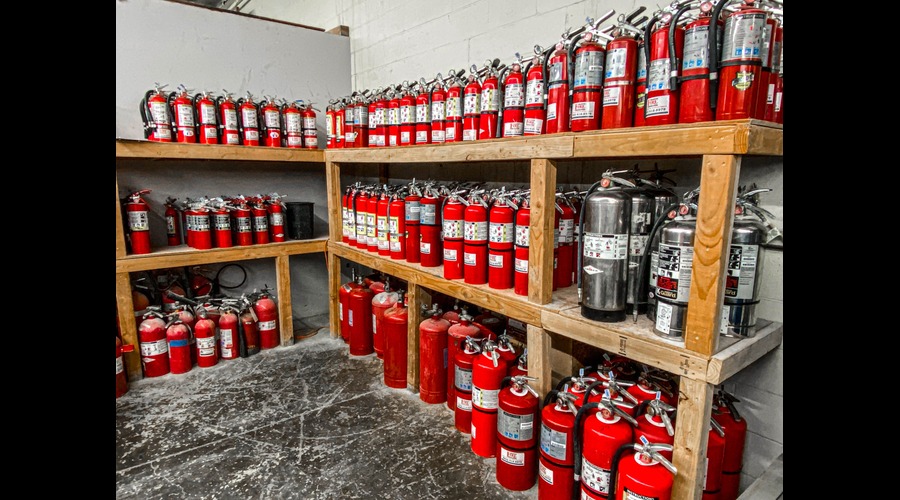
Across industrial floors, retail stockrooms, and busy commercial sites, Obsolete Fire Extinguishers can sit quietly in the background like props in a scene that should have wrapped years ago. However, old and unserviceable units are not harmless clutter. They can create risk, confusion, and compliance trouble. NFPA 10 Section 4.4 gives a clear path for handling them, and that path matters when safety, uptime, and audit readiness all sit on the same table.
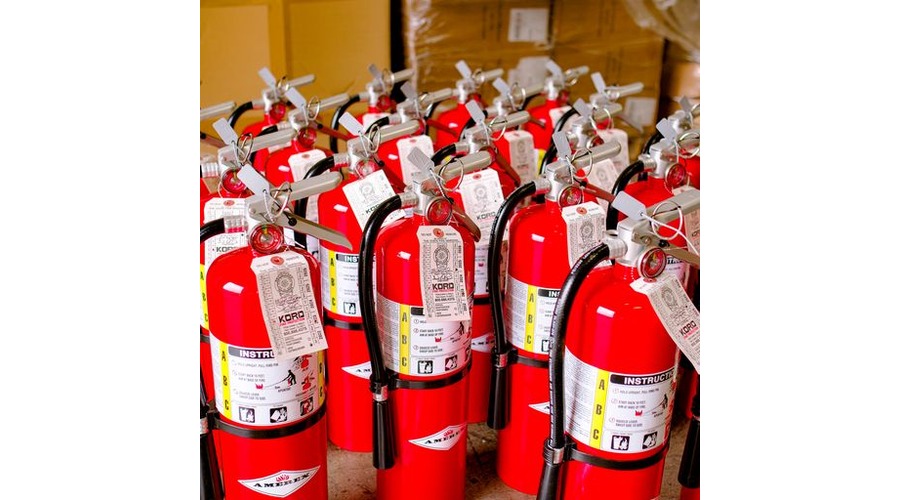
If your building has a mix of old inventory, inherited equipment, or extinguishers that look like they have survived three remodels and one questionable storage room decision, this is exactly where a strong fire extinguisher service and certification program becomes useful. A qualified provider can sort the serviceable units from the ones that need to leave the stage.
What NFPA 10 Section 4.4 Means in Practice
NFPA 10 Section 4.4 focuses on extinguisher replacement and removal when a unit no longer meets service, safety, or identification needs. In plain terms, if an extinguisher cannot be properly maintained, has failed inspection, or belongs to a type no longer acceptable for use, it should leave the site service list. Therefore, the rule is not about keeping old equipment around as a backup. It is about removing items that can mislead staff during an emergency.
This matters because an extinguisher that looks ready may not work when needed. Also, in commercial settings, a unit that cannot be serviced can become a compliance issue during audits. No one wants to explain to an inspector why a relic from another decade is still hanging on the wall, pretending to be useful. That drama belongs in a movie, not a plant room.
Why this section matters beyond the code book
In practice, this section is about trust. When someone grabs an extinguisher, they are trusting that it is charged, appropriate for the hazard, correctly labeled, and mechanically sound. If any of those basics fall apart, the extinguisher is no longer part of a reliable fire protection plan. It is decoration with a pressure gauge, which is not the sort of design trend anyone requested.
How to Identify Obsolete Fire Extinguishers
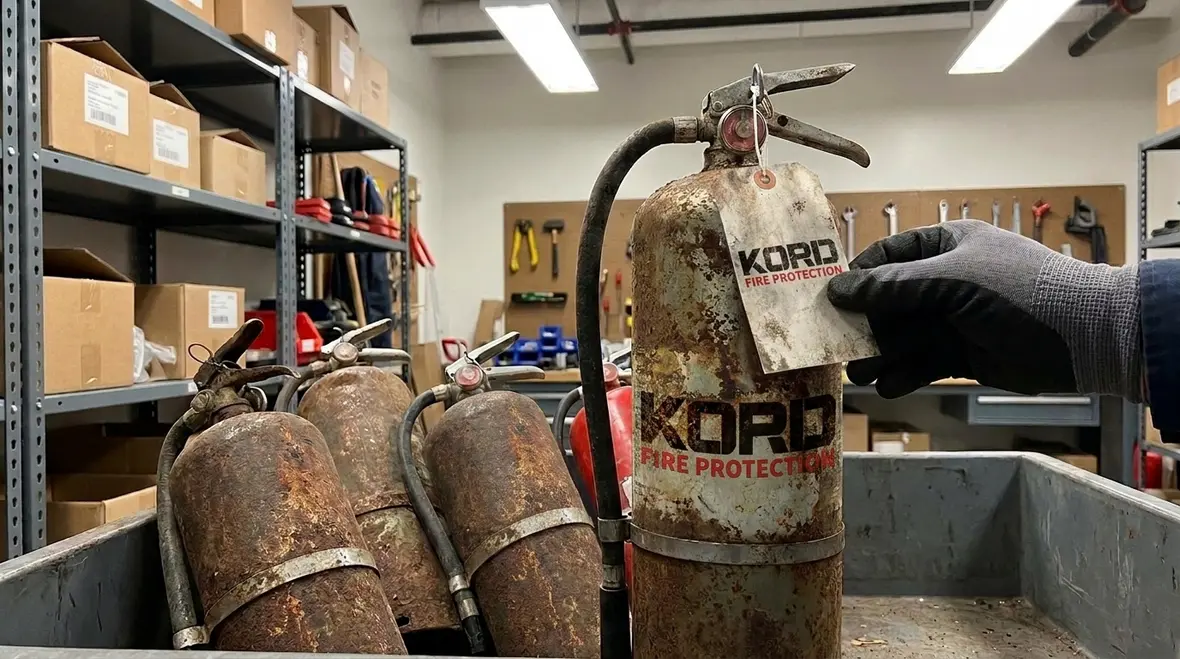
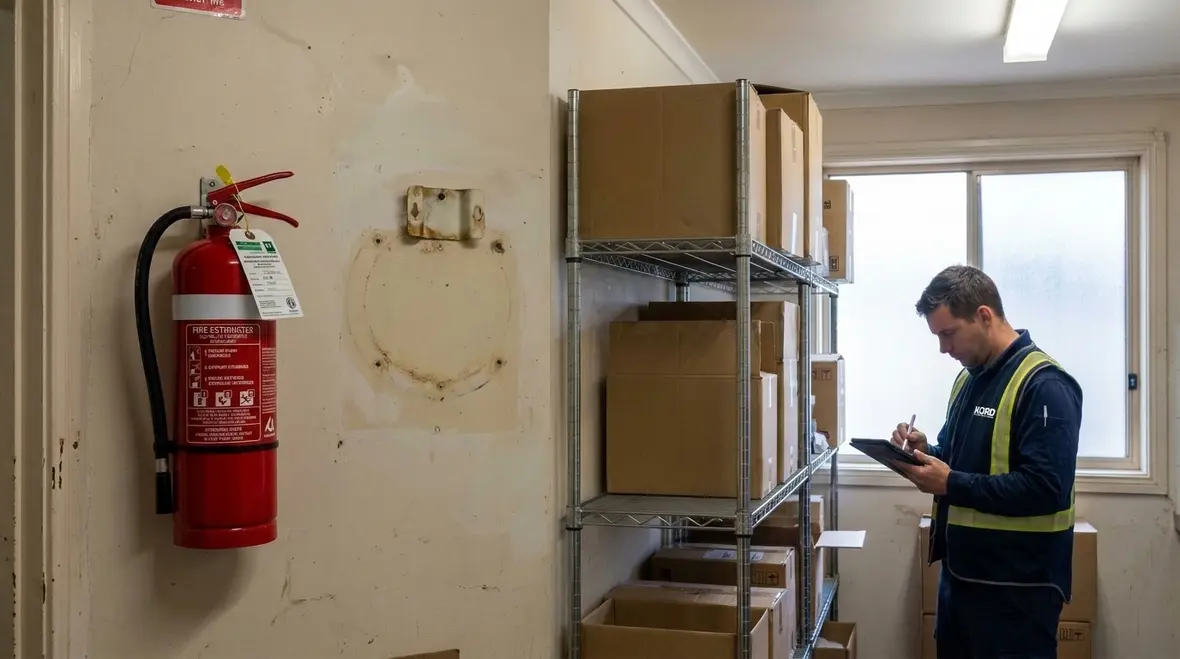
Sites should check for signs that a unit is obsolete, damaged beyond repair, or no longer supported by parts and service. Common examples include extinguishers with missing labels, heavy corrosion, cracked hoses, missing valves, or outdated designs that no longer meet current service needs. In some cases, the extinguisher may still hold pressure, yet it still fails because the equipment cannot be confidently maintained.
Facilities teams should also watch for units with unclear contents or old discharge agents that no longer suit the site. In industrial and retail locations, mixed equipment from mergers, refurbishments, or old lease fits can create a patchwork wall of confusion. That is never a good look. It also makes inspection harder than it should be.
Common warning signs worth flagging early
Unreadable or missing nameplate instructions
Corrosion on the shell, handle, or valve assembly
Hoses that are split, brittle, or detached
Pressure readings that do not match normal operating range
Units with no clear service history or inspection tag trail
Older extinguisher types that are no longer practical to maintain
Some obsolete extinguishers are obvious. Others are sneaky. They may appear clean, mounted, and official, yet still fail the moment a technician checks the details. That is why visual familiarity should never replace proper inspection.
What to Do When an Extinguisher Must Come Out of Service
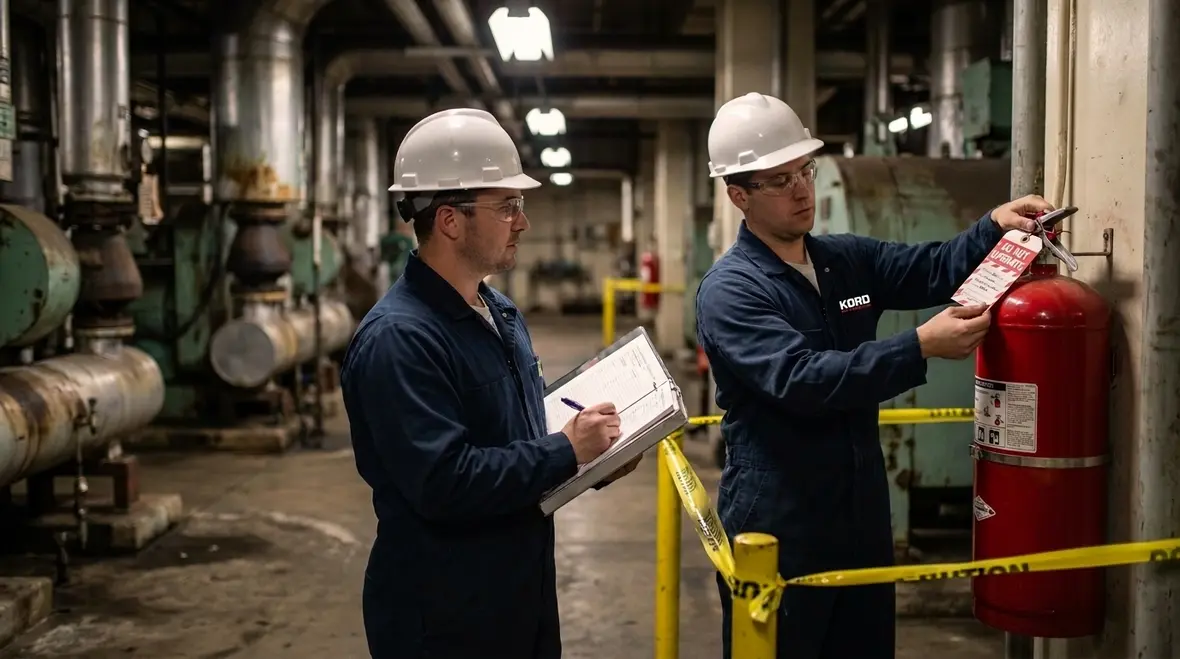
Once a unit is identified as obsolete or unserviceable, the site should remove it from active use and replace it with compliant equipment. First, the extinguisher should be tagged or isolated so staff do not rely on it in an emergency. Next, a qualified provider should assess whether it can be repaired, recharged, or must be retired.
If retirement is the only safe option, the unit needs proper decommissioning and disposal. That process should protect staff, reduce environmental risk, and keep the site aligned with code obligations. Then, the location should be updated with a suitable replacement so coverage remains intact. After all, a missing extinguisher is not a temporary minimalist design choice. It is a gap.
A practical site workflow
Identify the questionable extinguisher during inspection.
Tag it clearly so nobody assumes it is ready for use.
Remove it from active coverage if it is unsafe or unsupported.
Confirm whether repair, recharge, or replacement is appropriate.
Arrange safe disposal if the unit is obsolete beyond service.
Install a compliant replacement that matches the hazard and location.
Update records, tags, and asset lists so the site remains audit-ready.
This process becomes even easier when it sits inside a broader compliance strategy. Kord Fire Protection’s full fire protection services approach fits naturally here because extinguisher issues rarely live alone. Buildings often need coordinated inspection planning, documentation, and replacement support across several life safety systems at the same time.
Why Proper Disposal Matters for Compliance and Safety
Proper disposal does more than clear shelf space. It helps prevent accidental reuse, stops unsupported equipment from circulating, and shows due care during compliance checks. In addition, some older extinguishers may contain materials or agents that require controlled handling. A trained service partner can manage that process with the right paperwork and method.
For the business
Better compliance posture
Cleaner audits and documentation
Safer operations and clearer emergency readiness
Fewer surprises during inspections
For the fire protection partner
Inspection and condition assessment
Tagging, removal, and replacement planning
Safe decommissioning and disposal handling
Documentation that keeps the site moving
That combination matters because fire compliance is not just about hanging equipment on a wall. It is about proving the equipment can do its job, and do it now, not sometime after a hopeful tap on the gauge.
How Kord Fire Protection Can Support the Job
Kord Fire Protection can become a vital partner for industrial, retail, and commercial sites that need help managing obsolete equipment. Their team can assess existing extinguishers, identify units that no longer belong in service, and guide the site through removal and replacement. As a result, facilities managers get a cleaner path to compliance without the guesswork.
Just as important, Kord Fire Protection can help reduce downtime. When a site has several locations or a large asset list, obsolete equipment can pile up fast. A reliable partner can handle the inspection process, recommend the correct replacement units, and help keep records in shape for audits. In short, they help turn a messy closet of old extinguishers into a proper fire safety system. And yes, that is a far better storyline.
For readers who want a broader code baseline, Kord Fire also has a helpful resource on NFPA 10 portable fire extinguisher guidelines. It fits neatly with this topic because disposal decisions make more sense when the wider inspection, maintenance, and placement framework is understood.
What Facilities Should Ask Their Service Provider
Before removing old units, facilities teams should ask clear questions. They should confirm whether the extinguisher can be repaired, whether parts are available, and how disposal will be handled. They should also ask if the replacement unit matches the hazard type and the site layout. This helps avoid another round of swap outs next month.
It also helps to ask about inspection schedules, asset tagging, and documentation. Strong records make future compliance easier, especially across multi site operations where different buildings can age at different speeds. One site might be in top shape, while another looks like it has been held together by patience and cable ties. Good records bring order back to the map.
Useful questions to keep on your list
Can this extinguisher still be legally and safely maintained?
Are parts, labels, and service components still available?
What is the recommended replacement type for this hazard?
How will removed extinguishers be decommissioned and disposed of?
Will updated tags and documentation be provided after replacement?
Can the provider help standardize equipment across multiple buildings?
FAQ
Conclusion
NFPA 10 Section 4.4 makes one thing clear: obsolete fire extinguishers should not linger as silent liabilities. For industrial, retail, and commercial sites, the smart move is safe removal, proper disposal, and prompt replacement. Kord Fire Protection can help make that process smooth, compliant, and well documented.
When the old gear has had its day, it is time to retire it with style and keep the site ready for the real moment. That means fewer guessing games, better records, and a fire protection plan that is actually ready to perform instead of just looking busy on the wall.

Join Our Newsletter!
Get the latest fire safety tips delivered straight to your inbox From our Newsletter.