NFPA 2001 Section 11.3 Servicing Clean Agent Systems
Quick Answer
NFPA 2001 Section 11.3 sets the service rules for clean agent systems, and technicians must inspect, test, record, and restore these systems with care. In plain terms, the work keeps suppression systems ready for the moment they are needed most. For industrial, retail, and commercial sites, kord fire protection can help make that service reliable, compliant, and far less stressful. If your facility needs broader special hazards support, fire suppression services are a natural place to start.
NFPA 2001 servicing clean agent fire suppression systems matters because these systems protect critical spaces where downtime hurts more than a bad coffee machine on a Monday morning. Right up front, it helps to be clear: this standard guides how clean agent systems should be maintained, checked, and returned to service after work is done. The goal is simple. Keep the system ready, keep people safe, and keep operations moving. That is where disciplined service, good records, and the right partner make all the difference.
What Section 11.3 Means for Facilities
Section 11.3 focuses on servicing clean agent systems so they stay fit for duty. Technicians do not just look at the unit and hope for the best. They inspect parts, confirm settings, verify pressure and condition, and make sure no one leaves a protected zone in a risky state. As a result, the system remains ready for discharge when fire threatens key equipment, stock, or data.
For industrial plants, retail sites, and commercial buildings, that service protects business continuity. A clean agent system often guards switch rooms, server areas, archives, telecom spaces, control rooms, or high value production zones. Therefore, a missed fault can turn a small issue into a costly shutdown. NFPA 2001 servicing clean agent fire suppression systems exists to stop that slide before it starts.
Why this section matters more than it sounds
On paper, servicing requirements can look routine. In reality, they are the difference between a system that performs under pressure and one that becomes an expensive wall ornament. Facilities depend on these checks because clean agent protection is often installed in rooms where water is a terrible idea and lost uptime is even worse. If the protected room changes, if a control interface is off, or if a cylinder condition is missed, the consequences can spread fast through operations, safety planning, and compliance reviews.
What Technicians Must Do During Service
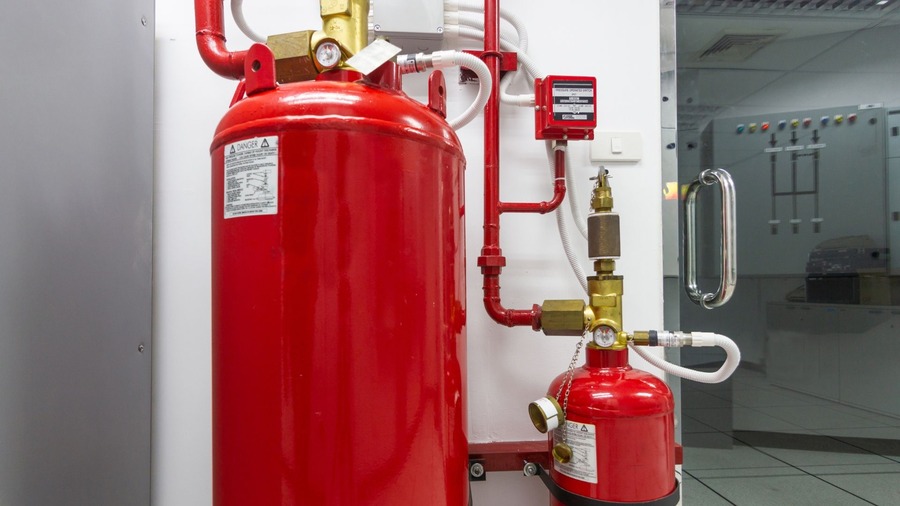
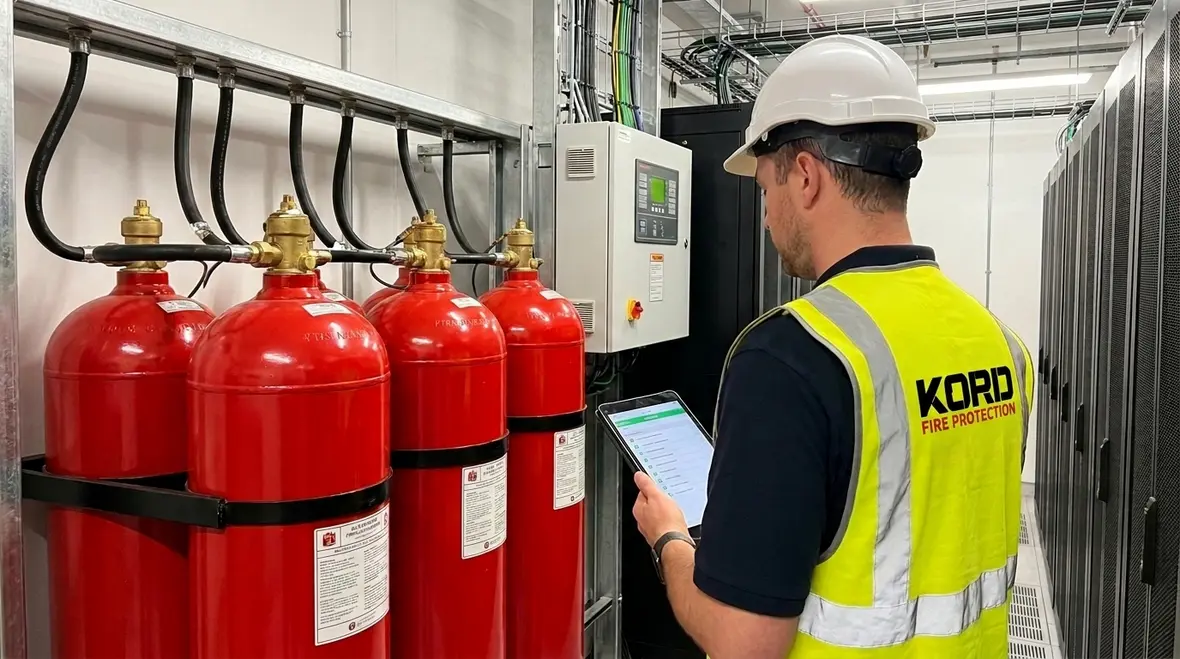
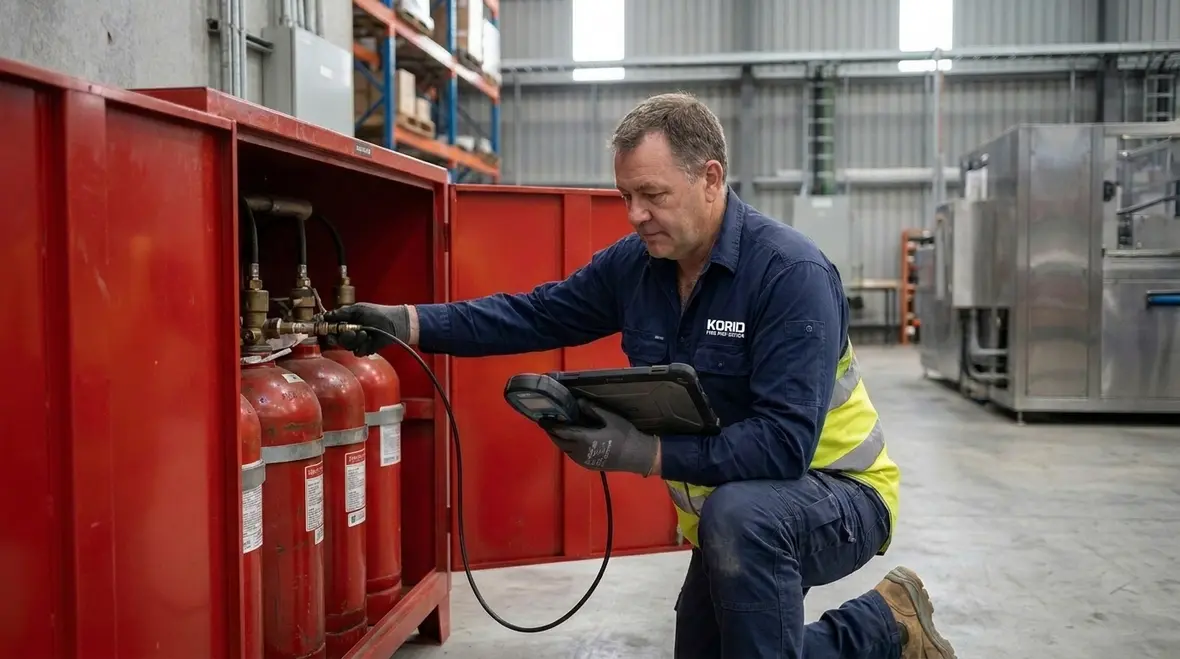
Technicians carry a serious load here, even if the job looks calm from the outside. First, they inspect the system for damage, leakage, corrosion, loose fittings, and signs of tampering. Then they check the agent storage containers, control panel, alarms, manual release devices, and any interface with building systems. They also confirm that the protected area still matches the original design. If the room changed, the system may need review. Fire protection does not enjoy surprise renovations.
Next, technicians verify service records and label updates. They document all findings, correct faults when allowed, and arrange repairs for anything outside spec. Finally, they restore the system to normal condition and confirm it can respond as intended. This process protects both compliance and performance, which is the whole point of the exercise.
The service visit is not just a quick once-over
A proper service appointment is usually a structured sequence, not a casual wander with a clipboard. The technician has to look at mechanical condition, releasing logic, enclosure suitability, system interfaces, and records together because those parts affect one another. A pristine cylinder bank does not help much if a manual release is compromised or if alarm communication is not behaving properly. Likewise, great paperwork cannot rescue a room that no longer matches the design assumptions the system depends on.
That is also why experienced providers bring practical judgment into the room. They notice when access has changed, when equipment loads have shifted, when airflow patterns may interfere with performance, and when small irregularities deserve a closer look. A checklist matters, but the person holding it matters too.
| Technician Task | Why It Matters |
|---|---|
| Inspect agent cylinders and components | Finds leaks, damage, or wear before a failure occurs |
| Check alarms and release controls | Confirms the system can warn people and activate properly |
| Review room conditions | Ensures the system still suits the protected space |
| Document every action | Creates proof of compliance and service history |
| Restore the system after work | Keeps the site protected without delay |
How Compliance Protects Business Continuity
Compliance is not just paperwork in a tidy folder. It is the backbone of reliable protection. When a facility follows NFPA 2001 servicing clean agent fire suppression systems rules, it reduces false confidence and hidden risk. That matters for operations that depend on equipment that cannot sit idle for long. A system that is serviced properly can save not only assets, but also trading time, client trust, and staff safety.
Moreover, good service supports audit readiness. Inspectors and facility managers want clear evidence that the system has been maintained, faults have been addressed, and required checks have been completed. In other words, records turn service from a vague promise into something solid enough to hold up under scrutiny.
Documentation is where confidence becomes proof
This is the part many teams underestimate until an inspection, incident review, or insurance question arrives at exactly the wrong time. Good documentation shows what was checked, what was found, what was corrected, what still needs action, and when the system was restored to normal status. That kind of clarity protects managers as much as equipment because it replaces guesswork with traceable history.
It also helps multi site operators maintain consistency. When records are complete and service methods are disciplined, teams can compare facilities more easily, spot recurring issues sooner, and plan maintenance with fewer surprises. Nobody enjoys a surprise in fire protection unless the surprise is that everything worked perfectly.
Why Clean Agent Systems Need Skilled Hands
Clean agent systems are not a set it and forget it solution. They use precise design and pressure control, and they depend on correct room integrity and reliable release logic. Therefore, technicians need proper training and a sharp eye. A small mistake can affect discharge timing or agent performance. That would be like tuning a grand piano with a hammer. Confident, yes. Helpful, not so much.
Skilled technicians also understand how different facility types affect service. A warehouse, a hospital support area, a media space, and a telecom room do not behave the same way. Temperature, access, airflow, occupancy, and equipment changes all matter. Because of that, experienced service teams bring practical judgment, not just a checklist and a flashlight.
This is also where related services become part of the bigger picture. If enclosure performance is a concern, NFPA 2001 guidelines for clean agent fire suppression systems can help readers connect servicing work to the wider requirements that shape dependable system performance.
Service quality shows up long before an emergency
One of the most valuable things a skilled team does is prevent small issues from quietly growing roots. Catching early wear, identifying room changes, coordinating follow up repairs, and restoring the system correctly are not dramatic moments, but they are exactly what keeps a protected space from becoming vulnerable. Good service is quiet, methodical, and slightly underappreciated right up until the day everyone is grateful it was done properly.
How kord fire protection Can Help
kord fire protection can become a vital partner for businesses that need clean agent servicing done properly and on time. The team can support inspection, maintenance, corrective work, and documentation for NFPA 2001 servicing clean agent fire suppression systems. Just as important, they can help facilities stay ahead of problems instead of reacting after an alarm or fault. That kind of support is worth its weight in gold, or at least in uninterrupted operations, which is close enough.
For industrial, retail, and commercial sites, kord fire protection can also help simplify compliance across multiple locations. A trusted partner reduces admin strain, improves service consistency, and gives facility teams one less fire related headache to carry. When a provider understands both the equipment and the practical pressures of running a site, service becomes smoother, reporting gets clearer, and corrective actions are easier to prioritize.
That support also connects naturally with broader planning for special hazards spaces. Teams that are reviewing protected rooms, coordinating upgrades, or trying to align maintenance across systems can benefit from Kord Fire’s clean agent expertise alongside wider suppression support. It is a much better arrangement than juggling scattered vendors and hoping the paperwork eventually learns to organize itself.
FAQ
Conclusion
NFPA 2001 servicing clean agent fire suppression systems protects assets, people, and uptime when it matters most. The standard’s servicing expectations are practical for a reason: clean agent systems often defend the spaces a business can least afford to lose. When inspections are thorough, records are current, faults are addressed, and the system is properly restored, a facility gains more than compliance. It gains confidence that protection is real, not assumed.
The smartest move is to work with a partner who knows the standard and the pressure. kord fire protection can help keep systems compliant, ready, and dependable while making the service process feel a lot less like organized chaos. When fire protection must perform, there is no room for guesswork. It is time to keep the system, and the business, in fighting shape.

Join Our Newsletter!
Get the latest fire safety tips delivered straight to your inbox From our Newsletter.