
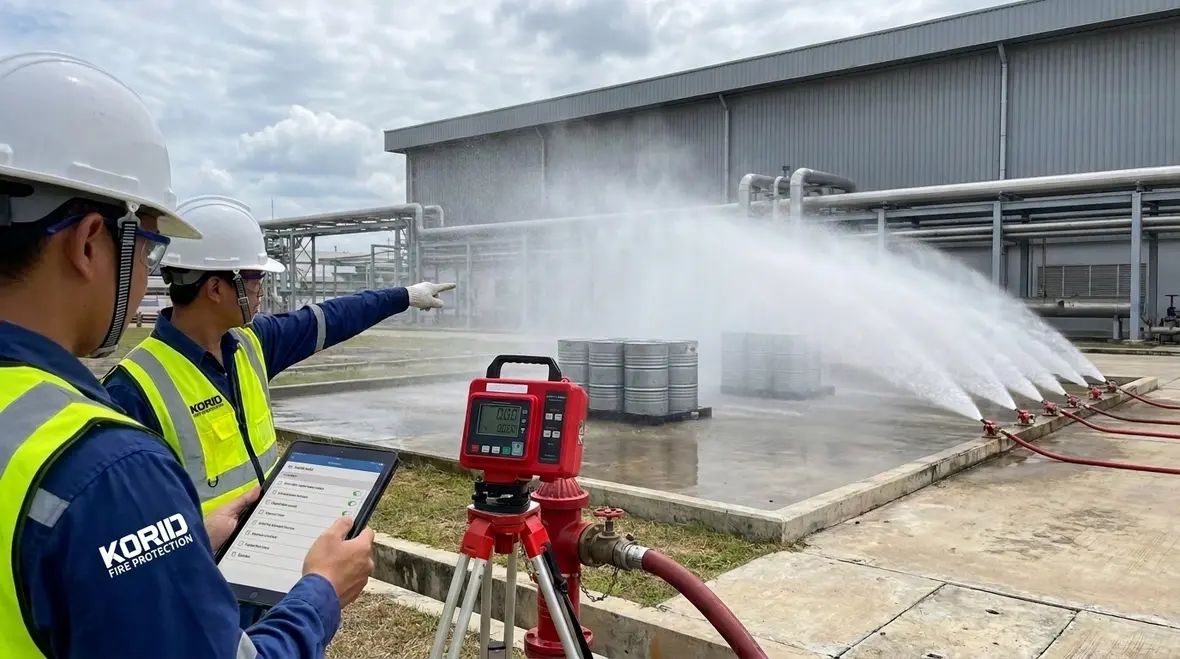
Ultra High Speed Water Spray System Testing NFPA 25 10 4
Quick Answer: NFPA 25 Section 10.4 outlines how teams should conduct operational testing for Ultra-High-Speed Water Spray Systems. It focuses on verifying system performance under real-world conditions, including water delivery, coverage, and control response. Kord Fire Protection helps facilities in Australia plan, execute, and document these tests so compliance stays calm, not chaotic.
When a site needs reliable fire protection, ultra high speed water spray system testing NFPA 25 becomes more than a checkbox. In the first moments of testing, crews follow NFPA 25 § 10.4, Operational Testing Topics, to confirm the system can deliver water at the right flow, timing, and coverage. To be clear, this is not the kind of job where someone “eyeballs” the results and calls it a day. Instead, teams verify performance through controlled procedures, measured outputs, and documented evidence. And yes, it can be as exciting as watching paint dry, unless you have the right plan, the right partner, and the right mindset.
For facilities that want broader support beyond one test window, Kord’s fire protection services for compliance and readiness in Australia fit naturally into the bigger picture of planning, maintenance, documentation, and operational follow-through. That matters because a good test tells you what happened today, but a smart service strategy helps make sure next quarter does not bring the same surprise wearing different boots.
What NFPA 25 § 10.4 requires during operational testing
NFPA 25 § 10.4 directs how operational testing should evaluate whether the ultra high speed water spray system is functioning as intended. First, the testing process confirms the system reacts properly to initiating conditions. Then it checks that water supply characteristics support the required discharge. After that, it verifies that controls and alarms behave correctly and that the system cycles without abnormal issues.
Facilities should not treat these tests like generic maintenance. Instead, operational testing should aim to prove performance in a way that withstands review during audits, insurance conversations, and internal safety governance. If a facility waits for a problem to show up during an emergency, that is not risk management, that is gambling. And gambling never shows up on a risk register as “fun.”
Why operational testing matters more than a basic check
A visual inspection can tell a team whether equipment looks presentable. Operational testing answers the more uncomfortable and much more useful question: will it actually perform when something hot, smoky, and expensive starts going wrong? That difference is huge. In special hazard environments, speed, pressure, and distribution are not “nice to have” features. They are the whole point of the system.
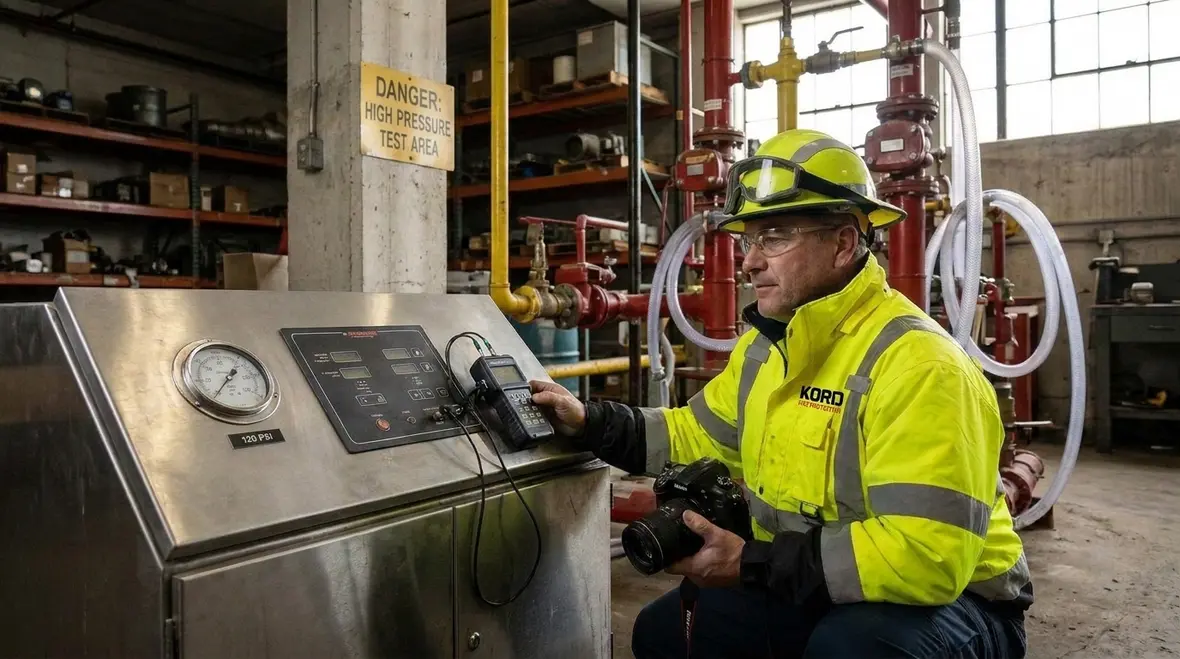
Ultra-high-speed water spray systems: the performance elements that matter
To test well, teams first understand what performance means for these systems. Ultra-high-speed water spray designs rely on fast discharge and precise delivery so water reaches the protected hazard effectively. As a result, operational testing must focus on measurable factors such as:
- Initiation and control response: How quickly the system signals, starts, and transitions into discharge mode.
- Water delivery quality: Whether the system maintains the required pressure, flow, and stability during operation.
- Coverage and discharge pattern: Whether spray behaviour matches design intent across the intended protected area.
- Stability and repeatability: Whether operation remains consistent when equipment cycles and returns to standby.
Meanwhile, teams also watch for signs of drift from expected behaviour. If components show variation, leaks, clogging patterns, or abnormal cycling, the site learns something valuable before the worst day. Kord Fire Protection helps facilities in Australia bring structure to that learning, so each test result turns into clear next steps.
The difference between “it turned on” and “it performed”
That distinction deserves its own spotlight. Plenty of systems can appear responsive at a glance, but operational testing is there to show whether response timing, discharge behavior, control logic, and water delivery all work together as a coordinated event. A system that starts late, sprays unevenly, or resets poorly may still look functional to the untrained eye. Unfortunately, fire does not grade on effort.
System checks before the test day actually starts
Good testing does not start at the moment the test begins. It starts earlier, when teams confirm readiness. Therefore, operational testing should include pre-checks that reduce downtime, prevent avoidable damage, and protect ongoing site operations.
Common pre-test activities include verifying access to test points, checking isolation status, confirming control panel readiness, and reviewing recent inspection findings. In addition, teams coordinate with site stakeholders to manage operational impacts. For example, industrial facilities and retail environments often require careful planning so testing does not disrupt critical processes or confuse staff during alarms.
At this stage, the value of a steady partner becomes obvious. Kord Fire Protection plans the sequence, aligns documentation, and supports the facility so the job stays controlled. That way, the day runs like a business meeting instead of a “surprise drill” nobody scheduled. Because surprise is great for birthdays, not for life safety systems.
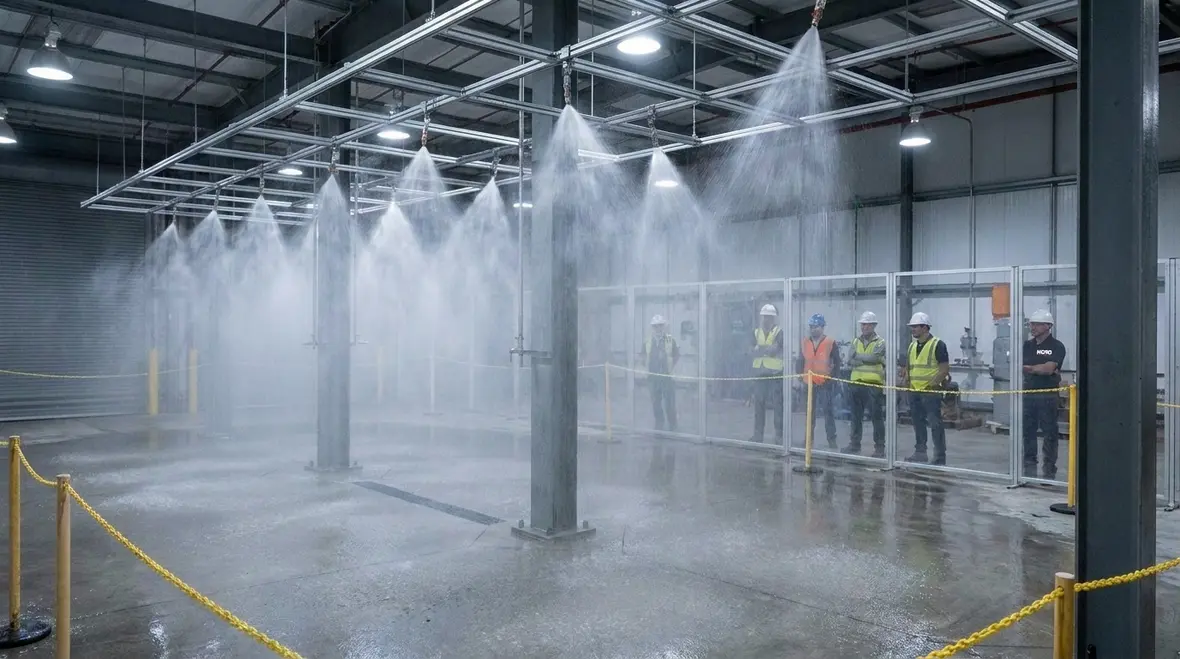
Pre-test coordination that saves headaches later
This is also the right time to review drainage paths, temporary access needs, communication responsibilities, and post-test restoration steps. None of that sounds glamorous, but glamorous is not the assignment here. Clean coordination is what keeps testing from disrupting production, tripping avoidable alarms, or creating a puddle large enough to earn its own internal incident report.
Operational testing steps for accurate results and compliance
During ultra high speed water spray system testing NFPA 25, crews should follow a structured sequence that produces reliable, repeatable data. While exact steps may vary by design and site layout, a strong operational testing workflow typically includes these phases.
- Confirm system mode and baseline status: Ensure the system starts in standby and verify readings match expected baseline values.
- Initiate operation under controlled conditions: Start the system using the approved test method to trigger discharge and control action.
- Measure delivery during operation: Track key parameters tied to discharge and system response so results remain defensible.
- Observe discharge behaviour and coverage: Confirm spray output reaches intended areas without unexpected stoppages or instability.
- Verify alarms, signals, and interface behaviour: Confirm the control system sends the right notifications and transitions properly.
- Stabilize and return to standby: Confirm the system resets, restores normal conditions, and remains free from faults.
Furthermore, operational testing must consider safety controls and water impact. Facilities in Australia can include warehouses, manufacturing lines, food-adjacent areas, and mixed-use commercial buildings. Therefore, testing should include safe staging practices, drainage awareness, and clear communications so staff understand what to expect. Kord Fire Protection supports that planning and ensures testing stays compliant, not improvised.
If your team wants a broader framework for how water-based system maintenance fits together, Kord’s NFPA 25 overview for complete water-based fire protection systems maintenance gives useful context around testing, inspection, owner responsibilities, and system categories. It is a helpful companion piece when the conversation moves from one operational test to the larger maintenance picture.
What a well-run test sequence looks like on site
In practice, good testing feels organized long before anyone writes the final report. People know who is initiating the test, who is observing the discharge, who is watching controls, who is recording values, and who is responsible for restoring the system. That clarity matters because confusion during testing tends to create two things at once: bad data and irritated humans.
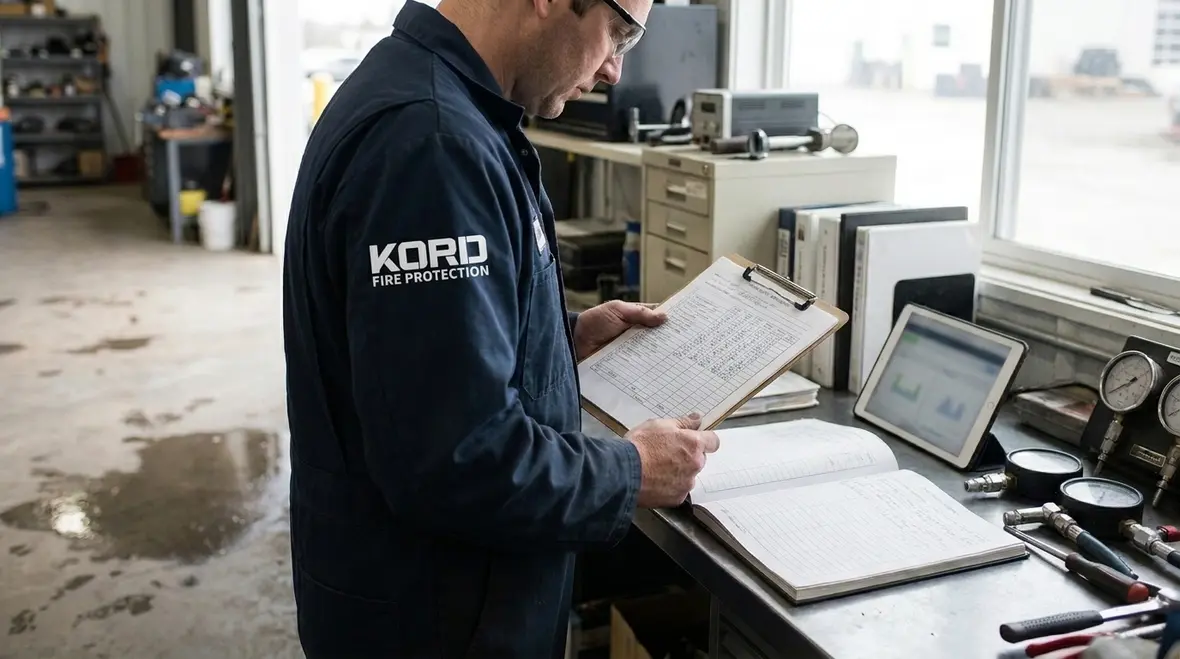
Common issues found during operational tests and how teams handle them
Every operational test tells a story. Sometimes the story is “everything performs as expected.” Other times, it reveals issues that might not show up during a basic visual inspection. In practice, teams often uncover:
- Control or interface delays: Where initiation signals arrive later than intended due to settings, wiring checks, or panel behaviour.
- Water delivery instability: Where pressure or flow fluctuates under discharge conditions, often linked to supply performance or component wear.
- Discharge irregularities: Where spray behaviour differs from design intent due to nozzle condition, obstruction, or alignment drift.
- Reset or standby issues: Where the system does not return cleanly, creating repeat test problems and operational uncertainty.
Once an issue appears, the correct response matters. Rather than rushing into repairs blindly, teams document findings, trace likely causes, and recommend targeted corrective actions. Then they confirm those changes with appropriate follow-up testing. Kord Fire Protection helps facilities turn findings into an actionable plan, so the site does not repeat the same mistake next cycle.
Why recurring small faults deserve big attention
Minor irregularities have a bad habit of growing up into major failures when nobody deals with them properly. A slight delay, an odd fluctuation, or a reset hiccup might seem tolerable in the moment, especially when operations are busy and everyone wants the day back. But repeatable weakness is exactly what operational testing is designed to uncover before reality gets the first turn.
Documentation, evidence, and the audit-ready file
Operational testing only protects the facility if the results can be proven. Therefore, the documentation package should include test records, measured data, test conditions, and any outcomes that require attention. It should also explain what was verified, what was observed, and what actions, if any, resulted from the findings.
This matters across industries. Industrial sites need evidence that the system supports hazard risk management. Retail environments require proof that the test process maintained safe operations and correct alarm behaviour. Facilities teams want reports they can hand to governance bodies and stakeholders without rewriting the story every time.
Kord Fire Protection builds compliance-ready documentation as part of the service. That way, facilities in Australia keep testing outcomes clear, consistent, and ready when questions come. Because questions always come. Usually right after everyone goes home.
FAQ about NFPA 25 operational testing
Working with Kord Fire Protection in Australia
A facility can have the right system on paper and still struggle with execution in the real world. Operational testing requires planning, safe coordination, accurate measurement, and clear evidence. Kord Fire Protection helps industrial, retail, and commercial facilities across Australia build that control into the process. When the work follows a repeatable approach, teams reduce uncertainty, protect operations, and strengthen compliance outcomes. In short, Kord Fire Protection becomes a vital partner when performance, proof, and peace of mind all need to show up on the same day.
Ready to schedule operational testing? Contact Kord Fire Protection to plan ultra high speed water spray system testing NFPA 25 for your site. Kord coordinates preparation, executes tests with careful attention to performance and safety, and delivers audit-ready documentation. Let the code be the standard; let Kord handle the discipline. Book your next testing window now, before “later” becomes “oops.”

Join Our Newsletter!
Get the latest fire safety tips delivered straight to your inbox From our Newsletter.



