Fire Extinguisher Placement Guide for Australian Commercial Sites
Quick Answer (50 words)
A solid fire extinguisher placement guide helps Australian commercial sites protect people, limit damage, and stay compliant. Professionals choose mounting heights, travel distances, and hazard-specific locations so staff can grab the right extinguisher fast, even under stress. Kord Fire Protection can plan and deliver the full setup.
In commercial facilities, fire safety can feel like a never ending to do list. However, the right layout for first response matters more than most people think. A good fire extinguisher placement guide helps teams decide where extinguishers go, how they’re mounted, and how they remain visible, accessible, and matched to hazards. This article builds on that guide and explains what good looks like in the real world across warehouses, retail, offices, workshops, and plant rooms throughout Australia.
Near the top of the planning process, it also helps to think about how extinguishers fit into the wider life-safety picture. If your building’s first response plan also depends on detection and notification, Kord Fire Protection’s fire alarm service systems can support the kind of coordinated protection that makes a site feel less like guesswork and more like a real strategy. For facilities wanting broader support across systems, Kord also offers full fire protection services that tie extinguishers, alarms, and other essentials together.
Why placement decisions prevent costly delays
When a fire starts, people do not think like fire engineers. They move like humans in a hurry. That means placement must support quick action. If extinguishers sit behind stock, hidden by signage, or tucked near the wrong door, the first minute turns into a slow-motion problem. Then the damage compounds, insurance questions get louder, and management starts asking why nobody “saw it.”
Therefore, placement decisions focus on human behavior and clear paths. Extinguishers must be reachable without squeezing through obstacles, climbing stairs in smoke, or walking across an active hazard. In addition, staff should recognize the location instantly, the way they find a fire exit or a defibrillator. If the site uses multiple floors or sections, the plan must account for how people actually circulate during shift changes, deliveries, and closing time.
And yes, it helps to remember that fire does not care about your floorplan’s artistic intent. It only cares about oxygen, fuel, and ignition. Placement should reduce the time between “hey, smoke” and “grab and apply.”
What fast access really looks like on a busy site
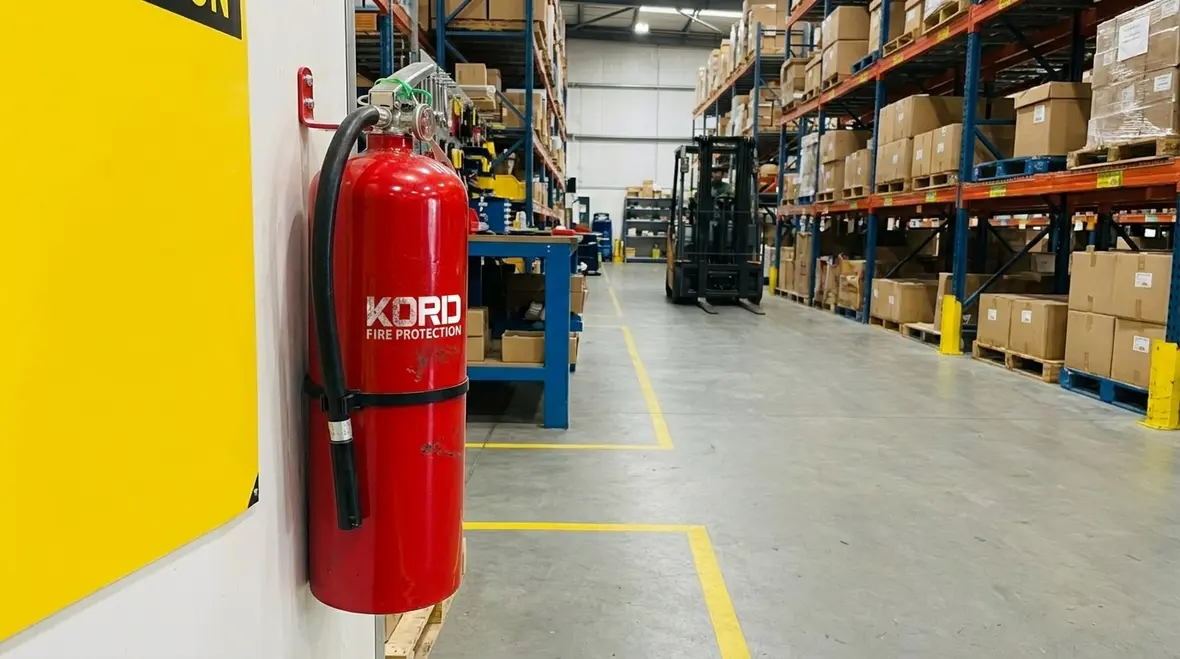
Fast access is not just a measurement on paper. It is what happens when a worker carrying boxes, a supervisor walking a plant room, or a retail team member in a crowded stock zone can still spot the extinguisher without doing a treasure hunt. In practical terms, that means visible units, clean mounting positions, and clear approach paths that still make sense at 10 a.m., 3 p.m., and five minutes before closing when the place looks like the day got away from everyone.
How to map hazards before choosing locations
Facilities do not all burn the same. A warehouse with pallets and plastics behaves differently from a café style breakout area or a workshop with powered tools. As a result, crews must map hazards before finalizing the extinguisher positions. This step turns placement from guesswork into a controlled plan.
First, teams identify likely fire sources and fuel loads, such as electrical switchboards, engine bays, flammable liquids in storages, cooking vapours in staff areas, and combustible materials like paper, cardboard, and packaging. Next, they review where ignition is most likely, including charging stations, welding zones, motors, and areas with careless “temporary” cable runs.
Then they connect hazards to extinguisher types. Foam, dry chemical powder, and CO2 each suit different scenarios. For example, electrical equipment often calls for CO2 or compatible dry powders, depending on the design and risks. Meanwhile, ordinary combustibles often respond well to the right class of agent. The goal stays simple: put the right extinguisher in the right place, not just another can on the wall.
At this stage, Kord Fire Protection acts as a vital partner. They bring practical site experience and can help align hazard mapping with installation planning, so the facility gets a layout that makes sense operationally, not just on paper.
Hazard mapping beats “we’ve always put one there”
This is the part where a lot of businesses realize old placement habits are not the same thing as a plan. A unit might have been hanging beside a doorway for ten years simply because that is where the wall space was. But if the room use changed, the storage changed, or the equipment changed, that trusty old spot may now be about as useful as a raincoat in a furnace room. Good mapping forces each extinguisher location to earn its place.
Where to mount extinguishers for real access
Even perfect hazard selection fails if people cannot reach the units quickly. Mounting location and mounting height determine whether staff can grab the extinguisher while walking, reaching, or assisting others. Additionally, good placement keeps the extinguisher visible and prevents it from becoming a decorative object.
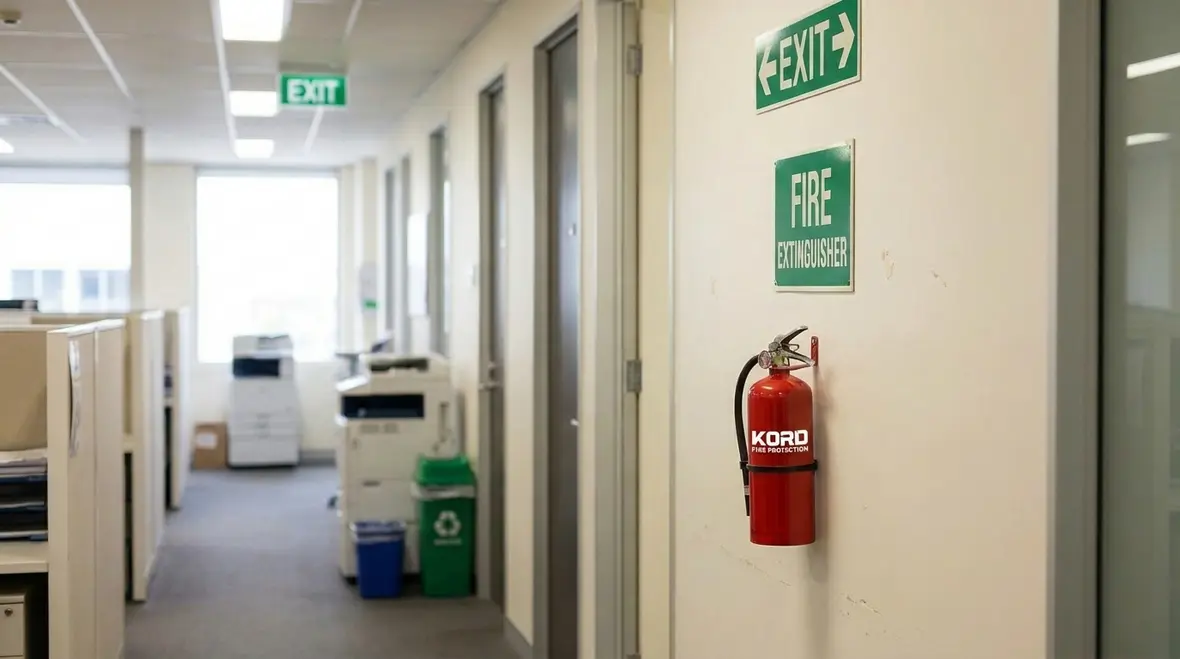
In commercial spaces, teams typically place extinguishers so they remain accessible along egress routes. They also avoid locations where hazards develop first, like right beside a flammable storage cabinet, unless the site design specifically protects that point. Where possible, they position units near entry points, within sight of doors, and along paths that staff naturally take during normal work.
They also consider obstructions that change throughout the day. Pallets move, forklifts block sightlines, and shelving gets rearranged. Therefore, the placement plan needs to account for routine traffic and how people operate during peak hours.
At the install stage, Kord Fire Protection can support with professional mounting guidance and layout checks, helping ensure the extinguisher placement guide is applied consistently across all areas. That kind of consistency reduces surprises during audits and walkthroughs.
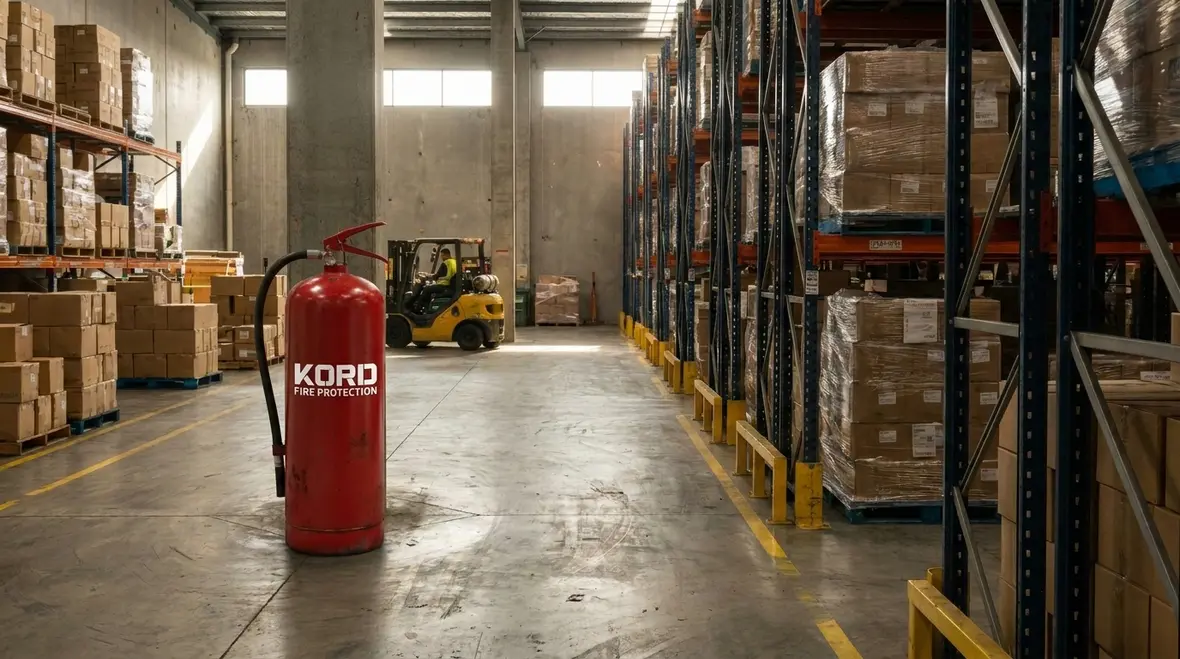
Mounting that works during normal work, not just inspections
A placement can pass a quick glance and still fail in real use if a trolley, display rack, bin, or delivery pallet regularly ends up parked in front of it. The best mounting positions survive ordinary business chaos. They stay visible during replenishment, accessible during busy periods, and obvious to new staff who have not yet memorized the whole building. If someone has to ask, “Wait, where did the extinguisher go?” the answer should never be, “Probably behind the seasonal stock.”
Designing travel distances and coverage areas
Placement is not just about “nearby.” It also depends on how far staff must travel to find an extinguisher when a fire breaks out. If coverage gaps exist, a small incident can grow before someone gets the right equipment. Hence, designers must plan for travel distances based on occupancy type, layout, and hazard level.
Commercial facilities also include wide bays, long corridors, and open-plan workshops. These spaces can create dead zones if extinguishers get clustered in one area because it was convenient for installers. Instead, teams distribute units so each risk area has practical coverage.
They should also think about how smoke and heat affect visibility. Even if the extinguisher stays technically “within range,” staff must still see it and reach it during the first moments. In large sheds, that means thinking about lighting, signage placement, and the flow of foot traffic.
With a strong plan, fire response becomes predictable. Without it, response becomes a scavenger hunt, and nobody wants to win the “Where’s the extinguisher?” game while the alarm is screaming.
Choosing signage, visibility, and durability in harsh sites
Australian commercial sites often operate in tough conditions. Dust, vibration, humidity, and cleaning chemicals can make wall signage fade or make cabinets get overlooked. Therefore, visibility is part of placement, not an afterthought.
Extinguishers must remain easy to identify from a standing position. That means clear markings, consistent placement along key routes, and signage that supports wayfinding. Also, teams must protect units from physical damage in high-impact areas such as loading docks, forklift lanes, and warehouse edges.
Where the facility uses fire hose reels, sprinklers, or detection systems, extinguishers should still complement the system, not compete with it. In other words, people should know what grabs first, what grabs next, and what stays for trained responders. Confusion wastes time.
Kord Fire Protection helps facilities maintain the full ecosystem: extinguisher selection, placement, and installation details that survive day-to-day operations. In business, survival matters. In fire safety, survival matters a lot more.
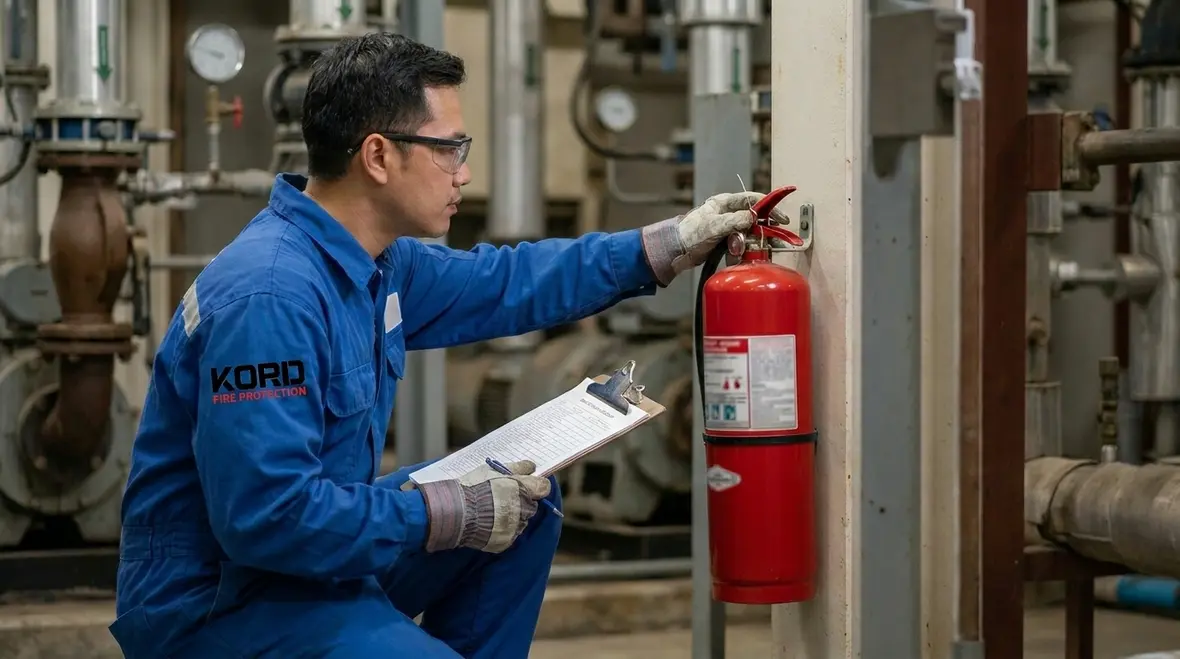
Durability matters when the building fights back a little
Some sites are gentle. Others seem to treat wall-mounted equipment like a contact sport. If a location is exposed to bumps, grime, vibration, or frequent washdowns, the placement plan has to account for that reality. It is not enough to say the extinguisher exists. It has to stay clean, readable, intact, and ready to use after the building has done its best to be difficult.
Installation and maintenance that keeps the plan alive
Placement is only the beginning. Fire safety plans live or die based on ongoing upkeep. Extinguishers need inspections, service schedules, tamper checks, and pressure verification. Without that, the unit becomes a prop instead of a tool, and the first test is always the worst day.
Facilities should plan maintenance around operations, not disrupt them with random visits. Additionally, they should document servicing, keep records accessible, and ensure any replacement or repositioning follows the same hazard logic as the initial fire extinguisher placement guide. If a warehouse changes layout, the coverage plan should update too.
Also, consider staff training and drill behavior. When staff understand where units sit and what each agent does, they respond faster. And when they respond faster, the outcome improves. That’s not motivational poster talk. That’s practical risk reduction.
By partnering with Kord Fire Protection, commercial and industrial facilities can align installation and service with real site needs across multiple departments, shifts, and risk profiles.
Compliance and audit readiness for Australian commercial facilities
Commercial sites often face inspections, insurance reviews, and internal compliance checks. While the exact requirements depend on building use and regulations, auditors generally look for evidence that fire equipment is correctly selected, correctly located, and properly maintained.
Therefore, facilities should keep records that show why extinguishers sit where they sit. That includes hazard reasoning, service logs, and installation notes. It also includes evidence of signage and accessibility. If someone can walk into a space, locate an extinguisher quickly, and explain its purpose, the site has done much of the right work.
When audits happen, management does not want to scramble for binders and guess answers. Instead, they want calm confidence. A well-implemented placement plan helps create that confidence. It reduces friction and gives teams a clear, repeatable approach.
Kord Fire Protection can help facilities keep documentation and installation practices aligned with the way commercial operations run across Australia, including industrial and retail environments where layouts change and hazards vary.
FAQ
Ready to strengthen first-response coverage?
A smart extinguisher layout protects people, reduces downtime, and keeps compliance from turning into a fire drill of its own. Kord Fire Protection can help your facility build, install, and maintain a placement plan that matches your hazards, your access routes, and your operations across Australia. Reach out to review your current setup and strengthen coverage before the next walkthrough, audit, or “surprise smoke” moment.
The best time to fix weak extinguisher coverage is before anyone needs to sprint toward it with adrenaline doing cartwheels. With the right placement, consistent maintenance, and a layout that reflects how people actually move, your site can respond faster, stay better organized, and look far more confident when inspections roll around.

Join Our Newsletter!
Get the latest fire safety tips delivered straight to your inbox From our Newsletter.