Electrical Interlocks in Fire Sprinkler Systems Explained
Electrical interlocks in today’s fire sprinkler systems, explained in plain terms
Modern fire sprinkler systems rely on smart wiring to make sure alarms, pumps, and valves do what they should, when they should. That is where Fire sprinkler electrical interlocks step in. In short, they are designed control links that help prevent the wrong action at the wrong time, and they confirm key components are in the right state before the system moves forward.
To keep this from sounding like a boring textbook, Kord Fire Protection technicians often describe interlocks like a well trained doorman. The doorman does not guess. Instead, he checks the guest list, checks the badge, and then allows entry. In the same way, interlocks guide sprinkler related control sequences so the system stays reliable under pressure. And yes, under pressure is the whole point. Nobody wants their fire system operating like a sitcom character with a broken watch.
At a practical level, interlocks help different pieces of the system speak the same language. A switch changes state, a controller sees the change, a relay passes along the right permission, and another device either acts or waits. That chain may happen in seconds, but it is built on careful planning and dependable field wiring. When any step in that chain is missing, the whole sequence can feel less like life safety engineering and more like a group project where nobody read the instructions.
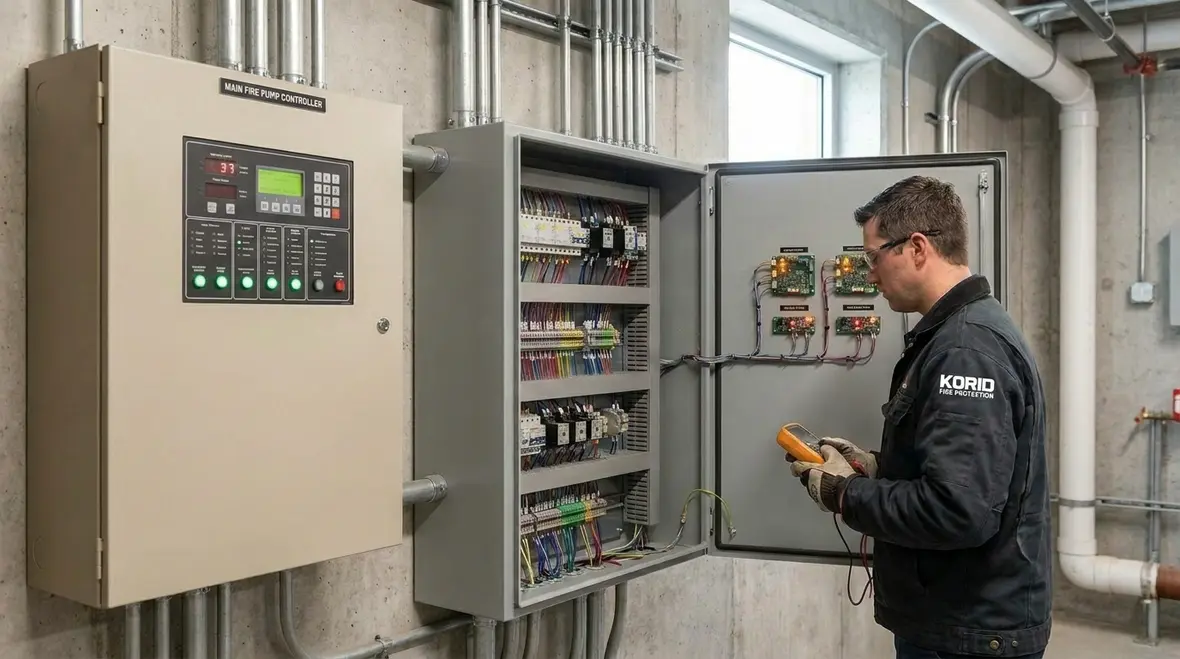
What are Fire sprinkler electrical interlocks and why they matter
Fire sprinkler electrical interlocks work by linking electrical signals between devices so one action depends on another. For example, a sprinkler pump start might require confirmation that a back up power source is available, a valve is open, or a pressure switch has settled into an acceptable range.
Because fires do not wait for “best effort,” these links help reduce delays and prevent unsafe sequences. Furthermore, interlocks support code focused behavior, such as ensuring supervisory signals stay active and alarm circuits work as intended. When engineers build these systems, they plan the logic ahead of time. Then, technicians verify field wiring and operation, because a concept that looks good on paper can stumble in real life.
That is why Kord Fire Protection technicians emphasize testing. They treat interlocks like a safety handshake that must be complete before anyone moves on.
Why the logic matters before the emergency does
Interlocks matter because they remove guesswork from system behavior. Instead of trusting that every component will somehow cooperate in the heat of the moment, the design tells each device when to act, when to hold, and when to report a problem. That is a huge difference. In a real event, you do not want a pump starting against a closed path, an alarm signal failing to transmit, or a trouble condition hiding quietly in the background like it pays rent.
This is also why interlocks are not just electrical details for a shop drawing margin. They directly affect reliability, serviceability, and occupant safety. A cleanly designed interlock sequence makes inspections easier, troubleshooting faster, and documentation more meaningful. It gives technicians a clear map of what should happen and a better chance of spotting what should not.
How interlocks coordinate pumps, valves, and alarm signals
Interlocks usually sit in the control path between detection and action. However, their job is not only to start equipment. They also manage status reporting, lockout conditions, and sequence timing.
In a typical setup, these devices may talk to each other:
- Pump controllers that start and stop water supply equipment
- Flow switches that confirm water movement
- Supervisory switches for valves like gate or control valves
- Alarm relays that notify the building and monitoring system
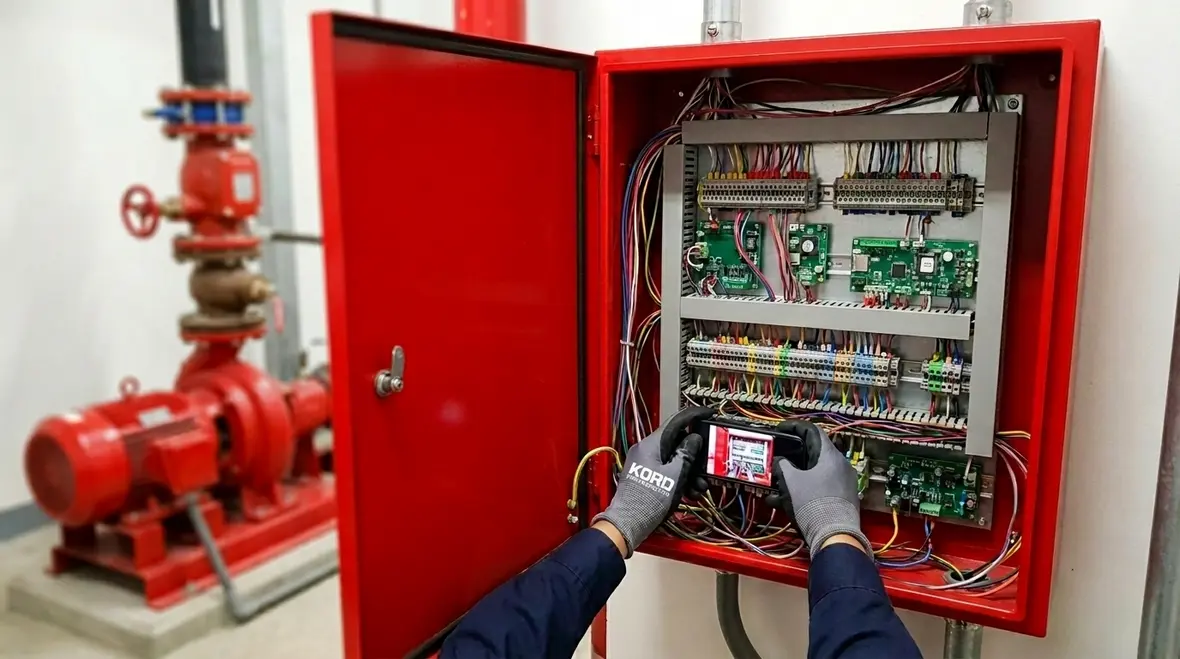
- Control panels that interpret input signals and drive outputs
Then, interlock logic keeps things orderly. For instance, a pump may only start when the correct permissive signals arrive. Meanwhile, alarms may report both “device active” and “device fault.” In addition, interlocks can stop a sequence if a permissive fails, like when a valve is still closed. That prevents the classic scenario where a pump runs hard while the water pathway is blocked.
In the field, Kord Fire Protection technicians often find that the “mystery issue” is actually a missing status contact or a miswired terminal. In other words, the interlock did its job, but someone installed a part like it was assembling furniture from a vague instruction sheet.
A simple sequence in motion
Picture a pressure condition that calls for pump action. Before the controller commits, the sequence may check that the right valve status is present, that supervisory signals are normal, and that no lockout condition remains active. If the conditions line up, the equipment starts and the associated alarm or monitoring outputs update accordingly. If they do not, the system holds, reports, and gives technicians a place to investigate. That is interlock logic doing exactly what it was paid to do, without coffee breaks or dramatic speeches.
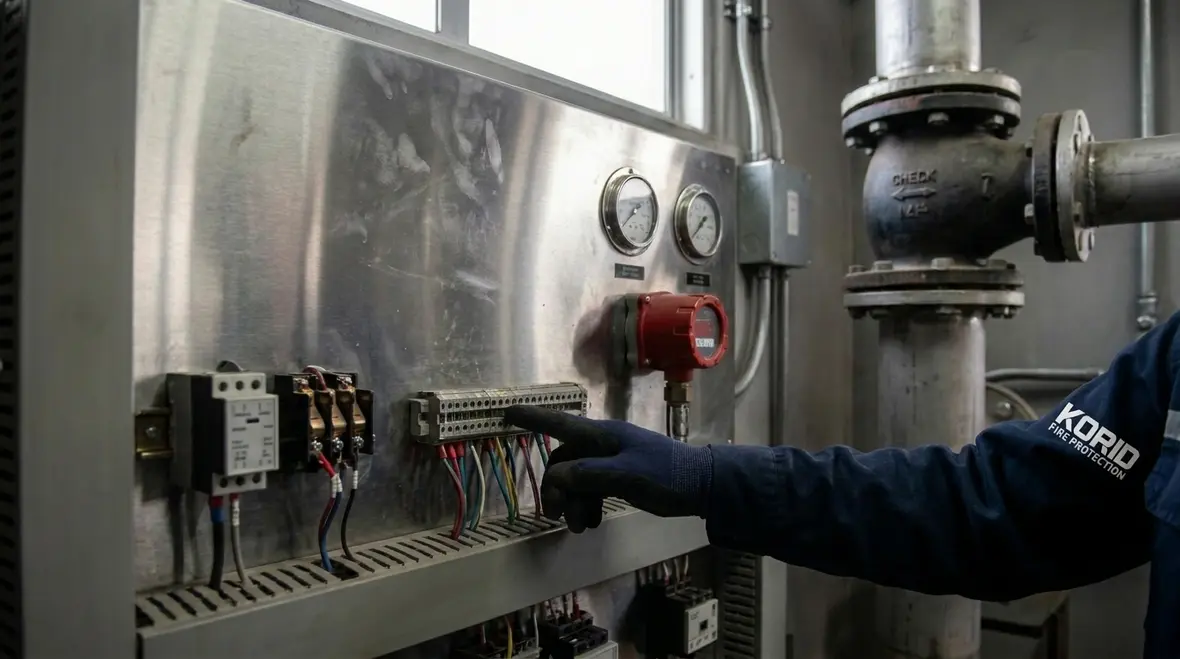
Common interlock types seen in sprinkler system design
Different buildings need different sequences, so interlocks show up in multiple forms. However, most designs cluster into a few practical types.
- Permissive interlocks that require a safe condition before an output runs, like valve position confirmation
- Supervisory interlocks that monitor circuit integrity and report trouble conditions early
- Start interlocks that coordinate pump operation with pressure switch status and alarm state
- Shutdown or lockout interlocks that prevent restart if a fault remains active
- Signal routing interlocks that link alarm inputs to specific outputs, such as panel zones to notification circuits
Because each type supports a different safety step, technicians cannot treat interlocks as “one size fits all.” Additionally, interlocks must match the system intent in the drawings. When Kord Fire Protection technicians review a project, they compare the labeled logic in the panel with the device wiring in the field. Then, they document what the system does during normal conditions and during trouble.
Why labels and field verification matter
A beautifully written sequence is only useful if the installed system actually follows it. That is why field verification matters so much. Terminal labels, relay designations, contact types, and device states all have to line up with the intended logic. When they do not, confusion spreads fast. One wire lands wrong, one contact is misunderstood, and suddenly the panel behaves like it has its own opinions.
Good documentation gives technicians a clear trail to follow. It also makes future maintenance less painful. No one enjoys opening a control panel and discovering that the as-built information reads like a scavenger hunt. Clean interlock records save time, reduce repeat troubleshooting, and make inspections far less theatrical.
Testing and commissioning: making sure the logic works
Interlocks only protect a building if they act correctly in testing. Therefore, commissioning matters as much as design. The process often includes verifying point to point wiring, checking supervised circuits, and confirming that control outputs follow the intended sequence.
During testing, Kord Fire Protection technicians typically focus on results, not just continuity checks. For example, they confirm that when a valve supervisory switch reports a trouble state, the panel reacts as expected. Meanwhile, when a pump permissive becomes true, the pump controller starts the way the logic specifies. If the sequence fails, they trace the chain: input contacts, relays, terminals, panel programming, and wiring paths.
Moreover, testing helps catch issues that look harmless but act dangerous. A loose connection, a mislabeled conductor, or a swapped contact can cause the interlock to block a required action or allow one that should not happen. And just like a smoke alarm with dead batteries, a “mostly working” system can still fail at the worst time.
From continuity to actual behavior
A wire can test fine and still belong to the wrong place in the sequence. That is the reason commissioning goes beyond “we have continuity” and moves into “the system behaves correctly under the right conditions.” Technicians simulate states, verify panel responses, observe equipment operation, and confirm that signals report where they should. In short, they test the logic as a working process, not as a pile of technically connected parts.
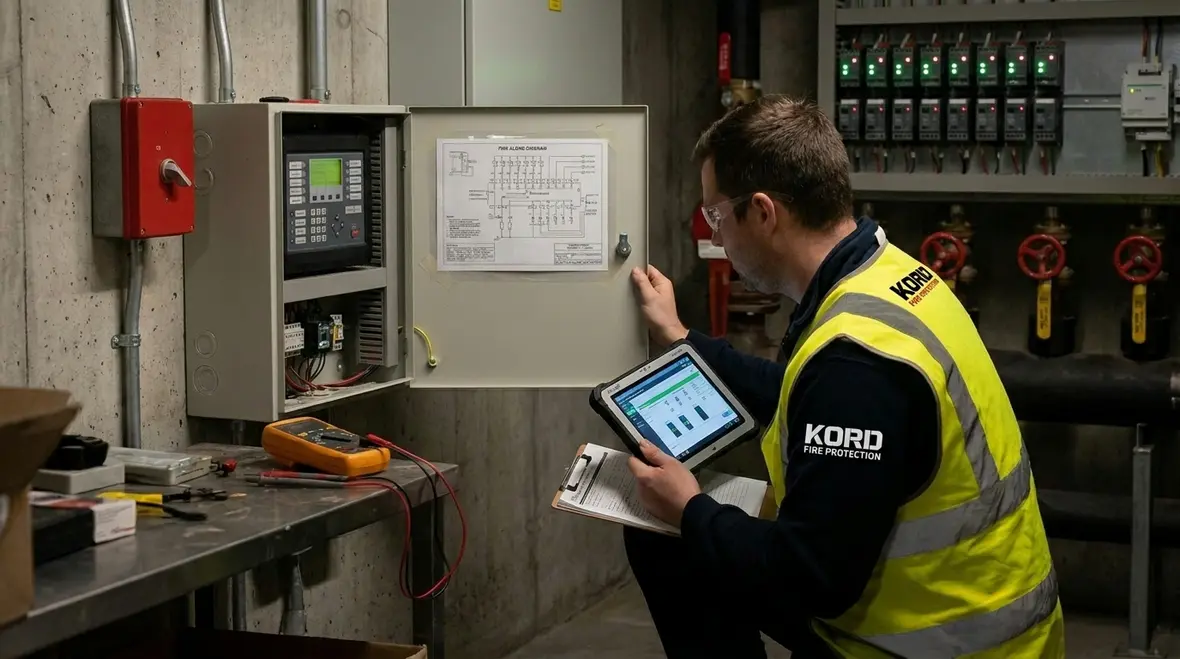
Why wiring quality and device selection make or break interlocks
Even the best interlock design can stumble when installation and equipment choices drift. That is why technicians pay close attention to cable routing, termination quality, and component compatibility.
First, proper wiring keeps signals clean and predictable. If field wiring runs through noise heavy spaces without proper separation, it can affect relay behavior. Second, device selection matters. A pressure switch rated for one range might not behave like the design expects. A supervisory switch with the wrong contact type can change the meaning of the signal.
Then, there is the human factor. Technicians often discover that someone wired a contact as if it were a different device, because the terminal markings looked close enough. It is common, and it is also where interlocks earn their keep. They expose problems because they do not “forgive.” A mismatched interlock input can stop a start permissive, and that gives the team a clue before a real incident.
In business casual terms, interlocks act like quality control with a strong backbone. They do not let the system slide.
A better install makes a better test day
When devices are matched correctly, conductors are landed cleanly, and circuits are labeled with care, testing becomes faster and more meaningful. Instead of chasing preventable mistakes, technicians can focus on confirming system intent. That saves time for contractors, owners, and inspectors alike. More importantly, it builds trust that the sequence will respond under real world pressure, not just during a lucky demo on a quiet afternoon.
Keeping interlocks reliable over the full system lifecycle
Interlocks are not a one and done feature that gets installed, blessed, and forgotten. They live inside the broader rhythm of design, installation, inspection, maintenance, and eventual upgrades. That is one reason Kord Fire Protection’s approach to the full lifecycle of fire protection servicing is such a helpful lens. The system has to remain understandable and dependable long after the first startup.
Routine inspections, service records, and periodic testing all help confirm that interlock behavior still matches the original intent. Buildings change. Tenants change. Equipment ages. Wires get touched during renovations. Panels get updated. Every one of those changes can affect sequence logic if nobody is paying attention. Reliable interlocks come from consistent stewardship, not wishful thinking.
FAQ: Quick answers about sprinkler interlock behavior
Partner with Kord Fire Protection for reliable interlock performance
Fire sprinkler systems need more than correct parts. They need correct logic. Kord Fire Protection technicians help teams verify wiring, confirm interlock sequences, and document test results so the system behaves as designed. If a project is in new install, retrofit, or maintenance mode, the smartest time to review interlocks is before a problem shows up during an emergency.
For teams that need broader support beyond interlock troubleshooting, Kord also offers full fire protection services to help keep sprinkler, alarm, and related life safety systems ready for real world pressure. Reach out for an assessment, a testing plan, or a commissioning review, and give your building a system that behaves more like a professional and less like a chaotic sitcom extra.

Join Our Newsletter!
Get the latest fire safety tips delivered straight to your inbox From our Newsletter.