Mechanical Rooms and Sprinkler Layouts: Key Considerations
How Mechanical Rooms Influence Sprinkler System Layouts: A Masterclass in Fire Protection (with Some Jokes Along the Way)
Picture this: a beautiful, expensive commercial building. Polished floors, tall glass windows, HVAC systems whispering in the background. And then—tucked away like the odd cousin at a family reunion—the mechanical room. Often overlooked, yet critically important when planning sprinkler system layout considerations. It’s like the drummer in a rock band: people forget it’s there, but without it, nothing works in sync.
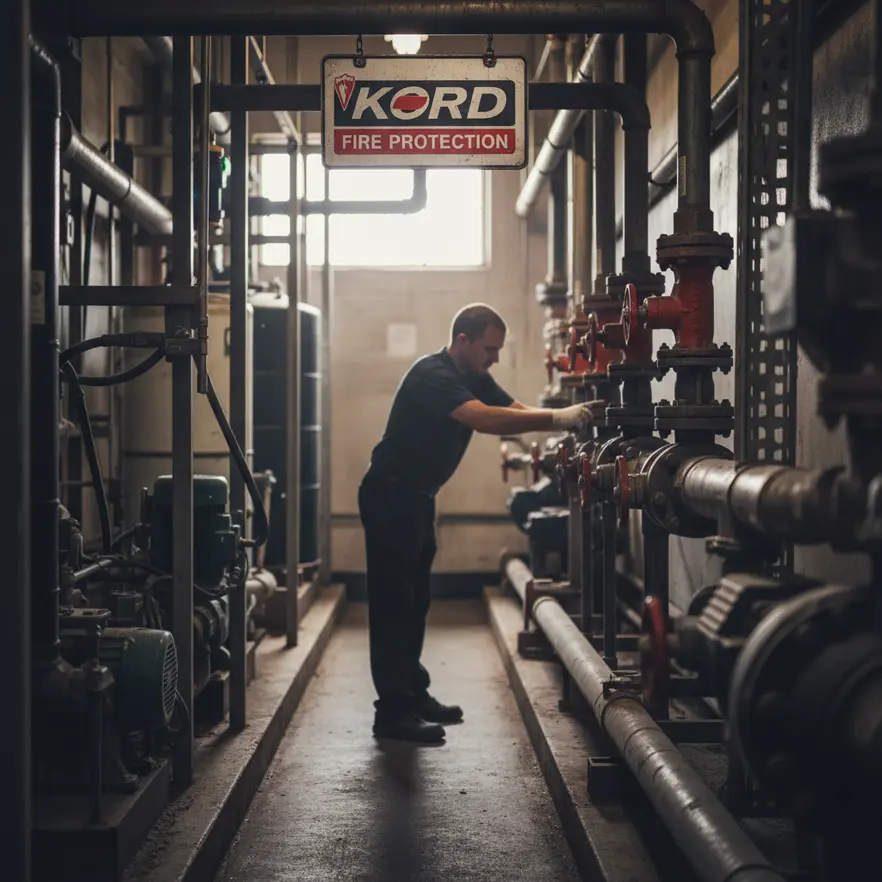
At Kord Fire Protection, technicians don’t just install sprinkler systems—they orchestrate them. Every pipe, valve, and nozzle is designed with precision, keeping in mind space constraints, utility routing, and fire safety codes. Mechanical rooms present a unique series of challenges that demand smart, adaptable design strategies. And trust us, there’s more going on behind those locked doors than just boilers and mystery buzzing sounds.
So buckle up, we’re diving deep into how mechanical rooms influence the fire life safety dance—sprinkler style.

What They Didn’t Teach You in Fire Protection 101
Let’s start by addressing the elephant in the utility closet. Most people—yes, even seasoned architects—rarely grasp how complex sprinkler system layout considerations become when there’s a mechanical room involved. These rooms are the Swiss Army knives of buildings: HVAC systems, backup generators, hot water heaters, electrical panels… basically, all the stuff that makes the building go “bing” and “vroooom.”
Fire protection designers have to work with multiple unknowns in the mechanical room—low ceilings, unplanned obstructions, and let’s not forget the HVAC guy who added ducts after lunch and didn’t tell anyone. A sprinkler can’t just *exist*. It needs calculated flow coverage, appropriate head spacing, and—oh yeah—a way to not drown a $200,000 electrical panel when the system activates.
This is why Kord Fire Protection technicians take a surgical approach, walking the space, cross-checking mechanical drawings, and often speaking soothingly to confused facility managers who thought fire protection design was just “spraying water on stuff.”
Pipe Routing: Like Urban Planning, But for Fire Safety
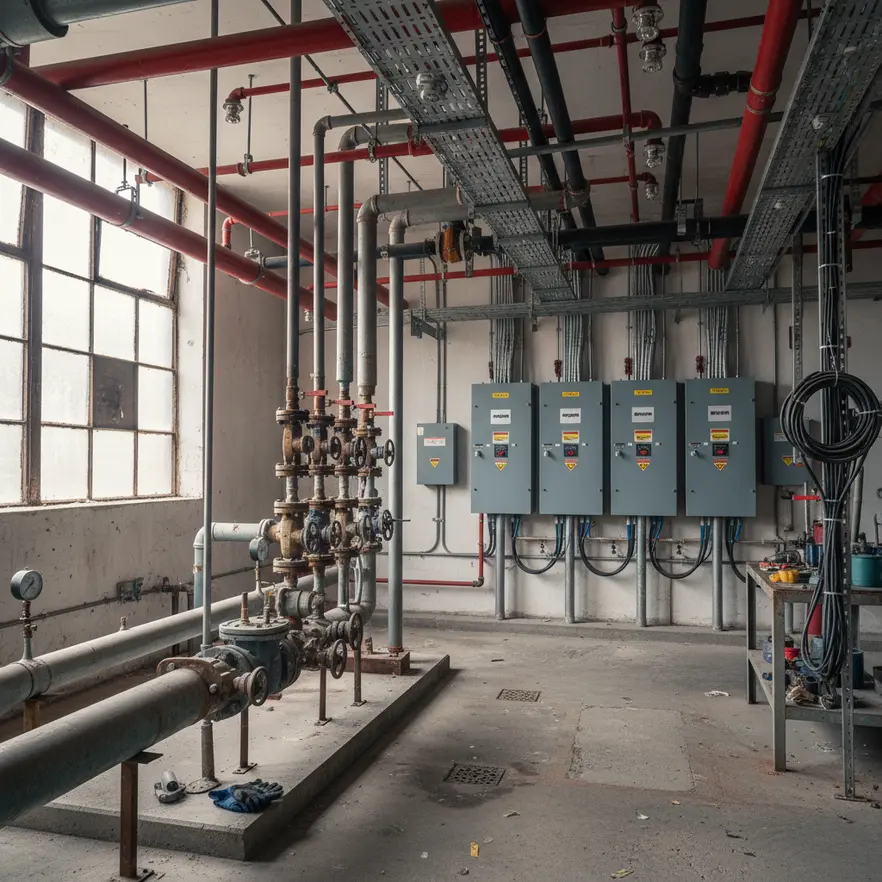
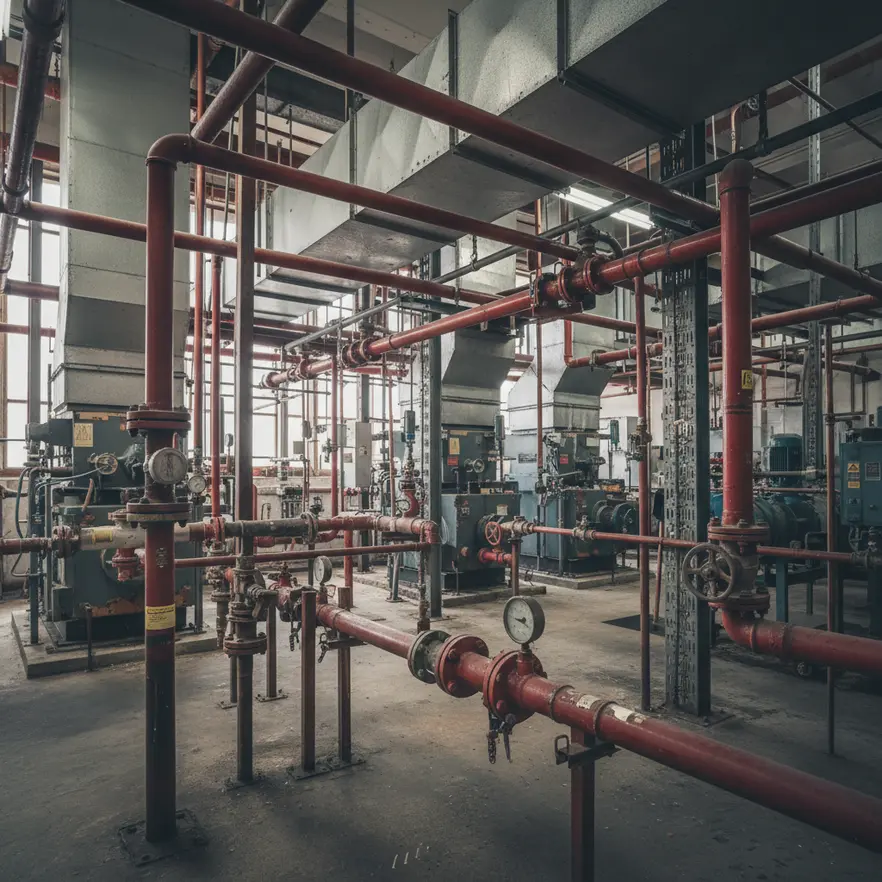
Imagine trying to lay out a subway system… inside a shoebox. That’s what pipe routing through a crowded mechanical room feels like. Mechanical rooms are typically compact because real estate hates being wasted. That means limited room for fittings and no space for compromise.
A sprinkler main can’t just weave around machinery like it’s auditioning for “Dancing With The Stars.” It needs control valves, drain lines, slope allowances, and—here’s the doozy—accessible maintenance points. And yes, it all needs to meet NFPA 13 and local code requirements … because when in doubt, there’s always another subsection to triple-check.
Now, add in chilled water lines, gas conduits, and ductwork, and you’ve got a fire protection labyrinth that only a seasoned Kord tech can decode. The golden rule? Avoid shadowing. Sprinkler heads can’t be hidden behind obstructions and still be expected to function effectively. That’s like sending Batman to fight crime in Gotham without letting him leave the Batcave.
Coordination with Other Trades: Your Sprinkler System’s Entourage
Fire techs don’t operate in a bubble. Before a single pipe is installed, the layouts often go through coordination meetings that feel a little like Thanksgiving—with less stuffing and more passive-aggressive Revit models.
Mechanical Engineers
Provide ductwork and equipment placement (often oversized, because “why not?”).
Electrical Engineers
Want their panels placed in the driest, sprinkler-farthest spots.
Architects
Keep asking if we can “hide those pipes somehow.” (Sure, can we also hide gravity?)
Kord Fire Technicians
Have to thread the needle—figuratively and literally—with layout paths that honor all the trades while still fighting fire legally and efficiently.
Coordination Tools
BIM modeling, clash detection, and expert-level diplomacy.
Outcome
A beautifully laid-out system that everyone will pretend was simple to do.

Clearances and Access: Because Space Isn’t Just a Final Frontier
In tight mechanical rooms, access isn’t just about convenience—it’s about compliance and safety. Control valves, test connections, and shut-offs need clear, unimpeded access. There’s no room for “crawl under the boiler and past the server rack, hang a left at the puddle, and you’ll see a valve.”
This is especially crucial during emergencies. Picture a facility manager trying to shut off a sprinkler zone during an accidental activation. Now make him do it blindfolded, backwards, and in a hurry. That’s what bad layout planning feels like.
Kord Fire Protection technicians insist on thoughtful valve positioning and maintenance corridors. They design with the understanding that someone will need to interact with that equipment years later—probably during the most stressful two minutes of their professional life.
Pressure and Flow Constraints: Science Says No
Mechanical rooms have the notorious habit of demanding more than they give. Because they’re typically far from the water entry point, sprinkler designers frequently hit pressure loss issues. And it’s not like you can just slap on a booster pump like you’re customizing a video game loadout.
A fire protection system has to consider flow calculation, system type (wet, dry, pre-action), and elevation changes. When a sprinkler riser runs through a mechanical room, friction loss—combined with quirky bends and elbows—can reduce flow efficiency fast.
One Kord tech joked, “Every extra bend we add costs us a few metaphorical push-ups.” Physically? It’s also a few real ones. That’s why Kord uses hydraulic calculations early, modeling system behavior with real-world equipment curves to predict flow loss and compensate smartly.
You may not be able to fight physics, but you can flank it with better design.
Fire Risks in the Mechanical Room: Like Storing Fireworks in a Sauna
When it comes to risk, mechanical rooms are high on the list. They house electrical systems, combustible insulation, fuel lines, heaters, and sometimes—because why not?—a janitor’s forgotten mop and oil-based rags. The fire load’s higher, the ignition sources are abundant, and response time needs to be lightning fast.
This demands that sprinkler protection coverage be tighter, faster-acting, and operable in difficult conditions. Kord techs often upgrade detection methods near mechanical rooms, like adding quick-response heads or integrating with gas shut-off systems. You’re not just fighting fire; you’re disabling a fire factory in real-time.
Fun fact: The only thing that loves sudden heat more than a fire is a popcorn kernel. Unfortunately, only one of those is supposed to be inside your building.
How Retrofits Complicate Everything (And We Do Mean Everything)
Existing buildings with older systems? You’re in for a treat. Imagine fitting today’s sprinkler standards into yesterday’s infrastructure. It’s a little like putting a Tesla engine in a horse-drawn carriage.
Retrofitting means analyzing what stays, what upgrades, and how to comply with codes without gutting the entire room. Mechanical overhauls may reveal outdated systems that no longer meet code—yet share space with your sprinkler mains. It’s surgery while the patient is still walking around and asking if it’s almost done.
Luckily, Kord Fire Techs approach these jobs like archaeological digs: full of surprises, historical quirks, and the occasional dinosaur of a water main. They rework layouts, re-pipe zones, and apply modern fire ratings—all while keeping downtime minimal and downtime jokes to a maximum.
Case Studies from the Trenches (No Names, Just Legend)
Let’s pull back the curtain a bit. One Kord team was called into a university server center, where a contractor had installed ductwork halfway across a row of fire sprinkler heads—like a sleepy dog curling up on freshly cleaned laundry. The result? Zero functional sprinkler coverage and one *very* unhappy fire marshal.
Another project involved a tech start-up with a mechanical room that had more wires than a Matrix sequel. The layout had to incorporate dual suppression zones, a shut-off for lithium-ion battery cabinets, and meet LEED building standards. Kord made it happen—and even earned a shout-out during the company’s grand opening. Apparently, they said, “The building is smarter, safer… and that one pipe looks kind of cool.”
That’s the magic. Functional art, as they say.
Frequently Asked Questions About Mechanical Rooms and Sprinkler Layouts
- Do mechanical rooms require dedicated sprinkler systems?
Not always. But they typically require special consideration due to high fire risks and equipment density. - Can sprinkler heads be installed directly above electrical panels?
No. NFPA codes prohibit this due to shock hazards. Deflectors or shielding is often required if installation is nearby. - How do you design around mechanical obstructions?
Kord Fire techs use coordinated BIM models to plan routing around ducts, equipment, and pipes, prioritizing code compliance and coverage. - Is additional fire detection used in mechanical rooms?
Yes. Quick-response sprinkler heads, smoke detection, and heat sensors are commonly integrated for faster activation. - Are pressure concerns greater in mechanical rooms?
They can be. Elevation and complex routing often reduce available pressure, requiring hydraulic rebalancing or pumps. - Can a retrofit system be brought up to code?
Absolutely. Kord Fire specializes in upgrading existing infrastructure to meet modern fire code standards safely and efficiently.
Conclusion: Your Building’s Safety Deserves Expert Hands
Sprinkler systems aren’t just pipe and water. They’re an expert calculation of risk, physics, space, and code—all dancing in harmony to protect lives and property. When it comes to mechanical rooms, the challenge is real, but so is Kord Fire Protection’s commitment to safety and precision.
Need a layout review or a system upgrade? Let Kord’s expert technicians bring your building’s fire protection up to par. We’ll handle the pressure—literally and figuratively.
Know Your Weapon Before You Fight the Flame
Kord Fire Protection is your go-to when it comes to all things fire protection. For over 20 years, we’ve been serving Southern California with the quality service and equipment to keep your home or business safe at all times. Our competitive prices reflect our unwavering commitment to protecting what matters most in the event of a fire emergency. Give us a call, send an email, or use that form!

Join Our Newsletter!
Get the latest fire safety tips delivered straight to your inbox From our Newsletter.