Thousand Oaks Fire Inspection Requirements Guide
Thousand Oaks Fire Inspection Requirements: What Property Owners Need to Know
In Thousand Oaks, safety is not a suggestion. It is a responsibility. The Thousand Oaks fire inspection requirements exist to protect lives, property, and the community at large. Within the first months of owning or managing a commercial building, most owners quickly realize that fire compliance is not just paperwork. It is a system of ongoing checks, documentation, and accountability. Fortunately, when Kord Fire Protection technicians walk clients through the process, they explain each requirement in plain language. No smoke. No mirrors. Just facts, codes, and a calm step by step plan.
Because regulations evolve and enforcement remains active, understanding these standards early prevents costly surprises later. Therefore, this guide explores what the city expects, how inspections work, and how businesses can stay prepared year round.
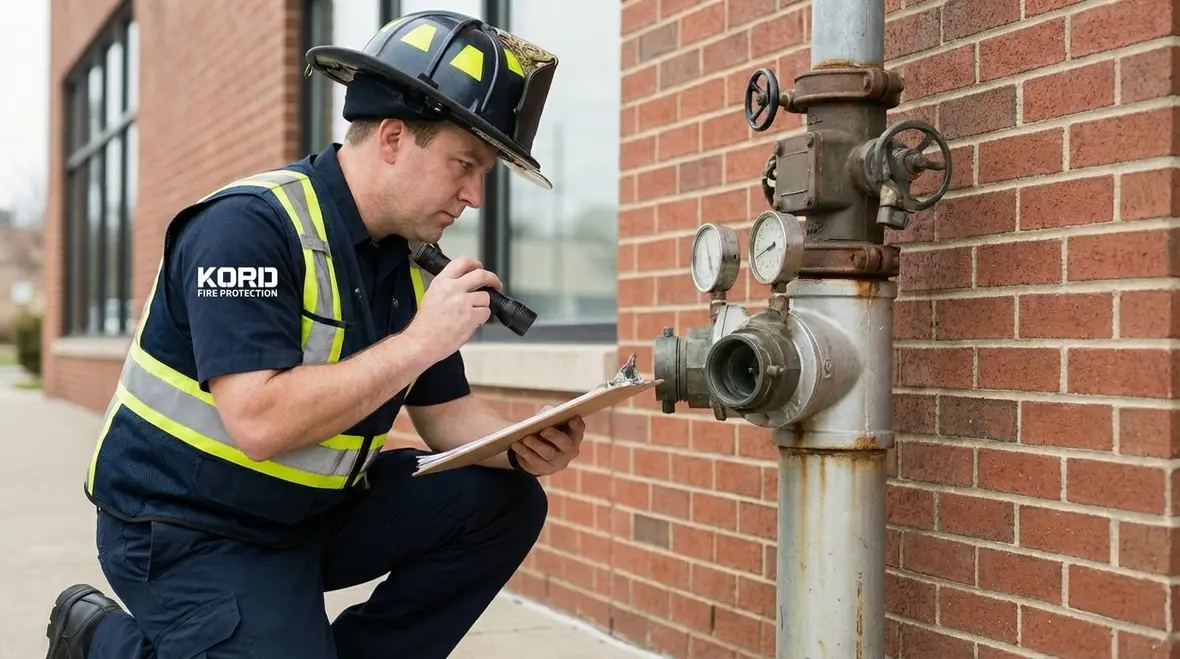
Understanding Thousand Oaks Fire Inspection Requirements for Commercial Properties
Commercial buildings in Thousand Oaks must comply with local fire codes, California state regulations, and national standards such as those from the National Fire Protection Association (NFPA). Although that may sound like alphabet soup, each rule serves a clear purpose and works together to keep people safe.
Fire inspections typically apply to:
- Office buildings
- Retail centers
- Restaurants and commercial kitchens
- Warehouses
- Apartment complexes
- Industrial facilities
Inspectors evaluate life safety systems, fire suppression equipment, alarms, exits, and storage practices. In addition, they review documentation that proves systems have been serviced on schedule and that inspections and tests follow current NFPA standards like NFPA 72 fire alarm testing requirements and other applicable codes.
Kord Fire Protection technicians often explain it this way: the city wants proof that if a spark turns into trouble, the building can respond immediately. Sprinklers must activate. Alarms must sound. Exit lights must guide. Furthermore, fire extinguishers must work when someone grabs one in a moment of panic.
Consequently, property owners who understand the Thousand Oaks fire inspection requirements avoid citations, reinspection fees, and operational disruptions. They also position their buildings to pass broader fire protection service inspections without last minute emergencies or costly rush repairs.
Key systems inspectors expect to see in good condition
- Automatic fire sprinkler systems
- Fire alarm and detection systems
- Portable fire extinguishers
- Emergency lighting and illuminated exit signage
- Fire pumps, standpipes, and hydrants where required
- Special hazard systems such as clean agent or kitchen hood suppression
What Does a Fire Inspector Actually Check?
This is the question most owners type into a search bar at midnight before an inspection. The answer is detailed, yet manageable when approached with preparation and a clear checklist.
Typical items on a Thousand Oaks commercial fire inspection checklist
- Fire sprinkler systems for visible damage, obstruction, correct coverage, and current inspection tags
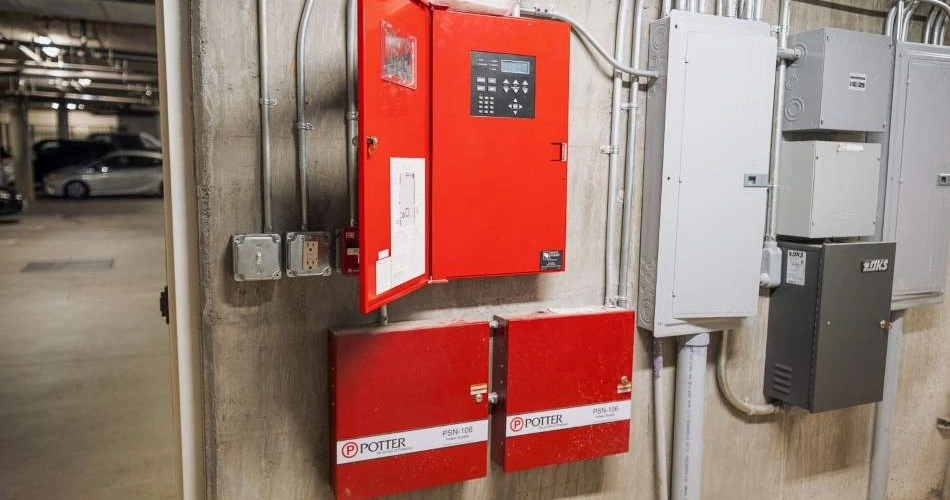
- Fire alarm panels for trouble signals, supervisory conditions, or faults
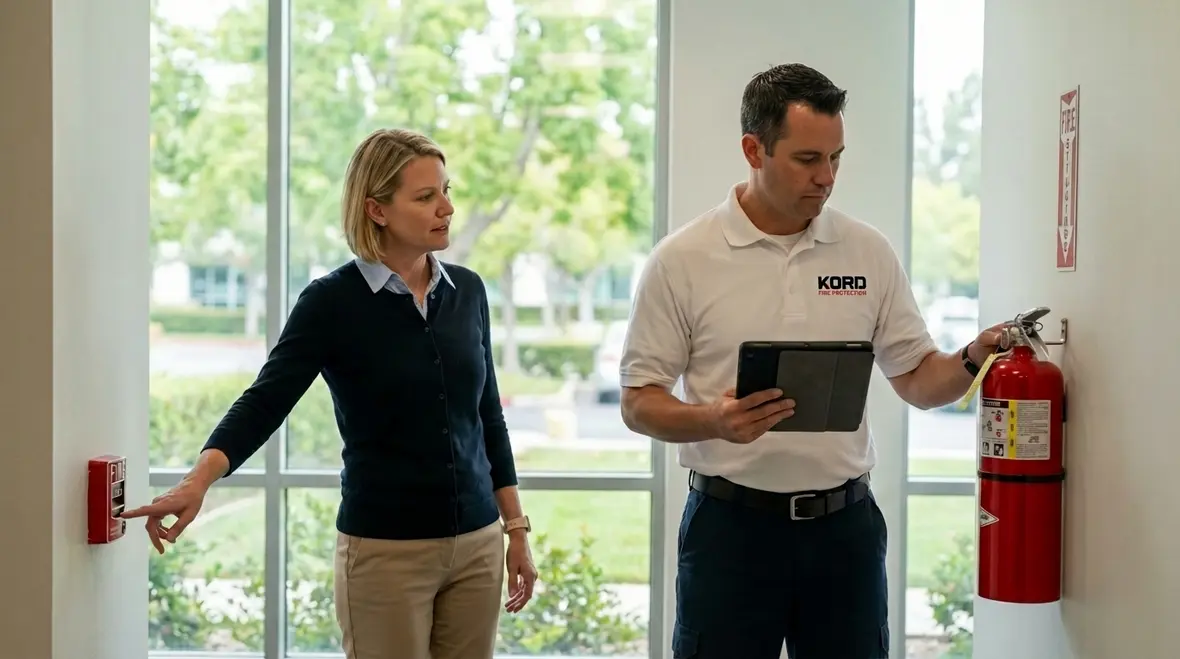
- Fire extinguishers for correct placement, pressure levels, mounting height, and current service dates
- Emergency exit lighting and illuminated exit signs for proper function and backup power
- Clear access to electrical panels, fire risers, and fire department connections
- Proper storage of flammable and combustible materials, including separation distances
- Commercial kitchen hood and duct suppression systems for cleanliness, nozzles, and service tags
- Housekeeping issues such as debris in corridors or storage rooms packed to the ceiling
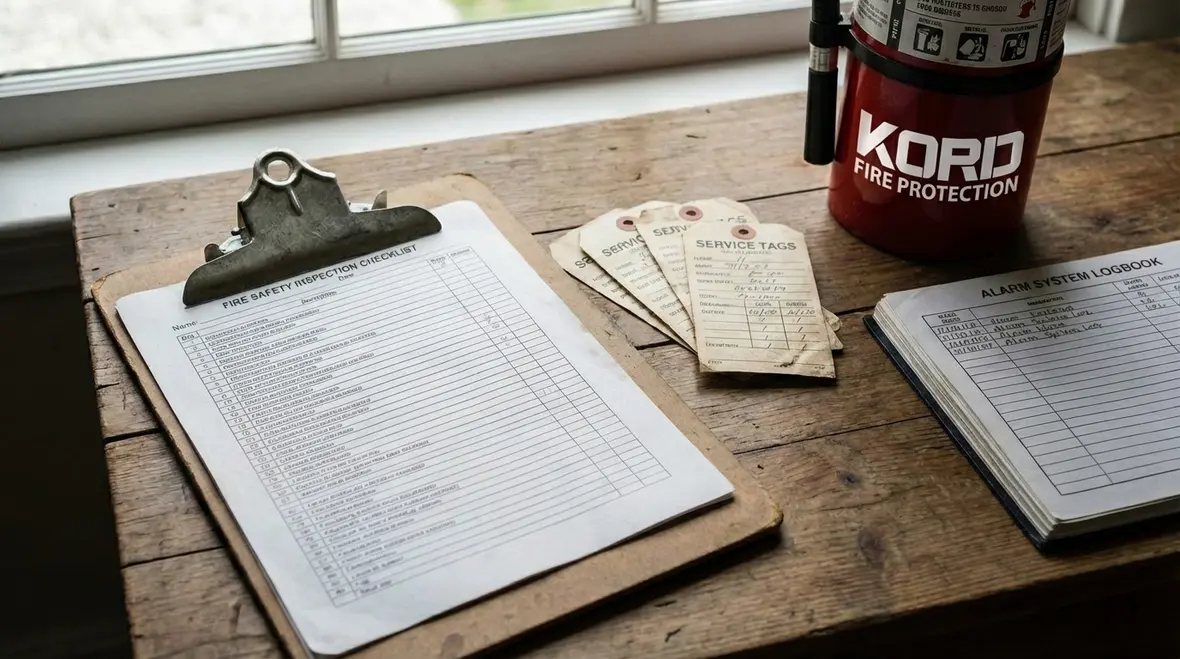
However, the inspection is not only visual. Documentation matters. Service logs, annual inspection reports, and testing certifications must align with city and state standards. Therefore, missing paperwork can cause as much trouble as a blocked exit.
Kord Fire Protection technicians often walk properties before official inspections. They identify small issues early. A blocked sprinkler head hidden behind holiday decorations might seem harmless. Yet to an inspector, it signals non compliance. And nobody wants a citation because of festive enthusiasm.
Inspection Frequency and Compliance Timelines
Not every building faces the same schedule. Instead, inspection frequency depends on occupancy type, square footage, fire risk level, and the specific systems installed. Thousand Oaks follows California and NFPA standards, which set minimum testing and maintenance intervals.
Typical inspection intervals for common systems
- Fire sprinklers usually require annual inspections and testing, with additional quarterly, three year, or five year internal checks depending on the system type and components.
- Fire alarms require annual testing for most devices, with some components tested more frequently under NFPA 72.
- Fire extinguishers require monthly visual checks by the owner and annual professional servicing by a licensed technician, following NFPA 10.
- Commercial kitchen hood suppression systems require semiannual inspections and cleaning cycles appropriate to cooking volume.
- Fire pumps, hydrants, and standpipes have their own monthly, annual, and multi year testing requirements.
Because these timelines overlap, many property managers create a compliance calendar that lists each system, the required frequency, and the vendor responsible. Kord Fire Protection technicians frequently help coordinate bundled service visits so sprinklers, alarms, extinguishers, and other systems can be handled together. As a result, owners avoid scattered appointments and conflicting reports.
Staying ahead of the Thousand Oaks fire inspection requirements reduces last minute scrambling. More importantly, it keeps occupants safe without interruption to business operations and supports long term relationships with insurance carriers and tenants.
Common Violations and How to Avoid Them
Interestingly, most fire code violations are not dramatic. They are simple oversights that slowly creep in during daily operations and busy seasons.
Frequent Thousand Oaks fire inspection issues
- Blocked exits or storage in exit corridors
- Painted, damaged, or obstructed sprinkler heads
- Expired fire extinguisher service tags and missing certification
- Extension cords used as permanent wiring or daisy chained power strips
- Improper storage too close to ceilings in sprinklered buildings, which interferes with spray patterns
- Emergency lights or exit signs with dead batteries or burned out bulbs
- Combustibles stored in electrical rooms, riser rooms, or stairwells
While none of these problems seem cinematic, they create real hazards. Therefore, regular internal walkthroughs help maintain compliance between official visits. Some managers assign a monthly “life safety walk” where staff check exits, extinguishers, and common areas using a simple checklist.
Kord Fire Protection technicians often remind clients that fire codes are written in response to real incidents. In other words, every rule has a story behind it. That perspective shifts the mindset from avoiding fines to protecting people.
Dual Overview: Responsibilities of Owners and Fire Protection Professionals
Passing a Thousand Oaks fire inspection is always a team effort. Building owners and managers handle day to day conditions, while fire protection professionals manage technical inspections, testing, and documentation.
Property Owner Responsibilities
- Maintain clear exits and safe storage practices
- Schedule required annual, semiannual, and multi year services
- Keep documentation accessible and organized for inspectors
- Correct violations promptly and confirm completion in writing
- Train staff on emergency procedures and extinguisher basics
Fire Protection Company Responsibilities
- Conduct inspections and testing per code and manufacturer requirements
- Provide detailed, easy to read inspection reports and tags
- Identify deficiencies and recommend practical solutions
- Perform repairs, system upgrades, and code driven retrofits
- Help owners prepare for upcoming inspections and rechecks
This shared effort ensures that the Thousand Oaks fire inspection requirements are not just met once, but maintained continuously. Moreover, when both sides communicate clearly, inspections become routine rather than stressful, and owners can lean on a single partner for end to end fire protection services.
How to Prepare for a Fire Inspection in Thousand Oaks
Preparation begins weeks before the scheduled visit. First, confirm that all required systems have current service tags from your licensed contractor. Next, review previous inspection reports to ensure past deficiencies were corrected and documented.
A practical pre inspection prep plan
- Verify sprinkler, alarm, extinguisher, and hood system tags are up to date.
- Walk each floor looking for blocked exits, damaged signage, or storage too close to sprinkler heads.
- Open electrical, riser, and fire pump rooms to make sure they are accessible and free of combustibles.
- Test emergency lighting and exit signs where possible.
- Gather binders or digital folders containing permits, past reports, and system drawings.
- Notify tenants or staff about the inspection date and access needs.
Kord Fire Protection technicians often conduct pre inspection assessments. During these visits, they explain findings in calm, practical language. No alarmist tone. No technical overload. Just clear guidance. As a result, property managers feel confident rather than overwhelmed.
On inspection day, ensure access to all rooms, electrical panels, riser rooms, and alarm panels. Have documentation ready and a point person available to walk with the inspector. When inspectors see organization and cooperation, the process moves faster and often smoother.
Why Compliance Protects More Than Just Buildings
Fire compliance is about more than passing an inspection. It affects insurance rates, liability exposure, tenant confidence, and business continuity. In short, it protects the people and the reputation behind the property.
Beyond the checklist: business and human impacts
- Insurance – Carriers may request proof that systems meet local fire safety standards in Thousand Oaks. Failure to comply could complicate claims or increase premiums.
- Liability – Documented inspections and timely corrections help demonstrate due diligence if an incident occurs.
- Tenant confidence – Tenants expect safe environments. A visible commitment to safety builds trust and encourages long term leases.
- Business continuity – Functional alarms, sprinklers, and suppression systems can turn a catastrophic event into a controllable one, minimizing downtime.
Beyond business metrics, there is a human element. Fires escalate quickly. Therefore, functioning alarms and sprinklers create precious minutes for evacuation. Those minutes matter more than any line item on an inspection report.
When Kord Fire Protection technicians explain these realities, they often do so with steady confidence. They remind clients that preparation is not paranoia. It is professionalism.
FAQ: Thousand Oaks Fire Inspection Requirements
Staying Ahead of Fire Safety Standards in Thousand Oaks
Compliance is not a one time event. It is a rhythm. When property owners understand the Thousand Oaks fire inspection requirements and partner with experienced professionals, that rhythm becomes steady and predictable instead of stressful and chaotic.
Kord Fire Protection technicians bring clarity to complex regulations. They translate code into action. They inspect, test, document, and explain. As a result, buildings remain safe, tenants remain protected, and inspections become routine rather than nerve wracking.
If a property needs guidance, now is the time to act. Schedule a professional evaluation, organize documentation, and create a proactive service plan. Because when safety systems work as designed, everyone sleeps better at night. And that peace of mind is worth every checklist.
To streamline everything from extinguishers to sprinklers, consider working with a single partner for full fire protection services in Southern California. You will get coordinated inspections, unified reports, and one team that understands your building’s history and future plans.
Know Your Weapon Before You Fight the Flame
Kord Fire Protection is your go-to when it comes to all things fire protection. For over 20 years, we’ve been serving Southern California with the quality service and equipment to keep your home or business safe at all times. Our competitive prices reflect our unwavering commitment to protecting what matters most in the event of a fire emergency. Give us a call, send an email, or use that form!

Join Our Newsletter!
Get the latest fire safety tips delivered straight to your inbox From our Newsletter.