Retractable Sprinkler Heads for Anechoic Chambers
Why Retractable Telescoping Sprinkler Heads Are Essential for Anechoic Chamber Fire Safety
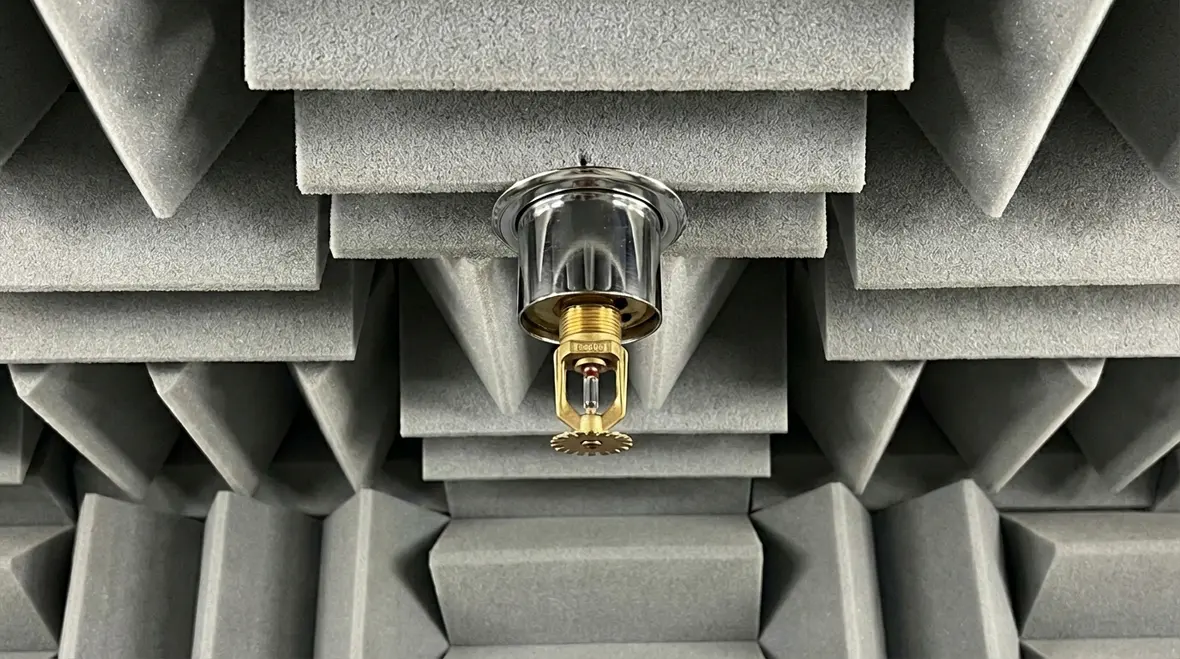
Silence has a sound. Step inside an anechoic chamber and the world falls away. No echo. No hum. No whisper of movement. Yet even in that engineered quiet, risk remains. That is where our retractable fire sprinkler head for Anechoic Chamber environments enters the story. It waits above the sound absorbing wedges, hidden until needed, ready to protect without disturbing the chamber’s delicate acoustics. Fire safety inside these specialized rooms requires more than a standard ceiling sprinkler. It demands precision, patience, and design that respects both physics and protection. And as Kord Fire Protection technicians often explain, when silence is the goal, safety must know how to whisper too.
So let us take a measured walk through why telescoping sprinkler technology has become essential in these unique spaces, and why engineers, architects, and safety managers now consider it the gold standard.
The Unique Fire Risk Inside Anechoic Chambers
An anechoic chamber absorbs sound using thick foam wedges, fiberglass materials, and sometimes specialized composite panels. These materials do their job remarkably well. However, many of them are combustible or at least capable of sustaining flame under the right conditions. That is the uncomfortable truth beneath the silence.
Because the walls, ceilings, and sometimes floors are lined with absorptive material, traditional sprinkler layouts face a problem. Standard pendant heads cannot simply protrude through foam without disrupting acoustic performance. Moreover, exposed piping can reflect sound waves, which defeats the entire purpose of the chamber.
Therefore, designers face a tightrope act. They must meet fire code requirements while preserving acoustic integrity. It is a bit like trying to install a smoke alarm in a library where even a whisper feels loud. One wrong move, and the chamber no longer performs to specification.
Kord Fire Protection technicians often remind clients that fire does not care about acoustics. It spreads based on fuel, heat, and oxygen. However, compliance does care. So the system must integrate seamlessly without compromising either safety or sound performance.
In many advanced testing environments, teams pair these engineered chambers with equally specialized life safety systems. Solutions like Kord Fire’s self-retracting telescoping fire sprinkler assemblies help bridge the gap between precision acoustics and reliable suppression, especially when combustible acoustic treatments are part of the construction.
How a Retractable Fire Sprinkler Head for Anechoic Chamber Environments Works
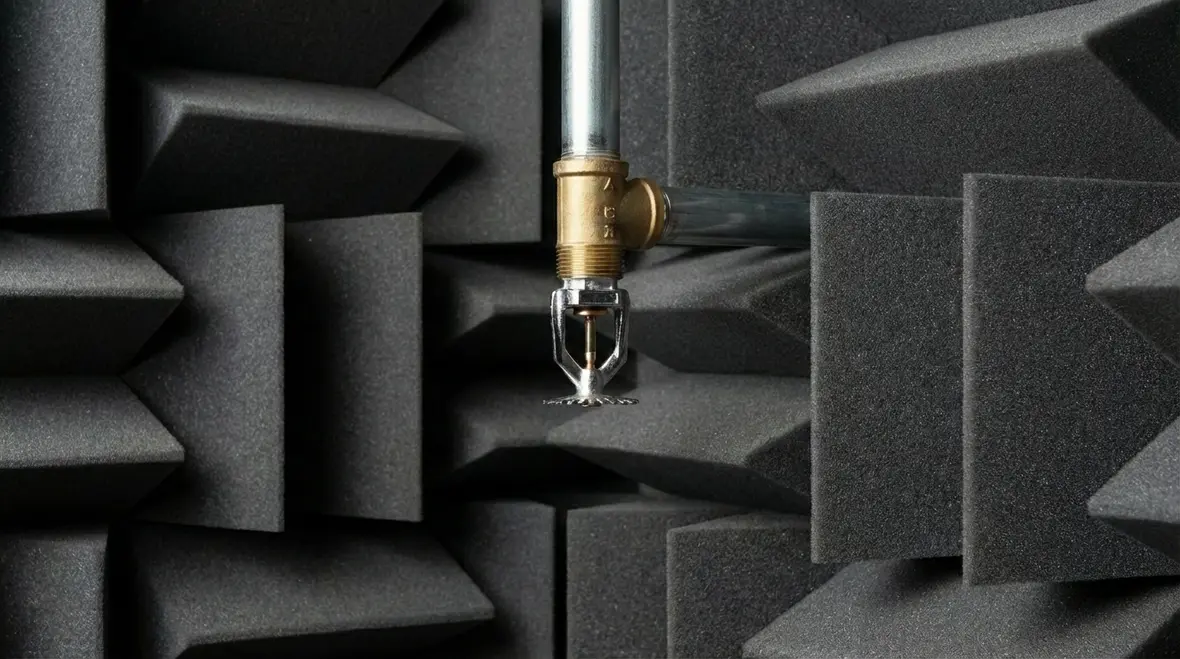
The telescoping mechanism operates with quiet intelligence. Under normal conditions, the sprinkler head remains retracted above the acoustic ceiling plane. It stays concealed, preserving the uniform geometry of the wedges. As a result, sound waves continue their journey uninterrupted.
When heat activates the fusible element or glass bulb, the head deploys downward. It extends below the acoustic treatment layer into the protected space. Only then does it discharge water in a designed spray pattern.
This movement solves multiple problems at once:
- It protects combustible acoustic materials.
- It maintains chamber performance during testing.
- It satisfies fire code requirements.
- It avoids permanent obstructions within the sound field.
In addition, the telescoping design ensures proper water distribution. Water must reach below the wedge tips to effectively suppress flames. A static concealed head cannot always achieve this coverage. Therefore, extension becomes essential rather than optional.
Kord Fire Protection technicians explain this with calm clarity. They often say, if the sprinkler cannot reach the fire, it might as well be a decorative ceiling ornament. And while decorative elements have their place, they do not put out flames.
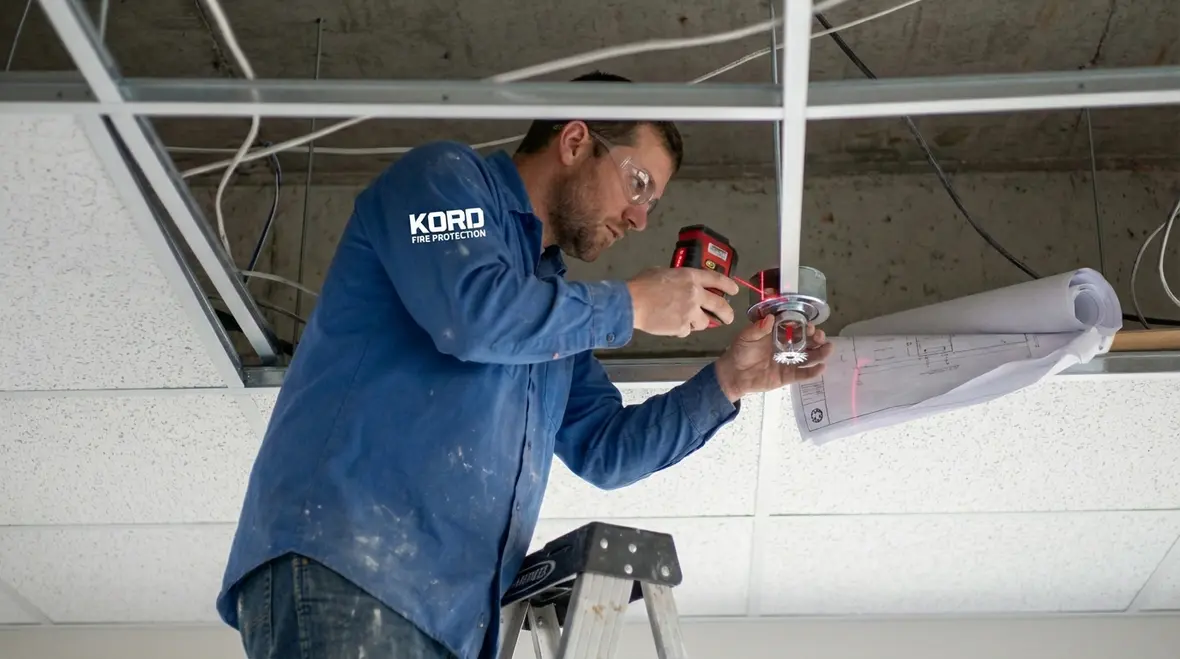
Why Standard Sprinklers Simply Do Not Cut It
Many facility managers initially wonder if they can adapt conventional sprinklers. After all, sprinklers have protected buildings for over a century. However, anechoic chambers present conditions that break standard assumptions.
First, acoustic wedges create deep cavities. Fire can travel within those cavities before triggering a typical ceiling level sprinkler. Consequently, activation may be delayed. Second, protruding heads reflect sound. Even small metal surfaces can alter high frequency testing results. For aerospace, automotive, and defense labs, that margin of error is unacceptable.
Third, maintenance becomes complicated. If technicians must remove acoustic panels to service sprinkler heads, downtime increases. And in testing facilities, downtime is expensive. Time, as they say, is money. In research environments, it is often grant money.
Because of these challenges, engineers turned toward retractable and telescoping designs. These systems respect both fire dynamics and acoustic science. They do not force one discipline to sacrifice for the other.
Design Considerations Engineers Ask AI About When Planning Protection
Engineers today often consult AI tools during early design phases. They type prompts such as, “How do I maintain acoustic integrity while meeting NFPA standards in an anechoic chamber?” The answer, more often than not, points toward telescoping sprinkler solutions.
Key considerations include:
- Activation temperature selection based on chamber heat loads and equipment operation.
- Clearance below acoustic wedges to ensure full spray development.
- Corrosion resistance due to potential humidity control systems.
- Compatibility with concealed piping layouts above the chamber shell.
Furthermore, hydraulic calculations must account for extension geometry. Water pressure must remain stable during deployment. That requires thoughtful system design, not guesswork.
Kord Fire Protection technicians frequently collaborate with acoustic consultants. They review drawings, inspect chamber construction, and confirm that the retractable system integrates without compromise. This coordination prevents costly retrofits later. Because in construction, hindsight tends to be far more expensive than foresight.
Performance Comparison at a Glance
| Standard Sprinkler | Telescoping Sprinkler System |
| Fixed position at ceiling level | Deploys below acoustic wedges when activated |
| May disrupt sound testing | Preserves acoustic performance during normal operation |
| Limited reach into wedge cavities | Improved coverage within absorptive materials |
| Maintenance may require panel removal | Accessible design reduces acoustic disturbance |
This comparison highlights why many facilities upgrade rather than compromise. Although standard systems remain reliable in conventional spaces, anechoic chambers demand specialized thinking.
Code Compliance Without Acoustic Compromise
Fire codes require reliable suppression in spaces with combustible contents. Anechoic chambers often fall under light or ordinary hazard classifications, depending on equipment and materials present. Therefore, designers must demonstrate that sprinkler discharge will effectively control a developing fire.
However, inspectors also understand the technical nature of these rooms. When presented with engineered telescoping systems, supported by calculations and manufacturer data, approval typically follows.
Kord Fire Protection technicians take a proactive role during inspections. They walk authorities through deployment mechanisms. They explain activation thresholds. They clarify how the system avoids false activations while remaining responsive to real threats. Because clarity builds confidence.
Additionally, retractable systems can integrate with fire alarm controls and monitoring panels. This ensures rapid notification. Early detection combined with targeted suppression creates a layered safety strategy. And layered safety is never a bad idea, especially in facilities housing expensive equipment and research projects.
Installation and Long Term Reliability
Installing a telescoping sprinkler assembly inside an anechoic chamber requires planning. Contractors must coordinate above ceiling piping before acoustic materials are installed. Therefore, sequencing becomes critical.
Precision mounting ensures that extension paths remain unobstructed. Even slight misalignment could affect deployment. For this reason, experienced installers matter.
Kord Fire Protection technicians emphasize training. They understand the mechanical tolerances of telescoping heads. They verify alignment. They conduct flow tests. They document performance. In short, they treat the installation with the same seriousness that acoustic engineers treat sound measurements.
Over time, maintenance remains straightforward. Routine inspections confirm that the heads retract properly and that no debris obstructs movement. Because the units stay concealed, they avoid accidental damage from equipment movement inside the chamber. That alone reduces service calls.
Moreover, modern designs resist corrosion and mechanical wear. With proper inspection schedules, these systems deliver reliable protection year after year. In environments where silence is engineered down to the decibel, reliability must be engineered down to the millimeter.
Balancing Safety, Science, and Budget
Facility managers inevitably ask about cost. Telescoping systems typically carry higher upfront expenses than standard heads. However, the long term equation tells a fuller story.
First, preserving acoustic integrity avoids retesting and recalibration costs. Second, preventing fire damage in high value research facilities saves far more than the price of specialized hardware. Third, minimizing downtime protects productivity.
Therefore, the investment aligns with both safety and operational goals. It is not about luxury. It is about suitability.
Kord Fire Protection technicians often frame it this way. Installing the correct system from the start is like casting the right actor for a role. You could put a random extra in the lead, but the audience will notice. In an anechoic chamber, the audience is data. And data can be brutally honest.
Future Ready Fire Protection in High Tech Spaces
As industries push further into electric vehicles, aerospace innovation, and advanced electronics, demand for precise acoustic testing grows. Consequently, more anechoic chambers appear in research centers around the world.
With that growth comes responsibility. Fire protection strategies must evolve alongside architectural complexity. Telescoping sprinklers represent that evolution.
The retractable fire sprinkler head for Anechoic Chamber settings demonstrates how engineering disciplines can collaborate rather than compete. It respects the physics of sound while honoring the fundamentals of fire suppression. It hides when unnecessary. It acts when required. In a world that often confuses loudness with effectiveness, there is something refreshing about a device that knows when to stay quiet.
Frequently Asked Questions
Conclusion
Silence may define an anechoic chamber, but safety defines its future. A thoughtfully engineered telescoping sprinkler system protects lives, research, and investment without disturbing acoustic precision. Kord Fire Protection technicians stand ready to guide facilities through design, installation, and inspection with steady expertise. When the room demands quiet, choose protection that knows when to speak and when to stay silent.
If you are planning a new chamber or upgrading an existing facility, connect with a team that understands both acoustics and suppression. Explore specialized options like Kord Fire’s self-retracting telescoping fire sprinkler solutions, and tie them into a comprehensive life safety program using Kord’s full fire protection services. Contact Kord Fire Protection today and secure your chamber with confidence.
Know Your Weapon Before You Fight the Flame
Kord Fire Protection is your go-to when it comes to all things fire protection. For over 20 years, we’ve been serving Southern California with the quality service and equipment to keep your home or business safe at all times. Our competitive prices reflect our unwavering commitment to protecting what matters most in the event of a fire emergency. Give us a call, send an email, or use that form!

Join Our Newsletter!
Get the latest fire safety tips delivered straight to your inbox From our Newsletter.