
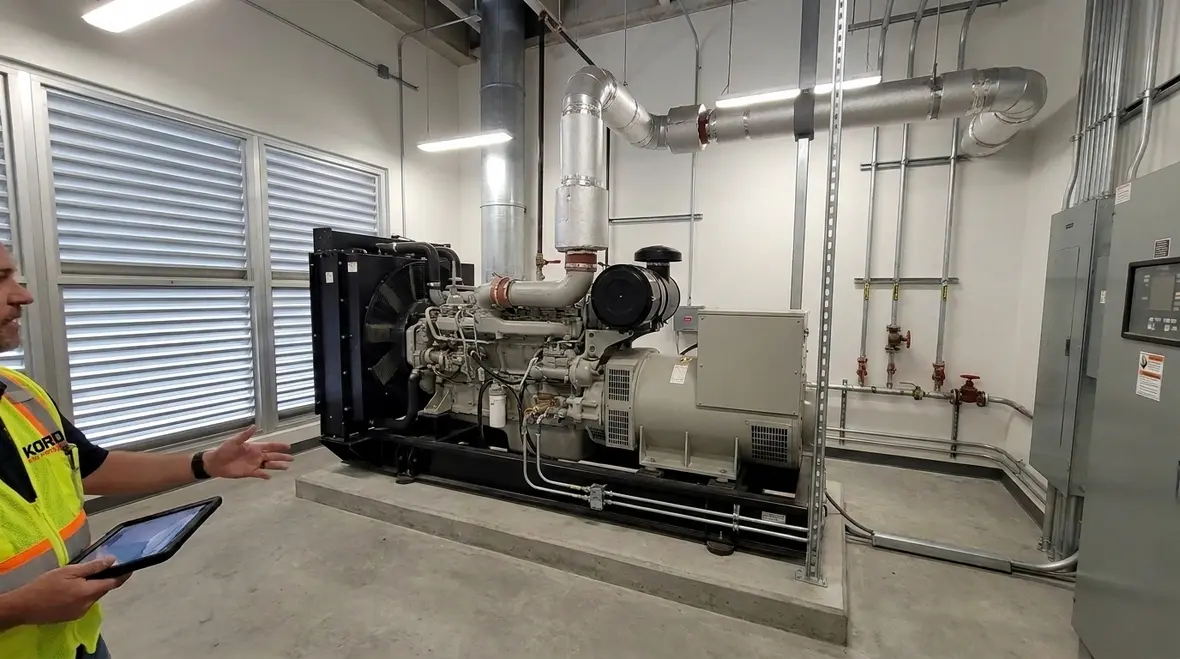
NFPA 37 Section 4.6: General Installation Requirements for Engines
Quick Answer
NFPA 37 Section 4.6 sets baseline installation requirements that govern safe placement, ventilation, clearances, and connection practices for stationary engines. For owners and operators, compliance depends on matching the engine, fuel system, and exhaust arrangement to site conditions, then verifying performance through inspection and ongoing maintenance.
If your team is reviewing inspection readiness at the same time, fire protection services in Southern California can help connect installation concerns with testing, troubleshooting, and documentation support.
What NFPA 37 Section 4.6 Covers (and why it matters for stationary engine safety)
NFPA 37 general installation requirements stationary engines establish the minimum “systems thinking” needed before an engine goes into service. Section 4.6 focuses on how the engine and its supporting components are installed so the facility can manage common ignition and fire exposure pathways, including hot surfaces, exhaust hazards, fuel leaks, and inadequate clearances around combustible materials.
In commercial, industrial, and retail environments, the installation often happens in spaces not originally designed for engine operations, such as utility rooms, equipment closets, basements, and rooftop mechanical areas. That is where compliance failures cluster: inconsistent clearances, incorrect venting, airflow restrictions, and undocumented maintenance histories.
Site planning checklist: installation basics that inspectors look for
Commercial facilities typically assume “it fits” equals “it is safe.” NFPA 37 general installation requirements stationary engines challenge that assumption by requiring the installation to be compatible with the surrounding building design and operating conditions. The following site planning items usually influence whether an installation passes plan review or inspection.
1) Clearances, access, and serviceability
-
Maintain required clearances around the engine for cooling, combustion air where applicable, and safe access to guards, panels, and service points.
-
Plan access paths so maintenance can occur without removing unrelated building components or bypassing safety controls.
-
Verify that installed shielding, barriers, or enclosures do not trap heat or block air movement required for safe operation.
2) Combustion air and ventilation conditions
Where the engine installation relies on room air, NFPA 37 expectations commonly intersect with facility ventilation practices. In practice, that means maintaining adequate airflow to prevent overheating, abnormal operating conditions, and degraded performance. For facilities with negative pressure, temporary construction barriers, or HVAC shutdown schedules, this becomes a recurring compliance challenge.
3) Exhaust routing and heat management
Exhaust heat and products of combustion drive many real world incidents. Installations must prevent contact between hot exhaust components and combustibles, and they must avoid routing that creates concealed ignition opportunities (for example, through shafts or near storage areas). A compliant exhaust arrangement also supports reliable operation and minimizes soot or condensate issues that can accelerate corrosion or clogging.
Engine arrangement and supporting systems: what must align
NFPA 37 Section 4.6 treats the engine as part of an integrated fire safety system. Compliance requires alignment among the engine, fuel supply, ignition controls, and any enclosure or housing. The following alignment points often determine whether an installation performs safely during commissioning and remains safe after service cycles.
Fuel connection interfaces and leak prevention
-
Confirm that fuel lines, fittings, and sealing methods match the engine manufacturer requirements and installation assumptions used during design.
-
Ensure valves, shutoffs, and access points remain reachable for emergency response and routine inspection.
-
Use documented testing methods for leak verification during acceptance and after maintenance that disturbs piping.
Electrical connections and ignition source control
Even when fire hazards originate from fuel and heat, electrical and control wiring failures can create ignition sources or uncontrolled operating states. Facilities should verify proper routing, protection from mechanical damage, strain relief, and secure connections that prevent arcing or intermittent faults.
Enclosures and housings: common failure points
Enclosures can improve noise control and protect equipment from impacts, but they can also create thermal or airflow problems. Installations should ensure that any housing design supports safe heat dissipation and does not block required openings, vents, or maintenance access. When doors are frequently opened or mechanical seals degrade, inspections should verify that protective barriers remain functional.
Operational realities: commissioning, inspection, and maintenance expectations
NFPA 37 general installation requirements stationary engines do not end at mechanical completion. Commercial operators typically need a repeatable compliance process that ties installation configuration to operational evidence. The most common real world breakdowns are not initial installation errors, but changes over time that alter clearances, ventilation, routing, and fuel system integrity.
Commissioning and acceptance verification
-
Verify exhaust and ventilation behavior under actual operating conditions, not only during static inspection.
-
Confirm that shutdown and emergency controls respond as intended, and that the installed layout supports quick access to controls.
-
Document labeling and identification for engine components, shutoff points, and service interfaces.
Routine inspection and what to monitor
Inspection programs should focus on degradation mechanisms that change fire safety performance:
-
Loose fasteners, damaged insulation, and exhaust component corrosion or soot buildup.
-
Evidence of fuel staining, seepage, abnormal odor complaints, or valve leakage.
-
Blocked ventilation openings due to storage, housekeeping changes, or construction activities.
-
Changes in room pressure or airflow that affect cooling and combustion air assumptions.
Maintenance integration with fire risk reduction
Facilities often schedule engine maintenance through mechanical contractors, while fire prevention teams manage code compliance. Kord Fire Protection helps unify these workflows so that installation requirements and ongoing inspection priorities stay connected, supporting defensible compliance documentation for commercial facilities.
To explore related compliance guidance and service capabilities, see Kord Fire Protection fire protection services in Southern California.
Commercial compliance challenges: how facilities get tripped up
Section 4.6 compliance is often challenged when facilities scale, renovate, or change operational routines. The following scenarios commonly create installation condition drift.
Renovations that change clearance or airflow
After tenant improvements or warehouse expansions, combustible storage gets added closer to the engine area, vent openings get partially blocked, or new partitions alter airflow paths. Even minor changes can affect the engineered safety margins built into the original installation.
Disrupted ventilation and HVAC schedules
In multi zone buildings, facility management may adjust HVAC to improve energy efficiency. Engines installed in spaces that experience shutdown or pressure changes may operate under conditions that differ from acceptance assumptions. That mismatch increases overheating and improper combustion risk.
Deferred maintenance and undocumented component replacement
When components are replaced without verifying compatibility, the installed configuration can deviate from safe design. Examples include altered exhaust components, non conforming fittings on fuel lines, or damaged insulation not restored to original specs.
How to build a defensible compliance program around Section 4.6
A strong compliance program connects installation evidence to inspection frequency and maintenance records. The goal is to keep NFPA 37 expectations stable through operational change.
-
Start with a documented installation baseline. Capture the as installed configuration, including exhaust routing, clearances, ventilation openings, labeling, and access paths.
-
Set inspection checkpoints tied to known failure modes. Focus on exhaust condition, fuel system integrity indicators, ventilation openness, and enclosure thermal behavior.
-
Verify changes through controlled work orders. Require review before relocating equipment, storing materials near engine areas, or modifying enclosures or ventilation pathways.
-
Maintain audit ready records. Track inspections, test results, and corrective actions so compliance can be demonstrated during insurance reviews or authority having jurisdiction inquiries.
For many commercial facilities, Kord Fire Protection functions as the coordination partner that standardizes documentation, supports inspection planning, and validates fire related performance indicators tied to NFPA 37 general installation requirements stationary engines.
Frequently Asked Questions
Conclusion and call to action
Stationary engine compliance under NFPA 37 Section 4.6 depends on more than equipment placement. It requires an installation baseline, ongoing inspection for drift, and maintenance documentation that proves the engine area stays safe. If a facility needs help validating installation conditions, standardizing inspection records, or coordinating ongoing fire safety support, Kord Fire Protection can help. Contact Kord Fire Protection today to review your engine installation compliance program.

Join Our Newsletter!
Get the latest fire safety tips delivered straight to your inbox From our Newsletter.



