
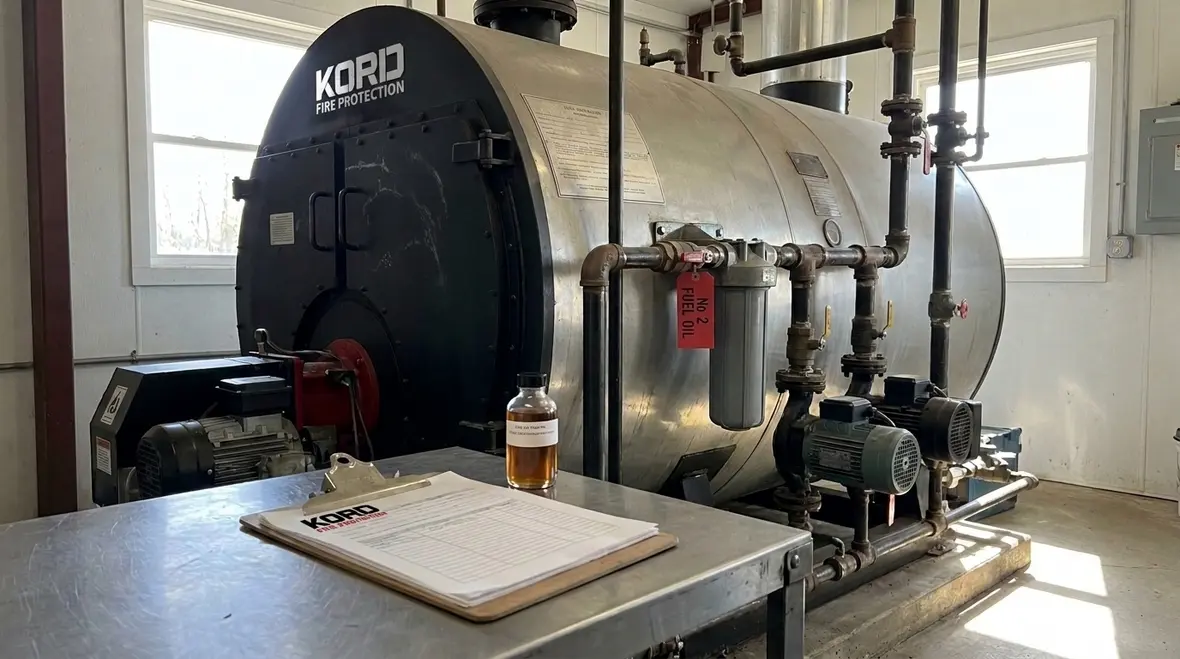
NFPA 31 Section 4.5: Which Liquid Fuels Are Acceptable Under the Code
Quick Answer
NFPA 31 Section 4.5 limits what liquid fuels can be used in oil burning equipment by defining acceptable fuel types and relevant grade controls. In practice, commercial owners confirm the fuel specification on delivery documents, align it to the burner and boiler design basis, and document ongoing quality checks and maintenance.
If your team is mapping compliance responsibilities across installation, service, and documentation, Kord Fire’s fire protection services in Southern California provide a useful overview of how inspection, repairs, and ongoing support fit together for commercial facilities.
What NFPA 31 Section 4.5 is trying to prevent
NFPA 31 Section 4.5 focuses on compatibility and safety. Liquid fuels are not interchangeable in oil burning systems. Variations in fuel viscosity, distillation range, sulfur content, water contamination, and density can change combustion behavior, flame stability, heat release rate, and soot formation. Those changes can lead to unsafe conditions such as incomplete combustion, excessive stack temperatures, carbon buildup, burner lockouts, and oil leakage.
For commercial and industrial facilities, the biggest compliance risk comes from operational drift. Equipment may start with compliant fuel, but over time the facility switches suppliers, storage practices change, or delivery procedures allow off grade material. NFPA 31 acceptable liquid fuels kerosene No 2 oil are commonly used because they align with typical burner and fuel train design parameters, but only when the facility controls fuel quality and documents it.
For a practical installation and compliance workflow that connects equipment selection to safe fuel handling practices, see: NFPA 31: A practical guide to oil burning equipment installation.
How Section 4.5 defines acceptable fuels for oil burning systems
Section 4.5 does not treat fuel as a generic commodity. It ties acceptable liquid fuels to defined fuel identities and performance expectations of oil burning equipment. The key compliance concept is “intended use.” If the oil burner, nozzle, combustion head, draft conditions, and safety devices are installed and adjusted for a specific fuel type, then changing to another fuel without verifying that the equipment remains within safe operating limits conflicts with the code intent.
Commercial facilities typically operationalize this requirement through three control points:
- Fuel identification: Match the fuel to the specified grade and identity stated by NFPA 31 and the equipment manufacturer.
- Fuel quality control: Verify delivery paperwork and, where required, test fuel for properties that affect combustion and safe operation.
- Equipment adjustment and tuning: Ensure the burner and controls remain calibrated after any supplier or seasonal transition.
When these controls are maintained, the facility reduces the likelihood of poor combustion, oil filter plugging, nozzle coking, and nuisance shutdowns that often appear after “temporary” fuel substitution becomes routine.
Why kerosene and No 2 oil are frequently acceptable under NFPA 31
Kerosene and No 2 fuel oil are widely used in commercial oil heating because they generally support stable atomization and predictable combustion when the burner is designed for them. In practical terms, acceptable fuels align with:
- Combustion stability: Flame characteristics that support reliable ignition and stable operation across expected firing rates.
- Atomization performance: Suitable viscosity and volatility so the nozzle produces a consistent spray pattern.
- Filtration compatibility: A level of particulate and sediment that can be managed by the normal fuel train filtration setup.
- Reasonable maintenance burden: Reduced risk of excessive deposits and faster degradation of components.
Facilities should still treat these fuels as “acceptable when controlled,” not as “always acceptable.” The most common failure point appears after delivery changes. Even with the same label on the tank, properties can vary between suppliers. That variability can shift the air fuel ratio requirements and increase the need for tuning and inspection.
To keep the system inside safe operating limits, commercial operators typically verify:
- Burner combustion analysis results remain within manufacturer and service standards.
- Stack temperature and smoke indicators stay controlled.
- Nozzle condition remains within serviceable limits.
- Fuel filters and strainers remain clean and correctly sized.
For ongoing compliance support, Kord Fire Protection focuses on aligning installation, commissioning, and maintenance practices to the expectations of NFPA 31 and to real world commercial facility operating conditions.
What compliance looks like in day to day commercial operations
NFPA 31 Section 4.5 compliance becomes real when the facility implements procedures that prevent accidental or unapproved fuel use. The code intent translates into operational discipline across receiving, storage, transfer, and burner service.
1) Receiving and documentation controls
Commercial sites should require delivery documentation that clearly states the fuel type and grade. Procurement records help prevent silent changes when a preferred supplier is replaced. Storage and burner operators then confirm the delivery matches the required identity before transfer begins.
2) Tank and fuel train practices that protect combustion performance
Fuel quality problems most often enter the system through water, sediment, or poor filtration during storage and transfer. Kerosene and No 2 oil can still fail combustion requirements if storage practices allow contamination.
- Use strainers and filters correctly, with scheduled inspections based on actual operating conditions.
- Monitor and remove water via proper tank maintenance practices.
- Prevent mixing of incompatible fuels during transitions between seasons or suppliers.
3) Maintenance and inspection that verify the fuel is still the right fuel
Even when the correct fuel is used, wear and drift can develop in the burner system. Common commercial failure points include:
- Nozzle wear that changes spray pattern and increases soot.
- Combustion head deposits that alter airflow mixing and flame stability.
- Fuel filter restriction that raises system pressure changes and can destabilize combustion.
- Improper control settings after a service event or seasonal change.
Kord Fire Protection supports commercial facilities with maintenance planning and field service that focuses on the practical factors behind “acceptable fuel” performance. That includes verifying burner tuning outcomes, confirming fuel train readiness, and documenting the service steps that reduce compliance risk over time.
Common compliance pitfalls when fuel types change
Most fuel related code issues do not come from a deliberate attempt to violate NFPA 31. They come from operational shortcuts, especially during supplier transitions, emergency deliveries, or renovations where old tank systems are reused.
Typical pitfalls include:
- Using a different grade without equipment review: The burner may still run, but combustion safety margin can shrink.
- Assuming label equals composition: Fuel properties vary and can alter burner performance.
- Skipping combustion testing after a delivery change: Without testing, facilities miss drift in air fuel ratio and heat release.
- Overlooking water and sediment: Even acceptable liquid fuels become problematic when contamination is introduced.
- Inadequate recordkeeping: Documentation gaps make it hard to demonstrate compliance during inspection cycles.
Commercial operators reduce these risks by treating fuel acceptance as a recurring verification process tied to burner service intervals. When fuel changes, combustion analysis and component inspection confirm the system remains within safe and stable operation.
Service partnership checklist for NFPA 31 fuel acceptance
Facilities can use the following checklist to align internal standards with the practical intent behind NFPA 31 Section 4.5. This also creates a clear scope for service partners.
| Checklist item | What to verify |
| Fuel identity control | Delivery documents match the required NFPA 31 acceptable liquid fuels kerosene No 2 oil grade and identity. |
| Fuel storage integrity | No cross contamination and water control practices match the facility fuel risk level. |
| Fuel train readiness | Filters, strainers, and components remain sized, clean, and in proper working condition. |
| Combustion performance testing | Post service and post delivery change combustion analysis confirms stable operation and acceptable emissions indicators. |
| Maintenance documentation | Service records show adjustments, inspections, and verification steps linked to the fuel and equipment configuration. |
| Seasonal transitions | Combustion retuning and fuel train inspection occur when seasonal or supplier changes happen. |
When facilities follow this workflow, they reduce the compliance burden during inspections and improve system reliability. Kord Fire Protection helps commercial clients maintain that consistency through scheduled service, targeted troubleshooting, and documentation that supports ongoing regulatory readiness.
Frequently Asked Questions
Conclusion and call to action
NFPA 31 Section 4.5 requires more than selecting the “right” fuel at installation. Commercial compliance depends on controlling fuel identity, preventing water and sediment contamination, and confirming burner performance through maintenance and combustion testing after supplier or seasonal changes. Kord Fire Protection can help your team maintain documented compliance with practical field service, inspection readiness, and ongoing tuning support. Contact Kord Fire Protection to schedule a compliance focused review of your oil burning equipment and fuel handling process.

Join Our Newsletter!
Get the latest fire safety tips delivered straight to your inbox From our Newsletter.



