NFPA 31 Section 4.2: Approved Equipment Requirements for Oil Burners
Quick Answer: NFPA 31 Section 4.2 requires oil burner components and burner systems to be “approved” for the intended service. Meeting the “NFPA 31 approved equipment listing requirements” means using equipment listed or approved by an accepted testing and listing organization, installed within its marked limitations, and maintained to preserve performance.
For facilities that manage fire protection systems across multiple compliance priorities, it also helps to align burner reliability planning with broader commercial fire sprinkler service and maintenance support so inspections and corrective work are not handled in separate silos.
What does “approved equipment” mean in NFPA 31 Section 4.2?
NFPA 31 Section 4.2 focuses on ensuring that oil burner equipment used in oil burning installations performs safely under expected operating conditions. In commercial and industrial facilities, “approved” does not mean a manufacturer simply sells a burner that runs. Instead, it means the burner and relevant components have been evaluated and listed or approved for the specific type of fuel, burner configuration, and application, then installed and maintained according to their markings and instructions.
In practice, this is one of the most common inspection friction points. Facilities often have burners that operate but do not align with the original approved configuration, or they include replacement parts that are not part of the listed or approved system. NFPA 31 approved equipment listing requirements become a full lifecycle obligation, not a one time purchase decision.
Where NFPA 31 Section 4.2 applies in the real world
Section 4.2 governs burner equipment approval within oil burning installations. While exact compliance details can vary by boiler, furnace, burner type, and fuel system design, the underlying intent remains consistent: the equipment must be acceptable for safe use, and it must remain acceptable after installation and through ongoing service.
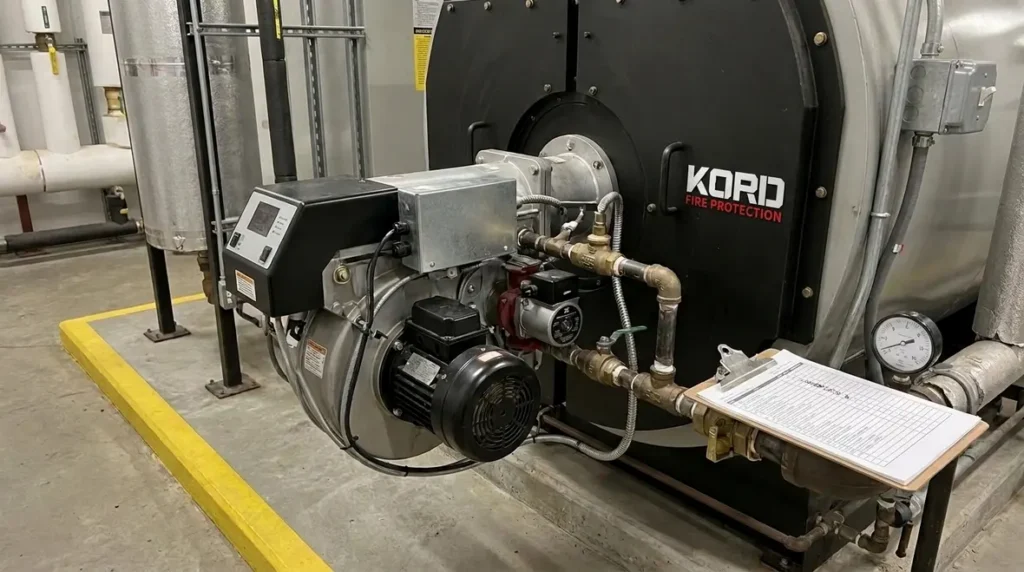
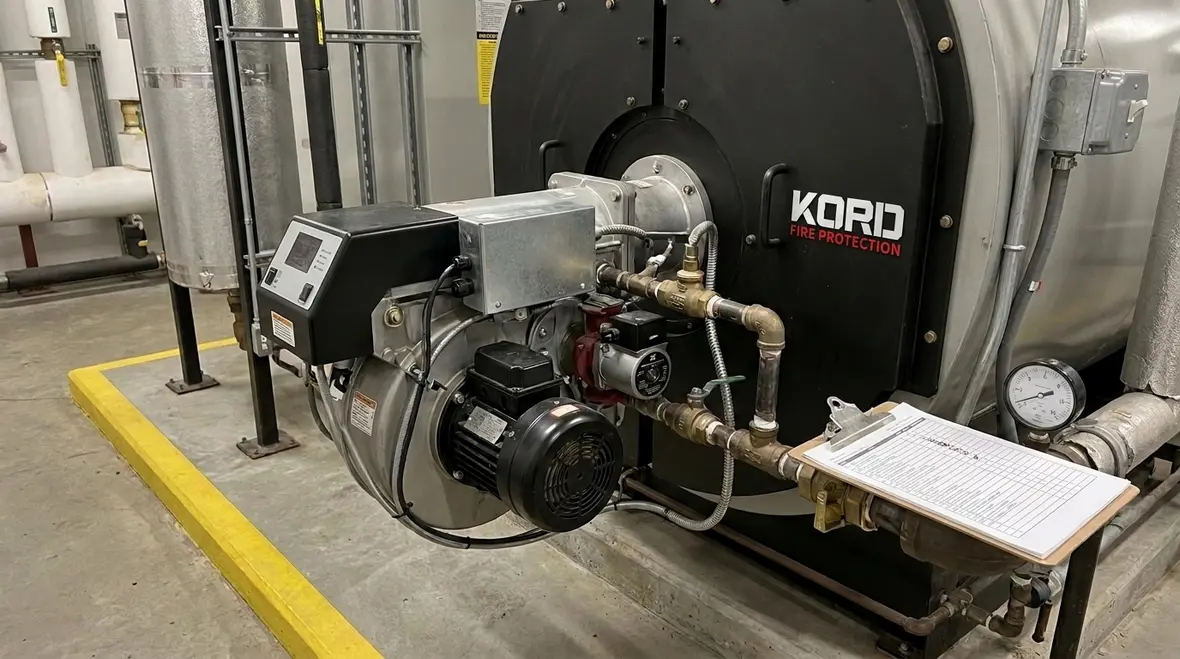
Commercial facilities such as retail stores, distribution centers, hotels, and manufacturing sites usually treat these systems as critical infrastructure. Downtime affects operations, and unsafe conditions create high consequence risks. That is why inspectors and AHJs (Authorities Having Jurisdiction) look not only at nameplates but also at the complete burner assembly, controls, and burner train configuration.
NFPA 31 approved equipment listing requirements: what inspectors verify
For compliance, inspectors typically verify three layers: identification, configuration, and maintenance condition.
1) Identification and documentation
- Burner manufacturer identification and model data matching the intended service.
- Evidence the burner and critical components are listed or approved for use with the applicable fuel type.
- Compatibility with the boiler or appliance to which it is connected.
2) Configuration match to the approved system
Many burner failures stem from “drift” between the original approved setup and the current field configuration. Examples include swapping nozzles, changing control modules, modifying the burner train layout, or altering combustion settings beyond what the approved system supports. Inspectors may also look for changes that effectively bypass safeties.
- Burner control and safety components installed as the listing or approval configuration requires.
- Correct oil piping arrangement, valves, strainers, filters, and interlocks.
- Correct firing rate range and combustion air setup.
3) Maintenance condition that preserves the approval basis
Approval assumes the equipment is maintained. Excessive wear, blocked fuel passages, failed ignition components, compromised seals, and deteriorated wiring insulation can undermine safe operation even if the equipment originally matched the approval.
- Ignition performance and reliable ignition trial characteristics.
- Fuel pressure within required operating ranges and stable atomization.
- Proper flame signal strength and correct combustion control response.
Common commercial compliance pitfalls that break “approved” status
Commercial facilities typically discover issues during annual inspections or after service calls that require component replacement. The following pitfalls repeatedly lead to failed reviews or corrective actions:
Unapproved substitutions and mixed burner train components
Replacing control parts, burner motors, flame scanners, ignition transformers, or solenoid valves with unapproved equivalents can break listing acceptance. Even when parts appear functionally similar, the burner system may rely on a specific approval basis.
Incorrect nozzle selection or improper fuel settings
Nozzle type, spray pattern, and firing rate directly affect combustion quality. A nozzle that is outside the burner’s listed specifications can lead to poor atomization, soot formation, smoke, and unstable flame behavior. Those conditions can also overload heat exchange surfaces and create safety hazards.
Bypassed safeties and incorrect reset or lockout behavior
Burners include lockouts for protection. If field modifications alter the safety chain, bypass interlocks, or disable lockout behavior, the system may no longer function as evaluated. Inspectors focus on safety response, not just operational start up.
Neglected tuning, combustion adjustment, and calibration drift
Combustion controls and fuel pressure regulators drift over time. Poor maintenance allows conditions to move out of the safe range. The equipment may still run, but it may not operate within the conditions assumed by its listing.
Operational procedures that support ongoing compliance
NFPA 31 compliance depends on the full service process: pre start checks, safe commissioning, routine operational verification, and documented maintenance. Facilities that manage this well reduce both inspection findings and operational risk.
Installation and initial commissioning
- Use only equipment and components that are part of the approved configuration or otherwise meet the required approval basis.
- Confirm installation matches manufacturer instructions and marked limitations, including wiring, piping, combustion air, and venting where applicable.
- Verify combustion performance through measured results and ensure safety controls operate correctly.
Routine inspection and documented maintenance
- Inspect the burner train components for wear, leakage, and proper seating.
- Test ignition and flame supervision performance under normal operating conditions.
- Verify fuel pressure stability, filtration performance, and atomization output.
- Maintain combustion test records and update settings only within approved limits.
For a practical overview that aligns installation thinking with safe, serviceable design, facilities can reference this commercial guide: NFPA 31: a practical guide to oil burning equipment installation.
Commercial partners like Kord Fire Protection help facilities keep systems in an “approved state” through ongoing compliance testing and maintenance planning, reducing the likelihood of last minute shutdowns caused by component mismatch or out of range combustion conditions.
How Kord Fire Protection supports NFPA 31 compliance
Meeting NFPA 31 Section 4.2 effectively means controlling change. Equipment replacement, burner tuning, and operational adjustments must preserve the approved configuration and performance assumptions.
Kord Fire Protection supports facilities with field focused verification and maintenance discipline that aligns with commercial inspection expectations, including:
- Assessing burner train configuration against the approved basis and identifying substitution risks.
- Combustion and safety performance checks that validate the system remains within safe operating parameters.
- Maintenance documentation that supports audit readiness for commercial and industrial sites.
- Service coordination to minimize downtime and prevent recurring failures tied to drifting settings or worn components.
Frequently Asked Questions
Conclusion and call to action
NFPA 31 Section 4.2 requires more than operational burners. Facilities must ensure burner systems and components meet the NFPA 31 approved equipment listing requirements, remain installed as evaluated, and receive maintenance that protects safe performance over time. Kord Fire Protection can help commercial sites verify configuration, tune within approved limits, and document compliance with practical, inspection ready service. Schedule a review to confirm your burner train is approved, supported, and ready for the next inspection cycle.

Join Our Newsletter!
Get the latest fire safety tips delivered straight to your inbox From our Newsletter.