
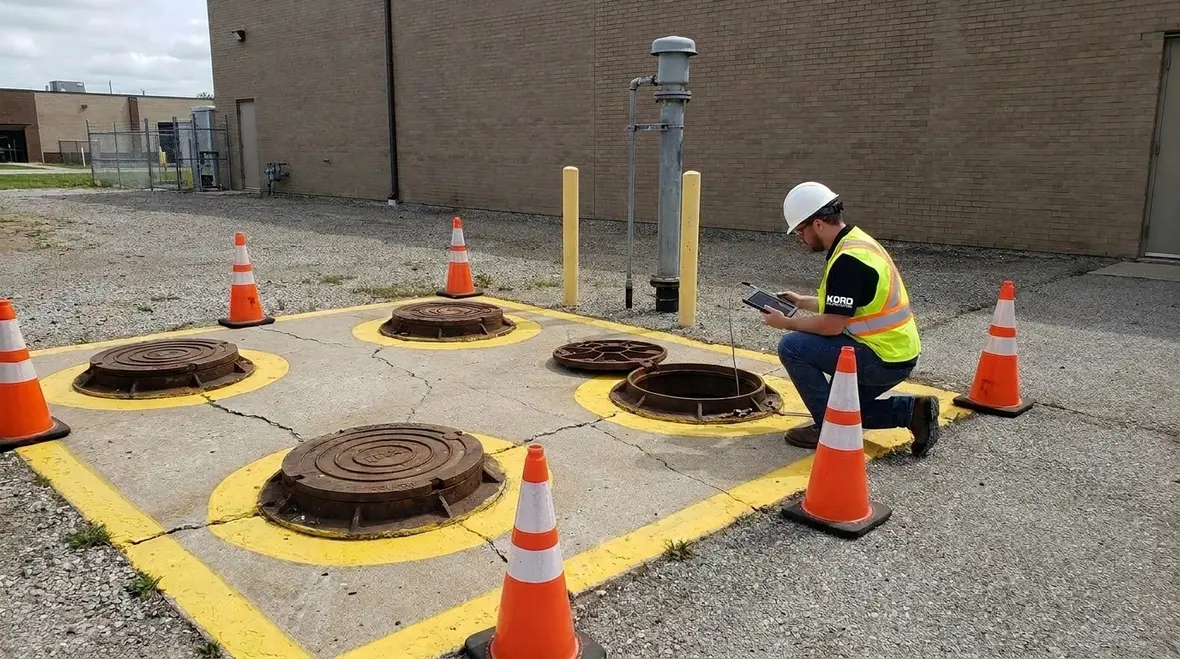
NFPA 30 Section 23.3 General Requirements for Underground Tanks: Compliance, Inspection, and Ongoing Operations
Quick Answer
NFPA 30 Section 23.3 general underground tank requirements set baseline rules for protecting underground flammable and combustible liquid storage. The requirements focus on installation integrity, corrosion control, leak detection, venting, testing, and documentation so facilities can reduce ignition risk and environmental impact.
What NFPA 30 Section 23.3 general underground tank requirements aim to prevent
Underground tanks remove storage systems from daily traffic and visual monitoring. That creates a practical risk: leaks can migrate through soil, utilities, and building interfaces before discovery. NFPA 30 Section 23.3 general underground tank requirements address that gap by enforcing installation practices and ongoing assurance that tanks, piping, and related components remain leak resistant and properly monitored.
For commercial, industrial, and retail facilities, compliance also aligns with internal risk management, insurance expectations, and environmental stewardship. Fire protection professionals and operations teams often discover that the biggest breakdowns are not during initial installation, but during maintenance gaps: missing tightness testing intervals, degraded coatings, failed sensors, or damaged venting components.
Facilities that want stronger overall inspection planning can also benefit from a broader fire protection compliance auditing guide that helps connect documentation, field verification, and corrective action tracking into one less-chaotic process.
Where Section 23.3 fits in the underground system
NFPA 30 governs flammable and combustible liquids across design, installation, inspection, and operational controls. Section 23.3 general underground tank requirements typically cover foundational expectations for underground tanks and their immediate system protections, including how the tank and associated piping are arranged to manage hazards.
In real facilities, teams often treat “tank compliance” as a single item. In practice, the system behaves as a network. A tank breach without correct monitoring, a piping joint with poor corrosion protection, or a vent problem that changes pressure control can all contribute to release, vapor accumulation, or delayed detection.
Installation integrity: the compliance baseline operators must verify
Compliance starts at installation, but ongoing validation determines whether the installation remains compliant through service life. NFPA 30 Section 23.3 general underground tank requirements drive attention to the physical setup and the protective layers that keep tanks and piping from failing early.
Containment, corrosion protection, and protective barriers
Underground environments accelerate corrosion through moisture, soil chemistry, stray currents, and backfill characteristics. Facilities typically implement protective measures such as coatings and cathodic protection, plus installation practices that limit water pathways and reduce physical damage. Kord Fire Protection supports site readiness by reviewing documentation packages, verifying that protective systems match the installed configuration, and planning maintenance activities that keep protections effective.
Joints, penetrations, and interface vulnerabilities
The most common failure points in underground systems often occur at penetrations, couplings, sumps, and interfaces where workmanship and long term settlement can create stress. Operational teams should treat these areas as “high attention zones” for inspection and integrity testing.
When facilities lack clear access and inspection records, they cannot demonstrate that critical components were checked to the required standard. This increases regulatory risk and undermines internal assurance programs.
Detection and monitoring: how releases get caught before they escalate
Underground tank safety depends on early detection. If a release occurs, monitoring must identify the event and provide actionable alarms. NFPA 30 Section 23.3 general underground tank requirements generally support the concept of assurance through detection and response controls, rather than waiting for off site impacts.
Leak detection interfaces and functional readiness
Functional readiness includes more than having a device installed. It includes calibration status, power continuity, alarm signaling pathways, and confirmable sensor performance. Common issues include failed sensor outputs, alarm panels that do not audibly notify, and maintenance records that show “tests performed” without confirming test parameters and outcomes.
Commercial operators can reduce downtime risk by scheduling detection system checks during planned maintenance windows. Kord Fire Protection coordinates inspection sequencing to minimize service disruption while meeting compliance expectations.
Response procedures and alarm handling
Even the best detection system fails if response procedures do not work. Facilities should ensure personnel know how to interpret alarm types, isolate affected areas when required, and document corrective actions. The goal is to prevent vapor accumulation and delay in mitigation.
To strengthen operational alignment, fire and safety teams can review how NFPA 30 interacts with flammable liquid hazard control strategies. For further context, see Kord Fire Protection’s technical overview: how NFPA 30 regulates flammable liquids.
Where flammable liquid hazards tie into broader suppression planning, a related look at commercial fire suppression systems and services can fit naturally into the same compliance conversation.
Testing, inspection, and documentation: the compliance evidence that matters
NFPA 30 Section 23.3 general underground tank requirements place emphasis on ongoing verification. Facilities must be able to prove that underground tanks remain safe and properly monitored after installation.
What to inspect and how often it impacts risk
Inspection programs typically focus on signs of corrosion, damage to protective layers, functional checks of monitoring systems, and confirmation that valves, vents, and controls operate as intended. The frequency often ties to system design, operational intensity, and prior test results.
Operational reality shows that inspection intervals slip due to staffing, contractor availability, and production schedules. When intervals slip, smaller issues can progress into releases that are harder and more expensive to remediate.
Test performance and evidence quality
Compliance requires evidence quality. A test log that lacks serial numbers, test date timing, operating conditions, or pass fail outcomes does not function as a strong compliance record. Facilities should maintain structured documentation that ties tank identity, system components, test method, results, and corrective actions to a traceable standard.
Kord Fire Protection helps commercial clients build a consistent compliance evidence trail by aligning testing and inspection reporting with the facility’s asset register and maintenance workflow, so audits and internal reviews do not become last minute disruptions.
Common failure points that drive real-world non compliance
When teams fall short of the spirit of NFPA 30 Section 23.3 general underground tank requirements, the causes usually cluster in a few predictable areas. Identifying these early helps operators target resources where they prevent the highest risk outcomes.
Corrosion protection degradation due to coating damage, water ingress, or ineffective cathodic protection monitoring.
Sensor and alarm reliability gaps such as failed detectors, impaired cabling, or alarm signaling faults that delay response.
Documentation breakdowns where test records do not match installed configurations or lack required details for verification.
Vent and pressure control problems that affect vapor management and can change how vapors behave during normal and abnormal conditions.
Maintenance shortcuts where inspections are performed but corrective actions are not tracked to completion with clear re test outcomes.
Facilities that treat these as operational discipline issues, not just technical issues, typically see fewer surprises during regulatory inspections and incident investigations.
How Kord Fire Protection supports ongoing compliance in commercial operations
Underground tank compliance must remain active over the full lifecycle. Kord Fire Protection works with commercial, industrial, and retail clients to plan inspection and testing, maintain traceable documentation, and support maintenance processes that keep detection and protective systems functioning reliably.
Because site conditions and operating schedules vary, effective service models include clear scope definition, coordinated access planning, and detailed reporting that operations can use. That approach reduces downtime, supports audit readiness, and strengthens hazard control for flammable liquids across the site.
Frequently Asked Questions
Next step: confirm your underground tank compliance readiness
Underground tanks require continuous assurance, not one time paperwork. Kord Fire Protection can help commercial sites verify documentation, plan inspection and testing activities, and support correction of high risk failure points before they lead to releases or compliance findings. Request a review of your current underground tank system and maintenance records to confirm readiness and reduce operational uncertainty.

Join Our Newsletter!
Get the latest fire safety tips delivered straight to your inbox From our Newsletter.



