
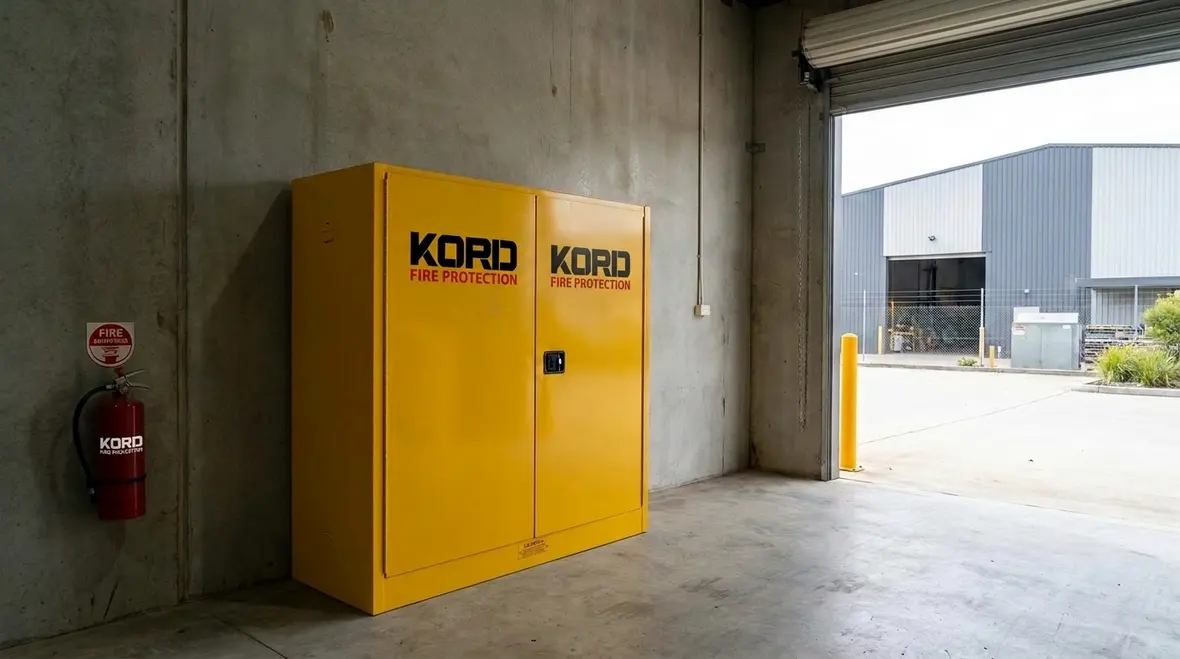
NFPA 30 Section 13.6: Storage Cabinets in Detached Buildings
Quick Answer
NFPA 30 Section 13.6 sets requirements for protecting flammable and combustible liquids stored in approved cabinets located in detached buildings. Compliance focuses on cabinet listing, correct installation, ventilation and spill control as applicable, fire protection separation, and ongoing inspection to keep the cabinets functional and safe.
Why NFPA 30 Section 13.6 matters in detached storage
Detached buildings concentrate fire risk because emergency response access can be slower, and the building’s fire exposure conditions can differ from an inside storage room. NFPA 30 Section 13.6 liquid cabinets detached buildings addresses how the cabinet concept gets used as a containment and limitation strategy within detached structures. Facilities often choose detached cabinets for operational workflow, segregation of incompatible products, or to keep hot work, ignition sources, and general traffic away from bulk chemical storage.
In practice, compliance failures usually do not come from the cabinet design alone. They come from how the cabinet is installed, how the liquids are transferred, and whether the facility maintains the cabinet and the detached building as an integrated fire risk system.
If your team is reviewing broader flammable liquid storage expectations, a useful companion read is NFPA 30 flammable and combustible liquids overview.
What “approved liquid cabinets” must meet under Section 13.6
NFPA 30 Section 13.6 liquid cabinets detached buildings requires that the cabinet used for flammable liquid storage is suitable for the intended liquid type and meets the applicable listing or approval basis. Cabinets intended for flammable liquids typically rely on features that limit ignition source contribution and manage small releases, including construction integrity, self-closing or controlled access where required, and containment characteristics designed to keep spill impact within controlled boundaries.
Key compliance expectations facilities manage during procurement and acceptance include:
Right cabinet for the liquid class and container size. Operations must match cabinet suitability to the stored product, not just the container volume.
Correct labeling and product identification. Cabinets must support clear identification and control of contents to reduce misstorage and incorrect transfer practices.
Integrity of doors, latches, and closure mechanisms. A cabinet that does not close correctly undermines the core containment and ignition limitation purpose.
Integrity of floors and anchorage in detached buildings. Settlement or improper anchoring can change door alignment, seals, and containment performance.
Installation and location controls that trigger real-world noncompliance
Detached building installation often fails during renovations, tenant changes, or workflow upgrades. NFPA 30 Section 13.6 requirements are not just about having a cabinet. Compliance depends on how the cabinet sits within the building plan, including access, clearance, and operational conditions.
Common installation failure points to verify
Cabinet placement and accessibility. The cabinet should remain accessible for emergency needs and daily transfers without blocking egress pathways or creating impromptu storage around the unit.
Sealing and spill management expectations. If the detached building layout relies on containment pathways, floor condition and drainage controls must not compromise spill retention or lead to uncontrolled migration.
Ventilation and vapor control assumptions. Many cabinet designs and detached building strategies assume a controlled environment. Facilities must avoid “fixes” that increase vapor spread, create trapped ignition sources, or bypass any manufacturer guidance.
Electrical and ignition source discipline. Detached buildings may still host switches, extension cords, and equipment. Cabinet location cannot become an ignition hazard zone. Ignition control integrates with the cabinet strategy.
How commercial facilities should manage change
In commercial and industrial environments, compliance often breaks after a process change. A good practice involves documented review whenever products change, storage quantities change, cabinet units change, or the detached building is reconfigured. Kord Fire Protection supports this by aligning cabinet verification with the facility’s ongoing inspection and maintenance schedule so the system remains consistent after operational changes.
Where detached storage areas also rely on disciplined ignition-source control, related planning often overlaps with proactive electrical hazard prevention for commercial spaces.
Operational controls and transfer practices that keep the cabinet effective
Even when a cabinet meets the approval basis, operational behavior determines whether the cabinet strategy works during routine operations and abnormal events. Facilities typically need documented procedures for receiving deliveries, decanting, and daily stocking.
Transfer procedures that reduce risk
Limit open time. Containers should not remain open while awaiting attention, especially during off-hours when monitoring is reduced.
Containment during pouring and decanting. Facilities should train staff to prevent splash and trackable contamination that can accumulate around the cabinet exterior.
Housekeeping discipline. Rags, spill materials, and packaging waste must be managed to avoid creating secondary fuel loads near the cabinet area.
Control of ignition sources. Hot work permits, smoking restrictions, and equipment maintenance practices must be enforced even in detached structures.
Inspection, testing, and maintenance requirements for sustained compliance
NFPA 30 compliance is sustained through inspection and maintenance. Cabinets can degrade through corrosion, door misalignment, damaged seals, and improper accessory fitment. Detached buildings add exposure factors such as vibration, weather effects, and temperature cycling.
Inspection items commonly missed by facility teams
Door closure performance. Latches and hinges must operate correctly so the cabinet returns to the intended closed condition after use.
Corrosion and damage assessment. Corrosion can compromise containment features and structural integrity, especially in harsh industrial environments.
Floor condition and containment paths. Cracks, settlement, and damaged coatings can create spill pathways that defeat the containment concept.
Label legibility and inventory controls. Unclear labeling leads to misidentification and incorrect storage decisions.
Compatibility of stored products and containers. Containers that do not remain compatible with the liquid increase leak probability.
Bring it back to the full NFPA 30 compliance picture
NFPA 30 addresses more than cabinet storage. A facility should consider how storage, quantities, separation, and emergency planning work together. For broader context on how NFPA 30 regulates flammable liquid storage systems, Kord Fire Protection recommends reviewing: how NFPA 30 regulates flammable liquids. Integrating cabinet controls with the larger flammable liquid program reduces the risk of partial compliance that still exposes the site to enforcement issues.
Frequently Asked Questions
Conclusion and next steps
NFPA 30 Section 13.6 liquid cabinets in detached buildings stays compliant only when the cabinet selection, installation, transfer practices, and maintenance work as one system. Kord Fire Protection helps commercial and industrial facilities validate cabinet suitability, verify installation and condition, and keep inspection records current through ongoing service. Contact Kord Fire Protection today to schedule a compliance-focused assessment and maintenance plan.
Website: kordfire.com.au

Join Our Newsletter!
Get the latest fire safety tips delivered straight to your inbox From our Newsletter.



