NFPA 1900 Section 31.9 Optical Warning Systems Ambulances
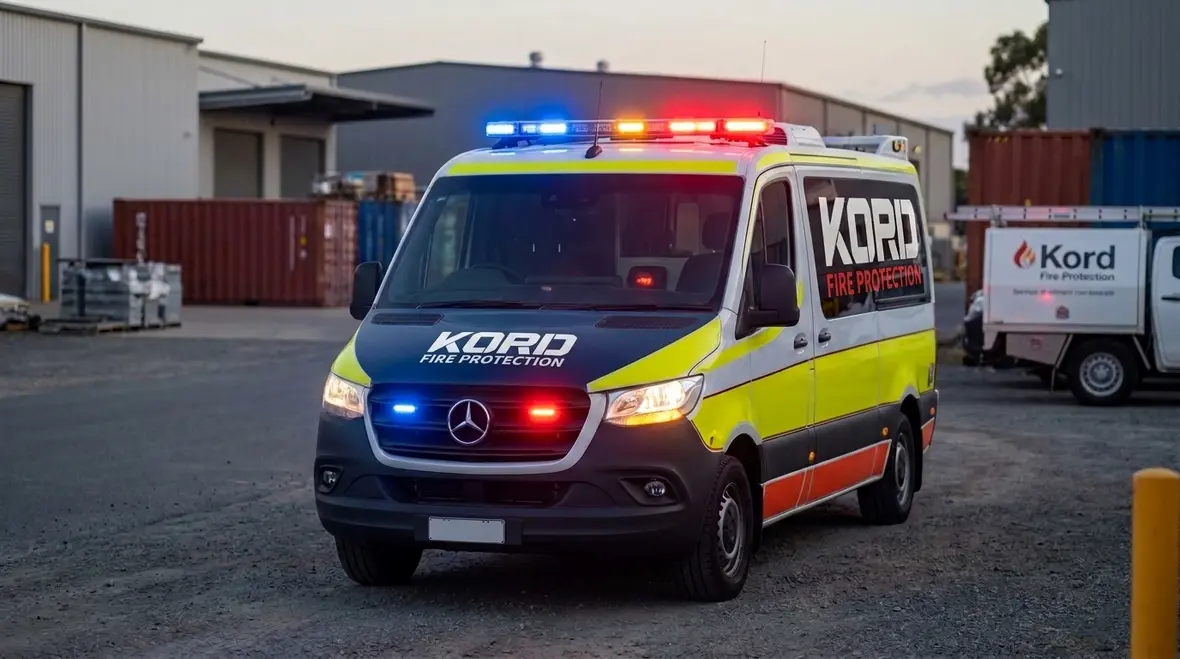
Quick Answer: NFPA 1900 Section 31.9 sets the standard for optical warning systems on automotive ambulances, helping improve visibility, reduce risk, and support fast response. For Australian industrial, retail, commercial, and facility fleets, compliant lighting is not just a box to tick. It is a frontline safety tool, and Kord Fire Protection can help keep those systems ready, reliable, and compliant.
In emergency response, light matters. That is why ambulance emergency lights NFPA 1917 and the updated guidance in NFPA 1900 matter to fleet managers, safety teams, and operators who rely on clear visibility in tense moments. These standards help ensure that ambulances can be seen, recognised, and trusted on busy roads and within large sites. For Australia’s industrial, retail, and commercial sectors, that kind of control is not optional. It is part of safe operations.
Near the top of any readiness plan, it also helps to connect ambulance visibility with broader fire protection services so inspection schedules, repairs, and safety documentation do not drift into separate little islands of chaos. When one provider can support coordinated maintenance habits, emergency assets are easier to keep ready for the moments nobody gets to reschedule.
What NFPA 1900 Section 31.9 Means for ambulance visibility
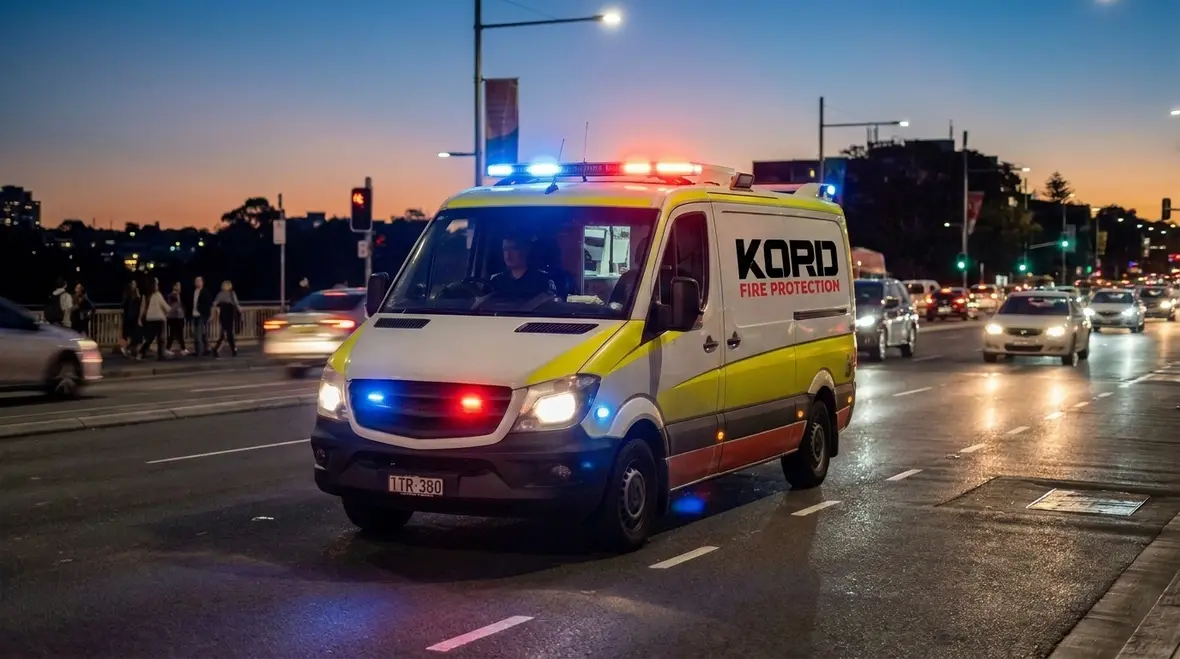
NFPA 1900 Section 31.9 focuses on optical warning systems for automotive ambulances. In plain terms, it guides how warning lights should work so the vehicle stands out in traffic and on site. The goal is simple. Other road users must notice the ambulance early enough to react safely. As a result, the standard supports quicker movement through traffic and lower crash risk.
It also covers the way lights perform in real use. Brightness, placement, flash pattern, and colour all matter. Therefore, the system must do more than glow like a Christmas parade float. It must cut through poor weather, glare, and distraction without creating confusion for drivers nearby.
Why visibility is more than a technical checkbox
On paper, optical warning systems can sound like a narrow equipment issue. In practice, they affect vehicle approach recognition, driver decision making, and how quickly a response corridor opens in front of an ambulance. If the lighting is weak, obstructed, uneven, or delayed, the vehicle loses precious seconds. Those seconds tend to disappear at exactly the moment nobody can afford to donate them.
This is also why the broader NFPA 1900 standard matters in context. It helps teams see optical warning systems as part of a larger apparatus safety framework rather than one flashy accessory stuck on top and trusted to work by sheer optimism.
Why ambulance emergency lights NFPA 1917 still matters
Many teams still refer to ambulance emergency lights NFPA 1917 because it shaped older ambulance lighting expectations. However, NFPA 1900 now brings the topic into a broader and more current framework. That matters because standards evolve, and fleets need guidance that reflects today’s vehicles, road conditions, and response demands.
For facilities and businesses that manage private medical response, industrial incident support, or site based emergency transport, this shift helps align equipment with modern safety needs. In other words, the standard is not just paperwork with a badge. It is a practical way to reduce risk, improve response, and keep lighting systems useful when seconds count.
That older reference also remains useful because many operators, purchasing teams, and maintenance staff still use legacy terminology when searching for replacement parts, spec guidance, or service notes. So even when NFPA 1900 is the present framework, NFPA 1917 language still turns up in conversations, records, and procurement trails. Nobody should be shocked by that. Standards history likes to linger in filing cabinets and spreadsheets long after the title page changes.

How optical warning systems should perform in daily use
Optical warning systems should do one job very well. They should make the ambulance impossible to miss. To achieve that, the system must stay visible from multiple angles and in different conditions. It must also avoid weak spots where another vehicle could fail to notice the ambulance until the last second.
Key performance points include:
- Clear forward and side visibility
- Strong recognition in daylight and at night
- Reliable flash patterns that signal urgency without causing confusion
- Placement that supports long range and close range visibility
- Durability under vibration, heat, dust, and weather
Furthermore, the system should work as part of the larger vehicle build, not as an afterthought. A good light bar alone will not save the day if wiring, mounting, or controls fail at the wrong moment. That would be like putting Bat Signal technology on a van and then forgetting the battery.
Daily conditions that expose weak lighting systems
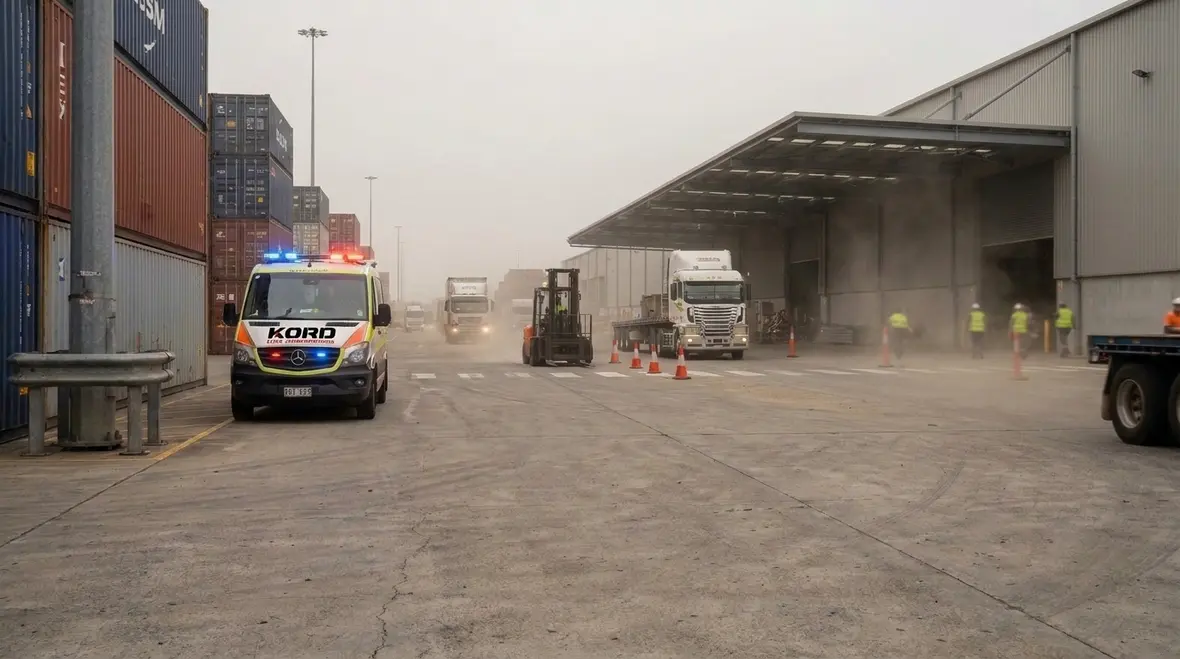
Real world use is where poor installations get caught. Day glare can wash out weak output. Dust can dull lenses. Vibration can loosen brackets. Water intrusion can create intermittent faults that only show up when the weather is at its most unhelpful. Tight sites with warehouses, loading zones, forklifts, and blind corners create another layer of risk because the ambulance may need to be identified quickly from odd angles and partial sight lines.
That is why routine testing should never be treated like a ceremonial button press followed by a satisfied nod. The system should be reviewed under realistic operating conditions, with attention to lens condition, wiring security, switch response, flash consistency, and whether the light remains effective in the actual environment where the vehicle works.
What Australian facilities should check first
Australian industrial and commercial operators should start with inspection and fit for purpose review. Even when they are not building ambulances themselves, they may manage vehicles, support emergency contractors, or maintain response assets used on site. Therefore, they should ask whether the warning system remains visible, stable, and serviceable.
They should also review the vehicle’s operating environment. A site ambulance working around warehouses, ports, mines, retail centres, or plant yards may face heavy dust, blind corners, and large vehicle movement. As a result, light systems need regular checks, not just a once a year glance and a hopeful nod.
Operational and compliance priorities
- Operational need: Fast recognition in busy environments
- Compliance need: Lighting aligned with current ambulance standards
- Maintenance need: Regular inspection, testing, and prompt repair
- Site safety need: Reduced collision risk near people, plant, and vehicles
Common warning signs
- Warning sign: Uneven flash output or dim lenses
- Warning sign: Loose mounts or damaged housings
- Warning sign: Poor visibility in daylight
- Warning sign: Delayed repair after faults appear
How Kord Fire Protection supports this service
Kord Fire Protection can become a vital partner because optical warning systems are part of a wider safety picture. Emergency vehicles depend on reliable protection, inspection, and upkeep to stay ready for work. That is where a strong service partner matters. Kord Fire Protection can help support compliance focused maintenance, scheduled checks, and practical readiness across fleet and facility settings.
For businesses in Australia, that support can reduce downtime and help keep critical vehicles available. Moreover, when emergency assets are tied to fire safety, response readiness, or site medical support, one weak system can affect the whole operation. Kord Fire Protection brings a service mindset that helps turn standards into action, not just shelf decoration in a binder nobody opens unless someone says audit.
Because it works across commercial and industrial environments, Kord Fire Protection can assist teams that need dependable support, clear servicing habits, and a partner that understands the pressure of keeping people safe. That kind of partnership helps protect both compliance and confidence.
Teams that want a more vehicle specific support path can also explore fleet vehicle fire suppression systems for fleet managers, which fits naturally alongside ambulance asset readiness, inspection planning, and coordinated servicing.
How to keep ambulance lighting ready for the next call
Teams should build a simple routine. First, inspect the lights for damage, dirt, and poor output. Then test all warning functions under real conditions whenever possible. After that, confirm the mounts, wiring, and controls hold up under vibration and use. Finally, log issues and fix them quickly.
In addition, managers should train staff to report faults early. A slow repair on an optical warning system can create a fast problem later. So, a clean process matters. Good light systems, after all, do not improve themselves while everyone is busy making coffee.
A practical maintenance rhythm
- Check lenses for cracks, haze, dirt buildup, and fading
- Confirm brightness and flash pattern consistency from several viewing angles
- Inspect brackets, fasteners, housings, and seals for looseness or wear
- Review wiring, switches, and control modules for fault signs or delayed response
- Document defects immediately and assign repairs before the next deployment window

FAQ
Keep the lights working when it matters most
NFPA 1900 Section 31.9 gives ambulance optical warning systems a clear job to do, and that job is safety. For Australian industrial, retail, commercial, and facility operations, the standard supports better visibility and lower risk. With Kord Fire Protection as a service partner, teams can stay ready, stay compliant, and keep emergency response moving with confidence.
Now is the time to review, service, and strengthen the systems that help people get seen. When optical warning systems perform properly, the result is not just a brighter vehicle. It is a safer response path, fewer avoidable risks, and one less thing to go sideways when the pressure is already high enough without adding a surprise light failure to the plot.

Join Our Newsletter!
Get the latest fire safety tips delivered straight to your inbox From our Newsletter.