
NFPA 15 Section 9.2: Sizing Water Supply Flow, Pressure, and Duration for Water Spray Systems
Quick Answer
NFPA 15 Section 9.2 requires designers to size the water supply to meet required flow, pressure, and duration for the most demanding spray demand conditions. For NFPA 15 9.2 volume and pressure flow duration simultaneous systems, the key challenge is ensuring the supply and system hydraulics align under realistic operating scenarios.
For readers who want broader context on water supply fundamentals before getting too cozy with Section 9.2, NFPA 15 Section 9.1 water supply for spray systems is a natural next read. It fits neatly here because Section 9.1 and Section 9.2 are basically neighbors, and neighbors tend to know where the pressure problems live.
What NFPA 15 9.2 volume and pressure flow duration simultaneous systems really means
NFPA 15 Section 9.2 focuses on the water supply requirements that must support a water spray system during its specified operating duration. In practice, the intent is simple: the system must deliver the required spray discharge rate and maintained pressure long enough to achieve fire control goals, even when multiple discharge points operate at the same time. This becomes especially complex for NFPA 15 9.2 volume and pressure flow duration simultaneous systems, where hydraulic demand from multiple simultaneous areas or flows must be validated against the available water supply.
For commercial and industrial facilities, the compliance challenge rarely lies in understanding the clause. It lies in proving the supply can maintain the required performance using real utility pressures, fire pump curves, jockey pump behavior, and acceptable system losses through valves, strainers, hose connections, piping, and sprinklers or spray nozzles.
Step 1: Establish the simultaneous system demand accurately
NFPA 15 Section 9.2 sizing begins with the system’s hydraulic demand model. The design team must define which sprinkler or spray heads discharge at the required flow, how many operate simultaneously, and what pressure is required at the most remote or hydraulically critical location. When the layout includes multiple hazard areas, sectional valves, or zone arrangements, engineers must confirm the simultaneous condition that produces the highest total flow and the lowest available pressure margin at the critical branch.
Common real world issues that affect compliance during plan review or acceptance testing include:
- Incorrect selection of design area assumptions, leading to underestimation of total discharge or duration.
- Misapplied piping roughness or overlooked fittings, causing excess pressure drop.
- Overlooked performance variations from site specific conditions, including elevation differences and construction tolerances.
- Failure to correctly model branch line restrictions such as orifice plates, pressure regulating valves, check valves, and strainers.
Facilities that serve as manufacturing, warehouse, retail, or mixed occupancy spaces often contain ceiling obstructions and unique routing constraints. These conditions frequently change the effective hydraulic path, which then changes the “critical” location for pressure and flow calculations.
Step 2: Size the water supply to deliver the required flow and pressure
After the design demand is established, Section 9.2 requires the water supply to be capable of delivering the needed flow at the pressure required to operate the system. Designers and contractors must coordinate with the fire pump design or city main water supply capacity, as well as system components that influence delivered pressure.
Fire pump implications and operational mechanisms
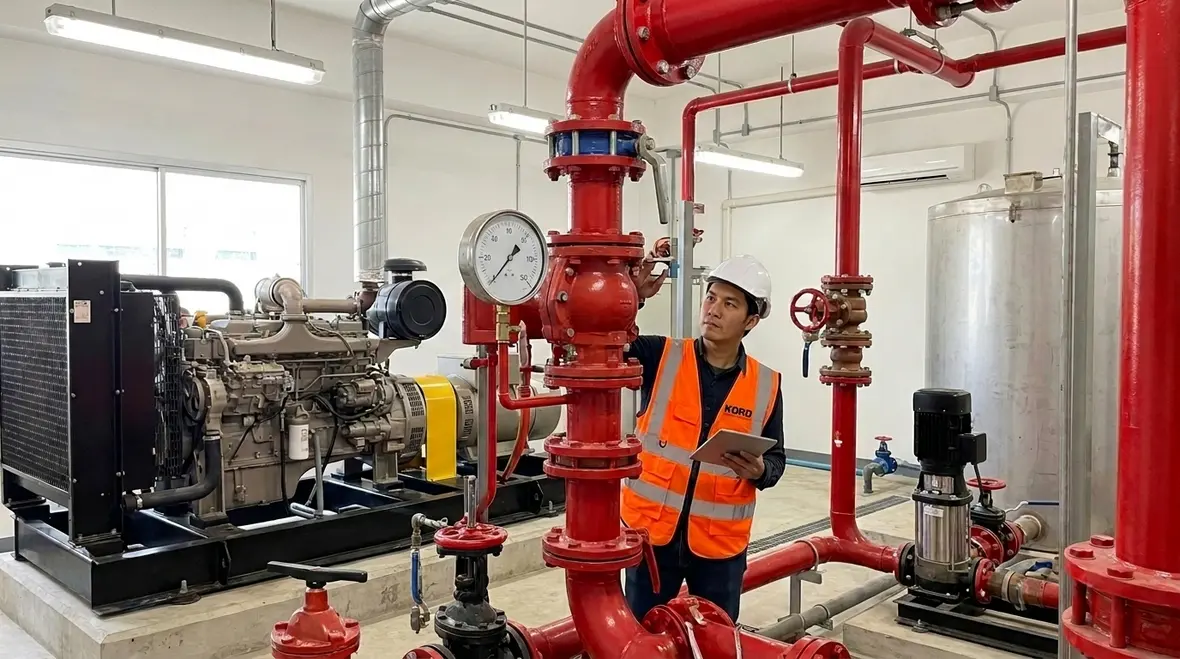
When fire pumps are used, sizing must align with the pump’s performance curve and the system’s required flow and pressure points. Key mechanical and operational details include:
- Pump curve compliance: The duty point must sit within the acceptable operating range. If it does not, the system may not reach required nozzle discharge pressures.
- Minimum flow and control strategy: Pumps can behave differently at low flow versus duty flow. Controllers, pressure sensors, and setpoints must be verified.
- Strainer and check valve losses: Real pressure losses occur during service and can increase over time due to debris. A compliant design anticipates normal losses, but field conditions must be maintained.
- Jockey pump behavior: Jockey pumps maintain pressure in the system. If they cycle improperly, inspect results can show pressure instability or delay before main pump start.
For more background on fire pump system considerations and industry practice, firepumps.org provides practical resources that support safe, code informed approaches. See FirePumps.org.
City water supply considerations
Where reliance on a municipal or tank supply is permitted, the available pressure and flow must be verified under conditions that match the simultaneous demand. Many facilities fail compliance verification because the available supply is tested under non representative conditions. The supply must account for:
- Static versus residual pressure and how it changes under sustained demand.
- Hydraulic losses across check valves, backflow preventers, and isolation valves.
- Potential supply interruptions or throttling by the utility during high demand.
Step 3: Prove the supply can maintain performance for the required duration
NFPA 15 Section 9.2 does not treat duration as an administrative requirement. Duration directly ties to water supply capacity and pump runtime, and it affects the practical ability to maintain spray discharge effectiveness over time.
In NFPA 15 9.2 volume and pressure flow duration simultaneous systems, duration proof becomes more complex because the total water demand is driven by the simultaneous discharge condition. If multiple hazards operate together, the system water volume requirement rises and the available supply may become the limiting factor. Designers must validate the complete chain of performance for the entire duration, including:
- Water source capacity: Tank volume, effective usable volume, and replenishment time if applicable.
- Pump run time: Fuel, electrical supply, and controller reliability to sustain operation.
- Pressure stability: Sustained discharge can reveal control issues not seen during short duration tests.
- System maintenance impacts: Over time, strainer loading, valve seal deterioration, and partial obstructions change pressure and flow delivery.
Commercial facilities often operate with unique staffing patterns, maintenance access constraints, and seasonal changes that affect water quality and debris loading. These factors can directly affect sustained strainer and valve performance, which in turn can reduce effective discharge pressure.
How compliance gets tested in the field and what fails most often
Plan review and acceptance typically verify that the system design demand matches the required supply performance. However, ongoing compliance depends on inspections, maintenance, and functional testing. For water spray systems, the most common failure points that impact NFPA 15 9.2 compliance include misalignment between design assumptions and field conditions.
Common operational and documentation gaps
- Hydraulic test deviations: Test conditions do not match the simultaneous discharge assumption. For compliance, the test must reflect the most demanding operating mode.
- Pressure measurement errors: Gauges installed at non representative locations or inaccurate instrumentation can mask real pressure drops.
- Valve position and logic errors: Isolation valves left in incorrect positions or defective valve actuators can prevent correct flow paths during operation.
- Maintenance neglect: Strainers not cleaned on schedule, or discharge outlets partially obstructed by construction debris, can reduce effective spray performance.
To improve long term compliance outcomes, facilities benefit from a structured service plan that includes verification of the water supply performance, valve and controller checks, and scheduled inspections tied to system demand patterns. Kord Fire Protection supports commercial organizations with maintenance and verification activities designed to keep systems aligned with NFPA 15 expectations. For additional context on water spray fixed systems and safety best practices, see NFPA 15 enhancing fire safety with water spray fixed systems.
Practical design and maintenance strategies for commercial sites
Commercial facilities face real constraints such as limited pump room space, variable incoming water pressure, and deferred maintenance cycles. The following strategies help teams reduce the risk of failing NFPA 15 9.2 requirements after installation.
Coordinate design with equipment specifications and access
- Confirm that pressure sensing locations for pump controllers reflect the system demand point.
- Ensure strainer access and cleanout procedures are practical so that routine maintenance does not get bypassed.
- Verify control valve and check valve selections are compatible with expected flow and pressure at the system’s duty point.
Use realistic acceptance and verification testing
- Test representative simultaneous flow scenarios that match the design basis.
- Document actual flows, pressures, and controller responses so future inspections can detect drift.
- Retest after modifications to piping layouts, equipment additions, or hazard reconfiguration.
Plan for ongoing reliability, not just initial compliance
Many failures appear after changes in building operations or after construction activities. A reliable program accounts for valve cycling, debris generation, and occupancy changes that can alter hydraulic conditions. Kord Fire Protection can support facilities by aligning ongoing inspection, testing, and maintenance with the specific demands created by NFPA 15 9.2 volume and pressure flow duration simultaneous systems.
Frequently Asked Questions
Conclusion and next steps
NFPA 15 Section 9.2 requires more than correct calculations. Facilities must verify that the water supply, pump performance, and sustained operation actually support the simultaneous hydraulic demand for the required duration. Kord Fire Protection can help commercial organizations reduce compliance risk through plan based reviews, acceptance testing support, and disciplined maintenance programs. Contact Kord Fire Protection today to assess your water spray system and confirm ongoing NFPA 15 alignment for NFPA 15 9.2 volume and pressure flow duration simultaneous systems.

Join Our Newsletter!
Get the latest fire safety tips delivered straight to your inbox From our Newsletter.



