
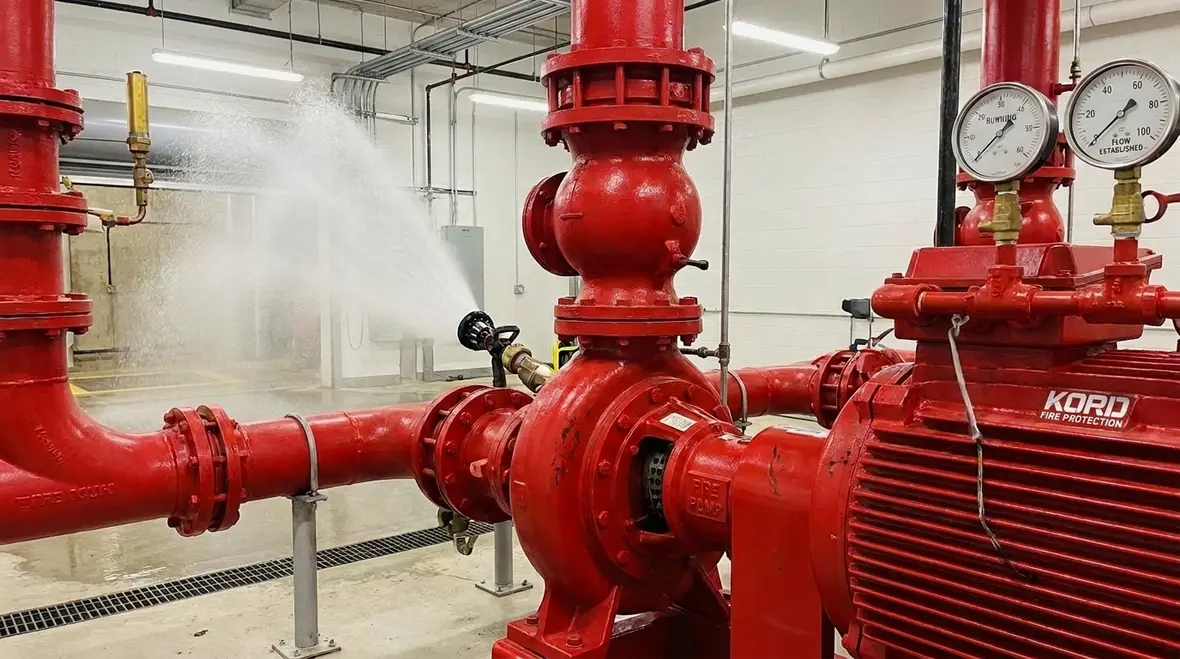
NFPA 15 Section 9.1: Why Every Water Spray System Needs an Automatic Water Supply
Quick Answer: NFPA 15 Section 9.1 requires a water spray system to have an automatic, reliable water supply that activates promptly without operator intervention. This ensures sustained discharge when heat or detectors initiate operation, preventing delays caused by manual valves, time loss, or intermittent pressure.
For facilities evaluating broader suppression readiness, Kord Fire Protection also provides commercial fire suppression system services that fit naturally with water spray compliance planning, inspection support, and corrective maintenance needs.
What NFPA 15 9.1 is really solving
For water spray systems, the core purpose of the NFPA 15 9.1 general automatic water supply requirement is simple: when the system activates, water must be delivered automatically and quickly enough to support fire control or mitigation. The standard focuses on real-world failure modes seen in commercial, industrial, and retail facilities, including delayed manual valve operation, empty or partially filled supplies, pressure drops, and conditions that leave the system “set up” but unable to discharge when it matters.
In practice, compliance does not end at selecting the right nozzles and piping. A properly designed water spray system depends on a dependable water source that responds automatically to system demand. That is the operational backbone of Section 9.1.
Automatic water supply: what “automatic” means in operations
“Automatic” is not a marketing term. In NFPA 15 related water spray system designs, automatic supply typically means the system can initiate water flow based on demand, without waiting for personnel. That includes coordination between the alarm or actuation method and the water supply control components.
Typical system demand pathways
- Detector or actuation pathway initiates discharge: The system recognizes a fire condition and transitions to operating mode.
- Supply control logic releases water flow: Valves and control devices open based on the system’s demand signal or operating sequence.
- Pressure and flow stability maintained: The supply must provide required pressure and flow for the design duration while the hazard is being addressed.
When a facility relies on manual steps or delayed operator response, it introduces unacceptable uncertainty. NFPA 15 9.1 is aimed at removing that uncertainty so water is available as soon as the system needs it.
Common failure points when automatic supply is missing or weak
Even when the piping layout is correct, deficiencies in the water supply cause many field problems. These issues show up during acceptance testing, periodic inspection, and annual or flow testing cycles.
1) Delay between alarm and actual water delivery
If the water supply is not capable of automatic response, the system can be “in alarm” while the valves remain closed or the supply remains unavailable. That delay directly reduces discharge effectiveness.
2) Inadequate pressure or rapid pressure drop
A water spray system depends on a stable hydraulic environment. Without sufficient pump performance, pressure maintenance, or correctly sized supply components, the system can discharge initially but fail to sustain flow at design conditions. This can result in noncompliant performance during the most critical early period.
3) Supply integrity and readiness failures
Commercial facilities often involve multiple water sources, building zones, or seasonal water supply variations. Inadequate attention to supply readiness can lead to situations such as:
- Valves left in the wrong position after maintenance
- Strainers clogged, reducing effective flow
- Control components misaligned after system upgrades
- Air or trapped conditions that affect water delivery performance
Automatic water supply requirement helps reduce reliance on human intervention and promotes consistent performance under alarm demand.
How pumps, valves, and controls support the NFPA 15 9.1 requirement
To meet the intent of the NFPA 15 9.1 general automatic water supply requirement, system designers and installers typically coordinate pumps, jockey arrangements or equivalent pressure control, automatic valve operation, and reliable supervisory signaling.
Pumps and pressure maintenance
Where required, fire pumps or other dedicated pumping systems provide flow and pressure on demand. Pressure maintenance arrangements help ensure that once discharge begins, water delivery does not stall while equipment ramps or reaches operating pressure. This is particularly relevant where the system needs immediate discharge to cover the hazard effectively.
Automatic valve operation and supervisory status
Valves used to control water flow must open automatically when the system goes into an operating state. Supervisory systems help ensure valves remain in their normal position and alert staff to abnormal conditions. Without dependable supervision and automatic control, the risk shifts back toward human dependence.
Hydraulic coordination across the system
Meeting Section 9.1 is not only about having water. It is about delivering the right water performance. That means coordinating:
- Pipe sizing and friction losses
- Elevation changes and system head requirements
- Nozzle characteristics and spray performance expectations
- Any pressure regulating or controlling components
For facility owners, these details matter because inspection failures often come from conditions that change over time: minor piping alterations, valve replacements, or newly added building loads impacting supply characteristics.
Inspection, testing, and maintenance that protect compliance
Even a correctly installed automatic supply can drift out of compliance if maintenance is inconsistent. Facilities should plan for inspection and testing that confirms the system can deliver water automatically, at required pressure and flow, within the expected operating sequence.
Operational checks that typically matter
- Valve position and actuation verification: Confirm valves used for automatic supply control operate as intended.
- Pump performance evidence: Confirm pump operation and pressure performance during required functional and flow related testing.
- Water supply availability and integrity: Confirm the supply remains able to deliver under supervisory and alarm conditions.
- Strainer and flow path condition: Verify flow paths are not degraded by contamination or debris.
Maintenance practices that reduce recurring defects
Common commercial maintenance shortcomings include postponed testing, incomplete documentation, and lack of coordination between contractors. A service partner should provide a maintenance approach that aligns with facility schedules and ensures the automatic supply remains dependable.
Kord Fire Protection supports ongoing compliance for water spray fixed systems by coordinating inspection readiness, performance verification, and practical corrective actions before failures occur. For a related overview on water spray fixed systems and compliance support, see NFPA 15 enhancing fire safety with water spray fixed systems.
Additional resources on fire pump and water supply concepts are also available at firepumps.org, which can help facilities contextualize how pumping arrangements support dependable water delivery.
Facility compliance realities: where teams get stuck
Many organizations understand the concept of automatic supply, yet struggle with execution in daily operations. The following scenarios commonly challenge compliance in commercial, industrial, and retail environments.
Building changes and supply reconfiguration
Renovations, tenant improvements, and utility updates can alter system behavior. Even when no spray nozzles are changed, supply components can be affected through valve work, piping reroutes, or changes to water distribution pressure and flow characteristics.
Staff turnover and reliance on “institutional knowledge”
When procedures depend on a small group of experienced technicians, valve positions and maintenance actions can drift. Supervisory systems help, but only if the automatic supply logic is verified and maintained over time.
Coordination between maintenance contractors
When contractors work on non-fire systems such as irrigation, cooling, or process water infrastructure, they can inadvertently impact fire system supply readiness. A structured maintenance plan and documentation discipline help prevent that risk.
For facilities managing compliance across multiple zones, Kord Fire Protection, including Kord Fire Protection service and support available through kordfire.com and local operations such as kordfire.com.au, can help standardize inspection and maintenance outcomes that align with NFPA 15 expectations.
Frequently Asked Questions
Take action now
Verify that your water spray system can deliver water automatically on demand, with stable pressure and flow at the required conditions. Engage Kord Fire Protection to review your Section 9.1 design intent, confirm operational readiness, and schedule corrective maintenance before inspections expose supply weaknesses. Reach out to start a compliance focused assessment and protect your commercial facility from delayed discharge risk.

Join Our Newsletter!
Get the latest fire safety tips delivered straight to your inbox From our Newsletter.



